



Coin Community Family of Web Sites Join Thousands of Coin, Bullion, & Money Collectors
Coin, Banknote and Medal Collectors's Online Mall Specializing in Modern Numismatics Royal Canadian Mint products, Canadian, Polish, American, and world coins and banknotes. 300,000 items to help build your collection! Join Thousands of Coin, Bullion, & Money Collectors Vancouvers #1 Coin and Paper Money Dealer Shop for APMEX Bullion on eBay!


Username:
Password:
Save Password
Forgot your Password?


This page may contain links that result in small commissions to keep this free site up and running.

Welcome Guest! Registering and/or logging in will remove the anchor (bottom) ads. It's Free!

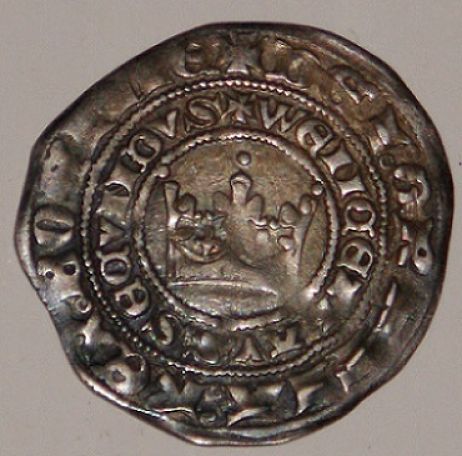
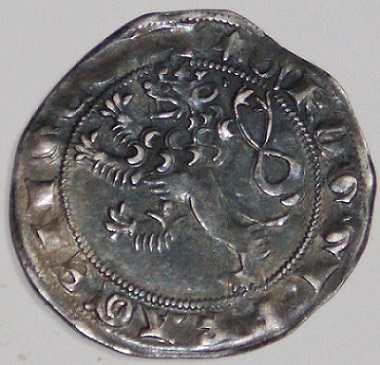
Prager (Prague) Groschen ( 1278 -1305)

To participate in the forum you must log in or register.
Author Previous TopicReplies: 5 / Views: 2,708Next Topic  
Pillar of the Community
austrokiwi's Avatar
2087 Posts
 Posted 12/21/2012  1:18 pm Show Profile   Bookmark this topic Add austrokiwi to your friends list Get a Link to this Message Number of Subscribers
Its taken me a while to find one of these: not because of rarity but rather the difficulty of finding one that is attractive and not overly worn. I was interested in getting one of these as it is one of the small "stepping stones" taking coins from the middle ages to the start of the early modern era.

As I understand the story coinage had deteriorated to the point the penny (Pfenig) was simply a small round of foil impressed on only one side ( these are known today as Bracteates).

Actually this "new" coin was officially a Denarii and gained the name Nummi Grosso and ultimately groschen. It is possibly the ancestor of the British groat.

Struck by order of King Wenceslaus II ( I think his predecessor is subject of a Christmas Carol). Its approximately 28 mm in diameter,0.9 mm thick and weighs 3.7 grams. As for grade: well I wouldn't venture an opinion....what attracted me to this example was the toning and uneven planchett it looks like a well circulated survivor and has an attractiveness ( to me) that an Unc example could never match

Prager-Prague-Groschen---1278--1305

Prager-Prague-Groschen---1278--1305
Pillar of the Community
Windchild's Avatar
Canada
1411 Posts
 Posted 12/21/2012  2:46 pm  Show Profile   Bookmark this reply Add Windchild to your friends list Get a Link to this Reply
Nice Coin!
Pillar of the Community
Bacchus2's Avatar
United Kingdom
2875 Posts
 Posted 12/21/2012  2:53 pm  Show Profile   Bookmark this reply Add Bacchus2 to your friends list Get a Link to this Reply
Nice example of an interesting coin!

I think the first English groat was from Edward I at around 1279 - the term was, I always believed, taken from "gros tournois" - but it may have been influenced by other terms too. I remember reading somewhere that Henry III, may have considered their striking - but I may be wrong in this.
Edited by Bacchus2
12/21/2012 3:06 pm
Pillar of the Community
harrison2's Avatar
Mexico
1304 Posts
 Posted 12/21/2012  3:23 pm  Show Profile   Bookmark this reply Add harrison2 to your friends list Get a Link to this Reply
Nice coin, I'm particularly attracted to lions on coins.
Pillar of the Community
austrokiwi's Avatar
2087 Posts
 Posted 12/22/2012  04:56 am  Show Profile   Bookmark this reply Add austrokiwi to your friends list Get a Link to this Reply
I believe, at the time this coin was produced, in europe there were economic drivers( predominantly increasing international trade) encouraging the minting of larger coin. this Prager groschen was one of the earlier examples... but also as Bachus2 has pointed out the Gros Tournois was a very influential coin and is likely the direct ancestor of the British groat.

I refer often to Freys Dictionary of Numismatic names but in the case of the Prager Groschen this old book is not very helpful. The entry under Prager groschen notes this coin as having an influence on surrounding nations and giving rise to the name groschen however under "Gros Tournois" Frey seems to state that coin was the one responsible for the development of this family of coins.

Digging else where I find references actually pointing to the Tyrolean Groschen of a few years earlier. I suspect all these slightly different accounts reflect the nationalities of the authors. As a whole I think these different accounts attest to the demands for a more substantive coinage than the Foil like "pennys" that went before.

The concurrent evolution of the type may also be strongly related to common Latin language roots.
Pillar of the Community
wonghinghi's Avatar
Hong Kong
1270 Posts
 Posted 12/26/2012  07:09 am  Show Profile   Bookmark this reply Add wonghinghi to your friends list Get a Link to this Reply
From "Standard Catalogue of English & UK Coins 1066 to Date", 1997 Richard Lobel:

"...In the 1260s the French had successfully introduced a large silver coin with a fairly similar value to the groat, the gros tournois. With England's European trade increasing Edward I realised the importance of larger denominations..."

It was very likely French issued this larger silver coin than England while silver groschen (and/or Tyrolean Groschen)of the same size coin in Germany was issued at the end of 13th Century, a bit later than the above two countries. Actually, they should have the same/similar weight and silver content for the purpose of trade.

Am I correct to say that?

Henry
  Previous TopicReplies: 5 / Views: 2,708Next Topic  

To participate in the forum you must log in or register.


Disclaimer: While a tremendous amount of effort goes into ensuring the accuracy of the information contained in this site, Coin Community assumes no liability for errors. Copyright 2005 - 2026 Coin Community Family- all rights reserved worldwide. Use of any images or content on this website without prior written permission of Coin Community or the original lender is strictly prohibited.
Contact Us  |  Advertise Here  |  Privacy Policy / Terms of Use

Coin Community Forum © 2005 - 2026 Coin Community Forums
It took 0.27 seconds to rattle this change. Forums