Hi Swamperbob
My doubtful photographic skills plus the need to reduce the resolution for posting don't make for easy viewing so I have emailed you separately a new photograph of the reverse. I am fairly confident the coin is genuine. The problem comes down to when the coin was minted. Although Hafner is the most used reference( because of its ease of use and English language)Dr Franz Leypold's technical work in 1976 is the best for understanding the variants and dating. Leypold has made a number of assumptions that, with indepth analysis/research aren't as strong as many people currently regard. He and Hafner give the start of the 19th century Italian mints MTT production as 1815(Milan) and 1817 (Venice) which are the official dates Following Austria regaining control of those two mints from Napoleon.
Based on a reprimand to the Venice mint ( basically a cease and desist order) Leypold attributes the very rare "F.S" variety( Krause valuation of US$2000.00) as 1815 Venice. Leypold has no direct evidence from the records that it was the F.S. Variety. I suspect he was putting 1 & 1 together and getting"3". A Florence mint record (month is from memory year is correct) July 1814 it is revealed the 1814 Florence minted MTTs were very like the Venice mint being produced in 1814. It seems likely the reprimand Leypold refers is actually targetted at the non official Venice mint MTT of 1814.
A much earlier researcher, Obergrath Carl von Ernst in 1894, citing another reprimand directly relating to the F.S. signature, dates the variety to Guenzburg 1793 (third quarter of that year). The problem Ernst creates for Hafner and Leypold is he dates what is regarded as the Italian MTT type to much earlier and to a different min than they do (Making that part of Hafner's cataloguing unreliable at the very least questionable.
In his history of the Guenzburg mint ( Carl von Ernst 1893 1st part & 1894 2nd part) notes that in 1788 a number of banking houses requested that the MTT be produced in Milan. Hafner and Leypold make little note of this. It is known( from other experts) that punches and matrices for MTT were sent to Milan from Vienna. These, it is generally accepted, were for the Vienna standard MTT with the arms of upper Austria in the fourth quadrant and the mint signature IC-FA on the reverse. In a 1980s news letter Leypold reports of his discovery in the Vienna mint archives of a tin trial strike for Milan. It was as expected the standard Vienna type but the brooch(round rather than oval) on the obverse was as can be seen in the photo at the beginning of this thread. (To date no one has seen an example of this type in the market or museums).
It seems to me it is highly likely Milan started producing the Guenzburg type( because that's what the customers wanted) in the late 18th century . {Note according to Ernst the last MTT minting in Guenzburg was in 1801 or 1802. Now that may seem just speculation except for an intriguing copper etching in a 1808 British publication: James Ede "Gold and Silver coins of all nations". In that book is an etching of an MTT obverse that is remarkably like, tha, which is regarded as, a post 1815 Milan mint MTT certainly it is a type never attributed to Guenzburg by Hafner or Leypold.
The intriguing puzzle, some might say mess, then returns to the 1814 minting in Florence. At that time Florence was under control of Napoloens sister and her husband. Therefore the minting of MTT was against generally accepted international principles of that time: one might say these were forgeries but they were not debased forgeries and collectors today treat them as genuine. And were likely copies of the most commercially acceptable form of the MTT at that time. Leypold long after Hafners book published his change in view that Hafner 35 (a hard to find variant with the initials ST above the normal SF) was from Milan and acknowledged that Florence was the most likely mint. The ST/SF coin looks like a Milan coin....but its first minting was quite probably a year before the Milan mint started producing the coin ( under the current zietgeist). I have examined two ST variants ( I have 7 in my collection) held in the Vienna Coin cabinet ( not on display) One is labelled Florence the other Venice) which takes me/us back to that 1814 Florence mint record. The Florence labelled coin is slightly different and only one( of the seven) in my collection matches it. the others in my collection match more closely the one that is labelled Venice.
I think I have outlined enough to make it clear the history and current cataloging of the Italian mint series is very questionable. I would hope people would also so see why I am fascinated with the MTT ( for me its like a whodunnit investigation).
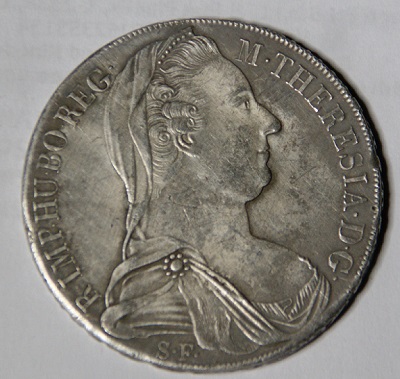
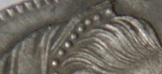
Back to the coin in this thread... being outside the norm makes it fascinating for me.....by the late 19th century early 20th century people(where the coin was used) were rejecting coins that had only 7 pearls in the diadem( the accepted standard being 8) where as a few decades earlier they would only accept coins with 7 pearls (being the Milan and Venice standard form). Those 8 pearls may have a story to tell!!












 Posted 12/29/2012 02:48 am


