| Author |
 Replies: 11 / Views: 1,780 Replies: 11 / Views: 1,780 |
|
|
Valued Member
United States
176 Posts |
|
|
|
|
Bedrock of the Community
United States
12437 Posts |
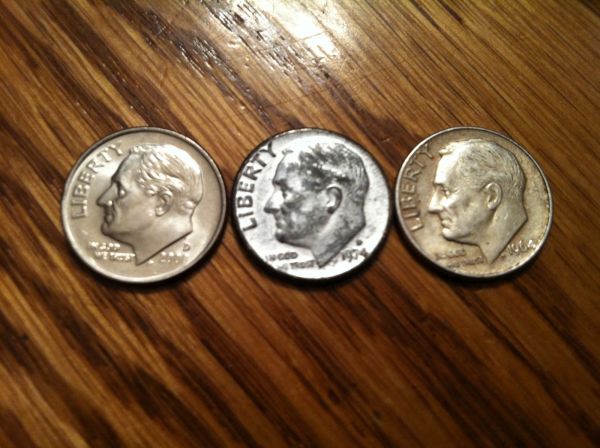
It looks like it has been plated.
|
|
Valued Member
 United States
176 Posts |
With what would you say biokemist?
|
|
Bedrock of the Community
13014 Posts |
Id assume silver maybe steel it does kind of look like some steel cents
|
|
Pillar of the Community
United States
1393 Posts |
|
|
Valued Member
United States
176 Posts |
The letters are extremely bold but there were no proofs that year so I thought plated but it doesn't seem any more thick than regular
|
|
Pillar of the Community
United States
3755 Posts |
Yep, thats plated. Old tarnished chrome job perhaps. And yes there were proofs in 74. But that would have an S mint mark.
|
|
Pillar of the Community
United States
1599 Posts |
Back in my day as a kid, my mother worked for a dentist and had access to mercury. I would occassionally get some from her to play with; one of the most fun things to do was to rub it on silver coins. It made them look real shiny (sort of looks like your dime). I think the EPA and others frown on such behavior today.
Edited by jprine
01/11/2013 11:09 pm
|
|
Moderator
 United States
16711 Posts |
Agreed, plated. You can see where it's wearing off.
swcoin.ecrater.com
|
|
Pillar of the Community
United States
3755 Posts |
jprine, amazing what he did as kids and we still have only one head on our shoulders. LOL
|
|
Moderator
United States
56855 Posts |
Being plated you wouldn't notice any difference in thickness.What does the reeding look like? To me it looks to be either plated or painted. John1  |
|
Pillar of the Community
United States
3552 Posts |
Hello,
Going on the assumption that this is not a valuable coin I personally would like to see a 'before scratched' and 'after scratched' very close-up side-by-side photo arrangement of a chosen area of the coin...
Even just a thin layer of paint could possibly chip off while electroplating's molecular bond would be less prone to this type of behavior.
In a nutshell via electrolysis electrons flow from an anode through the circuit of a system since they are attracted to an oppositely-charged cathode creating a much stronger molecular bond building upon a plated object etc.
In summary much more detail obviously exists for the electrolysis process which is beyond the scope of this thread but it would be nice see this particular surface under higher magnification just for yucks.
IMHO
mdpmedia
|
| |
Replies: 11 / Views: 1,780 |
|









 Posted 01/11/2013 4:16 pm


