| Author |
 Replies: 14 / Views: 1,697 Replies: 14 / Views: 1,697 |
|
|
Valued Member
United States
159 Posts |
I am not good at grading coins in higher grades...so what would you call this beauty. Also what do you think about the rim on the left, what do you think caused that? Additionally I believe that it is cleaned, so it would probably come back as details if I sent it out to get graded. However what would you call it disregarding the details grade. Thanks!  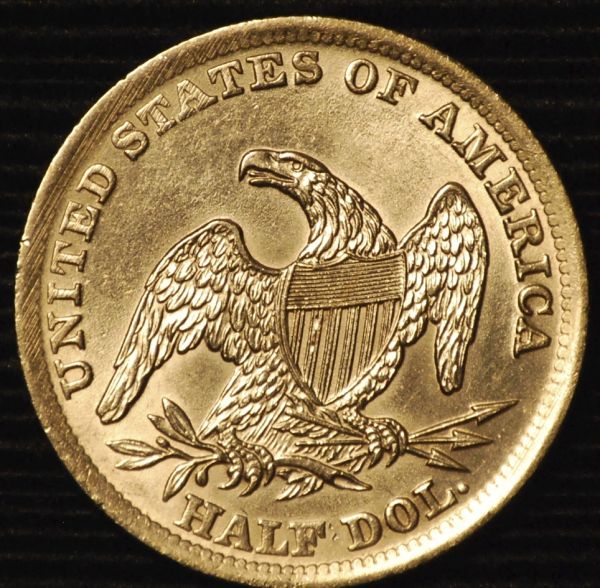 |
|
|
|
Pillar of the Community
United States
3184 Posts |
|
|
Bedrock of the Community
United States
10982 Posts |
AU55. Appears to have excellent luster and lots of detail. Likely was dipped and not abrasively cleaned.
Are you asking about the obverse area near the rim from 8:00 to 1:00? That could be a scratch or a die crack. It's an attractive coin.
|
|
Moderator
 United States
23522 Posts |
That obverse crack is characteristic of Reiver's JR-5a variety; not sure what that translates into under the new Graham-Reiver system. The striations you see on the reverse are as-struck; 1838's and 1839's are known for them (even into the letters), believed to be from the strip roller at the Mint.
Beautiful coin.
|
|
Pillar of the Community
United States
3843 Posts |
Definately has been dipped but there is a chance that it could get into a problem free holder. Looks more BU than AU to me.
|
|
Pillar of the Community
United States
9811 Posts |
 it does have more BU feel from it, the only thing holding me back from saying full unc is the field in front of Liberty's face, it looks pretty beat up. Probably AU55/58 with an old dipping. "Buy the Book Before You Buy the Coin" - Aaron R. Feldman - "And read it" - Me 2013! ANA Life Member #3288 in good standing since 1981, ANS, Early American Coppers Member (EAC), Colonial Coin Collectors Club member (C4), Conder Token Collector Club member (CTCC), Civil War Token Society (CWTS) member, Liberty Seated Collectors Club (LSCC) & Numismatic Bibliomania Society member (NBS), USMex, Member in good standing, 2¢ variety collector. See my want page: http://goccf.com/t/140440 |
|
Valued Member
 United States
159 Posts |
Ok thank you all. Do you think it would be worth it to get it graded?
|
|
Pillar of the Community
Israel
2420 Posts |
Can't seem to find any wear on it, but it might come back in an AU slab.
Nevertheless, even in AU, it is definitely worth slabbing, and I'd send it to PCGS.
|
|
Pillar of the Community
United States
6446 Posts |
Quote:
The striations you see on the reverse are as-struck; 1838's and 1839's are known for them (even into the letters), believed to be from the strip roller at the Mint. Interesting factoid; I didn't know that! My first thought would be adjustment marks inflicted when an overweight planchet was filed down before being struck. Do you know Dave whether the mint was still adjusting planchets as late as 1838?  Gradewise, looks high AU, probably AU-58. Reverse denticles are pretty weak but I presume that is strike-related. No hairline scratches to speak of. What about the color? Is the coin actually that brownish-gold shade as shown in the photos? I'd guess that was the result of retoning after an old dipping. It may or may not prompt a "cleaned" judgment from a TPG. It's still worth having it graded. In my experience ANACS might be more likely to slab it as problem-free. PCGS is pretty picky (and inconsistent) about the whole cleaning/dipping/toning issue. They could throw out anything from a righteous grade to "altered surface" or "artificial toning" for this coin. |
|
Moderator
United States
23522 Posts |
They weren't adjusting planchets; just a sea change in the process as indicated by the switch to reeding. The color of the coin is not as it appears here. The white balance of the images is off, as indicated by the yellowish hues in the background which is obviously black. Expect the coin to look more like this, in-hand: 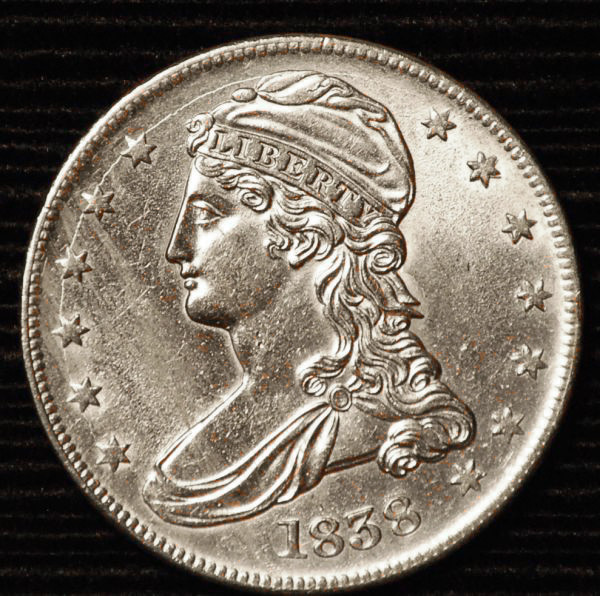 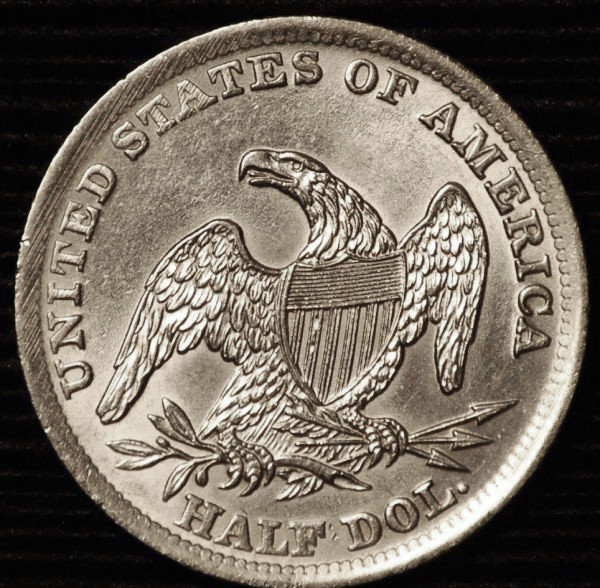 |
|
Valued Member
United States
159 Posts |
That is exactly how it looks in hand. How can I fix the color of the pictures like that in the future?
|
|
Pillar of the Community
United States
7332 Posts |
Your 1838 half is sharper than my example that is ANACs has graded AU 53. The brightness and the streaking liberty is facing may get you a details MS 60. Here is mine to compare.  |
|
Valued Member
United States
98 Posts |
I don;t see anything on the coin that is clearly rare -- so it should be an uncirculated grade. The field scratches on the obverse might keep it in a lower BU grade.
|
|
Bedrock of the Community
Australia
21792 Posts |
This should be a two graded coin. That is the way it would be described at auction in Australia.
Should get MS61 or 2. Obverse has a few tiny impact pits. Reverse much better.
It is a pity that the grade is determined by the lowest grade side.
In all honesty, BOTH sides should be graded on their own merits, as in the U.K.
If that were the case, MS 62 / MS 64.
Then again, The U.K. only recognises Sheldon for U.S. and related coins.
|
|
Moderator
United States
23522 Posts |
Quote:
That is exactly how it looks in hand. How can I fix the color of the pictures like that in the future? Your camera should have a white balance setting which allows you to tailor the camera's output to whatever kind of light you're using - the setting would be different for a regular tungsten lamp than a fluorescent one, for instance. |
| |
Replies: 14 / Views: 1,697 |
|










 Posted 02/14/2013 01:12 am