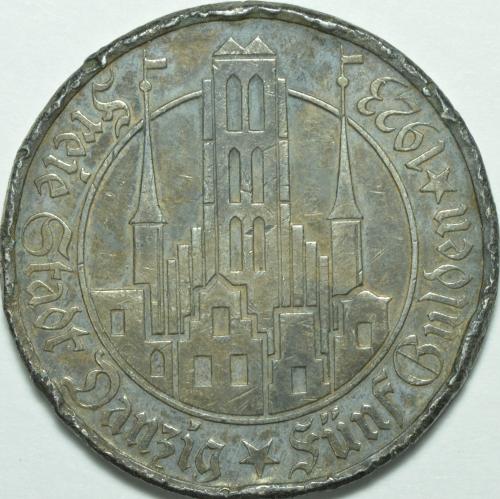
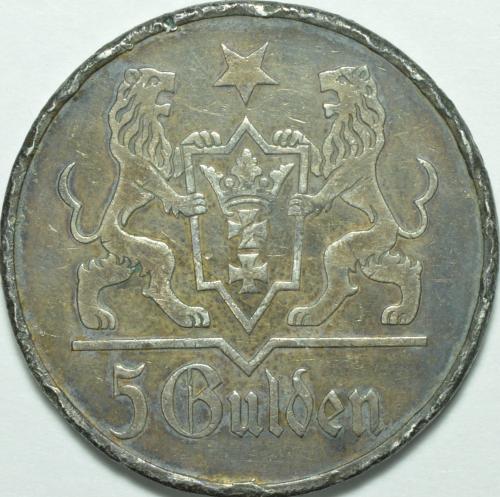
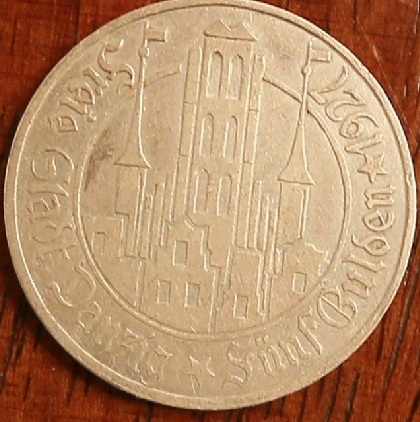
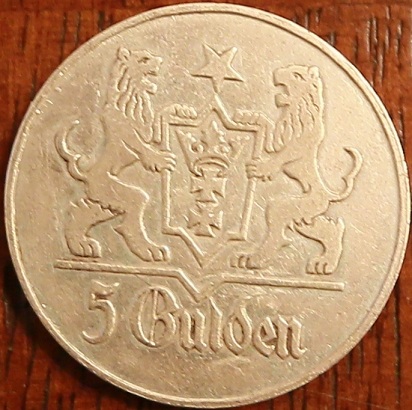
The coin is a struck counterfeit made from false engraved dies. This appears to be executed in an eastern European style by artists who copy coins from photographs and do not use any mechanical or digital means of image transfer. This school normally manufactures ancient coins which do have these kinds of variations but for hubbed coins - that no longer occurs.
There is ZERO chance the coin in the photos is original. The question is why.
The best place to view an original is by going to one of the websites like Heritage and finding a high grade example of an original and then reviewing the coins side by side on the computer screen. In this case I found a high grade MS-63 slabbed by PCGS on the Heritage web site archive. That took under 1 minute.
Here is the coin:
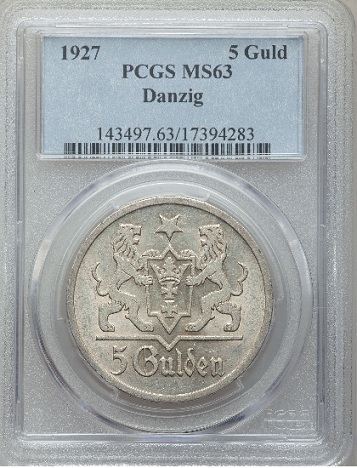
The counterfeit version of this coin is remarkable because of the nature of the errors that are actually present in the dies. They are far from insignificant. I will not review both dies here but for those interested there is an entirely missing window on the other side. That is a rare omission so I chose this side because it is more typical of this school of forgery and the errors they typically produce.
The pictures are reduced here, but at home I am using a much enlarged pair of photos to compare. Roughly 1/4 of the coin is visible at one time on the screen when set side by side.
This is the upper left quadrant of the counterfeit. You need to imagine it much larger.
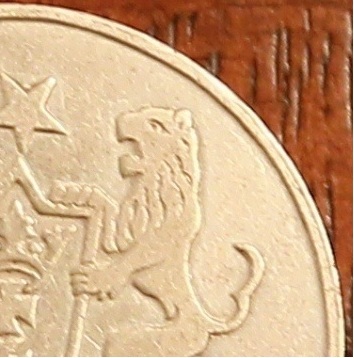
Now compare that to the same quadrant on the PCGS coin.
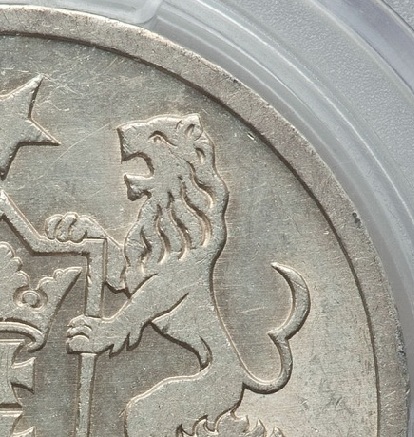
Now look at the lion's wrist area resting on the shield. On the forgery the line forming the top of the arm passes the corner of the shield a significant distance from the corner at a low angle but on the original it is MUCH closer to the corner and is far steeper.
On a hubbed coin this is enough proof to establish a forgery beyond all doubt. But I will continue.
Then count the number of lines on the Lion's right paw. The one holding the top of the shield. On the forgery the third finger nearest the "thumb" is outlined on both sides but on the original it is not outlined there past the knuckle. On the original it looks far more like the edge of a finger as it appears on a human hand.
The left paw is no better. The lines dividing the fingers are entirely different. The original displays tapering curves with the top dividing line clearly longer and heavier than the lower. On the forgery they are of equal thickness along their entire length, the counterfeit lines are less curved and they are almost perfectly identical in length.
The outline of the left paw including the hair hanging down is shown is substantially different (cruder) on the counterfeit than it is on the original.
I could of course go on and on but you get the picture. When you compare pictures closely using split screen there are DOZENS of similar errors. I think I counted 20 on this side alone without spending more than 5 minutes.
Writing up the opinion with proof takes ten times as long as spotting the problem.
What I am outlining is a process of "due diligence" as I interpret it. A collector should do exactly what I have just demonstrated before EVER buying a coin from anyone -
ebay especially. The operative policy of
ebay is "Let the buyer beware". That policy is a good one. All collectors should avail themselves of the technology and information available on the internet as use it appropriately.
If that happened about 99% of the forgery on
ebay would be self evident.
I am not saying any of this to toot my own horn - anyone can do what I have done here by just employing measurement techniques and information that I have already passed on.
When I learned the business we used pictures and drafting implements to check. It was far slower but now the capability is within the grasp of EVERY SINGLE one of you.









 Posted 03/03/2013 01:23 am