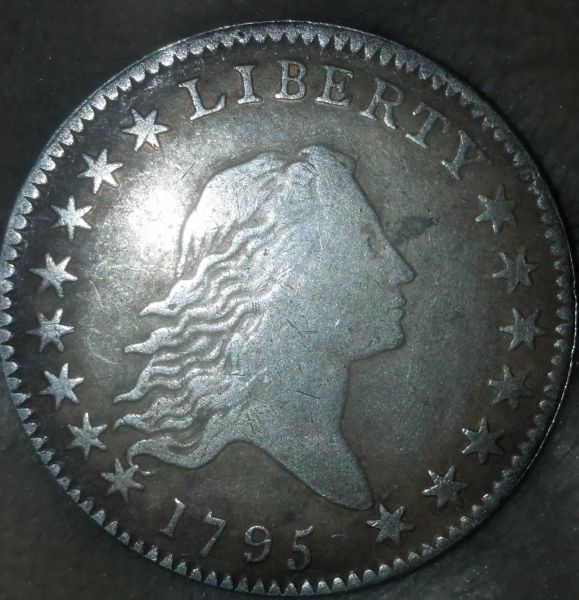
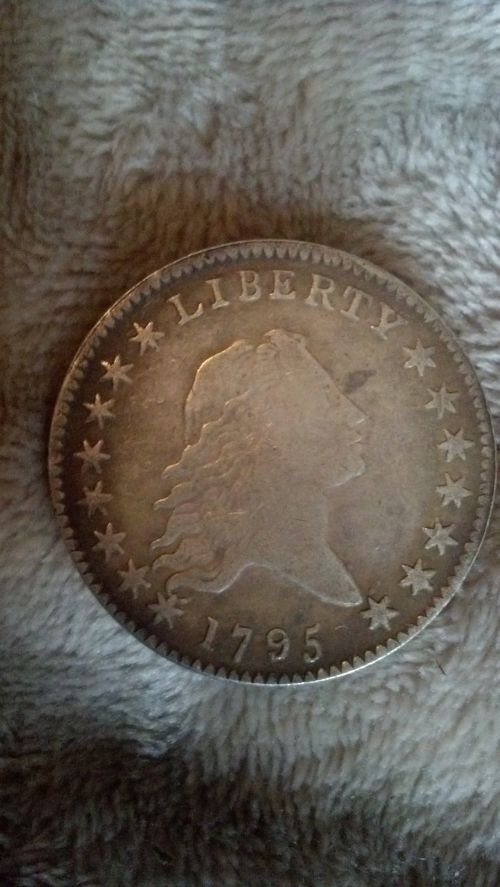
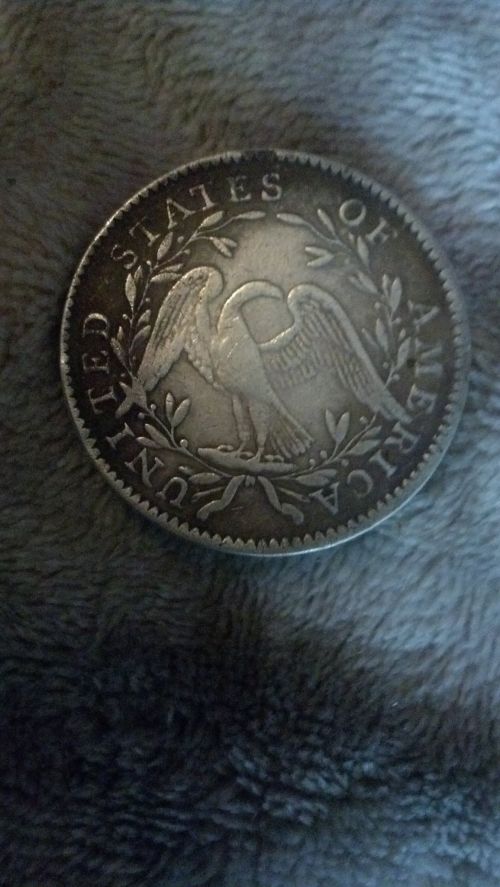
The apparent granularity of the bust would normally worry me about the coin's authenticity, but O-119 has idiosyncrasies - the aforementioned die defects, plus the gouge from the E to the wing - which one wouldn't expect on a counterfeit. And had they taken a casting of an existing coin, I wouldn't expect the obverse lettering and stars to be so sharp.
So a good case is to be made for this as a genuine 1795 O-119. I can't quite bring myself to consider the level of detail at VF20, but it's very_darn_close. A
TPG (and this coin
must be slabbed if resale is in the cards) will probably look at the obverse and call it Details, Environmental Damage, but even so it's a very nice example of a very scarce variety.
In a reputable slab, I see this one fetching $1500 from the right auction venue.












 Posted 03/03/2013 2:08 pm


