









 Posted 03/18/2013 03:18 am


Dead easy to find if any half crown is .925 sterling silver, or .500 fine. They have different ring tones, the .925 sterling coin having a lower pitch.
Actually, the ring tone on my mobile has a slightly lower pitch than the .925 half crown. I am sure you wanted to know this!
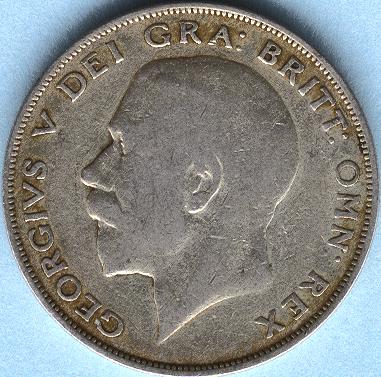
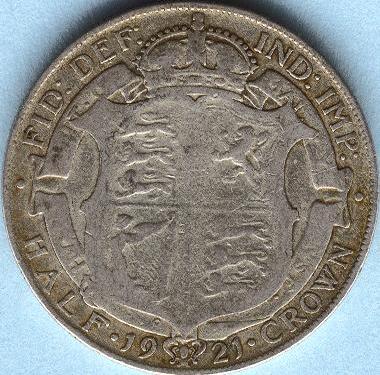
The 1921 half crown was alloyed .500 fine, with Ag 50% ,Cu40%, Ni 10%. Basically, a standard copper nickel alloy, which was then alloyed 50-50 with pure silver. As it turned out, the British silver coins of 1920-22 developed an ugly yellow tarnish in circulation, and The Royal Mint was not happy with them.
They solved the tarnish problem by substituting half of the nickel with zinc, producing what they termed a 'quaternary' alloy. The blanks had to be blanched in acid, then rinsed, before striking. That leached some of the copper, nickel and zinc out of the surface.
The coins gained surface enrichment when struck, because the acid treated surface was a little soft and spongy, with the removal of the non silver metals. Also made them easier to strike, thus extending die life.
All 500 fine silver coins after 1922 of Great Britain and her Commonwealth Countries used quaternary alloy, until the withdrawal of silver coins from circulation.
Actually, the ring tone on my mobile has a slightly lower pitch than the .925 half crown. I am sure you wanted to know this!
The 1921 half crown was alloyed .500 fine, with Ag 50% ,Cu40%, Ni 10%. Basically, a standard copper nickel alloy, which was then alloyed 50-50 with pure silver. As it turned out, the British silver coins of 1920-22 developed an ugly yellow tarnish in circulation, and The Royal Mint was not happy with them.
They solved the tarnish problem by substituting half of the nickel with zinc, producing what they termed a 'quaternary' alloy. The blanks had to be blanched in acid, then rinsed, before striking. That leached some of the copper, nickel and zinc out of the surface.
The coins gained surface enrichment when struck, because the acid treated surface was a little soft and spongy, with the removal of the non silver metals. Also made them easier to strike, thus extending die life.
All 500 fine silver coins after 1922 of Great Britain and her Commonwealth Countries used quaternary alloy, until the withdrawal of silver coins from circulation.


