| Author |
 Replies: 40 / Views: 10,054 Replies: 40 / Views: 10,054 |
|
Pillar of the Community
Australia
1874 Posts |
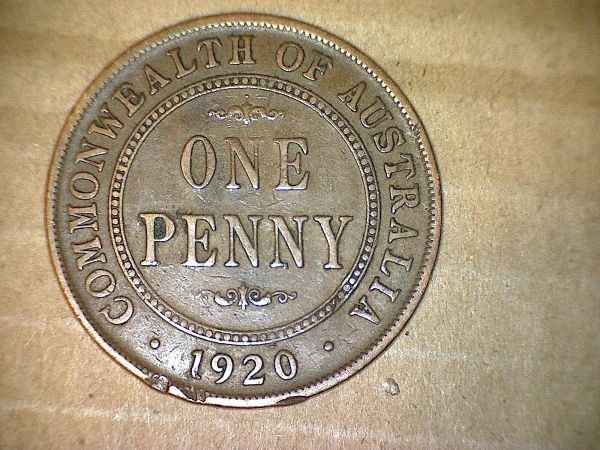
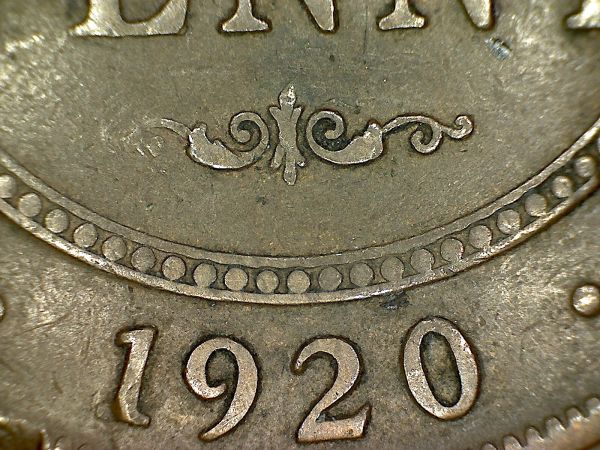
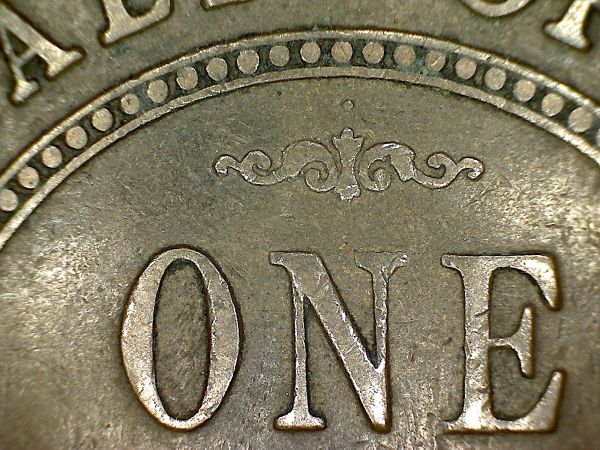
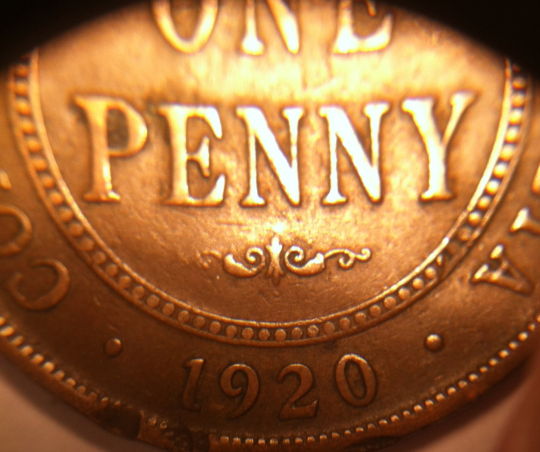
I was at an auction and I think I found a 1920 Double Dot Penny. Can you confirm this for me? 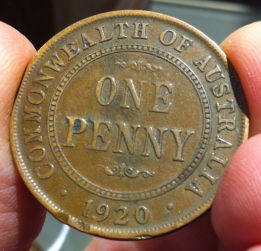 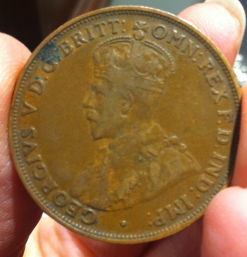 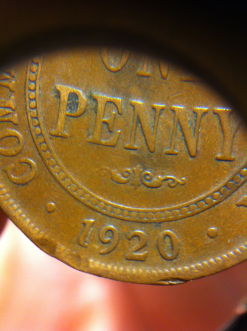 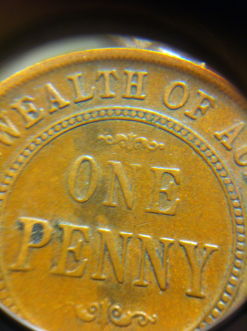 Sorry the pictures are not great but all I had was a phone. |
|
|
|
Pillar of the Community
Australia
1046 Posts |
Yep,double dot,seems to be a lot around at the moment.Obviously the poor rim slashes its value but still a good find.
|
|
Pillar of the Community
Australia
852 Posts |
I agree, it has a dot visible over the top and I think I can make out die clash marks between the NN. Easiest way to spot them is a die defect above the W (it is like an accent mark).
|
|
Pillar of the Community
 Australia
1874 Posts |
Hi Basil and nealeffendi thanks for your help, what do you think its value is, I need to place a bid on the lot so I need a rough estimate.
Edited by flippy
08/03/2013 01:22 am
|
|
Pillar of the Community
Australia
852 Posts |
They go for around $20-35 on ebay in average circulated condition (I've purchased a few dozen that way and only better than average go for $50 and up). This coin has a few problems, both sides have some dark patches and the rims are dinged. So a bargain under $10, OK at $15 and at $20 I wouldn't care either way if I won the lot. Remember to allow for the Auction commission. The Double Dot is barely scarce, Melbourne Mint struck them in the first month of striking the 1920 pennies and they struck a large number of coins before retiring this working die. |
|
Pillar of the Community
Australia
1874 Posts |
Thanks for your help nealeffendi, Hopefully I will win the lot.
|
|
Pillar of the Community
Australia
2180 Posts |
Quote:
The Double Dot is barely scarce, Melbourne Mint struck them in the first month of striking the 1920 pennies and they struck a large number of coins before retiring this working die Where did you find that out? And have you had any luck with a 1920 London die no dots yet? |
|
Pillar of the Community
Australia
852 Posts |
Mr T Melbourne began the second striking of pennies on 7/9/1920 (according to Sharples). On the 9/11/1920 at the Numismatic society of Victoria W.A. Hall exhibited seven different 1920 pennies dated 1920. They were No Dot,3 types of Dot Under, the Dot over Top and the Double Dot. They were all most likely FBL as the lettering is described as similar to the type on the Imperial die of 1919. Note that the Dot Above was not exhibited, so they had not received any yet from Sydney and it may demonstrate that Melbourne didn't test strike any Dot Overs (otherwise Hall would have had one put aside). As for the long die life I can only surmise that by how many are offered for sale on sites like ebay, how frequently I find them when I'm lucky enough to find batches that haven't been cherry picked and because the coin can be found with no spur, spur, double spur and triple spur. As for the No Dot English, lets just say I have seen the sales reports and/or images of at least 6 Dot Above English (plus own a few more) and I own the Dot Below English in the hundreds, but the No Dot not only eludes me but every image that I have seen posted (even on the Museum of Victoria website) is of a Dot Below. It almost certainly does not exist. |
|
Pillar of the Community
Australia
2180 Posts |
Quote:
On the 9/11/1920 at the Numismatic society of Victoria W.A. Hall exhibited seven different 1920 pennies dated 1920. They were No Dot,3 types of Dot Under, the Dot over Top and the Double Dot. They were all most likely FBL as the lettering is described as similar to the type on the Imperial die of 1919.
Note that the Dot Above was not exhibited, so they had not received any yet from Sydney and it may demonstrate that Melbourne didn't test strike any Dot Overs (otherwise Hall would have had one put aside). Is that the same Numismatic Society of Victoria meeting mentioned by John Sharples in his Australian COins 1919 to 1924 article? Quote:
As for the No Dot English, lets just say I have seen the sales reports and/or images of at least 6 Dot Above English (plus own a few more) and I own the Dot Below English in the hundreds, but the No Dot not only eludes me but every image that I have seen posted (even on the Museum of Victoria website) is of a Dot Below. It almost certainly does not exist. I thought that might be the case. One less to worry about I guess. |
|
Pillar of the Community
Australia
852 Posts |
Mr T
Yes and No.
Sharples really messed up in that article (JNAA Vol 1 1985).
He cited the ANS meeting where Dr Andrews exhibited the dot above and a Melbourne struck Dot below. Sharples then went on to speculate about the 1919 Double Dot and the 1920 Double Dot and the 1920 Dot over Top as possibly struck in Sydney. Sharples then goes on to speculate that the .// and .// were struck in Sydney from the 3rd shipment of dies.
He really messed up because he didn't read Spinks Numismatic Circular thoroughly. He didn't read the entry for the November meeting of the NSV, he only read the earlier one where the 1919 penny was exhibited.
That bad research by a museum curator has probably thrown others off from finding out the history of the .// and the .//
I can understand why Sharples messed up, I'm a former research technician and the mantra of any government funded research body is Publish or Perish and they have to publish as much as possible in as many tranches as possible (there is even a term for that Least Publishable Unit).
AFAIK that exhibition by W. A. Hall of the Dot over Top is the only reference to that variety until Sharples in his 1985 article.
Even Phil Bird didn't list that variety in his 1985 varieties catalogue, so at least Sharples article had one important (re)discovery that helps current researchers.
|
|
Pillar of the Community
Australia
2180 Posts |
Oh I see.
So were W. A. Hall's 1920 pennies all struck in Melbourne? Did he work at the mint or something?
Where did you get access to the Spink Numismatic Circular too?
Thanks for the information anyway as I've been doing a bit of reading on the 1920 pennies lately and it's hardly a clear-cut thing.
|
|
Pillar of the Community
Australia
852 Posts |
W.A. Hall was a leading member of the NSV. Other members included the Deputy Mint Master (Le Souef) and there were a number of visits by members to the mint by invitation (so it was a close relationship, both Hall and Le Souef were on the provisional committee when the society formed in 1914, and the Chair was occupied by Dr Andrews).
I'm not 100% sure but W.A. Hall probably stands for William Alfred Hall (1859-1937) who was a prominent resident and a member of a number of societies in Victoria including the Historical Society.
I accessed Spinks at the Mitchell Library in Sydney
|
|
Pillar of the Community
Australia
2180 Posts |
Ah thanks, didn't even think of the state library.
And so does that mean the 1920 double dot was struck in Melbourne and the 1920 dot over top scroll was struck in Sydney?
|
|
Pillar of the Community
Australia
1874 Posts |
|
|
Pillar of the Community
Australia
852 Posts |
Mr T
Both the Double Dot and the Dot over the Top were Melbourne struck.
Flippy, what was the final cost?
I noticed that the lower dot is well struck up on your coin. Less than half of them are visible.
|
|
Pillar of the Community
Australia
852 Posts |
Mr T
Don't mistake the State Library for the Mitchell, they are next to each other in the same complex but the Mitchell closes earlier. Neither are lending libraries.
|
| |
Replies: 40 / Views: 10,054 |







 Posted 08/03/2013 12:34 am