| Author |
 Replies: 12 / Views: 1,438 Replies: 12 / Views: 1,438 |
|
|
Valued Member
United Kingdom
240 Posts |
Edited by stratocaster
06/11/2007 12:13 pm
|
|
|
|
Moderator
 United States
6563 Posts |
Yep! Nice Find!  |
|
Valued Member
 United Kingdom
240 Posts |
Do die cracks affect the value of a coin?
This one is anyway worth nothing, but generally speaking?
|
|
Moderator
United States
6563 Posts |
for US coins it can add a premium because there is a buyers market for them. as far as foreign goes it's possible but it's not in demand. |
|
Pillar of the Community
United States
5362 Posts |
Personally - I like die cracks...
They make great die identifiers before the die is retired. But many people do not like them. Some graders reduce the net grade - which I think is wrong.
|
|
Valued Member
United Kingdom
240 Posts |
This is the first coin with a die crack I find. But I feel it's more valuable since it unveils one more thing about its past and after all, abot history.
|
|
Valued Member
Italy
244 Posts |
Hi,
please could you explain what does it means "die crack" in relation to coins ?
Thanks Antonio.
|
|
Pillar of the Community
United States
5362 Posts |
When a steel die breaks - it usually starts as a small stress crack in the surface. This small hole in the die is transferred to the coin just like the designs on the die. So you can see the crack develop.
Most mints will change the die as soon as a major crack develops. They don't usually wait for big breaks. So cracks may not be all that common in SOME mint products.
|
|
Valued Member
Italy
244 Posts |
|
|
Moderator
 Australia
16964 Posts |
From the CCF glossary: die break
An area of a coin that is the result of a broken die. This may be triangular or other geometric shape. Dies are made of steel and they crack from use and then, if not removed from service, eventually break. When the die totally breaks apart, the resultant break will result in a full, or retained, Cud depending whether the broken piece falls from the die or not.
die crack
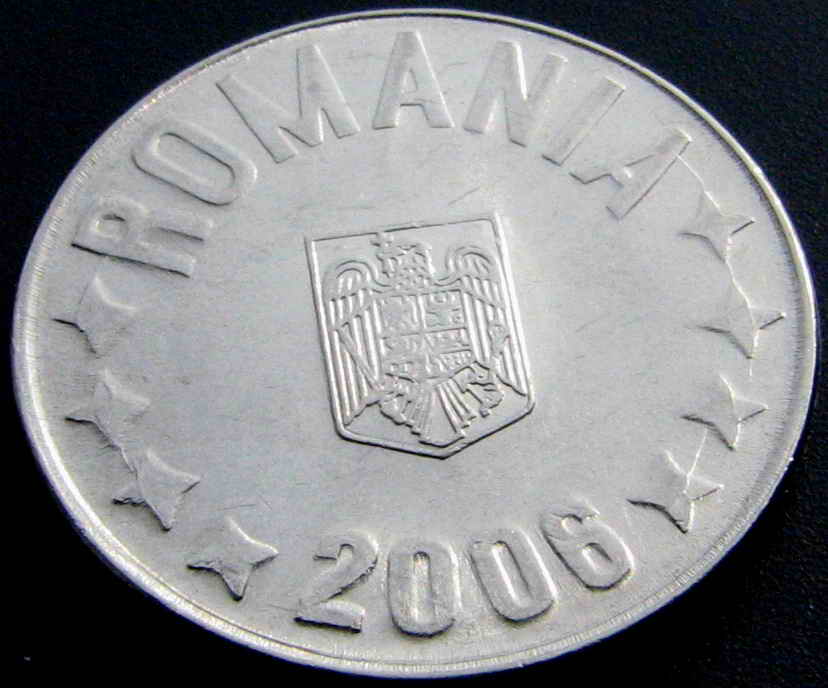
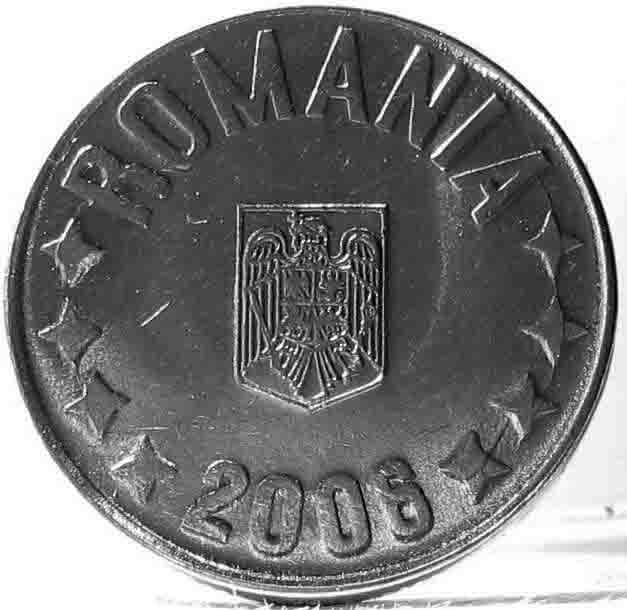
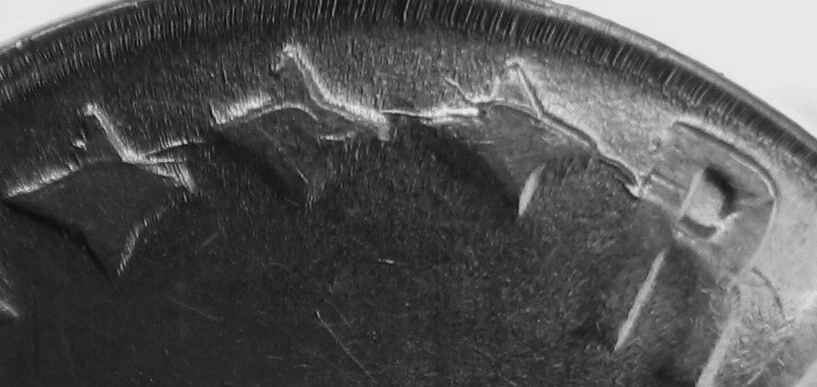
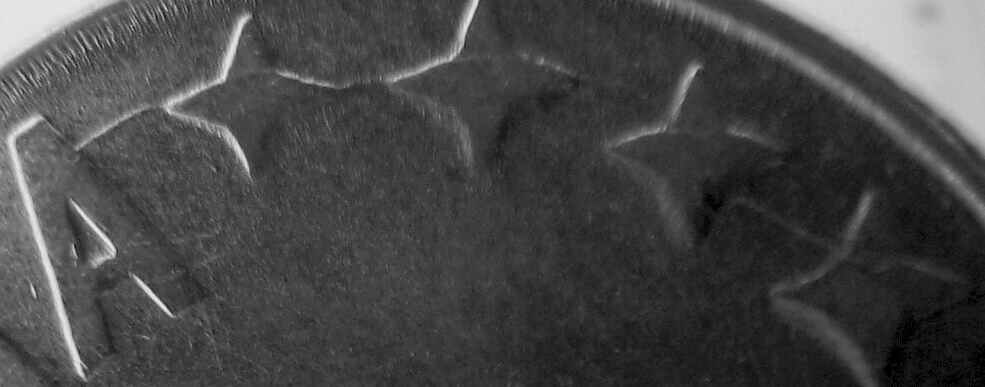
A raised, irregular line on a coin, ranging from very fine to very large, some quite irregular. These result when a hairline break occurs in a die.In this instance, the crack has formed in a weak spot on the die - the stars, The crack is the jagged line connecting the last A of ROMANIA and all the stars on the right hand side. That's quite a large crack - the die very probably broke shortly after this coin was made. These coins are made of nickel-plated steel, not the easiest substance to strike coins from - dies would wear and break quite rapidly, I would imagine. Don't say "infinitely" when you mean "very"; otherwise, you'll have no word left when you want to talk about something really infinite. - C. S. Lewis
|
|
Valued Member
United Kingdom
240 Posts |
There's also a crack connecting the left side stars to the first R from ROMANIA.
How many coins are usually struck with the same die before it breaks/cracks?
|
|
Pillar of the Community
United States
5362 Posts |
stratocaster You have asked the $64,000 question. Unfortunately only the mints know and they are not 100% forthcoming except in published studies. The last one I reasearched was the 1996 US 25 cent coin struck at Philadelphia. I identified 305 different die pairs from the die cracks that developed. (I did the study over a one year period by examining up to 25 rolls of new quarters per day in an attempt to see if it could be done using only two Federal Reserve Bank areas (Boston and New York). There were over 3,000 die pairs as I recall and the production went from 1 coin - a die broke on the FIRST strike to just under 500,000 coins for one prolific die pair. So there is a wide RANGE.
|
|
Valued Member
United Kingdom
240 Posts |
Thanks swamperbob  . That's what I wanted to know. the about maximum number of strucks a die can resist. Never thoughht it could be that big! half a million! |
| |
Replies: 12 / Views: 1,438 |
|









 Posted 06/11/2007 12:50 pm





