| Author |
 Replies: 10 / Views: 4,355 Replies: 10 / Views: 4,355 |
|
|
Valued Member
United Kingdom
240 Posts |
I know nothing about these coins, but I suppose they are from Lituania. I bought them for about 8US cents. I know they're in awful condition, but I still think it was a bargain since they look very old. Any information will be apreciated. I think this one is 1647 and it looks like silver, though it has that green copper-like corrosion 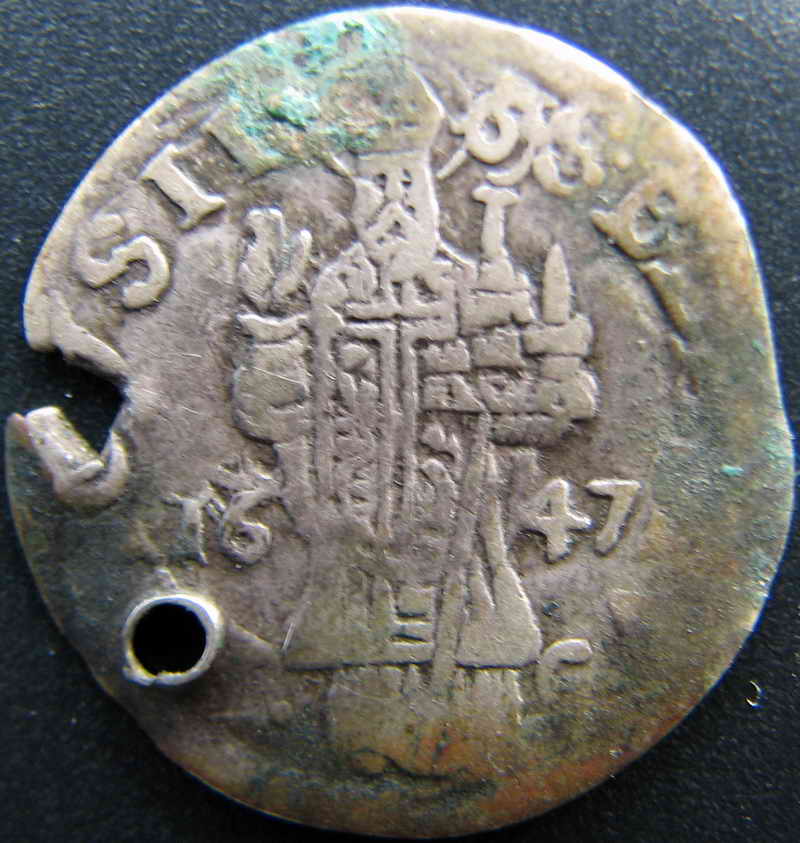 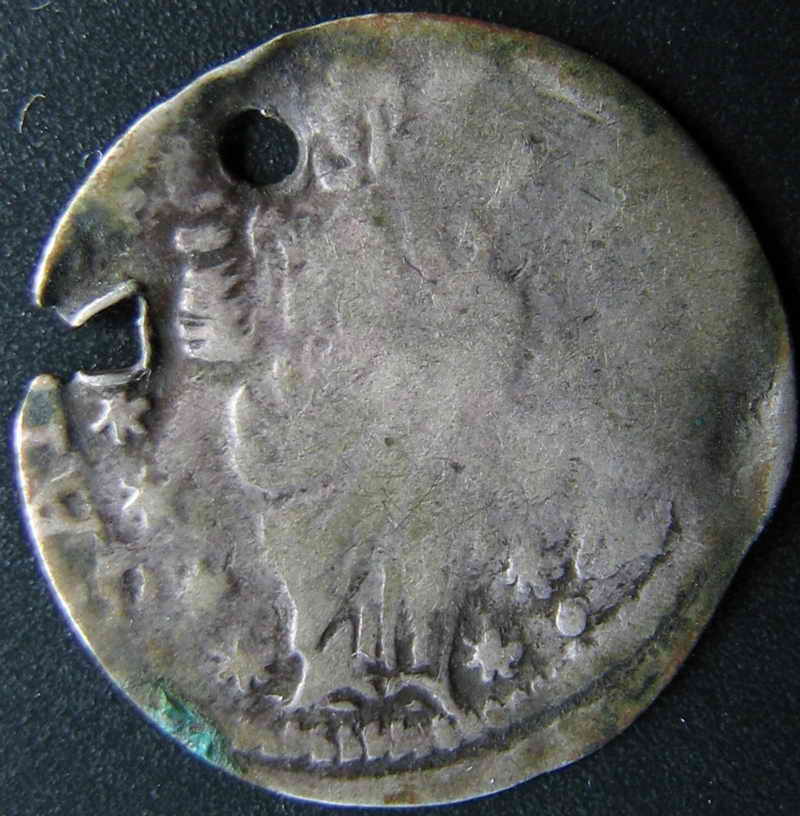 Could this be a solid? 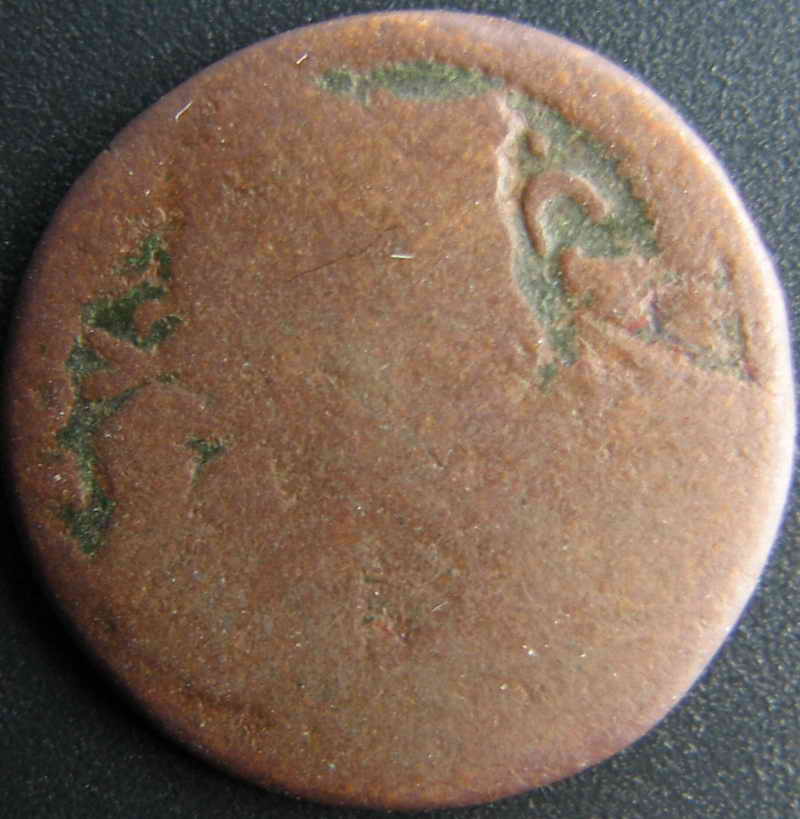 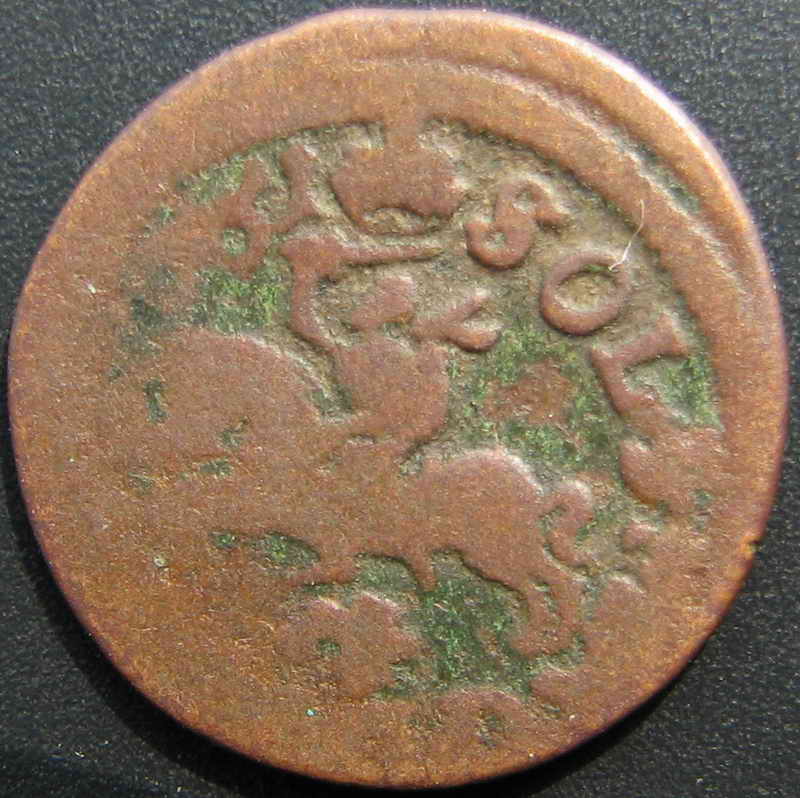 Edited by stratocaster
06/12/2007 2:42 pm
|
|
|
|
Valued Member
Poland
55 Posts |
|
|
Valued Member
 United Kingdom
240 Posts |
Forgot to mention that both coins are about 16-17mm in diameter.
|
|
Pillar of the Community
Egypt
3470 Posts |
8US cents is a good deal
Nice coins
|
|
Moderator
 Australia
17031 Posts |
Your first one isn't Lithuanian. It's from the tiny independent Republic of Ragusa, now known as Dubrovnik in what is now southern Croatia. The denomination was known as a denar or grosetto, and shows the local patron saint, St Blasius (the guy wearing a bishop's hat and holding a church building) on one side and Christ on the other. Unfortunately, the holes are drilled right through the name of the city, "RAGVSII". Listed in the 1600's Krause as KM# 5, CV $10 in VG condition. The composition is listed as "billon", or very low-grade silver - hence the greenish colour. Here's a similar one on the CoinArchives site, which sold for US$20 in Germany in 2006. The second one, however, certainly is Lithuanian, a copper schilling (solidus) of Johann Casimir, issued 1660-1666 - and yours is 1661, you can just see the last two numbers on the date just above the sword-holding arm of the mounted rider. You can also see the CA of Casimir's name on the other side, which is supposed to be a portrait of the king. KM# 50, CV $2.50 in VG condition. Don't say "infinitely" when you mean "very"; otherwise, you'll have no word left when you want to talk about something really infinite. - C. S. Lewis
Edited by Sap
06/13/2007 09:49 am
|
|
Pillar of the Community
Czech Republic
803 Posts |
|
|
Valued Member
United Kingdom
240 Posts |
Thanks a lot Sir Sapcyclopedia!I really apreciate your help! On the copper coin I now think I distinguish two letters "IO" to the left of the portrait. Could that be from "Ioan" "Ion" or something like this?  you seam to know the answers to all the questions! Thank you again! Edited by stratocaster
06/13/2007 09:05 am
|
|
Valued Member
United Kingdom
240 Posts |
One more question: Got a 1549 coin from Lithuania. The legend says: "LITVA*MONETA*MAGNI*DVCAT" Does that mean "Coin from the Grand Duchy of Lithuania" or "Grand Ducat Coin from Lithuania"? If it's not a "Grand ducat", than what is it? It looks like silver.
If you can't tell from these details, I shall post some pics.
|
|
Moderator
Australia
17031 Posts |
quote:
stratocaster asked:
On the copper coin I now think I distinguish two letters "IO" to the left of the portrait. Could that be from "Ioan" "Ion" or something like this?
Yes, that's what it should say. I haven't found a coin exactly like this one on the CoinArchives site - they're probably too cheap to sell as an individual coin in the major auctions the database sources it's information from. Still, the obverse should resemble this gold coin, with a legend something like "IOAN CAS REX". Don't say "infinitely" when you mean "very"; otherwise, you'll have no word left when you want to talk about something really infinite. - C. S. Lewis
|
|
Moderator
Australia
17031 Posts |
quote:
stratocaster asked:
Got a 1549 coin from Lithuania. The legend says: "LITVA*MONETA*MAGNI*DVCAT" Does that mean "Coin from the Grand Duchy of Lithuania" or "Grand Ducat Coin from Lithuania"?
The coin is probably supposed to read "MONETA MAGNI DVCAT LITVA" - money/coin of the Grand Duchy of Lithuania. My Krause books don't go back that far - the 1500's are a "black hole" in my knowledge. The only references I have are for British and Islamic coins. Posting pics might help. Or have a look through CoinArchives yourself - note that you'll probably need to use the German spelling of the country, "Litauen", since most of their old European coins are from German auctions. Here's a half-groschen I found from your date, with that legend. Don't say "infinitely" when you mean "very"; otherwise, you'll have no word left when you want to talk about something really infinite. - C. S. Lewis
Edited by Sap
06/13/2007 09:49 am
|
|
Valued Member
United Kingdom
240 Posts |
Thanks again Sap.The coin I have is the one you linked, so it's got to be a half groschen.
I looked on CoinArchives (thank you for this one too) and found loads of such coins. I carefully studied all of them and foun out a little difference. None of them is exactly like mine:
the legend states:"SIGIS AUG REX PO MAG DUX LI"
On mine, the legend says:"...MAG DUX L", so it's just L instead of LI. The legend is very clear and it's no doubt it's just an L.Wondering what this means. Different Mint?A simple variation?I shall post some pics soon.
|
| |
Replies: 10 / Views: 4,355 |
|




 Posted 06/12/2007 12:52 pm





