| Author |
 Replies: 42 / Views: 6,679 Replies: 42 / Views: 6,679 |
|
Valued Member
Canada
331 Posts |
I was just reading through the varieties section on KGVI 50 cent pieces in the new Charlton, and I came across this coin in my collection. I was wondering if anyone else thinks this is a Round Back 9 / Wide Date / Straight 4 / Blunt 5. The only example photo in the book also has 4/4, which I don't see here (or to be completely honest, in the closeup photo in Charlton). Thoughts? 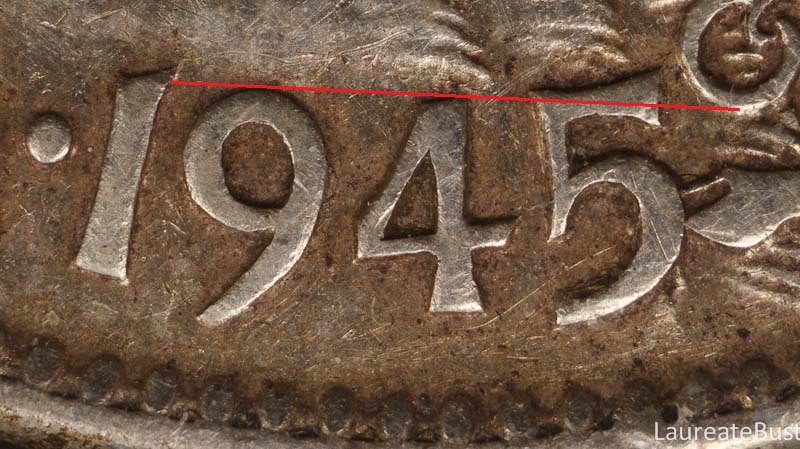 |
|
|
|
Bedrock of the Community
Canada
10743 Posts |
I have a couple of these, looks like a wide date, blunt 5 to me..
|
|
Valued Member
Canada
456 Posts |
This is certainly a wide date, blunt 5... I also have to question whether the 4/4 in Charltons 68th is not just Die Deterioration or the beginnings of Peeled Chrome Plating on the die... The Mint figures say there were 42 reverse dies used in 1945 (the last two date digits punched individually on each) and this may be another die, although the spacing of the 4 and 5 look identical to the pictures, but the 9 has more of a flat-back appearance.. Edited by pginrh
10/18/2013 07:33 am
|
|
Valued Member
Canada
456 Posts |
I examined the five examples that I have (all EF to MS) and they are flatback 9's although, in a couple of them, buildup behind the 9 makes it almost look rounded. Two have the start of Die Deterioration of the 4. The surest way to tell if this is the same as the Charlton example is to look at the point of the 4, and see if there are several toolmarks emanating from the point in a due north direction... it appears from the picture that this is the case although somewhat obscured by the horizontal reference line... |
|
Pillar of the Community
Canada
2302 Posts |
I checked mine (12) they are all flatback 9's. Wear creates an illusion of a round back 9.
|
|
Valued Member
Canada
456 Posts |
Thanks Mike.... I had always considered it flat-back... don't know how it made it into the 68th as round-back.
|
|
Valued Member
 Canada
331 Posts |
Thanks for the great replies. I went back and forth over whether the nine was round or flat backed. I found some of the photos declared as round backed in Charlton looked a little flat and vice versa. In the end I was swayed by the fact that the only blunt five variety listed was round backed. I'll post another clearer photo of the date, sans line, when I'm able. This coin is F-VF.
|
|
Valued Member
Canada
456 Posts |
It was my coins that were photographed for the 68th Variety section and I must have selected a Blunt 5 that was ambiguous, because I had provided the flat-back information for this variety. My fault, since I did proof read the section and must have missed the reclassification.
|
|
Valued Member
Canada
331 Posts |
Whoops, double post. I blame my phone! It's fun exploring this series, and it's one I barely know. Loving the new Charlton variety section on these. In fact, I picked up an AU 1940 with some nice obverse die cracks yesterday. Here is a slightly better photo of the '45 with the red line omitted: 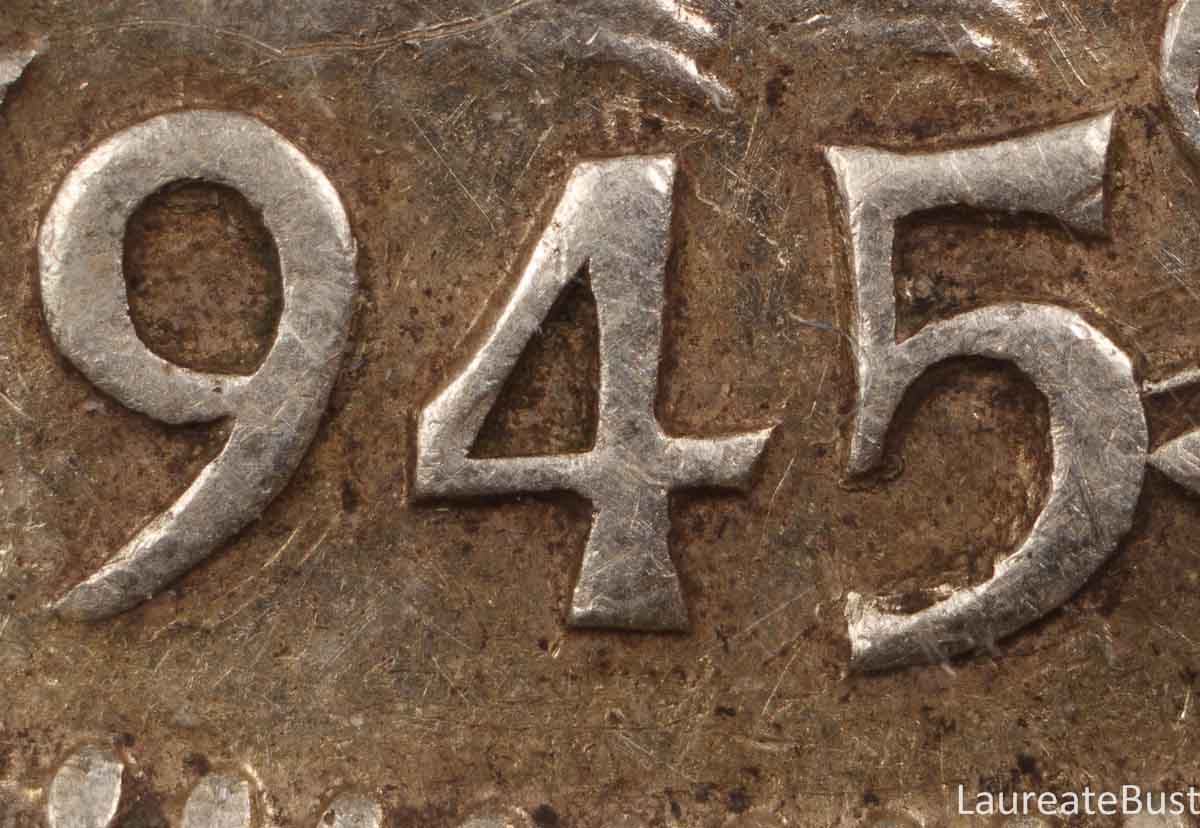 There do appear to be three vertical lines pointing north from the top of the 4. So pginrh, this is a sign of Die Deterioration? Is the 4/4 variety a more advanced die state for this reverse? So many questions! Edited by LaureateBust
10/19/2013 6:23 pm
|
|
Valued Member
Canada
456 Posts |
The three lines at the top of the 4 are toolmarks (file) from finishing off the die preparation before using it to strike coins. The 4 suffered Die Deterioration Doubling after the die had been used for a while as the sharp edges on the die around the four broke down and defintion was lost (turns fuzzy looking around the edges). The Charlton coin is a later die state than yours, but it has undergone less wear though circulation (about EF to AU). If you provide a picture of the 1940 Obverse Die Cracks, I can see if it is a known variety (ie. if Zoell catalogurd it). Edited by pginrh
10/19/2013 7:36 pm
|
|
Valued Member
Canada
331 Posts |
|
|
Valued Member
Canada
456 Posts |
Nice Pictures. Zoell listed 11 1940 Die Crack Obverse varieties across his three Minor variety catalogues and yours is not one. I'm still looking for 4 of the ones that Zoell listed. I have found an additional 12 1940 Die Crack coins that Zoell didn't list and your coin matches one of those.
Edited by pginrh
10/20/2013 1:35 pm
|
|
Valued Member
Canada
331 Posts |
Very interesting! I'm looking at getting my hands on some original Zoell books. Is any of your work on KGVI 50 cent pieces published, aside from the new Charlton varieties section?
|
|
Valued Member
Canada
456 Posts |
Nothing published, but many of the coins showed up in Charltons 61st. Best of luck in trying to get the Zoell Catalogues, they are getting pretty pricey...The ones to really go after are the 4th Major and the 3rd and 5th Minor... I do have an extra copy of the 5th Minor.
|
|
Pillar of the Community
Canada
2845 Posts |
Moving this thread out from the dusty archives, looking forward to adding to it in the near future....
Considering the popularity of blunt 5 versus pointed 5 in other denomination, not often mentioned is the 1945 50c which has the two different varieties as well
|
|
Pillar of the Community
Canada
2845 Posts |
1945s - says 2014 Charlton Vol 1, the Pointed 5 is more common than the Blunt 5 type. I also notice a photo of very widest of wide date where the pointed 5 actually touches the ring, looks like really cool variety (Zoell J446n). I have a Blunt 5 variety similar to the one posted upthread, wide date, flat back 9. However this one has me a little bit stumped. Doubling of the 5 but what of the 4? Perhaps chrome peeling in the center portion? It's proving extremely difficult to photograph. 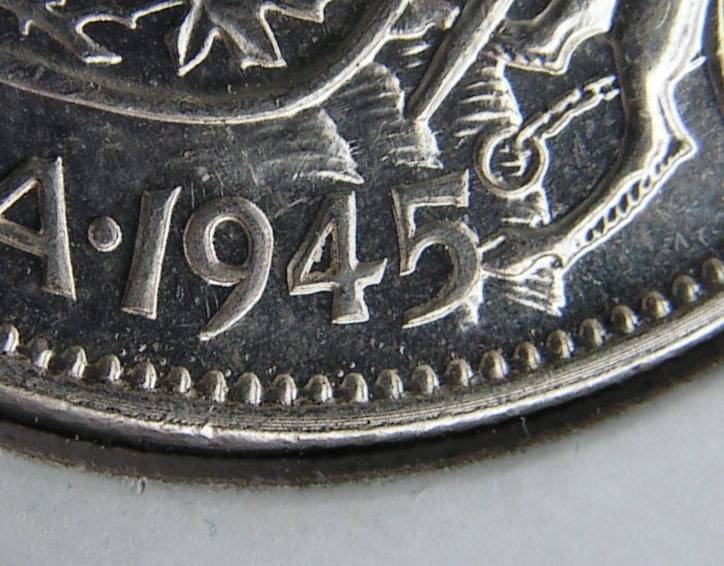 Closer view 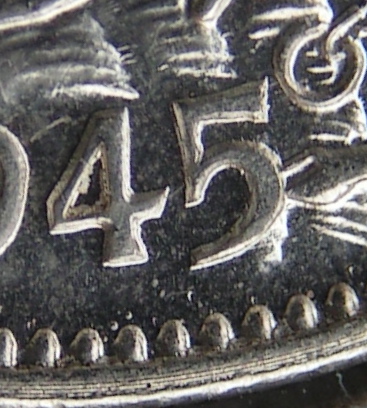 And again, different lighting/magnification 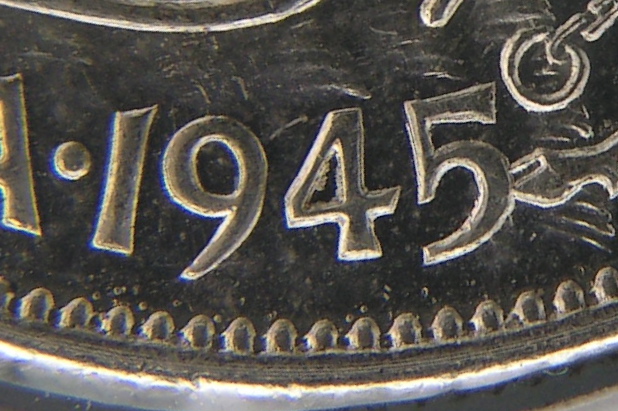 Pointed 5, Narrow Date for comparison only (The upper tip of the 5 is much further away from the ring) -- Why is it these well worn coins seem to almost smile at the camera!  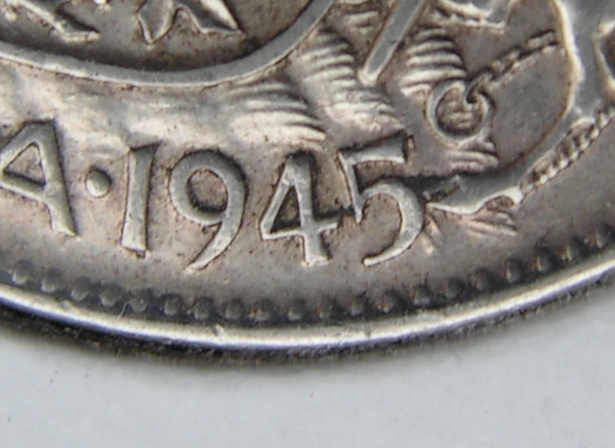 Edited by wildflowerAB
02/01/2016 5:29 pm
|
| |
Replies: 42 / Views: 6,679 |









 Posted 10/18/2013 07:31 am


