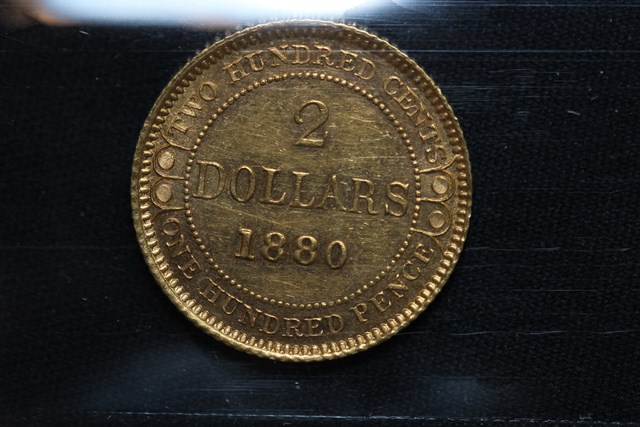
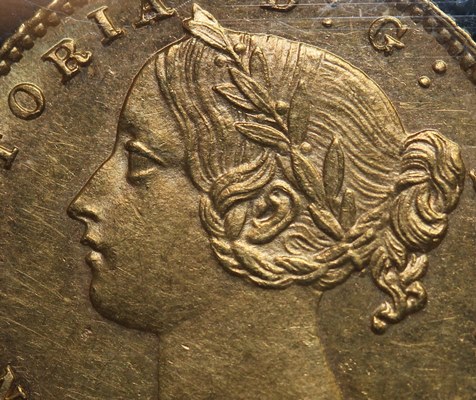
| Author |
 Replies: 65 / Views: 7,341 Replies: 65 / Views: 7,341 |
|
|
|
Valued Member
83 Posts |
I agree with you that "bag marks" are an imperfection that has been accepted with respect to lower MS assignation - and that these marks can occur during transportation of coin outside the mint. But would offer that the type of "hairlines" exhibited from "coin rub" are distinguishable from typical hairlining caused by improper handling in circulation - often, and unfortunately, caused by someone thinking that it would be a good idea to "shine" up that coin with a cloth. Speaking of being rubbed the wrong way  You continue to misrepresent my quotes & opinions. Re: Quote:
Although I disagree that every coin professionally graded needs to be knocked down 4 grades. Where did I make such suggestion  |
|
Pillar of the Community
 Canada
1461 Posts |
No rub intended...Obviously the coin above was rubbed (more than 40 years ago in this case). The question becomes is that an attribute (more so how much of it) that is acceptable in lower grade MS coins. This is where I disagree with posters claiming that ICCS is tougher on coins than NGC or PCGS. PCGS being the strictest on hairlines. With respect to newbies and grading. That works both ways. Some dealers constantly try to overgrade raw coins for the purpose of sales (one we often discuss here). I guarantee you that more people get burned on raw coins than buying graded coins. Professional grading also opens up the market to many other people and not only seasoned professionals. And that's a good thing for the industry as a whole.
Edited by TheCoinHunter
10/25/2013 10:10 pm
|
|
Pillar of the Community
Canada
2495 Posts |
Professional grading service is a very good thing for the hobby.
In regards to hairlines, I believe both ICCS and PCGS are equally strict in grading hairlines however they go about it in completely different ways.
Say for example you have a technical 'ms63' coin with obvious hairlines.
ICCS will most likely grade this coin 'au55' without any mention of hairlines, whereas PCGS will grade the coin as 'Unc details'.
Take your pick.
Edited by doubleeagle59
10/25/2013 10:19 pm
|
|
Pillar of the Community
 Canada
9904 Posts |
I'll take "Unc details".
A coin with no wear Is MS (uncirculated).
No reason for "net" grading,indicate a problem coin if so and let the market decide the value.
"Dipping" is not considered cleaning...
-from PCGS website
|
|
Pillar of the Community
Canada
2495 Posts |
DBM...I totally agree with you.
|
|
Pillar of the Community
Canada
1461 Posts |
Agreed DBM. Although looking at some resent ICCS submissions that have come back at MS64 you wouldn't think so. I think ANACS is best at avoiding net grading on the most part (hence why it's often criticized). Maybe because it actually follows the ANA grade guide. |
|
Pillar of the Community
Canada
1461 Posts |
Edited by TheCoinHunter
10/28/2013 8:48 pm
|
|
Pillar of the Community
1844 Posts |
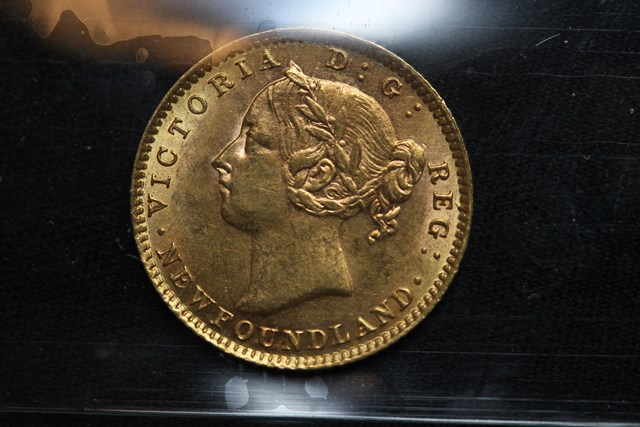
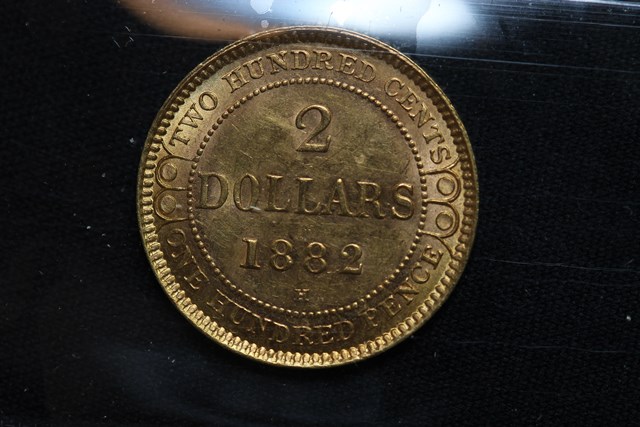
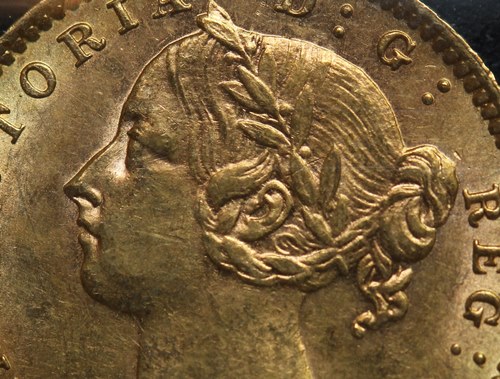
I know this is going to sound crazy but because the 1882 has much nicer fields I would not be surprised if ICCS gave it AU 50.....Although in my opinion it should only be VF 30 ...... So that said I will call ICCS at EF 40
|
|
Valued Member
83 Posts |
Re:
Quote:
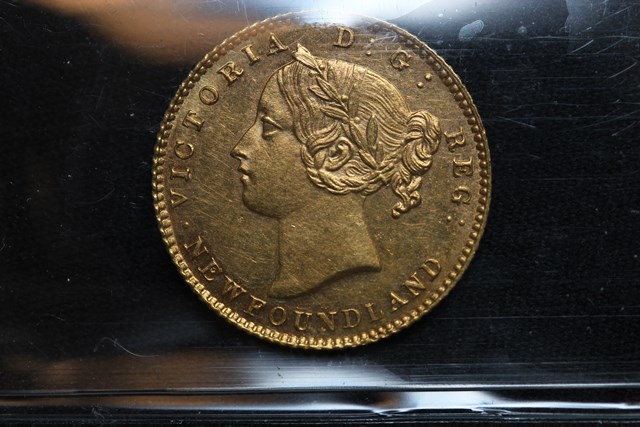
" this coin was penalized at a whopping AU55 (without comments). So the argument continues... "
I don't think your coin was "penalized" by the grader - it was simply assigned the proper grade.
And I don't agree with your assertion that there is an "argument" here - it is fact that proper grading includes more than just technical details - it is a combination of details, surface preservation, presence of lustre, and eye-appeal - and just because you seem to not want to accept that, doesn't mean that it is somehow in doubt
Also, you seem to be confusing the term "net grading", characterizing this as (what you feel to be improperly) the taking into account of the combination of factors beyond just technical detail.
My understanding is that net grading refers to the combining of reverse grade and obverse grade to achieve net grade - most graders assign 60% weight or more to the obverse portrait side.
Re your 1882 - even though it appears to have clearer fields, this coin has far more wear on obverse portrait than the 1880 does (which exhibits sharp MS details), and should not grade as high as it did - I would venture AU-50 maximum, maybe even only EF-45.
|
|
Pillar of the Community
Canada
1461 Posts |
Scott. I appreciate your desire to not be the rubbed the wrong way, but in the future you may want to present factual information to avoid it. Your understanding on "net grading" is only partially correct. The term is used in both cases. A higher grade coin technically that is brought down in grade due to some undesirable characteristic (some times the other way) and/or the definition you provided in which the obv. and rev. of the coin have some disparity. For the lack of a better word, and if you want the exact definitions, "Google it". The context of it's use in this thread (by me and others), was the prior. On the point of "penalized", I would consider "net grading" (now that we figured out the definition) a form of grade penalty. As mentioned in this thread (not only be me, read above), some of us would prefer to have a coin graded predominantly on wear with certain key imperfections noted aside. You yourself brought up ANA's guidelines with respect to grading. I posted this before, but let me refresh your memory on ANA's definition of an MS60 grade. +++DEFINITION.."A coin graded MS-60 will be unattractive, dull, or washed-out mint luster may mark this coin. There may be many large detracting contact marks, or damage spots, but no trace of circulation wear. There could be a heavy concentration of hairlines, or unattractive large areas of scuff marks. Rim nicks may be present, and eye appeal is very poor. Copper coins may be dark, dull, and spotted."++++. I am not sure which part of this definition the 1880 coin pictured in this thread does not fall into. So it seems obvious that ICCS uses their own criteria to grade problem coins. Let's rephrase "argument" to "discussion" for your benefit. The discussion is about what criteria that should be used by TPGs to stick a coin in a particular grade. There are some coins that are graded fairly consistently across all major TPGs, however it seems coins with imperfections are all over the map and graded by different definitions by each major TPG. No offense Scott, but I'll take a TPGs grade opinion (even an ICCS grade that was arrived at via means I don't necessarily agree with) as a "base" in the market place over an opinion. As the online coin sales grow, TPGs will play even a larger role in coin sales. I know you want to pull all your coins out of holders, however in most cases in the online market and even at shows, that's a loosing proposition. Some dealers claim they get more money either selling raw coins or cracking coins and and selling them raw, and although that may be true in some cases (either through a buyer gamble, bad pictures or dealers that misrepresent grades), it's generally not the case for better quality coins. Although I'd like to be holding an MS63 problem free 1880 coin in my hand (cause I need a vacation). I'm guessing whether the 1880 coin was graded by ANACS at "MS60 Hairlines", ICCS "AU55" or NGC/PCGS "UNC Hairlines", the final selling price will likely be the same. Without giving the grade away just yet, I will say this. I'm confident that the 1882H coin would be graded lower by NGC than the grade ICCS assigned it. |
|
Valued Member
83 Posts |

TCH - Thanks for being magnanimous enough to allow that I may be "partially correct".
But once again your rub that I'm not factually correct, is not correct.
I agree there are two definitions of the term "net grading" as used in relation to coins.
But you are still incorrect in the use of the term in relations to your argument / "discussion" of the gold coins.
Complaining in this case that ICCS gave you a lower grade than you think the coin in your opinion deserved WAS NOT a result of "net grading".
"Net grading" (as used by 3rd party graders), assigns a grade to coins with good technical details to them, but that otherwise have some type of "damage" (like cleaning or corrosion), which has greatly reduced their value as collectibles.
In the gold coin in question, there was no "damage", just circulation wear - this did not result in ICCS "penalizing" you, or "net grading" you - but only in applying proper accepted grading standards and assigning the warranted AU grade, rather than the MS you "wished" for.
|
|
Pillar of the Community
Canada
1461 Posts |
Look, we can go in circles. Read your own posts. Your quote was "My understanding is that net grading refers to the combining of reverse grade and obverse grade to achieve net grade - most graders assign 60% weight or more to the obverse portrait side." How is that not only being partially correct? You left out the primary part of the definition. The "net grade" in the contyext fo this thread had nothing to do with differences between obv/rev. Secondly, you continue to avoid the ANA definition of MS60 in place of "Scott's 101 of grading". Last but not least, IMO the only reason why the coin was brought down in grade is due to a clean/wipe which caused the hairlines and the lack of visible fields. There is no "technical" wear on this coin that should prevent it from being graded an MS60. Once you see the grade of the 1882H coin, you'll understand my point. |
|
Valued Member
83 Posts |
|
|
Pillar of the Community
Canada
1461 Posts |
You already know the grade for the 1880 (AU55). The 1882H is ICCS graded MS62. Is this just a weak Birmingham strike? 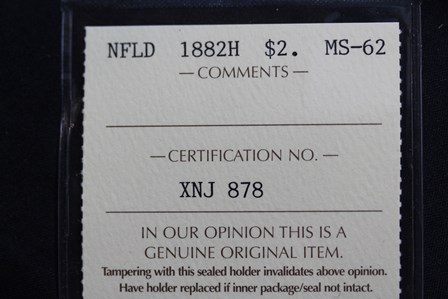 Edited by TheCoinHunter
10/30/2013 11:45 am
|
|
Pillar of the Community
1844 Posts |
let me just say that ICCS was sleeping on the job for the 1882... There is no way that coins is even AU ... Lets be real... I can show you a NF gold ( I have the whole set ) thet is way nicer with a grade that makes me shake..Sorry coin hunter but PLEASE dont ever remove it from that obvious overgraded note....... You will never get that grade from any other service...
|
| |
Replies: 65 / Views: 7,341 |








 First Page


 Posted 10/25/2013 10:02 pm