| Author |
 Replies: 3,989 / Views: 392,558 Replies: 3,989 / Views: 392,558 |
|
|
|
Bedrock of the Community
United States
11951 Posts |
Thanks for the nice ... adjustment to the rules Jbuck  Sometimes I will have two coins I really like .. and was hard to make a choice. I hope it does not get abused, I promise I won't post 10 coins for the same year, unless it is a set. I do have a plan for 1909 for I think six coins .. it will be a set .. I promise. I am not sure what year I will have problems finding coins to post. I still don't know what coin I will post for 1941 .. I am trying to get pictures ahead, are other members doing the same things? When looking though coins today, I saw my Henning nickel .. darn ... why didn't I post that ...  |
|
Pillar of the Community
United States
1234 Posts |
The revised rules are going to make it more interesting for some of us that will be going days/weeks when we have nothing to post. Let's not abuse them but please yes more to drool over Jan 8 - 1940 Jan 18 - 1930 Jan 28 - 1920 Feb 7 - 1910 Feb 17 - 1900 Feb 27 - 1890 Quote:
I am trying to get pictures ahead, are other members doing the same things? Always think of the past as something yet to come. I think the dates are right, close enough at least. I only have a few hours to dig out my 1941's I hope I can show a nice shot of war time zinc of a different sort, and maybe some more steel. |
|
Pillar of the Community
Canada
2805 Posts |
 Italy, 10 centesimi, 1942 This came up in the 20-cent bin and I had to have it. Germany's cheap wartime coins were zinc... France's cheap wartime coins were zinc (and aluminum)... but Italy kept it classy with aluminum-bronze and nickel. The fasces popped up on Italian coins more and more leading up to 1945... and after fascist Italy's defeat, we saw the fasces less and less, although it is still a symbol of power and unity - most notably it dropped right off the American dime and was replaced with a similarly-bound torch. The symbol still has much more legitimacy than the swastika, though, and it survives through plenty of pre- (and post-) war relics. Can you spot the fasces here?  The shield overtop of the fasces is the shield of the House of Savoy, although in 1942 Mussolini had already allied with Nazi Germany in World War II against the wishes of King Victor Emmanuel III, so if we are going by political reality the fasces should be covering up the shield. In 1936, Victor assumed the crown of Ethiopia, and in 1939 Italy invaded Albania, which met a similar fate, causing King Zog of Albania to flee. Popular support for these actions were extremely low abroad, and even in Italy the invasion of Albania was considered an unjustified action against a weaker neighbour. In 1943, nearly everyone got fed up with Mussolini and he was overthrown in one day. The King was given his full constitutional power back, and renounced both the crowns of Ethiopia and Albania in favour of those countries' legitimate monarchs: but the damage was done to his popularity and Italy became a Republic in 1946. Another fun fact: Victor Emmanuel III had a collection of over 100,000 coins! They were reportedly from Roman times to the present day - mostly Italian. Did he have any interest in coins from the two countries he assumed the crown of? After he was kicked out, all but the coins issued by his family (the House of Savoy) were donated to the National Museum of Rome. Here's an article about his collection: http://www.muenzgeschichte.ch/downl...emanuele.pdfEdited by nalaberong
01/06/2014 10:32 pm
|
|
Pillar of the Community
 United States
1908 Posts |
I love these fascinating side stories even tho my stage 3 brain will never retain all that information. Do we have a future history professor in the making among us?  I'm just going to drop a War Nickel in here before the clock runs out . . . 1942P USA five cents; mintage = 57.9 mil. : 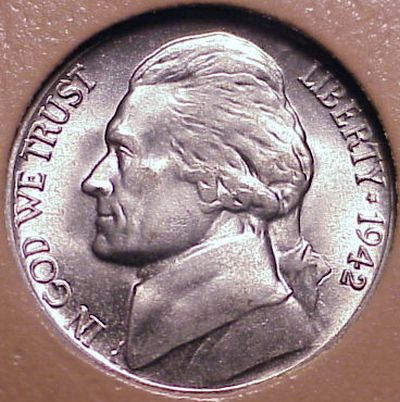 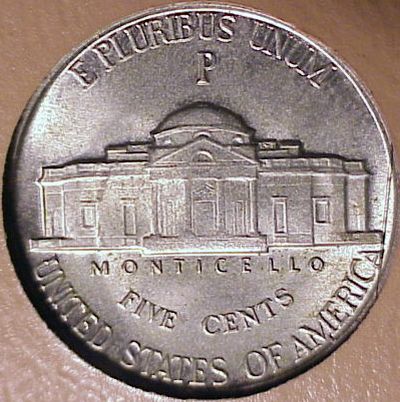 GR58's post got me thinking about nickels. Did you know there were thousands of those Hennings fakes dumped in creeks and most have never been found? And that there are other faked years besides 1944? I talked a neighbor friend's mom out of the coin shown above when I was around 16. It and a few others were just sitting in a desk drawer mixed in with keys and such. It looks better in a 7070, don't ya think  |
|
Bedrock of the Community
United States
11951 Posts |
After seeing that nice nickel, I had to change my post. Mysilveryears I agree that Henning story is very interesting. And that is a great looking nickel for a desk find. This 1942 D Jefferson, was one of the last ones I purchased to complete my set. It is harder to find in higher grades. 1942 D 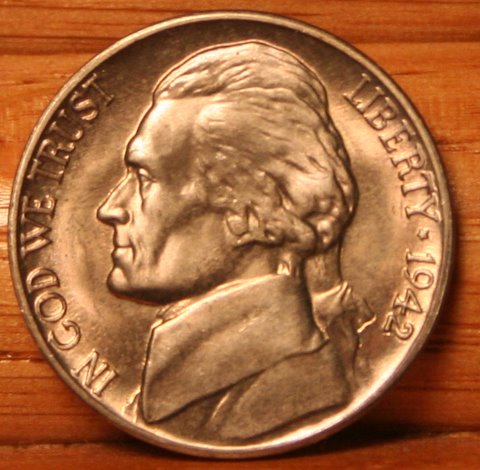 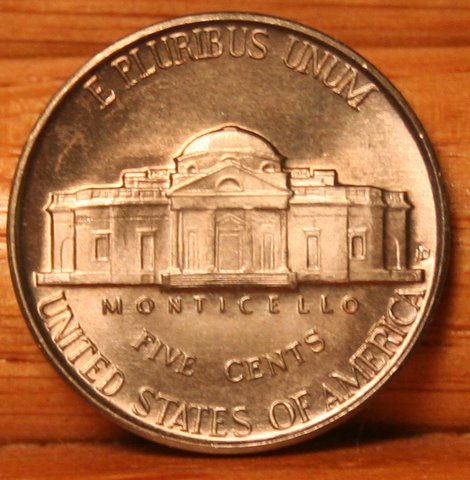 Edited by GR58
01/06/2014 10:18 pm
|
|
Pillar of the Community
United States
7298 Posts |
I need a good war nickle for my 7070, all I have are worn circulation finds.
|
|
Pillar of the Community
United States
7298 Posts |
Yet another walker, did I mention I liked them? 1941 s   |
|
Pillar of the Community
United States
1234 Posts |
Lets keep the nickel rolling 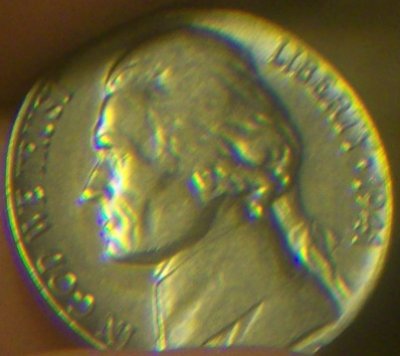 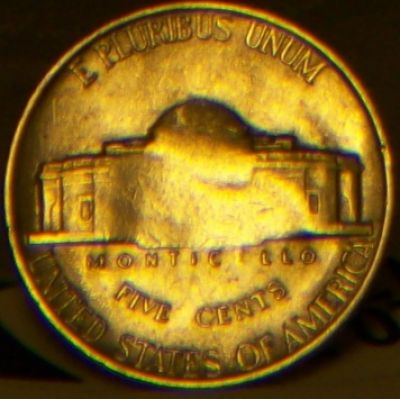 This is worn but not from circulation, 1941 Jefferson oil grease strike, check this link if you missed it, https://goccf.com/t/166164Quote:
Dec 8, 1941:
Jeanette Rankin casts sole vote against WWII
On this day, Montanan Jeanette Rankin, the first woman elected to Congress and a dedicated lifelong pacifist, casts the sole Congressional vote against the U.S. declaration of war on Japan. She was the only member of Congress to vote against U.S. involvement in both World Wars, having been among those who voted against American entry into World War I nearly a quarter of a century earlier.
- a HISTORY web site I was taught in school that she abstained not wanting to seem to be on the side of Hitler with a flat out no, she just did not cast a vote. I'm not sure what her vote was when the following year Congress removed the nickel from nickels, but this 1941 marks the final full year of copper-nickel, until it's return in 1946. Some of the 1942's were copper-nickel some were 35% silver, 56% copper, 9% manganese, mysilveryears example shows off the prominent "P" mint mark used for the first time on any US coin, before and after the Philadelphia mint has used nothing for a mint mark. The large mark was used to make sorting and removal of these silver coins easier. GR58 has posted the copper-nickel version from earlier in the year with the smaller D mint mark next to the right side of Monticello, before Congress passed the law to change the composition. I had mentioned I was going to show a zinc coin of a different sort but then I got busy floating coins on water and the 10 Haleru coin from Bohemia & Moravia would have just sunk. Bohemia & Moravia was a protectorate of the German empire, basically the part of Czechoslovakia they did not take over. Edit: it toke me hours to look that coin up in the first place, I said Czechoslovakia but I'm not certain on the exact location. Central Europe, one of the small enclaves that managed to be under the Nazi thumb but not to be crushed by it. Great Reichspfennig's and European silver to come and a nice piece from Lebanon a good reminder that the war was not only in Europe and the Pacific, but also was very hot in the middle east. It's always the same the only thing that changes is the metal content. Edited by ASLAN TVorlon
01/07/2014 03:51 am
|
|
Valued Member
United States
263 Posts |
|
|
Pillar of the Community
United States
1109 Posts |
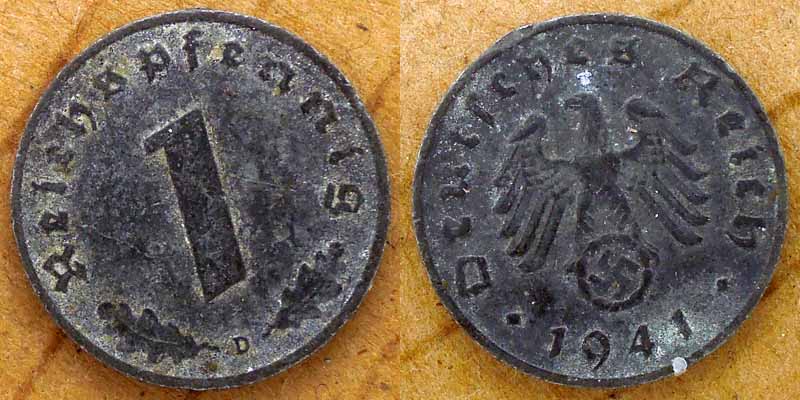
Here's a 1941-G 1 Reichspfennig coin from Nazi Germany. This was given to me by a World War 2 Army veteran just before I deployed to Afghanistan. He told me he found it in a foxhole in Belgium and took it as a good luck token. I guess it was good luck, because I came home safe just like he did. Something positive out of something minted by the order of someone so negative. This coin was minted in Karlsuhe, Germany, and has the lowest mintage of all the mints for that year. 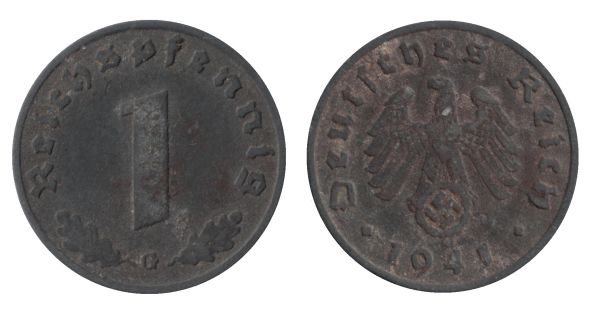 |
|
Pillar of the Community
United Kingdom
2929 Posts |
Lebanon 1941 2 and half piastres KM13 An interesting and short lived war time issue type from Lebanon. 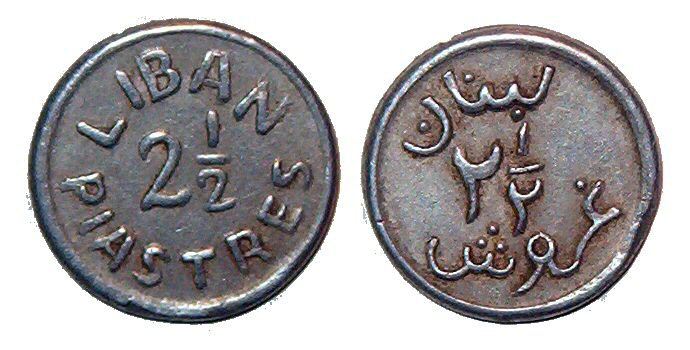 |
|
Pillar of the Community
Belgium
506 Posts |
Any war-time silver in continental Europe? Yes there was. Hereby a quite exceptional example of a Slovak 20 Korun: 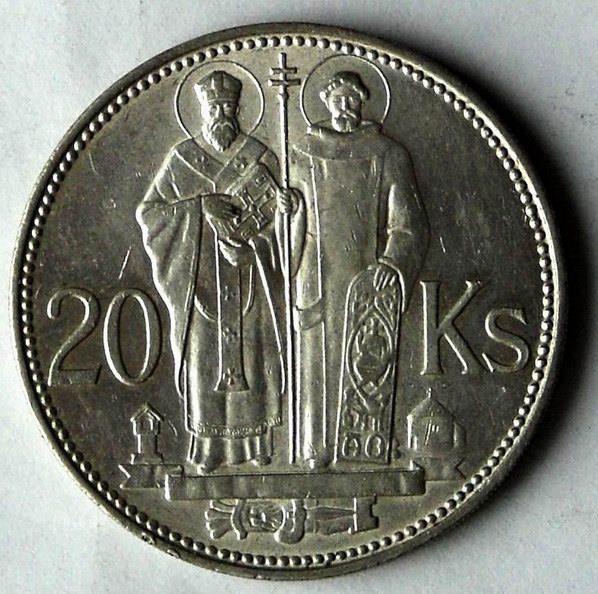 St. Kyrill and St. Methodius depicted on the Obverse 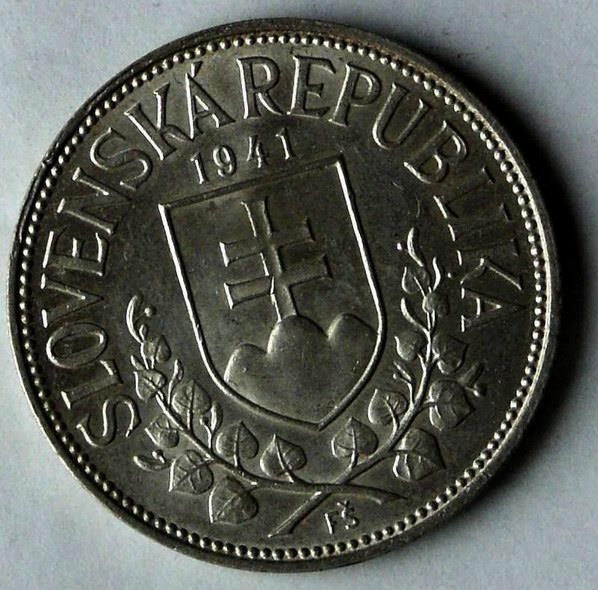 Reverse: Double cross on a shield The war-time Slovac republic was what was left of Czechoslovakia, after Hitler had annexed and occupied what is now the Czech republic. The Slovac republic had the choice between occupation or collaboration, accepting a regime 'friendly' to Nazism. As did Vichy-France, they chose the latter. |
|
Pillar of the Community
Australia
9780 Posts |
|
|
Bedrock of the Community
United Kingdom
18740 Posts |
Southern Rhodesia halfcrown - 1941 (92.5% silver)  Southern Rhodesia issued its first coins under the sterling system in the 1930s during the reign of George V. Silver coins were struck to the old sterling standard, not the debased 50% silver used in the UK! The silver content was cut to 50% in 1944 and replaced by cupro-nickel in 1947. Halfcrowns with a similar design were issued until 1954 (with Queen Elizabeth II's portrait by then). In 1955 and 1957 a joint currency was issued for Rhodesia and Nyasaland (now Zambia and Malawi). Rhodesia got its own coins again in 1964 and converted to decimals in 1970 - unusually, the halfcrown was retained in the decimal system as a 25-cent piece. The coins were redesigned in 1980 and the denomination disappeared. Hyperinflation from the 1990s rapidly made all Zimbabwe coins obsolete... Edited by NumisRob
01/07/2014 03:48 am
|
|
Valued Member
United States
103 Posts |
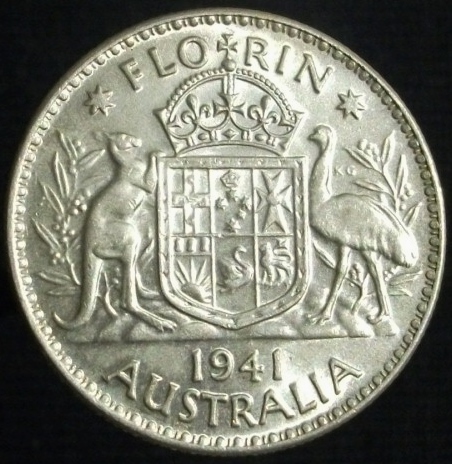
One of these was posted yesterday (1942) but this is what I have ready to go and I love the design on this New Zealand Florin.  |
| |
Replies: 3,989 / Views: 392,558 |








 First Page
 Previous Page


 Posted 01/06/2014 7:18 pm