| Author |
 Replies: 11 / Views: 1,544 Replies: 11 / Views: 1,544 |
|
|
Pillar of the Community
United States
1304 Posts |
Check out this odd bit of damage on the reverse at the mint mark. Its not circular so it doesn't appear to be caused by a drill. The base inside the hole is flat, doesn't appear to have been someone driving a nail into it either. Any thoughts? Color and wear around the damage is consistent with the rest of the coin giving me the impression its been there a long time. Also, nothing on the obverse opposite the hole. 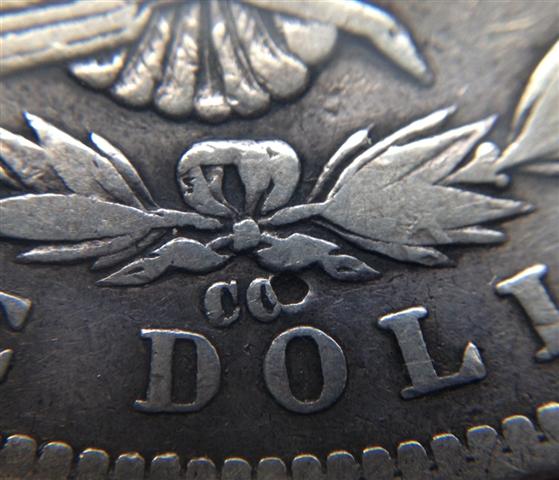 Edited by EFLargeCents
11/04/2013 1:45 pm
|
|
|
|
Pillar of the Community
United States
8533 Posts |
Looks like a collapsed bubble to me.
Oregon coin geek.....*** GO BEAVS ! ! ! ***
|
|
Pillar of the Community
 United States
1304 Posts |
Quote:
Looks like a collapsed bubble to me. Would this have been caused by a flawed planchet or something that happened to it in circulation? I'm not familiar with collapsed bubble type damage. |
|
Pillar of the Community
United States
7729 Posts |
Planchet flaw or someone tried to punch a hole it it a long time ago.
|
|
Moderator
 United States
23522 Posts |
It's postmint damage; I think we may be trying too hard to overthink it here.  No reason not to believe something punched it early on in life, and circulation wore the precise details down. |
|
Pillar of the Community
United States
1304 Posts |
Good enough explanation for me. I have a large cent with damage similar to this (odd shape hole that doesn't show any damage on the opposite side). This coin sits in my low grade (G-F), better date/mm, Morgan date set Dansco album. Apart from the hole the coin has great eye appeal for the grade.
|
|
Pillar of the Community
United States
8533 Posts |
Can you show the obverse ? If its punched and that deep there should be a corresponding mark opposite. A counterstamped coin, for instance, will almost always show that.
Oregon coin geek.....*** GO BEAVS ! ! ! ***
Edited by 52Raymo
11/04/2013 8:13 pm
|
|
Pillar of the Community
United States
1304 Posts |
There is no evidence on the obverse of it having been punched. Nothing is pushed out in the area opposite the hole (wheat/wheat leaves). 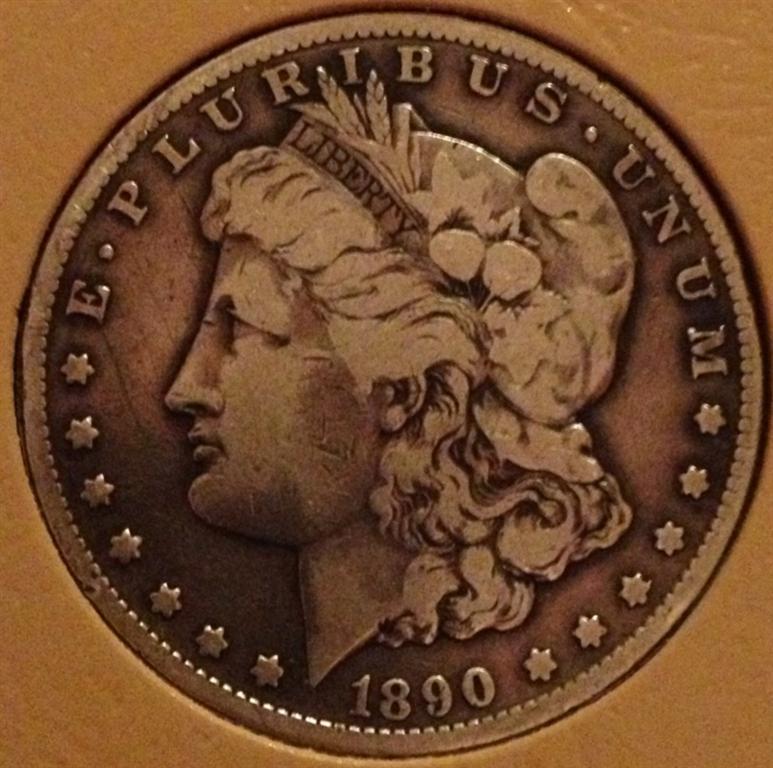 |
|
Valued Member
United States
368 Posts |
appears to be PMD because the upper half of the C is smushed towards the base of the C....just my guess tho. |
|
Bedrock of the Community
United States
17884 Posts |
And the field area below the hole has been pushed causing it to "dome" enough that the top of the dome shows wear that occurred after the punch. Definitely not a flawed planchet. If that hole had been in the planchet the field would be crushed flat by the field of the die all the way to the edge of the hole. And as mentioned the second C would not have been pushed back. The serif of the C would have simply disappeared where it overlapped the hole.
|
|
Pillar of the Community
United States
1304 Posts |
If the hole was indeed punched, where did the displaced silver go? There is no corresponding bulge on the obverse opposite. Would it have been possible for the silver to be compressed without bulging the opposite side? The raised portions around the hole are not large enough to account for the entire space of the hole. Some silver from the coin appears to be absent. Could the amount missing have been worn away over time?
|
|
Pillar of the Community
United States
8137 Posts |
They might have taken the silver out of the hole when it was punched
|
| |
Replies: 11 / Views: 1,544 |
|









 Posted 11/04/2013 2:44 pm


