| Author |
 Replies: 27 / Views: 3,446 Replies: 27 / Views: 3,446 |
|
Pillar of the Community
Australia
1041 Posts |
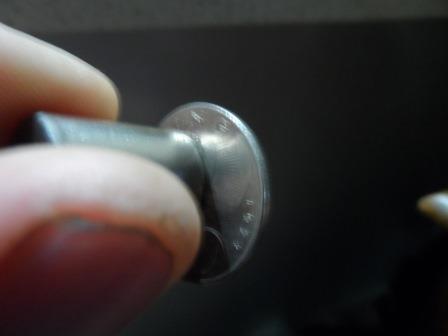
hi I have been playing with a magnet in a box of world coin and this Austrian 10 shilling stuck are they metal inner its cool what will stick I found a australian penny doing the same thing still trying to work that one out a 1973 didn't stick and a 1976 didn't stick but 1974 did so it must be a different material
thank in advance
|
|
|
|
Pillar of the Community
Thailand
1509 Posts |
The Austrian 1973 is silver. From 1974 they were copper-nickel. Are you refering to another 10 shilling for the 1976? The weight should be 6.20g and the silver 7.5g. What year is the magnetic Australian penny? Just had a quick look on the net and bronze (for the penny) apparently can sometimes be magnetic depending on its composition. Check here under Bismuth bronze. http://en.wikipedia.org/wiki/BronzeEdited by thai-vic
12/06/2013 05:36 am
|
|
Pillar of the Community
 Australia
1041 Posts |
thanks thai vic is will copper nickel stick to a magnet and the Australian penny is 1952
|
|
Pillar of the Community
Australia
1041 Posts |
|
|
Pillar of the Community
Thailand
1509 Posts |
Yes nickel is magnetic.
Is the 1952 penny minted in Perth (a dot after the word AUSTRALIA .) or Melbourne (no dot)?
Maybe one of the mints had a delivery of alloy that was a slightly different specification.
|
|
Bedrock of the Community
Australia
21792 Posts |
The '52 Australian pennies are bronze.
The '73 Austrian 10 schilling is .640 silver.
The '74 Austrian 10 schilling is copper nickel plated nickel.
By having a pure nickel core, it should respond to a magnet.
The last silver coin struck for circulation anywhere in the World is the '74 .625 5 mark of Germany, until the bi metallic 10 and 20 pesos of Mexico, which had a .925 silver core. These WERE the very last silver coins for circulation.
Some European countries still issued silver coins after 1974, to be purchased from banks and could be circulated, but those who bought them almost never had them circulated.
When I was in Europe in 1971 I saw Austrian 10 schillings, German 5 mark, and French 5 franc silver coins in circulation, AND were still being currently issued.
I would imagine that by 1971, there would have been a large amount of American and Canadian silver coins in circulation, despite the fact that the issue of new silver coins for circulation had ceased.
|
|
Pillar of the Community
Australia
1041 Posts |
thanks sel I have 3 1974s and magnet only sticks to one coin ah well fun with a magnet anyway
|
|
Pillar of the Community
2087 Posts |
Quote:
Some European countries still issued silver coins after 1974, to be purchased from banks and could be circulated, but those who bought them almost never had them circulated. Austria was one of those countries. I believe it was the five Euro coin which has since been produced in copper.The silver version ended up having more silver in it than the face value. They actually pushed quite hard( radio announcements and the like) to get the silver coins to circulate.....but who would spend a silver coin when a paper note was available(Rhetorical) |
|
Bedrock of the Community
Australia
21792 Posts |
If a paper note is available concurrently to a silver coin, Gresham's Law applies.
|
|
Pillar of the Community
Australia
1041 Posts |
|
|
Bedrock of the Community
Australia
21792 Posts |
Gresham's Law: Coins of baser alloy drive coins of purer alloy from circulation.
It is normal for people to keep coins of higher intrinsic value and circulate those of lower intrinsic value.
The same applied to notes and silver coins of the same face value in concurrent circulation.
|
|
Pillar of the Community
Australia
1041 Posts |
so has anyone got a Austrian 1974 10 shillings and a magnet did it stick to your magnet ha sel you use words this bumb butt shearer would not be taught in our shearing shed school tone it down a bit willya
|
|
Pillar of the Community
Australia
3841 Posts |
What I suspect is - having a nickel core, it is magnetic. However it might have been struck in nickel-copper alloy which is NOT magnetic. Pure nickel is magnetic, a nickel-copper alloy is not. I am not well versed in this type of coinage hence unable to comment more on it.
My partial coin collection http://www.omnicoin.com/collection/gxseriesMy numismatics articles and collection: http://www.gxseries.com/numis/numis_index.htmRegularly updated at least once a month. |
|
Pillar of the Community
2087 Posts |
Quote:
The '74 Austrian 10 schilling is copper nickel plated nickel.
By having a pure nickel core, it should respond to a magnet. Are you sure on this? The 2013 ANK Oesterriech Muenzkatalog just describes the coin as Cupro-Nickel. I had always thought that this meant (like Aussi and NZ cupro-nickel coins) it was simply an alloy and not a plated core( I thought the USA was the only country to use such a technique). Given the standards of production at the Austrian mint I would really doubt they would plate a coin. I just checked a 1990 5 schilling( exactly the same reported alloy) with a magnet; it does not stick!! I know that we have issues with counterfeit Euros coming from eastern regions...therefore it is possible that there were also fake schillings produced. Edited by austrokiwi
12/08/2013 07:26 am
|
|
Pillar of the Community
Germany
1238 Posts |
Quote:
I had always thought that this meant (like Aussi and NZ cupro-nickel coins) it was simply an alloy and not a plated core( I thought the USA was the only country to use such a technique). Hmm, a core is different from the "sandwich" technology that is used with many US coins. See http://de.wikipedia.org/wiki/Magnimat (text in German) ... (Edit) Don't have a 10 Schilling coin to try this out, but the Schön catalog (KDM) says "10 Schilling 1974-2001 - Ni, Cu75/Ni25 plattiert". That sounds as if the pieces had a pure nickel core, much like the German 2 DM and 5 DM Magnimat coins. Whether the catalog info is correct or not, I don't know. :) Christian Edited by chrisild
12/08/2013 3:30 pm
|
|
Pillar of the Community
2087 Posts |
|
| |
Replies: 27 / Views: 3,446 |





 Posted 12/06/2013 06:22 am