First Page


 Posted 12/07/2013 4:37 pm


From ebay Guides;
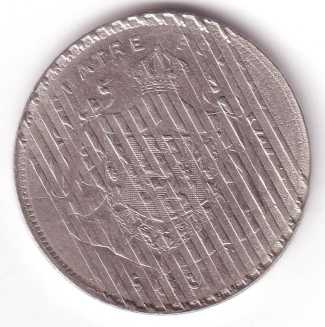
An overview on Waffled Canceleld coins (Waffle Errors)
October 21, 2009--------------------------------------------------------------------------
About Waffled Cancelled Errors:
Minting errors, though not as common to coins as they are in baseball do happen. When coins are released from the US mint with an error they achieve a new more valuable status. Historically they have multiplied in value, in fact there is even a society for error coin collectors (CONECA). If the past is any guide, unlike in baseball the error always results in a score. Error coins that manage to get out of the US mint become valuable collector's items; and recently as coin minting technology has advanced the amount of imperfect coins leaving the mint has been drastically reduced; creating an even bigger demand for those that inadvertently do get out.
Now the mint has begun to employ a new method of cancelling errors and voiding them as currency. That method is called waffle cancelling. In most cases these cancelled coins are subsequently melted and recycled, but not always. Those that have appeared on the open market have achieved their own unique market values. Since the mint began to waffle coins in June 2003, they have become a new hot collectible in the coin market.
Early in 2002 the mints changed their production methods to a new system designed to eliminate deformed planchets, off-center strikes, and similar errors. They also changed the delivery system of bulk coin, and no longer shipped loose coins in sewn bags to be counted and wrapped by banks or counting rooms, where error coins were often found and sold to collectors. Under the new system, coins are packaged in large quantities and go directly to automated counters that filter out deformed coins. The result has been that very few error coins have entered the market since late 2002, and almost none after that date. Those dated after that, with but a few exceptions, are valued considerably higher.
In mid-2003. the U.S. Mint acquired machines to eliminate security concerns and the cost associated with providing Mint police escorts to private vendors for the melting of scrap. sub-standard struck coins, planchets, and blanks. Under high pressure, the rollers and blades of these machines cancel the coins and blanks in a manner similar in appearance to the surface of a waffle, and they are popularly known by that term. This process has effectively kept most misstruck coins produced after 2003 from becoming available to collectors. The Mint has not objected to these pieces' trading in the open market because they are not considered coins with legal tender status.
An overview on Waffled Canceleld coins (Waffle Errors)
October 21, 2009--------------------------------------------------------------------------
About Waffled Cancelled Errors:
Minting errors, though not as common to coins as they are in baseball do happen. When coins are released from the US mint with an error they achieve a new more valuable status. Historically they have multiplied in value, in fact there is even a society for error coin collectors (CONECA). If the past is any guide, unlike in baseball the error always results in a score. Error coins that manage to get out of the US mint become valuable collector's items; and recently as coin minting technology has advanced the amount of imperfect coins leaving the mint has been drastically reduced; creating an even bigger demand for those that inadvertently do get out.
Now the mint has begun to employ a new method of cancelling errors and voiding them as currency. That method is called waffle cancelling. In most cases these cancelled coins are subsequently melted and recycled, but not always. Those that have appeared on the open market have achieved their own unique market values. Since the mint began to waffle coins in June 2003, they have become a new hot collectible in the coin market.
Early in 2002 the mints changed their production methods to a new system designed to eliminate deformed planchets, off-center strikes, and similar errors. They also changed the delivery system of bulk coin, and no longer shipped loose coins in sewn bags to be counted and wrapped by banks or counting rooms, where error coins were often found and sold to collectors. Under the new system, coins are packaged in large quantities and go directly to automated counters that filter out deformed coins. The result has been that very few error coins have entered the market since late 2002, and almost none after that date. Those dated after that, with but a few exceptions, are valued considerably higher.
In mid-2003. the U.S. Mint acquired machines to eliminate security concerns and the cost associated with providing Mint police escorts to private vendors for the melting of scrap. sub-standard struck coins, planchets, and blanks. Under high pressure, the rollers and blades of these machines cancel the coins and blanks in a manner similar in appearance to the surface of a waffle, and they are popularly known by that term. This process has effectively kept most misstruck coins produced after 2003 from becoming available to collectors. The Mint has not objected to these pieces' trading in the open market because they are not considered coins with legal tender status.
"Dipping" is not considered cleaning...
-from PCGS website
-from PCGS website


 Love it, DBM!