| Author |
 Replies: 13 / Views: 2,894 Replies: 13 / Views: 2,894 |
|
|
Valued Member
United States
136 Posts |
Edited by Carlos arriaga
12/09/2013 11:14 am
|
|
|
|
Pillar of the Community
Canada
5417 Posts |
Very interesting  |
|
Valued Member
 United States
136 Posts |
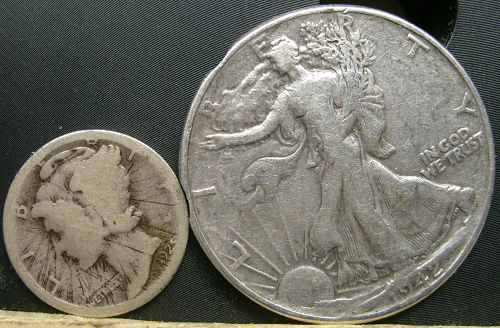
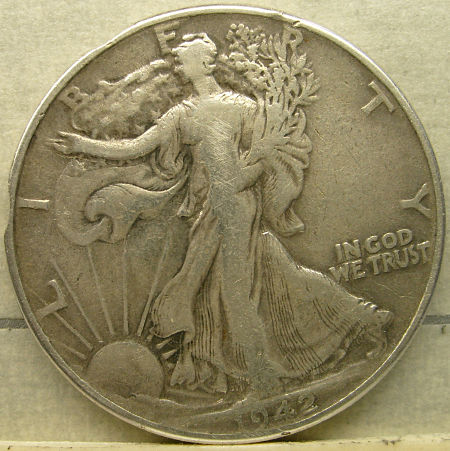
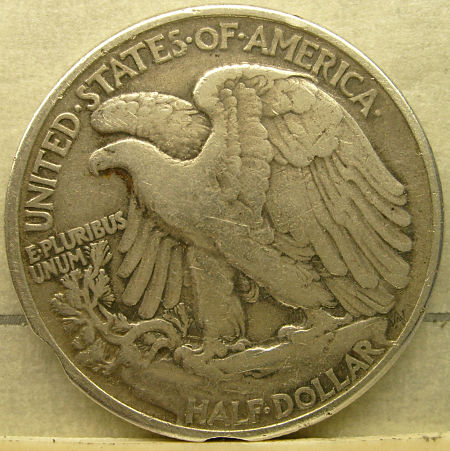
The 1/2 dollar is 1942 and the dime 1925. The interesting thing here is that. One fact support another fact. THERE WAS AN ENOURMES RELATION IN THE MAKING PROCESS OF BOTH COINS DENOMINATIONS. (my next post will be about the beautiful DIE CLASH on the Mercury dime). |
|
Bedrock of the Community
United States
12437 Posts |
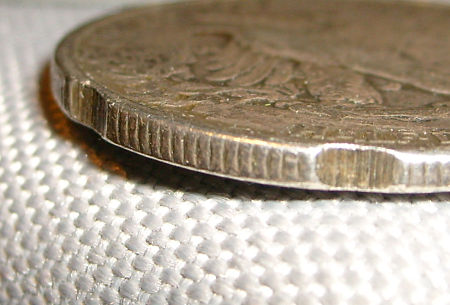
The half dollar is just damaged, I can clearly see vertical grinding lines that would not be present with a genuine clipped(incomplete) planchet. The Mercury dime is covered with scratches, I do not see any signs of a die clash. |
|
Bedrock of the Community
United States
17884 Posts |
Sorry they don't punch dime planchets and half dollar planchets from the same strip at the same time. There would actually be more wastage doing that than just doing one denomination at a time. And Biokemist is right those are not legitimite clips, just PMD. |
|
Valued Member
United States
136 Posts |
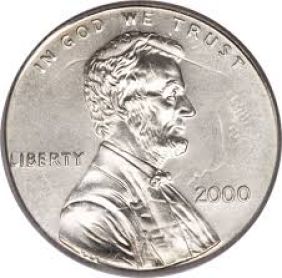
On the year 2000 a Lincoln Cent appeared with the oberse of a dime, in some legit Die clash. HOW THAT'S HAPPEN? If both were different denomination and different material. Now.....Do you think the lines on the skirt of Lady Liberty are also PMD because they are no straight. 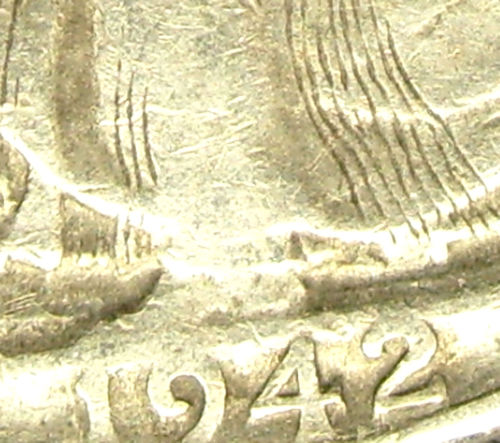 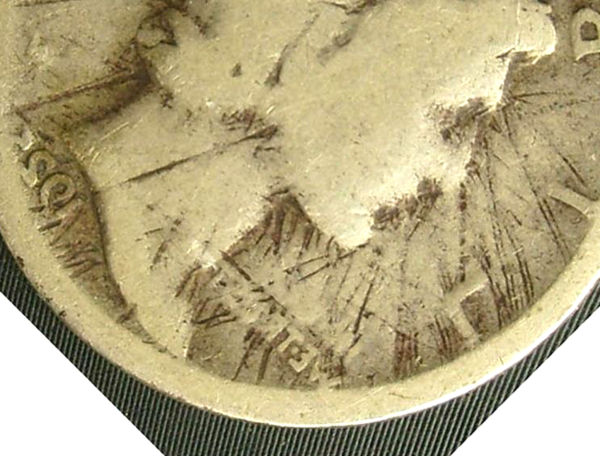 |
|
Valued Member
United States
136 Posts |
The presence of vertical lines inside of a Clip planchet; depend on the shape of the edge of the coin producing that Clip planchet. From Cents o from Nickels the inside will be "plain" because they don't use RIDGES. But from Dimes o Quarters the Vertical lines are MANDATORY.
|
|
Bedrock of the Community
United States
12437 Posts |
Quote:On the year 2000 a Lincoln Cent appeared with the oberse of a dime, in some legit Die clash. HOW THAT'S HAPPEN? Simple- it cannot happen because a cent is too large to fit in a dime collar. The differing diameters are not compatible so there is no way to legitimately transfer a dime strike or clash to a Lincoln Cent. Quote:
The presence of vertical lines inside of a Clip planchet; depend on the shape of the edge of the coin producing that Clip planchet. From Cents o from Nickels the inside will be "plain" because they don't use RIDGES. But from Dimes o Quarters the Vertical lines are MANDATORY. This quote shows me that you have a profound misunderstanding of the minting process. Every single blank has a smooth edge when it is punched from the metal stock sheet. Only one denomination is punched at a time because they each use a different metal stock. The reeding is added by the collar(third die) at the time of striking so every clipped(incomplete) planchet will have a smooth edge at the site of the clip because that part never touches the collar during striking. The collar is essentially a thick metal plate with a hole in the middle and that hole will either be smooth or reeded depending on the denomination. The collar defines the diameter of a coin and it forms the coining chamber in conjunction with the obverse and reverse dies. The diameter of a planchet is 1-2mm smaller than the resultant coin so when a planchet is struck by the dies, it radially expands until confined by the collar. That expansion is what will add reeding to the edge of a coin. Edited by biokemist6
12/09/2013 6:56 pm
|
|
Valued Member
United States
136 Posts |
Edited by Carlos arriaga
12/10/2013 07:29 am
|
|
Bedrock of the Community
United States
12437 Posts |
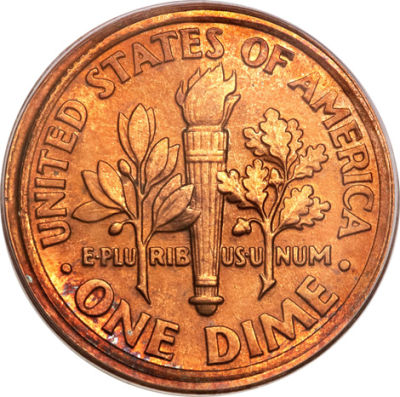
1)The first coin appears to be a dime missing the reverse clad layer, thus exposing the copper core.
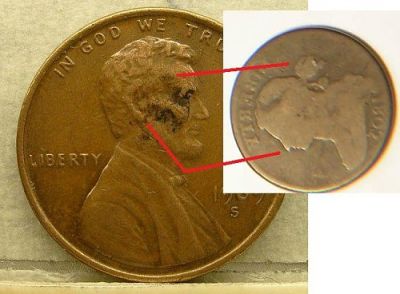
2)I have no idea what the purpose of the second image is but if you are trying to state that a shrunken design of a 200+ year old Draped Bust cent is on a mondern Lincoln, then you are wrong. The black area is nothing more than a stain.
3)That is not a dime clashed on a cent. It is a double-denomination error- a normally struck dime that is then restruck as a cent. A dime will fit in a cent collar but a cent will not fit in a dime collar.
|
|
Bedrock of the Community
United States
17884 Posts |
Quote:
The diameter of a planchet is 1-2mm smaller than the resultant coin so when a planchet is struck by the dies, it radially expands until confined by the collar. I'd say closer to .5 to 1 mm and on the small end of that. The first picture he posted is the reverse of a mule, a cent that was struck in a cent collar by a cent reverse and a dime reverse Notice how the coin extends PAST the outer edge of the rim. That was because the planchet was larger than the die. I think there are two known. You are absolutely right on the third image. As to the second image, if I remember correctly this poster has a history of finding all kinds of clashed dies on dies used hundereds of years apart and even from different countries. For some reason no one else ever seems to be able to see them. |
|
Valued Member
United States
136 Posts |
Something rarely we have in consideration is. What was the way? the mint used to make coins before the 80's; o before the actual times. I don't think in 50 o 100 years they never changed nothing. Many answers in this fourum is about THE MODERN WAY TO MAKE COINS. But what we know about the past?
I was working in Precision Stamping and some times in less than 6 month we were forced to make changes. Because something on the die o the press was no working right.
Edited by Carlos arriaga
12/11/2013 07:30 am
|
|
Pillar of the Community
United States
595 Posts |
Quote:
The first picture he posted is the reverse of a mule, a cent that was struck in a cent collar by a cent reverse and a dime reverse Notice how the coin extends PAST the outer edge of the rim. That was because the planchet was larger than the die. I think there are two known. I think actually this was with a dime collar, and not a cent collar. It is true that the cent planchet will not fit into a dime collar, but in this case it appears that the cent planchet was pressed onto it. Note that you can see the outer edge of the dime in the size that it should be. If you look at about 10:30 - 11:00on the dime, you can actually see some of the dime reeding that formed when part of the cent planchet was pressed into the dime collar. Edited by Susuman
12/20/2013 8:14 pm
|
|
Bedrock of the Community
United States
17884 Posts |
My bet is if you were to examine the coin in hand you would find only traces of reeding there and that it is the results of damage from a collar clash. If it had been struck using a dime collar neither the planchet or cent die would not be able to enter the collar so the planchet would never be pressed against the dime die. The image on the dime side would be either extremely weak or non-existant.
|
| |
Replies: 13 / Views: 2,894 |
|











 Posted 12/09/2013 12:08 pm