| Author |
 Replies: 9 / Views: 1,486 Replies: 9 / Views: 1,486 |
|
|
Valued Member
United States
339 Posts |
I always thought something looked funny about this and I'm not sure if it's a minting/striking thing or a previous owner using brillo on the thing. Between the D in "United" and the first S in "states" and also between the arrows and the right wing you can see a mirror finish, I just want to make sure to avoid buying from them again or what :/ 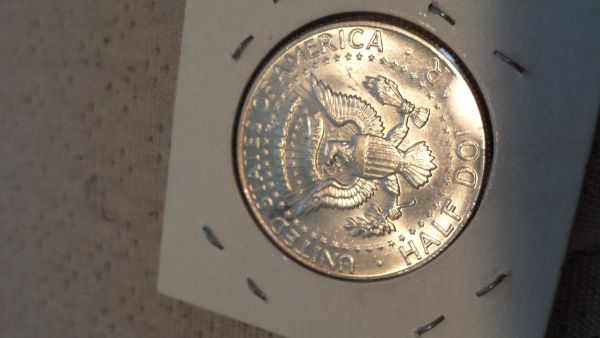 |
|
|
|
Pillar of the Community
United States
5825 Posts |
Really can't tell much of anything from your image.
|
|
Moderator
 United States
14463 Posts |
 can't tell very much from your image, sorry |
|
Valued Member
 United States
339 Posts |
You don't see the discoloration between the words united and states? I even had my friend holding the ocin himself and he even said he didn't see anything, I think I'm the only one that can see these marks
|
|
Moderator
United States
14463 Posts |
I see the discoloration between united and states, but I can't see the mirroring between the arrows and the right wing.
|
|
Valued Member
United States
339 Posts |
The one between the arrows and the right wing is pretty thin but it's there, should it be something to worry about?
|
|
Moderator
United States
14463 Posts |
If you are going to try for slabbed MS70, yes.
<------ Personally, I would not worry about it otherwise.
|
|
Moderator
United States
23522 Posts |
I'm seeing it as a consequence of strike rather than something postmint. For someone to polish a coin hard enough to achieve a mirror finish, there'll be other stuff on it which would make the work obvious to you. As a standalone feature, it's the die's fault for wearing funny.  Not the first I've seen like it. |
|
Valued Member
United States
339 Posts |
That's good to hear, I was a bit worried it had been cleaned before I got the thing, or even dipped, but it doesn't seem like it had been dipped either
|
|
Moderator
United States
23522 Posts |
I don't know if modern Schuler presses (in almost-universal use) work with similar methods as earlier press designs, but the Morgan & Orr presses used to strike Morgans had feed fingers which would wear the dies somewhat and result in mirror finishes applied to small areas on the surface of the struck coins. This was particularly notable with 1921's.
However, I've seen the same phenomenon on much newer issues, which is what I was thinking of in my original answer.
|
| |
Replies: 9 / Views: 1,486 |
|








 Posted 12/19/2013 7:05 pm


