| Author |
 Replies: 22 / Views: 3,968 Replies: 22 / Views: 3,968 |
|
Valued Member
United Kingdom
287 Posts |
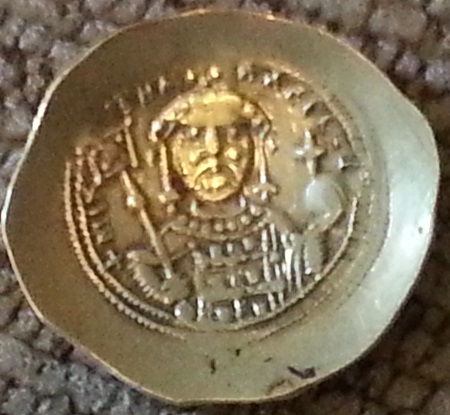
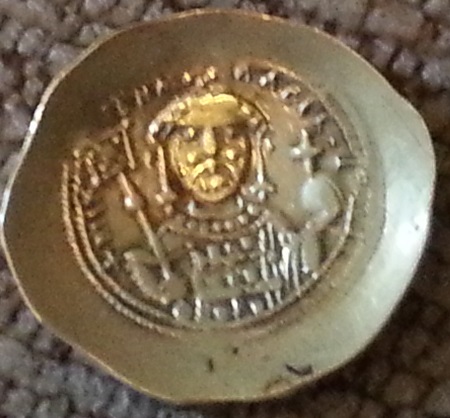
Hi guys I am buying a coin, quite blind, so it is a little bit of a gamble to me. The only info I have is the picture, and this statement: MICHAEL VII GOLD ELECTRUM COIN (1071-1078) MY FATHER BOUGHT THIS COIN FROM WESTMINSTER COLLECTIONS LIMITED IN 2001 I HAVE THE RECEIPT FOR £530.00 PAID. What I am after please: Any info on the coin, Will the coin be a coin from this date, or will it be a remade version from westmister? What is it worth? Any info is appreciated Thanks 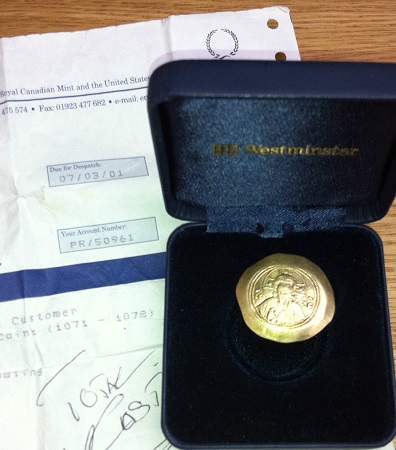  |
|
|
|
Pillar of the Community
United States
2480 Posts |
Hard answer your questions based on one small picture of just the obverse. Here's a link to CNG's archives showing similar sold coins so you can get an idea of current values. CNG Archives Michael VII electrum |
|
Pillar of the Community
Canada
579 Posts |
I am more curious that if the coin is from the Westminster Collections and that is an invoice from the coin why does it say Royal Canadian Mint and the United States on it? |
|
Valued Member
 United Kingdom
287 Posts |
I think it says something like 'official distributers of...' Here's the whole pic I got, I had cropped it Thanks for the Link T.I.F, can I assume it will be the real deal if it came from Westminster at that value? 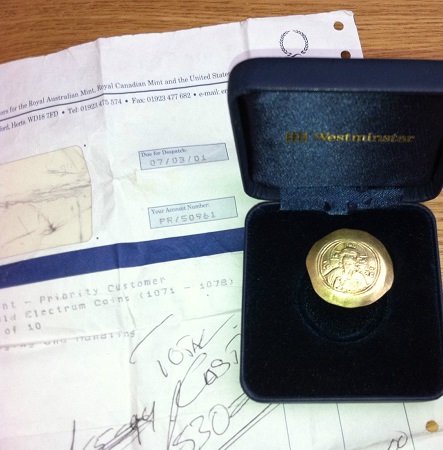 |
|
Moderator
 United States
23731 Posts |
Can't say for sure without better pictures if the coin is legit or not. Depending on condition it could be worth up to $800 for am As Struck example. I wouldn't base the price on a receipt that could have been for another coin of Michael VII.
|
|
Valued Member
United Kingdom
287 Posts |
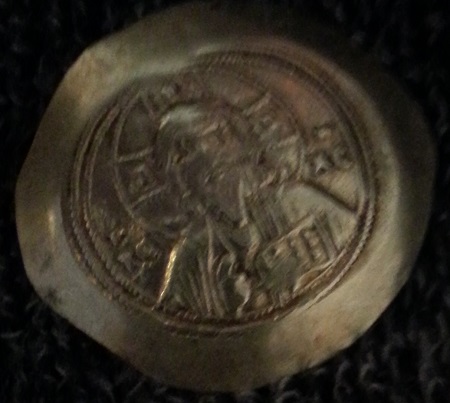
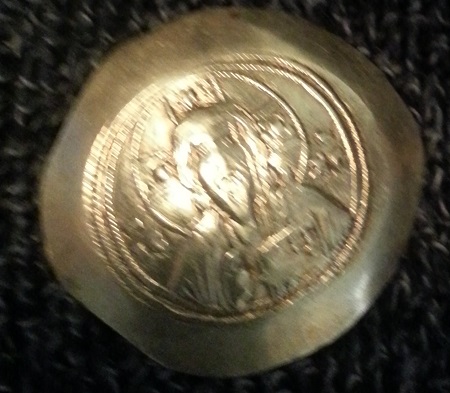
When I receive I will add some better pictures.
I won at auction for a total of £181 delivered. That's about $295 I think.
This is going to sound like a stupid question but... Is this coin 1000 years old, or is it a recent coin struck in memory of?
|
|
Pillar of the Community
United States
2480 Posts |
Hard to say based on that picture but I suspect it is authentic. When you get it post nice clear closeup (cropped) picture of both sides :)
|
|
Moderator
United States
23731 Posts |
It's most likely legit, but I would still want to see better pictures to be sure.
|
|
Pillar of the Community
United Kingdom
2624 Posts |
I think you have probably done well.
I had a few items from this company a long while back. (A silver proof set of coins and they used to send me 2 bank notes a month which added up to an unusual ensemble of peculiarities)
Generally they are not great value for money but I would assume the item to be genuine, I don't recall them distributing replica items though it's not impossible.
From the information you have given I too would have gambled on it and I would expect that its a bet where you have a significant edge in your favour.
|
|
Moderator
Australia
17006 Posts |
Westminster may sometimes indulge in questionable business practices (especially with regard to overpricing), but all the coins they sell are genuine, or at least are not fakes commissioned by them. It is possible it has not been identified properly by them (Westminster aren't the most knowledgeable when it comes to ancient and mediaeval coins and are simply passing along information they were told by whoever sold them the coins). In case it hasn't been stated anywhere else and you're unsure where it comes from, Michael VII was a Byzantine emperor. Yes, it is a thousand years old. The denomination is called an "electrum trachy", to distinguish it from the debased-silver "billon trachy" which the Byzantines also issued. There are four examples of this coin at the top of the Wildwinds page for this ruler. Some of the coins in the Wildwinds database are derived from old coin auctions; these four are. Prices paid for those four coins back in 2001-2002 were $246, $269, $327 and $276. As I suspected; Westminster charged triple the actual market value for the coin, but the coin probably is indeed genuine. The price of gold has gone up since 2001, but not I suspect enough to warrant a £530 pricetag, even today. The price you paid ($295) is much more in line with market reality. Don't say "infinitely" when you mean "very"; otherwise, you'll have no word left when you want to talk about something really infinite. - C. S. Lewis
|
|
Pillar of the Community
United States
1316 Posts |
Looks good from here, can't wait to see the rev.i bought one a while back with the same Ob. Byzantine Empire.. Michael Vll...1071-1078..AD.. Histamenon Nomisa Ob.Bust of Christ facing right, holding 4 Gospels,hands raised in Benediction. to left IC - right XC. Rev. Michael Vll bust facing, bearded, wearing, crowning, holding loros and labarum.. Mint...Constantinople 29mm x 4.36g. 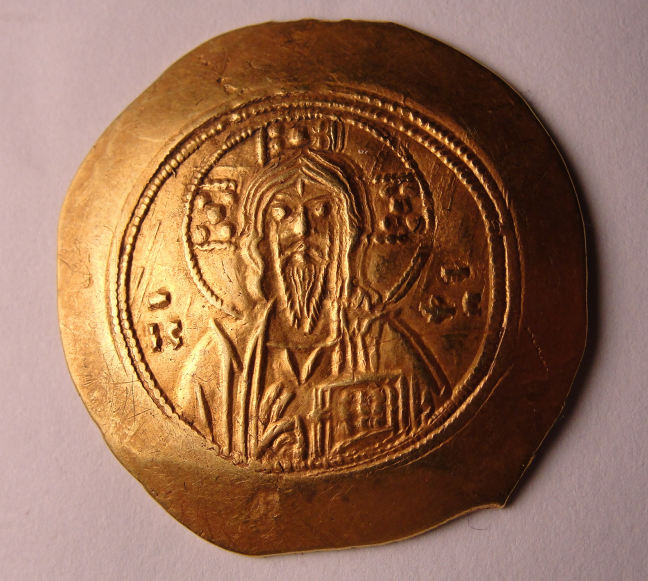 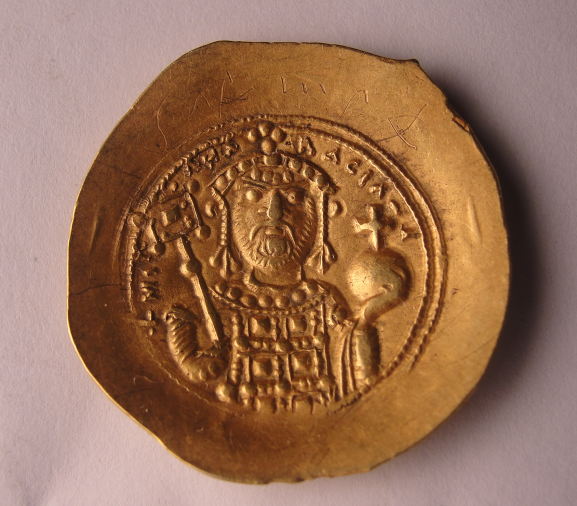 |
|
Valued Member
United Kingdom
287 Posts |
Thanks guys, I appreciate the input.
Thank you Sap especially for the extra info I was after :)
I have bought many coins, but this one I am most looking forward to receiving.
I have paid for special delivery and just hope it arrives before the Christmas!
Do you guys think it is a safe place to keep it (in the Westminster box)? or will it discolour in time?
I'm guessing there are no capsules in this shape :)
Eng5858, yours looks a nice example. Before I started researching this coin I would have been shocked to see one in such a nice state, but it appears there are near perfect examples out there. It makes you wonder if 1000 years ago when they were struck, did someone say 'I best store this well because it will be worth a lot in the future'
Were these used as money? what would be purchased with "electrum trachy", ? and what would the equivalent be in todays money?
|
|
Pillar of the Community
United Kingdom
2624 Posts |
You don't have to worry too much about storage since gold/electrum is not very reactive, which also explains why they survive in such great condition so long on from the date of their manufacture. I guess it would be fine to store it in the box supplied or transfer it to a Mylar flip.
In todays money we don't have any large denominations...just small change. Back in those days large sums could be carried around and items such as ships could be paid for in cold hard cash. I haven't looked it up but I am guessing at that time this coin was not something a peasant would ever have in his lifetime but was likely used as a store of wealth for rich merchants/church etc and only brought out for large purchases such as property or buildings. If someone knows something, feel free to contradict me since I am just speculating.
|
|
Moderator
Australia
17006 Posts |
Quote:
It makes you wonder if 1000 years ago when they were struck, did someone say 'I best store this well because it will be worth a lot in the future' If coin collectors existed back in Byzantine times, they did not get a mention in any of the surviving histories. As with many ancient and mediaeval coins, the ones that have survived down to today were lost somehow and dug up again centuries later. Coins in pristine condition likely saw little circulation because they were lost shortly after manufacture. When you consider Byzantine history, the battle of Manzikert happened shortly before these coins were made. Manzikert was one of the greatest disasters to befall the Empire; not only were thousands of troops slaughtered, but large swathes of territory in what is now Turkey were lost, never to be regained. I suspect many hoards of coins from this time period were buried by people who never came back to reclaim their treasure, either because they had been killed in the fighting or because they suddenly found themselves on the opposite side of the border from where they hid their money. Quote:
Were these used as money? what would be purchased with "electrum trachy", ? and what would the equivalent be in todays money? The coinage of this time period was complex. As far as we know from surviving records, theoretically, the electrum trachy was still worth the same as the old solid gold solidus, worth 180 copper folles or 12 silver miliaresia, though nobody in the markets were fooled; coins exchanged value based on bullion value only, not on what the government said the face value was. In the coinage reform of 1093, electrum coins were re-valued at 1/3 of the new solid gold coin, the hyperpyron. As for purchasing power, this also is difficult to compare, given the vastly different expectations of "civilization" between the Byzantines and us. There are also surprisingly few records of prices for basic goods from this time period; most of the surviving historical records focussed on the lives and times of the great and powerful and were unconcerned about the price of eggs. Nevertheless, it is fair to say that the coin contains about $100 worth of gold in today's money, and gold has more or less retained its buying power down through the ages - so thinking of this coin as the Byzantine equivalent of a $100 note would not be too inaccurate. Not that very many common, ordinary people of Constantinople would have seen too many of these coins. They were primarily used to pay the mercenary armies and navies upon which the Empire relied more and more for defence, and to pay bribes and tribute to the enemies of the Empire in exchange for peace. It's entirely possible that, apart from the fellow that actually struck it, not a single Byzantine ever touched your coin. Don't say "infinitely" when you mean "very"; otherwise, you'll have no word left when you want to talk about something really infinite. - C. S. Lewis
|
|
Pillar of the Community
United Kingdom
2624 Posts |
Sap you say that gold has largely kept its buying power and that you see it as something similar to a $100 bill.
Well $100 is worth about 2cents compared to $100 many years ago because governments continually increase the money supply. This didn't happen in the past when currencies were backed by gold.
Looking at inflation etc and just thinking about wages I don't see this coin could have ever been as little as $100 bill. When you think that people used to work all week for just a few pence and that a gold sovereign would be a years wage for someone with a half decent job and people now get many $100's every week.
I was guessing that one of these coins could give you food and lodgings for many weeks back in the day, $100 really doesn't go that far. Maybe you know more on this subject than I do, but if that isn't the case the only explanation I can think of is that the cost of living was extremely expensive back then with regards to simple things like food, clothes and shelter. I guess they didn't have the same needs as us (petrol, heavy taxes, technology and energy bills) so would that automatically make the basic needs cost more?
|
|
Valued Member
United Kingdom
287 Posts |
|
| |
Replies: 22 / Views: 3,968 |






 Posted 12/19/2013 10:42 am