Coin Community Family of Web Sites Join Thousands of Coin, Bullion, & Money Collectors
Specializing in Modern Numismatics Royal Canadian Mint products, Canadian, Polish, American, and world coins and banknotes. Royal Estate Auctions - $1 Coin AuctionsJoin Thousands of Coin, Bullion, & Money Collectors Coin, Banknote and Medal Collectors's Online Mall 300,000 items to help build your collection! Vancouvers #1 Coin and Paper Money Dealer


Username:
Password:
Save Password
Forgot your Password?


This page may contain links that result in small commissions to keep this free site up and running.

Welcome Guest! Registering and/or logging in will remove the anchor (bottom) ads. It's Free!

2014 Penny

To participate in the forum you must log in or register.
Author Previous TopicReplies: 3 / Views: 2,397Next Topic  
Valued Member

United States
126 Posts
 Posted 04/10/2014  11:53 pm Show Profile   Bookmark this topic Add Snooderpuff to your friends list Get a Link to this Message Number of Subscribers
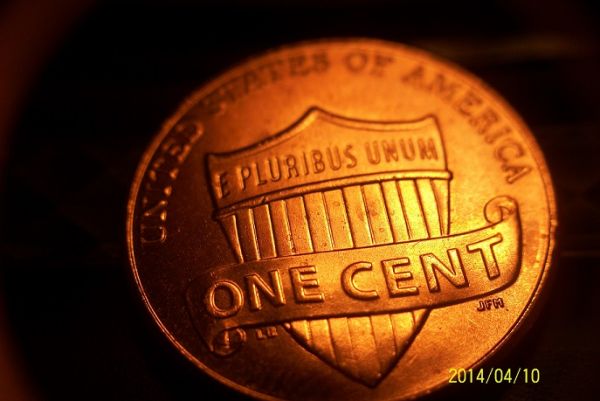
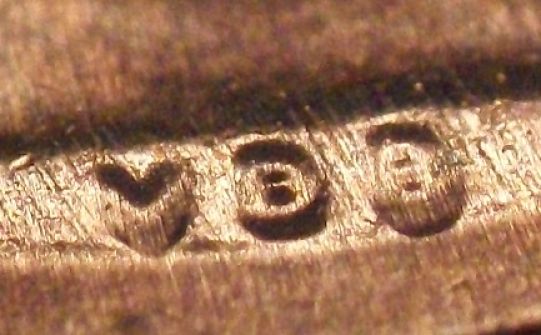
I thought the initials looked odd on the obverse of this penny. Is this just md? Thanks.

2014-Penny

2014-Penny

2014-Penny
Bedrock of the Community
coop's Avatar
United States
62064 Posts
 Posted 04/11/2014  2:17 pm  Show Profile   Bookmark this reply Add coop to your friends list Get a Link to this Reply
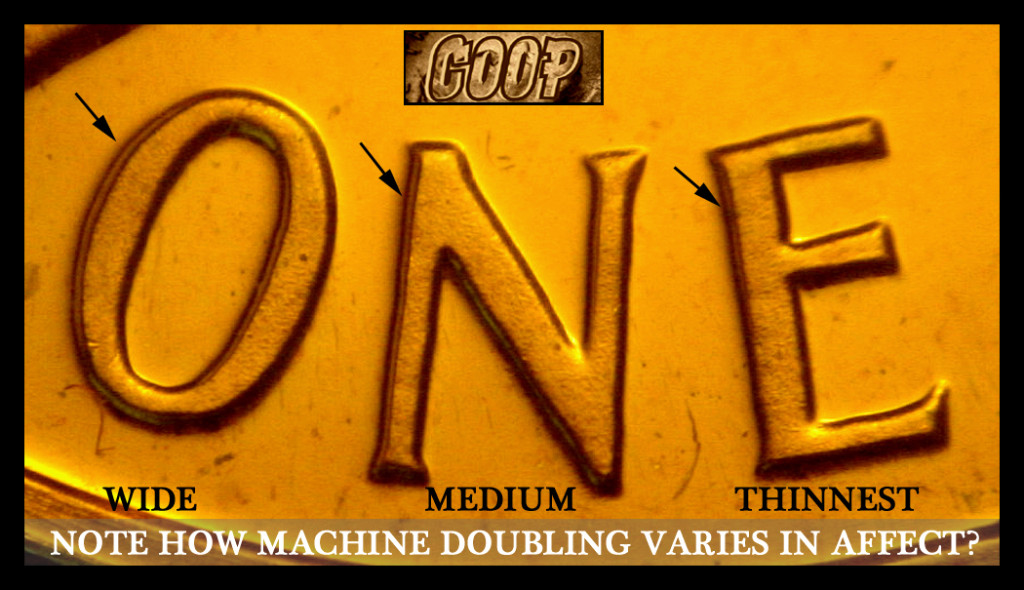
I'm glad you mentioned in your question "machine doubling."

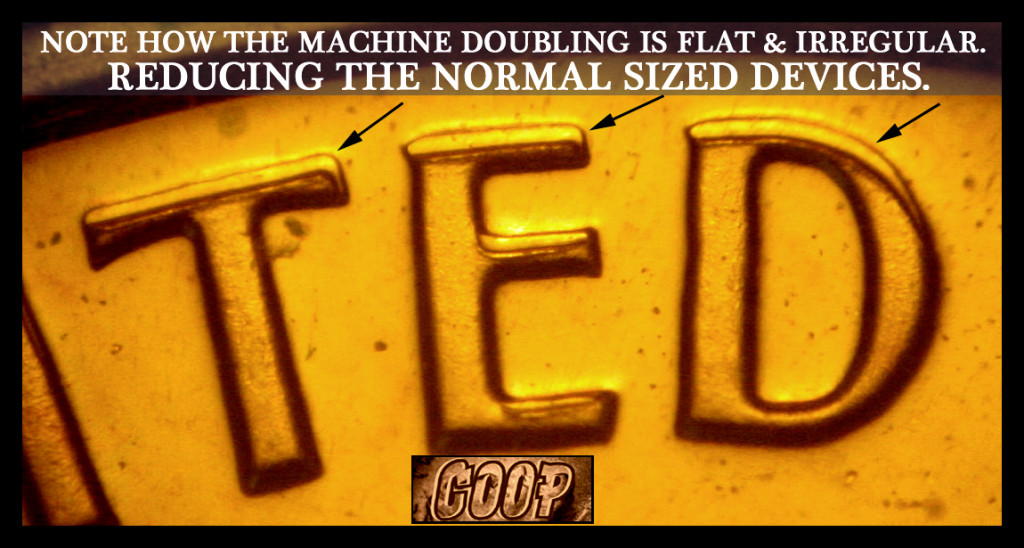
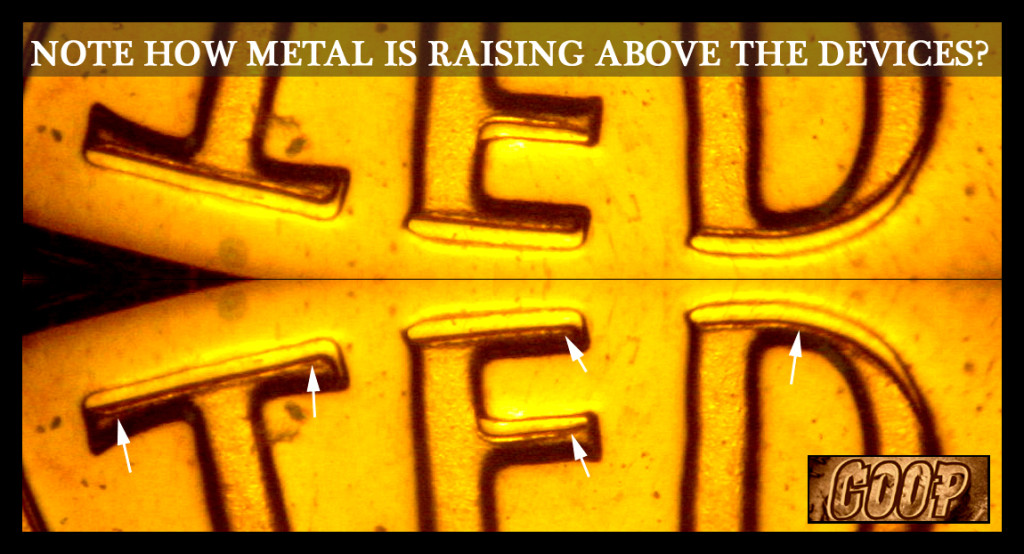
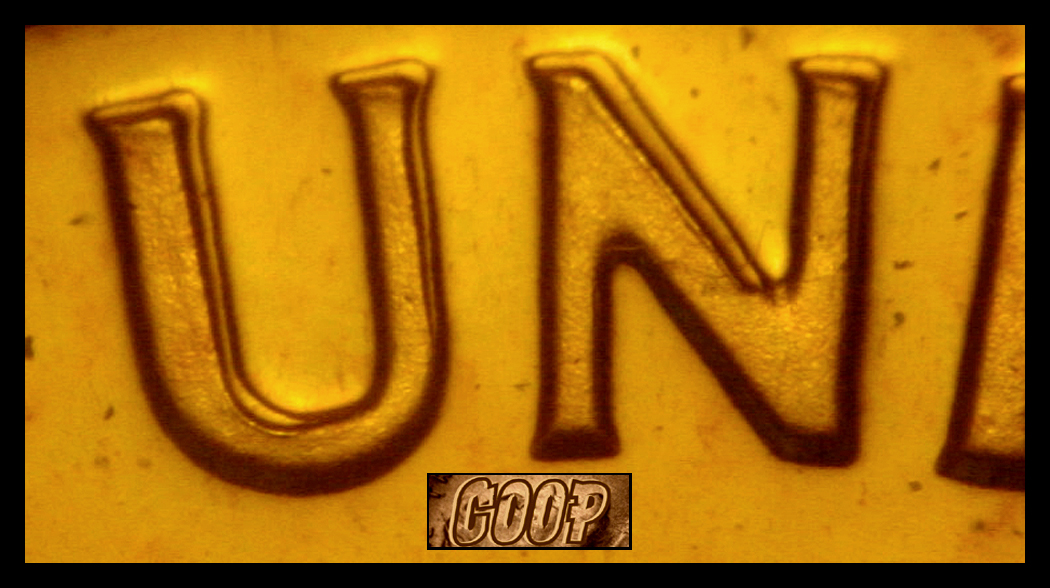
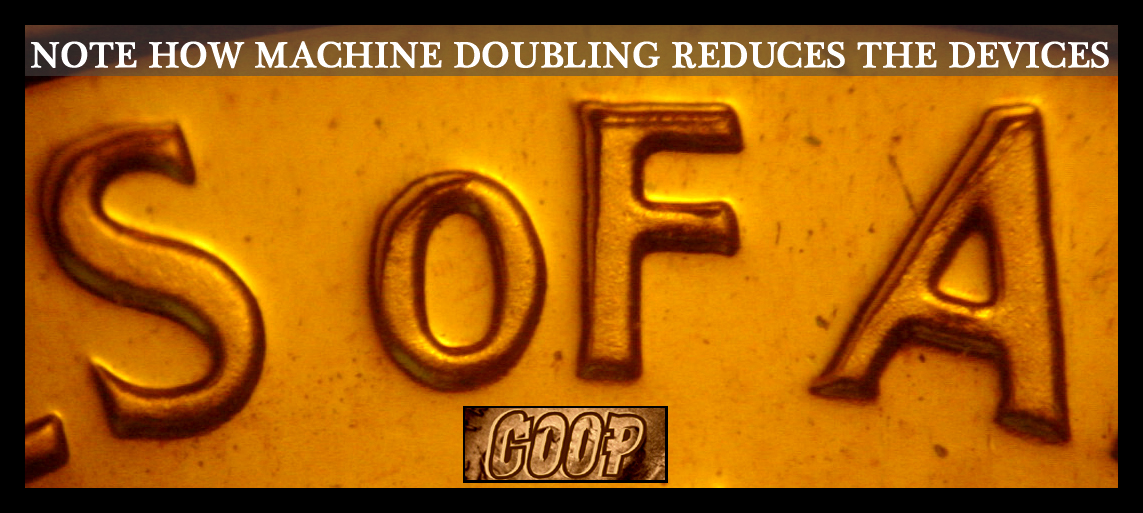
A subject I've come to the conclusion that is what it is. On a normal doubled die with the raised devices, the hub doubling widens/thickens the devices. On machine doubled examples the devices are reduced is width/height but often show parts of the full devices. These are normal sized, but reduce because of the Machine Doubling.

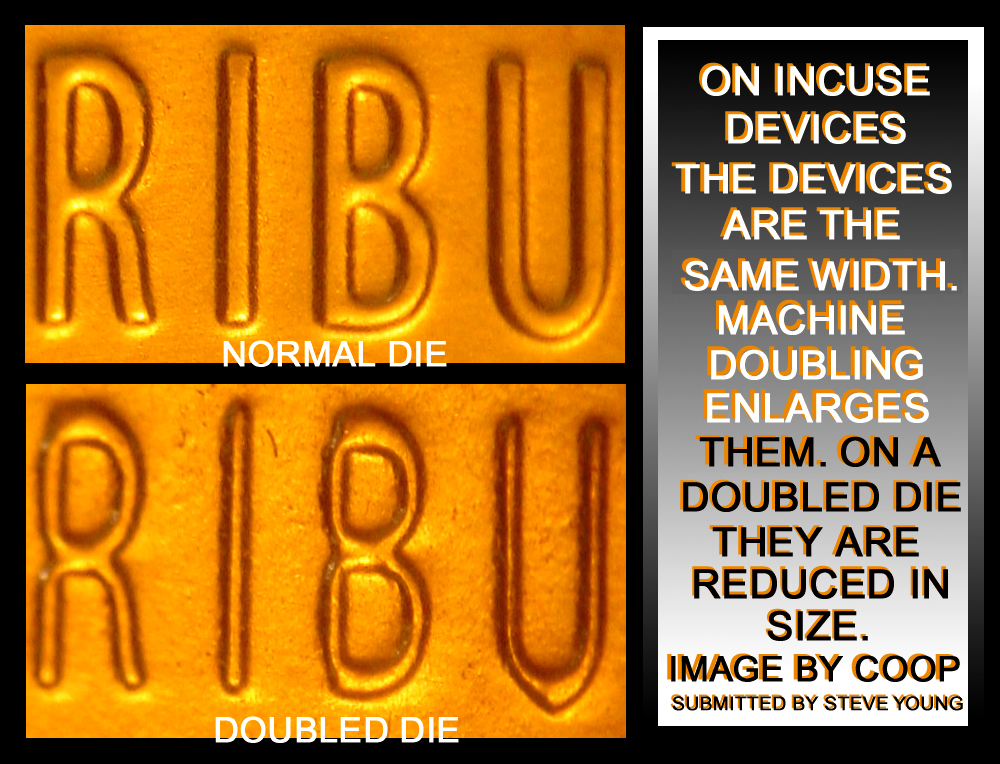
On incuse devices like the VDB, EPU on Shield cents, the "State Parks" quarters on the outside devices, when Machine Doubling happens on the incuse devices like these, increases the sizes of the devices. On hub doubled examples of incuse devices, these are actually reduced. Kind of confusing, but realizing what the difference is helps us to under stand this.
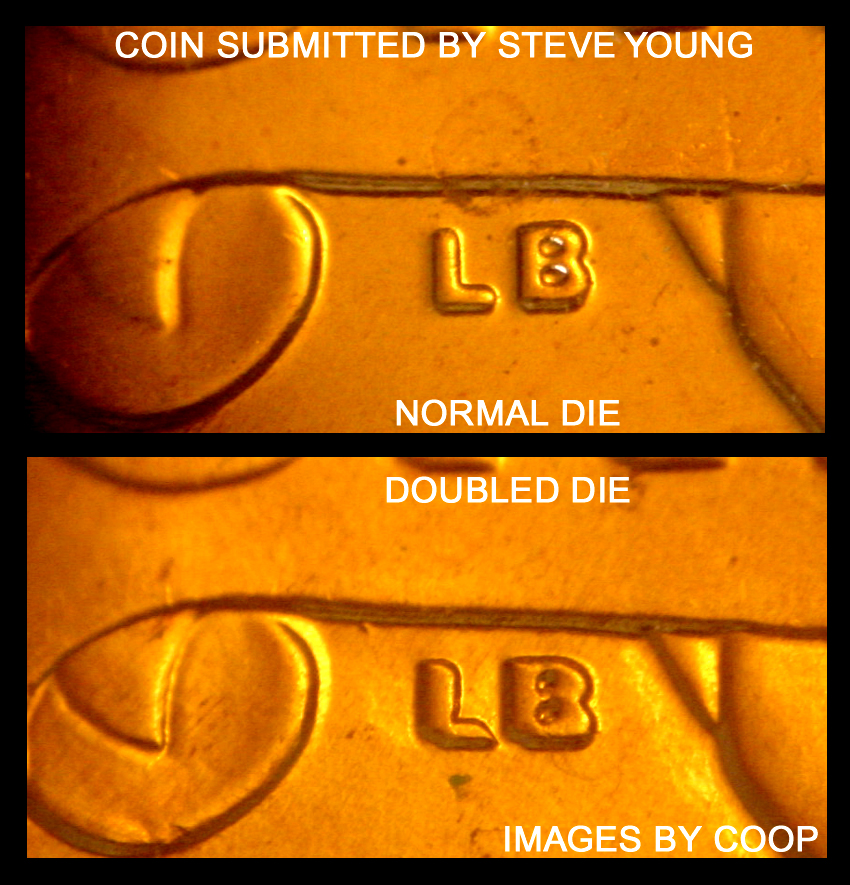
On a Shield cent this is what a doubled die would look like:
2014-Penny
Note how the incuse devices are enlarged as compared with a normal die?
But on the incuse devices of the EPU, the devices are reduced with hub doubling:
2014-Penny

Machine Doubling on raised devices reduce the overall shape of the devices:
2014-Penny
2014-Penny
2014-Penny
2014-Penny
2014-Penny
On incuse devices, the Machine Doubling looks like your initals "VDB" on the cent. They are enlarged. (Wish I had more images of the quarters examples.)
But I hope this helps?

Can I add your image of the VDB to my image files?


Edited by coop
04/11/2014 2:21 pm
Pillar of the Community
Sudz's Avatar
United States
1572 Posts
 Posted 04/11/2014  2:18 pm  Show Profile   Bookmark this reply Add Sudz to your friends list Get a Link to this Reply
Snooderpuff,the VDB looks interesting. By any chance can you post a closeup of the LB on the reverse, please?
Valued Member
United States
126 Posts
 Posted 04/12/2014  10:42 pm  Show Profile   Bookmark this reply Add Snooderpuff to your friends list Get a Link to this Reply
Coop,

You can add the image to your files if you like.

Sudz,

I'll try and get a close up of the LB on reverse when I get a chance.

Thanks for the info all!
  Previous TopicReplies: 3 / Views: 2,397Next Topic  

To participate in the forum you must log in or register.


Disclaimer: While a tremendous amount of effort goes into ensuring the accuracy of the information contained in this site, Coin Community assumes no liability for errors. Copyright 2005 - 2026 Coin Community Family- all rights reserved worldwide. Use of any images or content on this website without prior written permission of Coin Community or the original lender is strictly prohibited.
Contact Us  |  Advertise Here  |  Privacy Policy / Terms of Use

Coin Community Forum © 2005 - 2026 Coin Community Forums
It took 0.21 seconds to rattle this change. Forums