| Author |
 Replies: 18 / Views: 3,747 Replies: 18 / Views: 3,747 |
|
Valued Member
United States
462 Posts |
|
|
|
|
Pillar of the Community
Hong Kong
1270 Posts |
Both coins look good to me but no idea about the greenish color.
|
|
Pillar of the Community
United States
3229 Posts |
Like them both!
The 2 Escudos looks to have been cleaned IMHO. Maybe someone used a chemical cleaner and that left a green hue. Or maybe old pvc that was removed?
|
|
Pillar of the Community
Australia
1874 Posts |
I think it may have been stored in PVC.
|
|
Valued Member
 United States
462 Posts |
Thanks all. I dipped the 2 escudos in Acetone without luck. Does PVC residue suppose to dissolve in acetone ?
Edited by plonker
04/12/2014 10:36 am
|
|
Pillar of the Community
United States
1962 Posts |
While the detailing (the relief) looks regal on this piece (the Spain 2E), you have to be very wary of contemporary counterfeits for Spain crown/half crown-sized coinage from the 1840s (vellon 4R, 10R, 20R) extending into the Peseta series (up into the 1890s, I would say - tons of CC 5P and also 2P).
Again, while the detailing itself looks normal enough, and the weight is (I believe) correct, the surfaces are odd. That COULD be due to an old cleaning/ugly retone (note all the buildup in the protected areas)...
|
|
Pillar of the Community
Hong Kong
1270 Posts |
Quote:
you have to be very wary of contemporary counterfeits for Spain crown/half crown-sized coinage from the 1840s (vellon 4R, 10R, 20R) extending into the Peseta series (up into the 1890s, I would say - tons of CC 5P and also 2P). This is a new fact to me. Would you show us some examples of CC 20R or 5P of Spain, realeswatcher? Let us see how to figure out the original from CC. Henry |
|
Valued Member
United States
264 Posts |
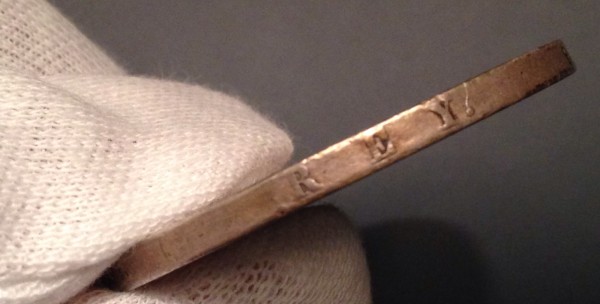
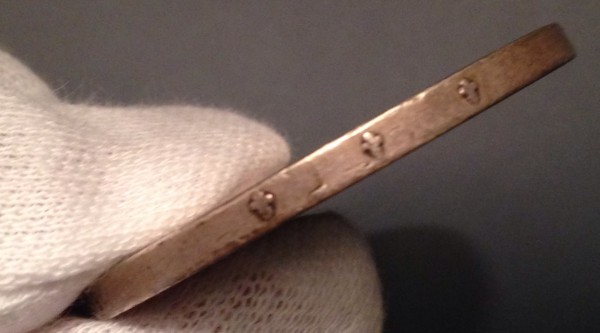
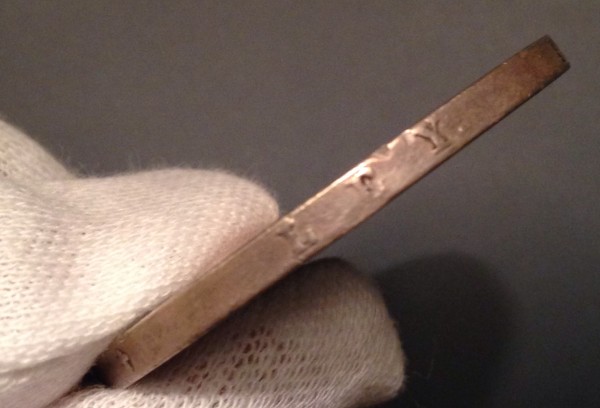
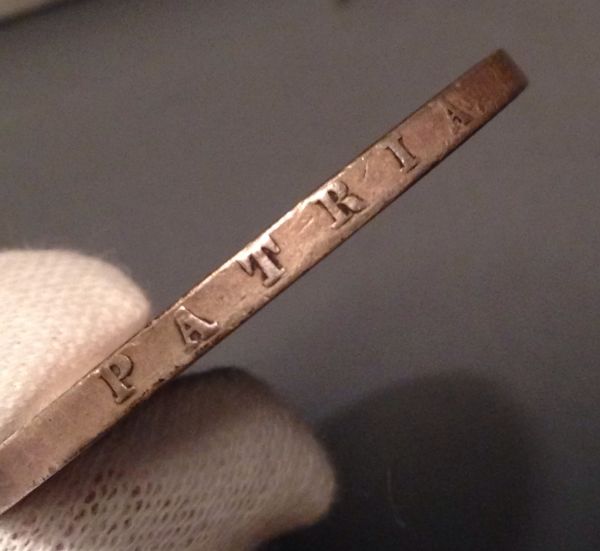
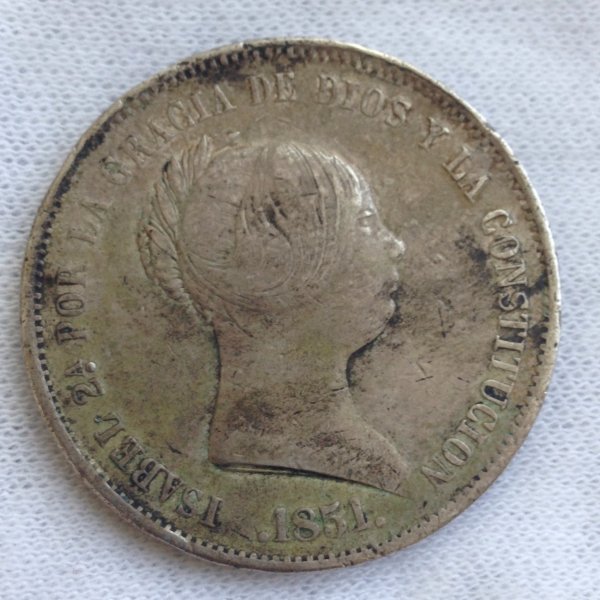
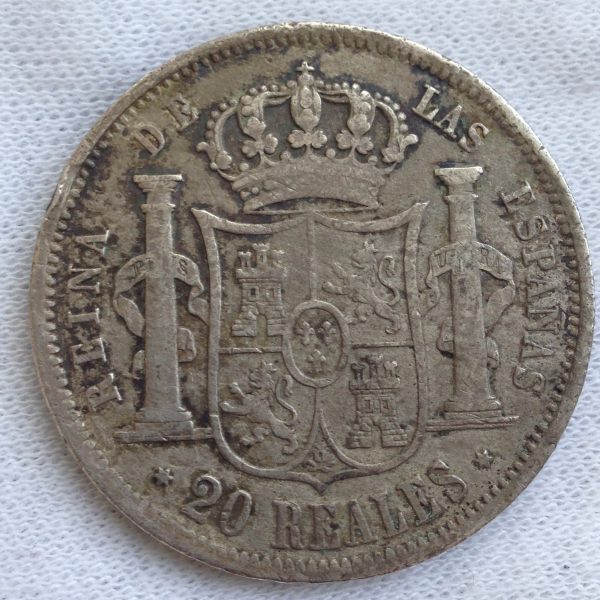
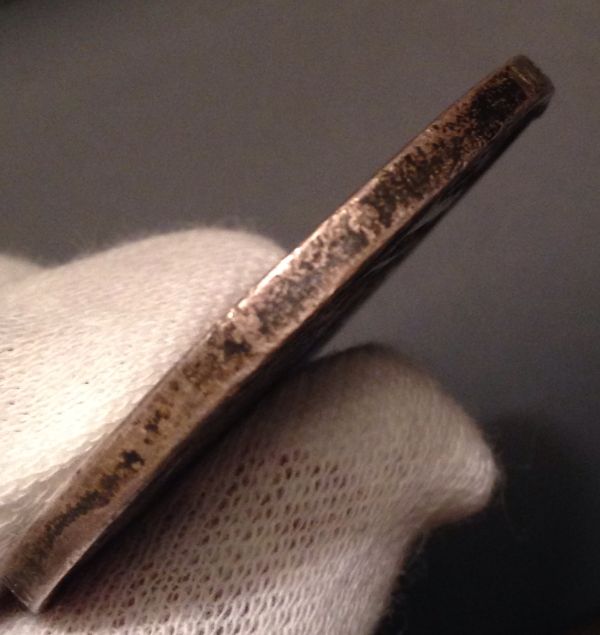
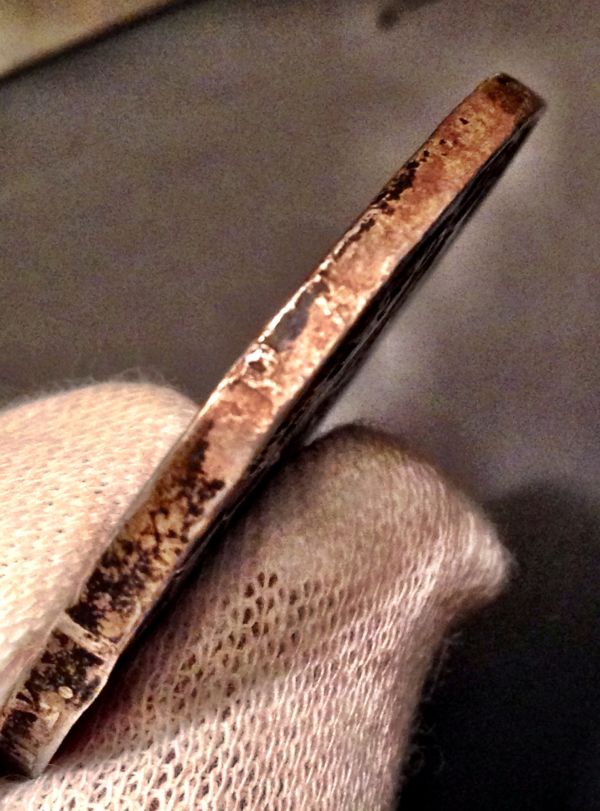
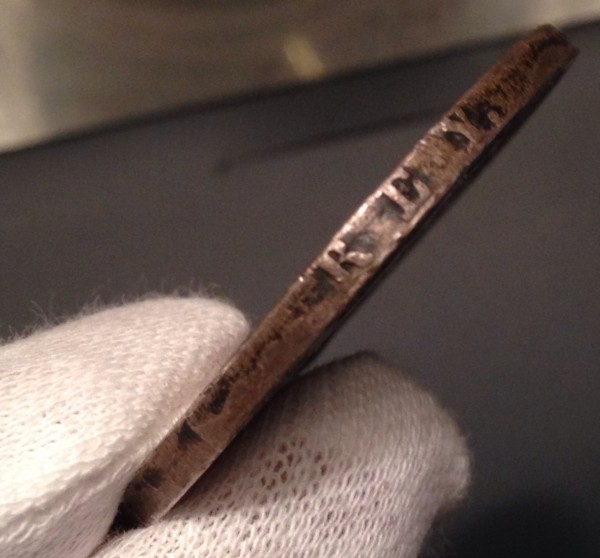
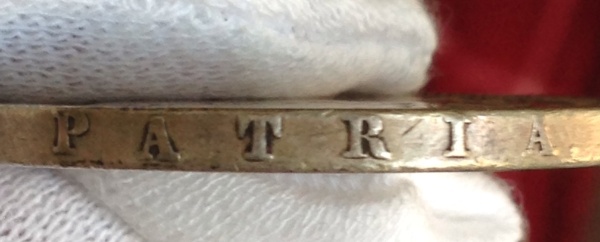
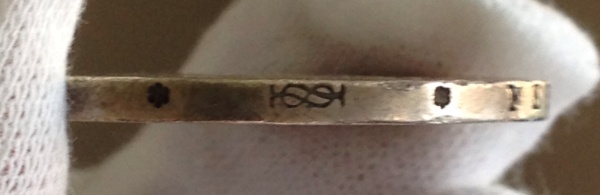
So glad to finally see an Isabel II coin here! The 20 Reales and 2 Escudos are rather difficult to find with nice rims like yours has. Would like to see more of the edge if possible.
I would also very much like the benefit of any additional information realeswatcher or others can shed on contemporary counterfeits for this series. I'm always interested in more info on Isabels!
I've a reasonable grasp of the modern counterfeits and a good bit of experience with the contemporary counterfeits for the gold Isabel II coins. But have thus far not encountered any contemporary counterfeits of the silver 2 Escudos first hand. Coronado lists three for this coin in copper, brass, and corrugated iron. The copper and iron pieces were generally just a simple plating which the wear on this piece would certainly have uncovered. The brass, as I understand it, would be underweight for this coin.
The OP's coin does not appear to match any of these.
My experience with Isabel II coins in general and 20 Reales/2 Escudos in particular suggests that these coins were heavily and often harshly used and suffered many injuries during their lifetimes. Many have heavily dinged rims and most are cleaned. In fact, it is so hard to find these coins in problem free condition that they generally slab and sell as market acceptable so long as the cleaning is not too harsh.
In the case of the OP's coin I think the light areas on the obverse would prevent a problem free grade, but otherwise it is rather nice for its grade.
Please post more good photos of the edge if you would.
|
|
Valued Member
United States
462 Posts |
Edited by plonker
04/13/2014 9:14 pm
|
|
Valued Member
United States
264 Posts |
Thanks for posting additional images. Based on the information available, in my opinion your 1867 2 Escudos is genuine. What I can see of the 1851 20 Reales doesn't raise red flags, but the weight seems a bit low even for one that has suffered such damage. Proper weight for this coin should be 26.29g. Interestingly, Coronado does list an 1851 Madrid coin of this type which had a contemporary counterfeit of debased silver. Moreover, his valuation for that counterfeit is nearly as much as the current value of a genuine coin. A specific gravity test and closer photos of obverse and reverse would be the next step, if you're so inclined. Regardless, thanks for sharing some Isabel II's and making my area of interest relevant to the forum for a time.  |
|
Valued Member
United States
462 Posts |
I have doubts about the 20R as well. WRT debase silver how does ring test and magnetic behavior differ from .9 silver ? I use a N52 single magnetic sliding off the coin to determine the magnetic behavior. The 20R seems to slide off a fraction faster than my other silver crowns that I know genuine. I think wonghinghi has built a grid of N52 magnets and slide the coin off of that. Any idea if this will produce different results ?
|
|
Valued Member
Spain
110 Posts |
|
|
Valued Member
United States
264 Posts |
Certainly if the 1851 20R thuds rather than rings it may be cast, heavily debased, or contain no silver at all. If it is debased silver, in some cases the content may not be radically different from the expected ratio. So long as the coin is struck rather than cast, I would be hard pressed to describe a procedure for discerning silver content which may differ by as little as 20% by ring test alone. How do I describe what to expect to hear such that you could know if you hear the same thing? I'm not certain I could distinguish it in that manner either.
It is always challenging to ascertain the true nature of a coin when limited to non-destructive testing. In this particular case and at this stage, I believe the most substantive data for making an assessment would come from a specific gravity test.
|
|
Pillar of the Community
Hong Kong
1270 Posts |
Plonker, your 1851 20R looks good to me though it is underweighted. I have no idea of how seriousness of the contemporary or modern counterfeits of the Spain 20R or 2Esu or 5 pesetas. I hope realeswatcher can elaborate more about this issue. Also moneditis, can you tell more about the phenomenon of "duros sevillanos"? Is underweighted coin a sign of fake? I show 4 Spain coins (3 20R and a 2Esc) below and they are all underweighted but I find them good, not like a fake to me. Welcome your comments on my coins. I start to query was it a custom/fact to produce underweight coins from Spanish mints? Spanish coins are far from showing good standard weight when compared with English and German coins in the same time frame. Who know why? Can anybody show more about your Spanish coins and their weights for our reference. Coin 1:1850 20R, 25.88g (std. 26.29), 37.2mm, N52 magnet slider 5.36 seconds. Coin 2:1855 20R, 25.70g (std. 26.29), 37.2mm, magnet slider test 5.38s, the coin is plugged. Coin 3:1861 20R, 25.67g (std. 26.29), 37.3mm, magnet slider test 5.55s, S.G.10.301 (~89.8%Ag) Coin 4:1867 2Esc, 25.84g (std.25.96), 37.0mm, magnet slider test 5.14s, S.G.10.25(~86.5%Ag) Findings: 1)Coin 3 is seriously underweighted 2)For the magnet slider test, the longer the time taken for the coin to slide through the magnets, the higher will be the silver content, this is perfectly fit with coin 3 and coin 4 which were proved by S.G. test. Sorry that I had not done the S.G. for coin 1 and 2. Coin 1 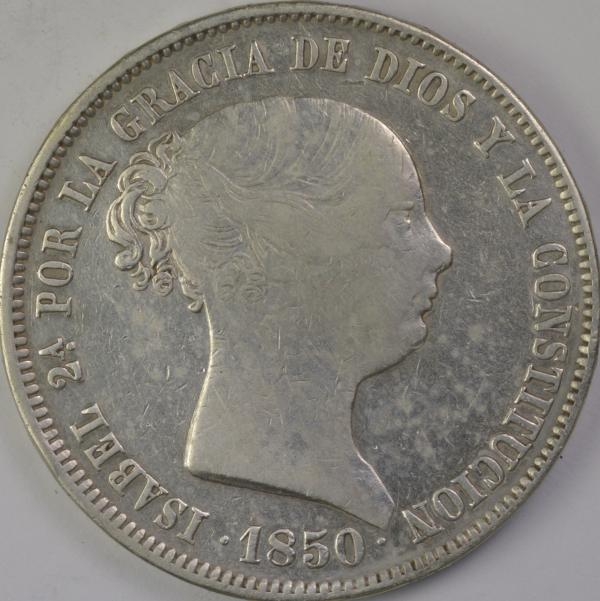 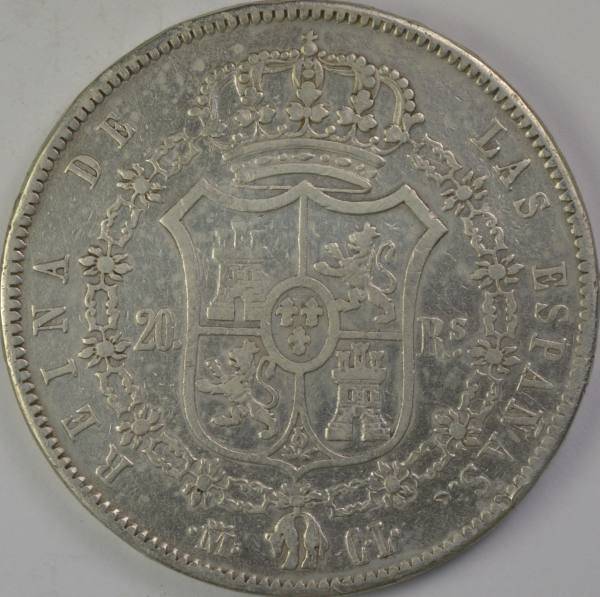 Coin 2 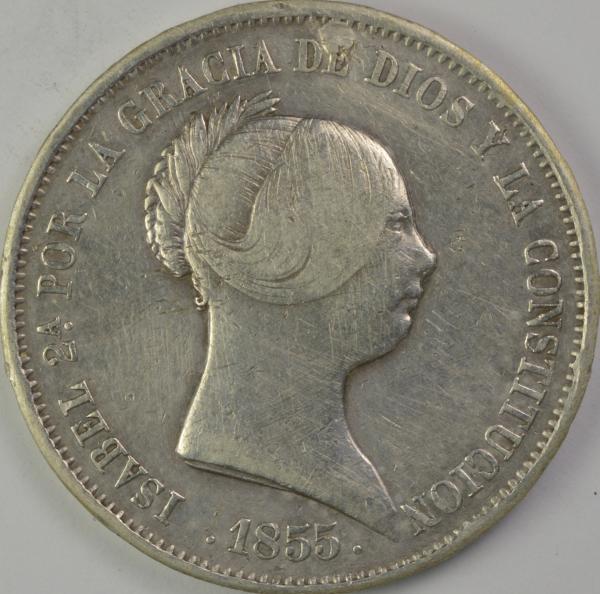 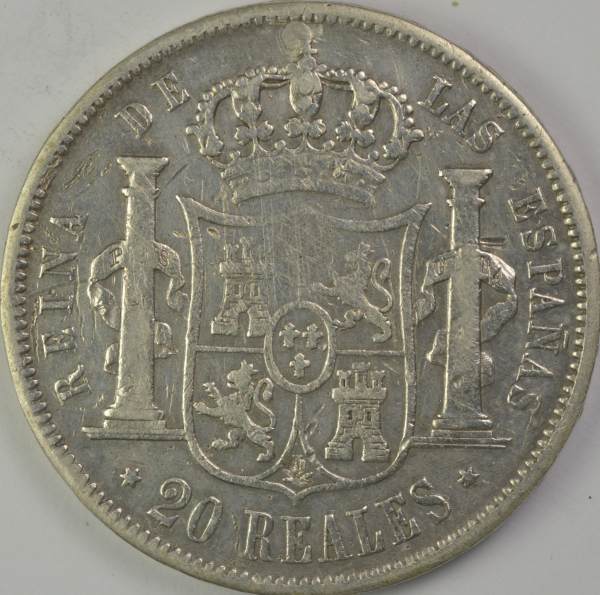 Coin 3 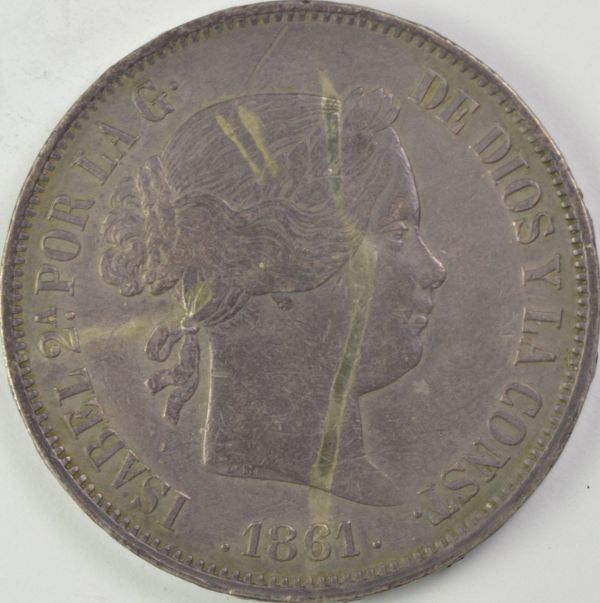 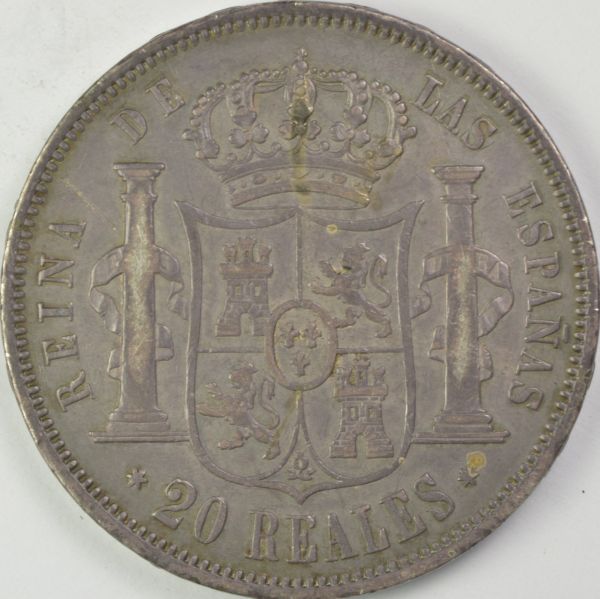 Coin 4 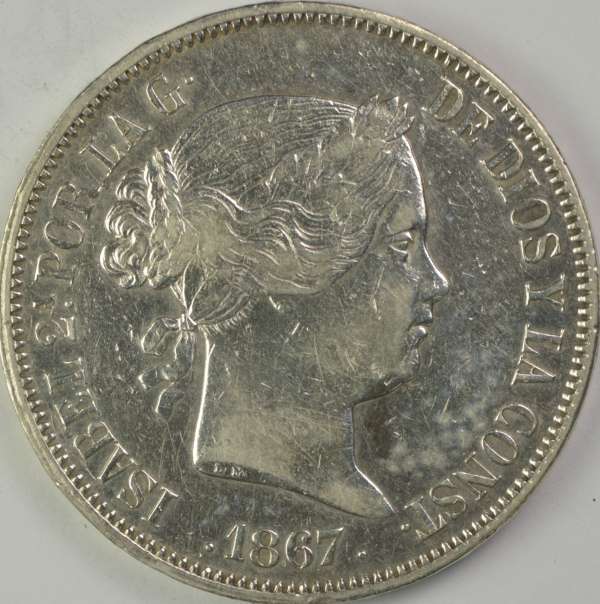 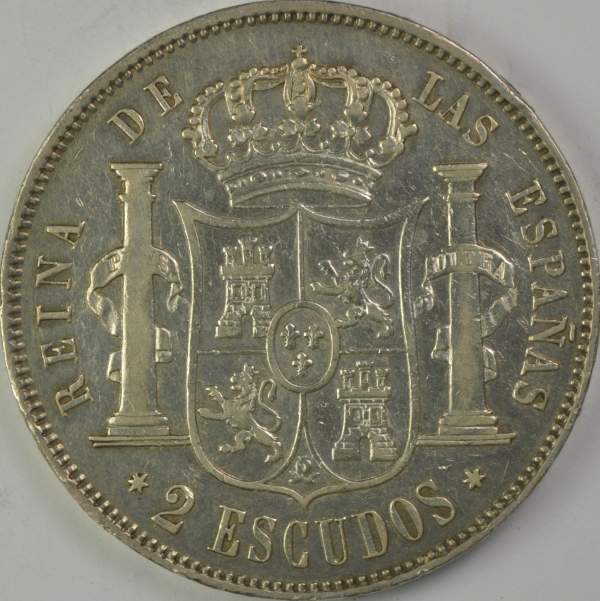 From top to bottom : Coin 1->2->3->4 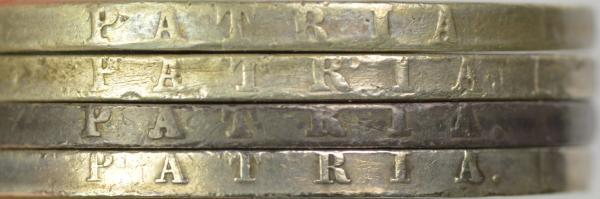 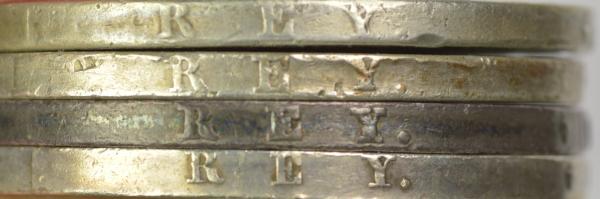 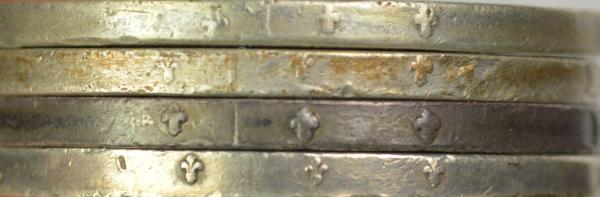 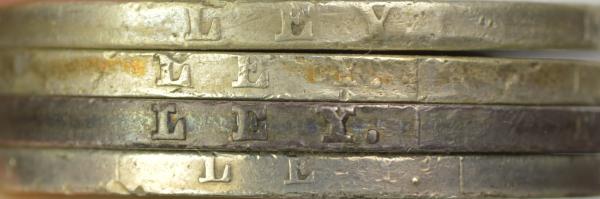 All of you have a happer Easter! Henry |
|
Pillar of the Community
United States
1768 Posts |
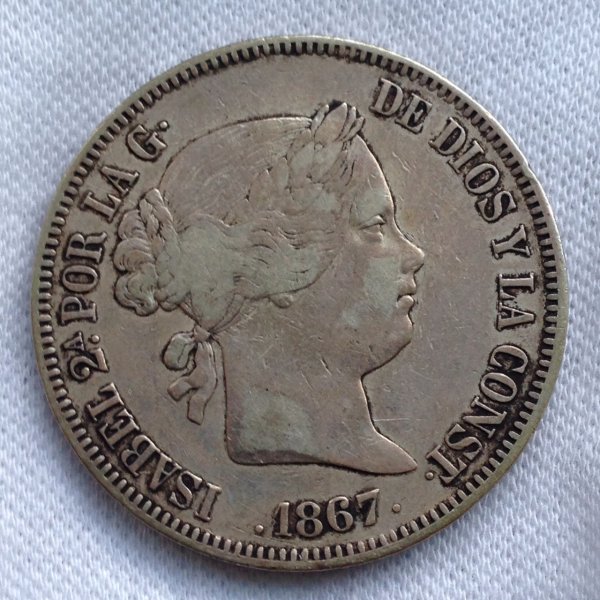
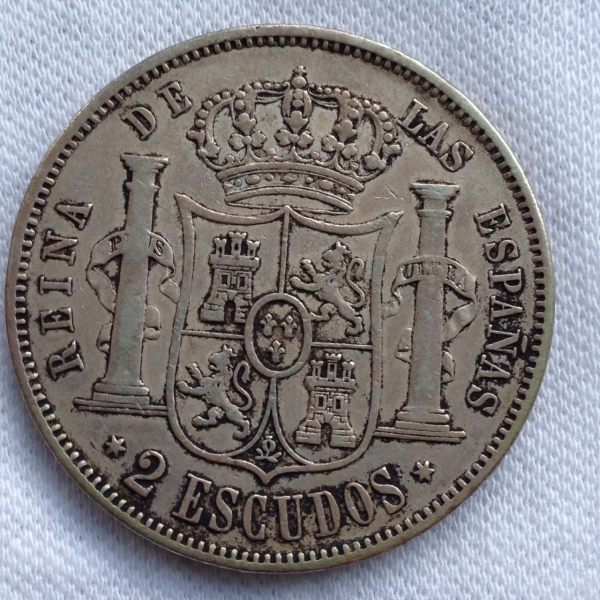
Q.Got these two recently, not too rare but not common either. Just wanted to share with everybody. Any idea what has caused the greenish color on the 2 Escudos , perhaps cleaned ? Spain 1867 2 Escudos weigh 25.92g A. Copper tends to leach to the surface. Out of corrosion products, cuprite Cu2O and also malachite Cu2(CO3)(OH)2 are the most common copper oxides in a coin alloy. See here: http://en.wikipedia.org/wiki/MalachiteMalachite is a vibrant green and copper oxide is red. Depending on environmental conditions you can get both or either. As mentioned the other possibility is man induced corrosion as with a PVC holders - these holders impart chlorides which acts as a corrosive agents. However acetone WILL remove it - if not - its part of the alloy and probably copper surface leaching or selective corrosion process (i.e., copper leaching to the surface from the alloy). I found these issues for a lack of a better term boring ... so I have not spent much time expounding the work of Barrerra which uses these simplistic alloy classifications. Realize most of these regal issues have the ~5% Cu so this kind of effect SUGGEST a debased alloy. From experience and owning several specimens it may not be a debased alloy but just selective corrosion. If you do have this effect and you do on your coin realize the Weight Tolerance should be within +/- 0.5 grams of the regal standard for a debased alloy. Again - This green color is indicative that you MIGHT? have a FALSA or debased alloy. You do realize that all the Isabel II Au/Pt-host issues are from South American Mints ... for good reason <VVBG>. BTW - the 1861 to me anyway does not look like improper alloy mixing bands but some foreign object was put on top of the coin creating these bands ... but if under a loop if the band edges are jagged then you MAY have this error type as part of the annealing blank making process. John Lorenzo United States Edited by colonialjohn
04/17/2014 12:54 pm
|
|
Valued Member
Spain
110 Posts |
|
| |
Replies: 18 / Views: 3,747 |











 Posted 04/11/2014 11:47 pm