| Author |
 Replies: 12 / Views: 1,651 Replies: 12 / Views: 1,651 |
|
|
Pillar of the Community
1121 Posts |
I have this coin that I am unable to attribute. I believe it to be Greek. Can someone help me please 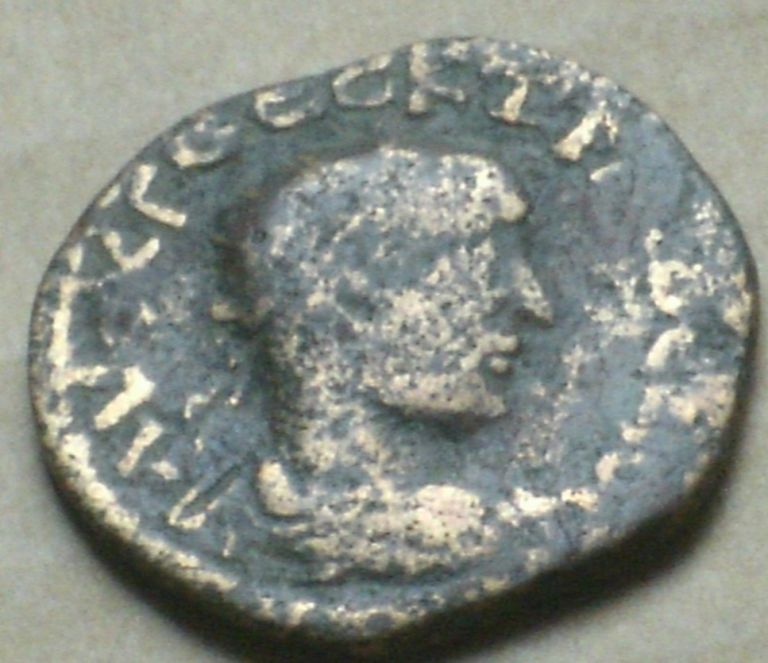 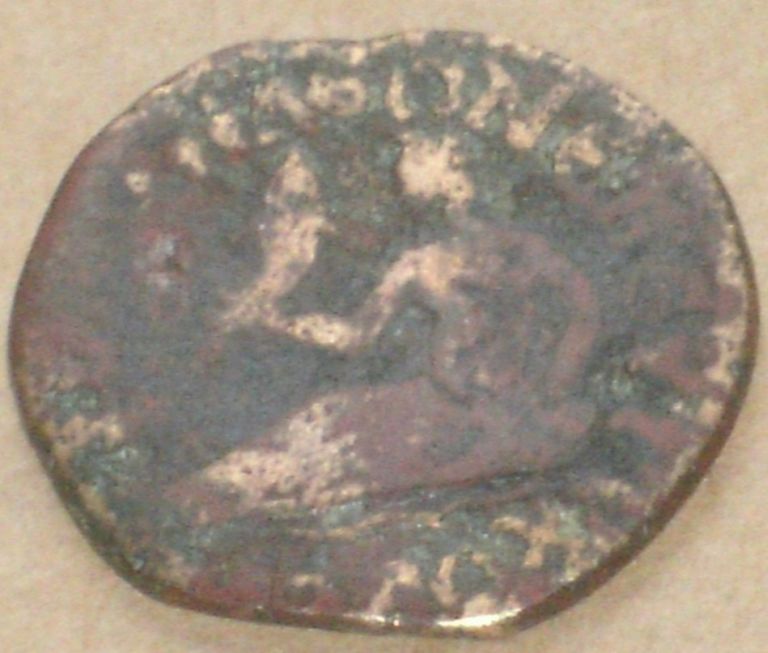 |
|
|
|
Pillar of the Community
United Kingdom
3626 Posts |
Picture seems to have lots of tiny dots all over it. If these are tiny holes, then it is probably a cast fake, sold to tourists. I am no expert, lets see what the others make of it. Where did you get it?
|
|
Pillar of the Community
 1121 Posts |
Bought on (the dreaded) ebay. |
|
Moderator
 United States
23731 Posts |
It is supposed to be a Roman provincial but the legend doesn't make sense to me. Looks like the same letters repeated. The reverse appears to be a river God. The Bust looks like it might be Gordian III, but with that strange legend I think this might turn out to be a copy.
|
|
Pillar of the Community
United Kingdom
2838 Posts |
I'm also having trouble with the legends, maybe from Pautalia or Hadrianopolis  Edited by bobbyhelmet
04/22/2014 10:45 am
|
|
Pillar of the Community
1121 Posts |
pishpash
I don't know that a 'cast' coin can be automatically considered a fake as (here I shall quote two references)
(Reference 2 sources on the question of cast ancient coinage.)
The website, NGCcoins.com: "Cast Coins"
Ancient cast coins are ineligible for the services of NGC Ancients. Though the vast majority of ancient coins were struck, some issues were manufactured through a casting process. Distinguishing between original cast ancient coins and modern castings is often difficult, and for this reason cast coins are ineligible for NGC Ancients grading, even if we believe them to be genuine. It was a common practice for ancient coins to be struck on cast planchets, and sometimes indications of that casting survives the striking process; this, of course, does not affect the eligibility of struck coins for grading."
In addition, from the source, Wikipedia.com:
"Cast coinage refers to coins made by pouring melted metal into a mold, i.e. casting. It has been used for regular coins, particularly in the Far East, but also on a smaller scale. (e.g.: the ancient Mediterranean world.) The method differs from the current mode of coin production, which is done by striking coin blanks that have been cut out of metal sheets. The method has also been used by forgers."
So you see that even a 'cast' coin may be genuine.
|
|
Bedrock of the Community
Australia
21792 Posts |
If it came from ebay, what was the seller's description for this coin? The style and lettering suggest that it is of Roman Colonial origin. The porosity and roughness of the surface, and differential colouring in various parts of it, suggests to me that it has suffered from corrosion due to burial. |
|
Pillar of the Community
United Kingdom
3626 Posts |
Topcat, as I say, I am no expert and just giving my first impression. I can't make out enough of the legend for an ID. Can you post a link to the ebay listing? |
|
Pillar of the Community
United States
567 Posts |
Looks like a corroded and (badly) cleaned provincial to me. Doesn't look cast.
|
|
Pillar of the Community
 United States
3098 Posts |
|
|
Pillar of the Community
United Kingdom
2838 Posts |
Quote:
I think this is it. Trajan Decius from Philomelion: Looks about right to me  |
|
Pillar of the Community
1121 Posts |
Thanks, Guys, all of you, (especially Paul).
I'm going with Paul. I have looked at his link and I am certain that he is on the right track.
That suits me fine because I have a 29.5 c.m. steel and marble (tourist sized) replica of Trajan's Column built in 113 A.D. and located in Italy North of the Roman Forum, (that details his exploits around and up the column), and the coin is an excellent compatriot to that. (I wish I could include a photo but I don't know how.)
Again, let me thank you all for your comments and help.
Regards
Topcat7
|
|
Pillar of the Community
1121 Posts |
I found the way to do it. 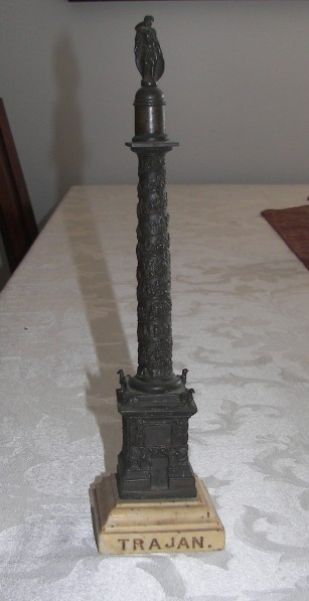 |
| |
Replies: 12 / Views: 1,651 |
|







 Posted 04/22/2014 05:38 am





