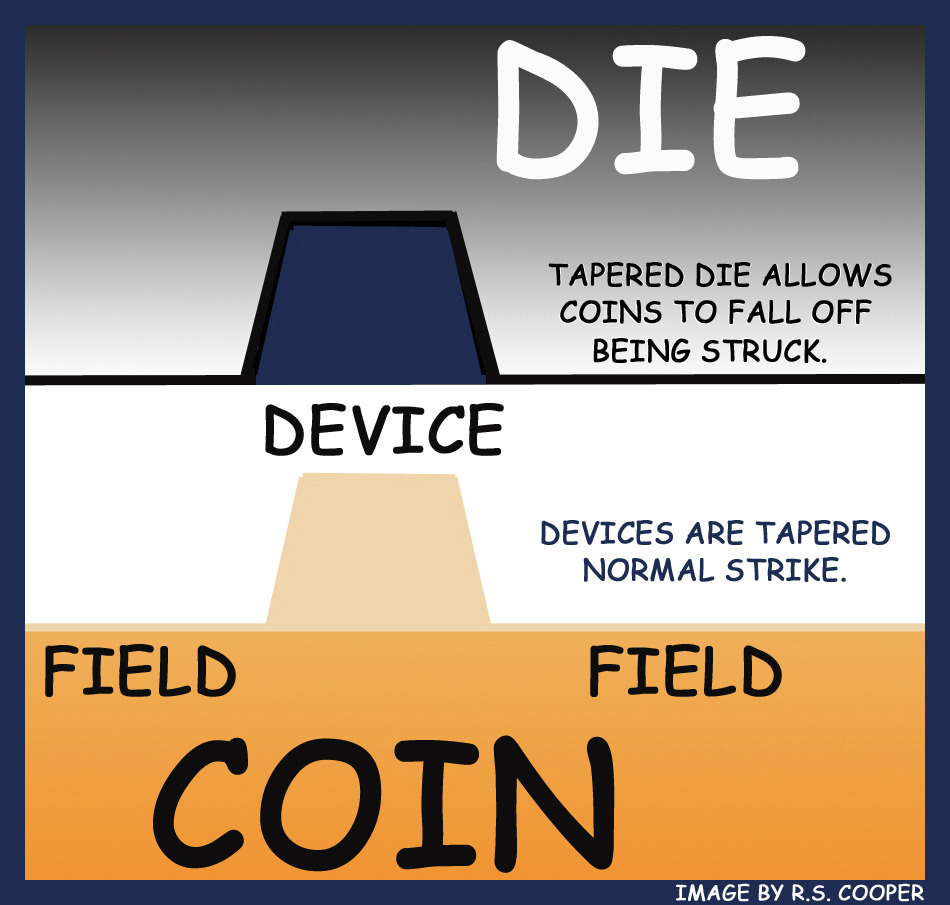
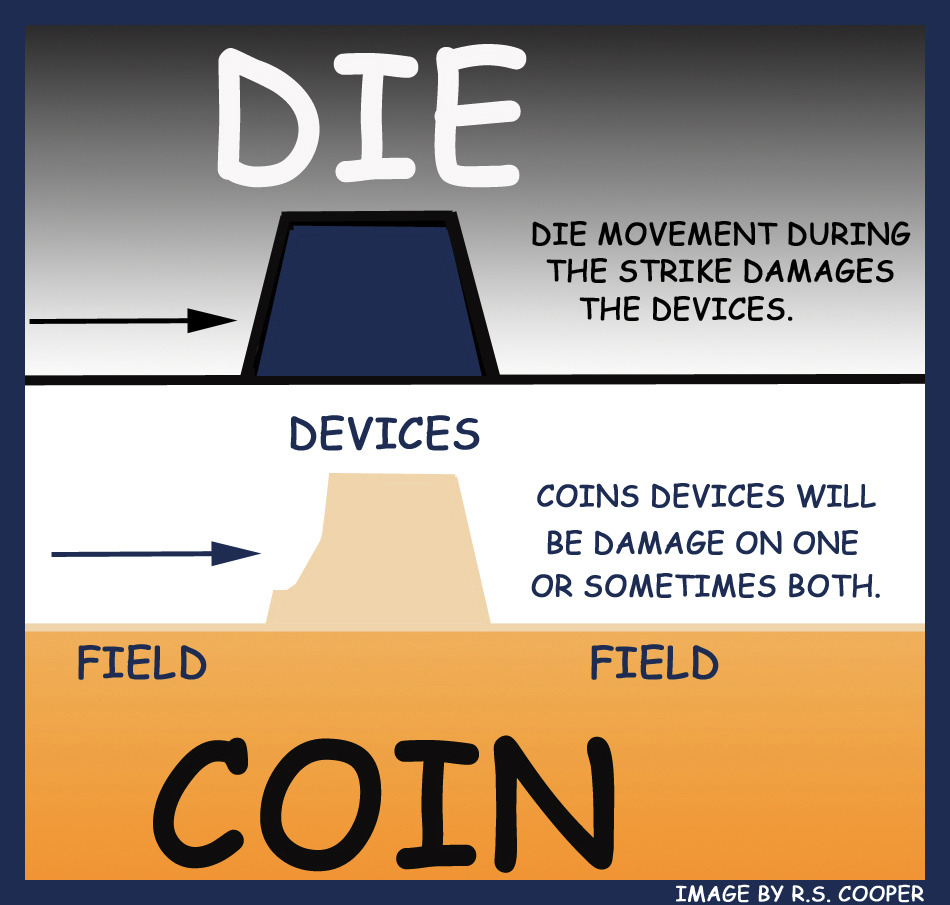
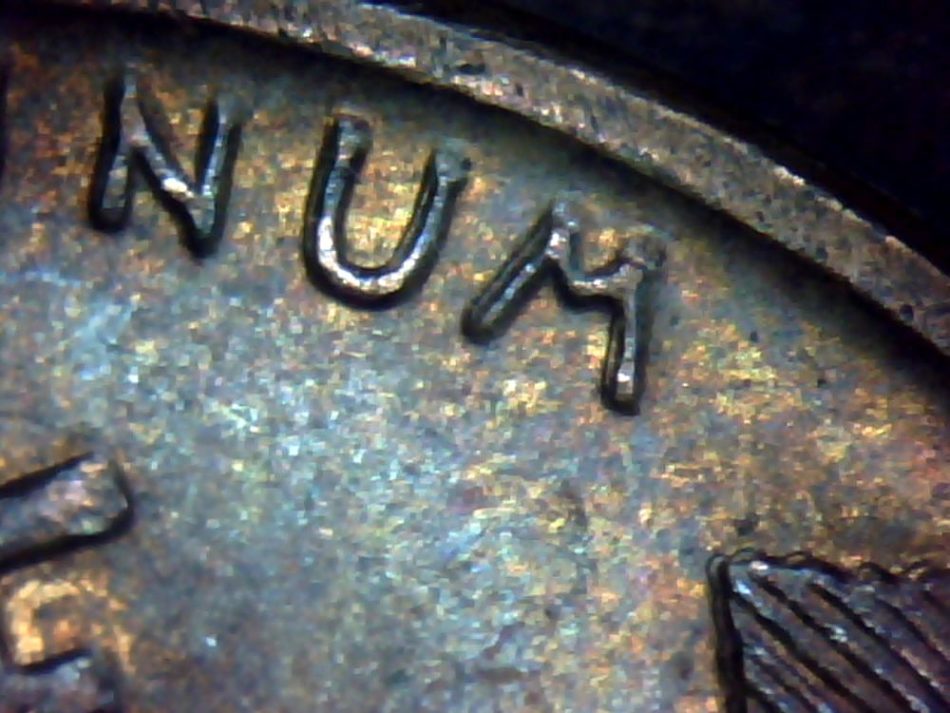
It is machine damage on the your UNUM. I just made an illustration to help with this subject. I made a setup of a normal coin To show how the die affect the coins. Note the shape of the devices on the coin. The are tapered. The tops of the devices are narrower than the bottoms of the devices. This is so that the coins don't stick to the die during ejection of the coins struck. On a machine damaged coin the die is normal, but the dies movement during the strike allows movement after the strike happens. This movement (which can vary depending on the sloppiness of the machine) can damage the coin during the strike. Most refer to this as Machine Doubling. I've recently change to call it what it is. It is machine damaged (Nothing is doubled, just damaged) Here is what happens on a machine damaged coin: Note the damaged area on the device. This can happen to one or both sides of the devices. Looking down from the top of the coin it looks like it is doubled, but it is actually reduced in size of the devices. So keeping the concept of the machine damaged devices will help us to grow in our search for the real ones we hand to find where the devices are enlarged from double hubbing creating a doubled die.
(I have a couple more illustrations on die chipping and grease filled devices when these subjects come up.)
Thanks everyone. I still have three more different ones not used yet. Waiting for the correct time. (Hint: grease filled device, die chip, doubled die.)
Disclaimer: While a tremendous amount of effort goes into ensuring the accuracy of the information contained in this site, Coin Community assumes no liability for errors. Copyright 2005 - 2026 Coin Community Family- all rights reserved worldwide. Use of any images or content on this website without prior written permission of Coin Community or the original lender is strictly prohibited. Contact Us | Advertise Here | Privacy Policy / Terms of Use












 Posted 06/01/2014 07:56 am