| Author |
 Replies: 15 / Views: 1,959 Replies: 15 / Views: 1,959 |
|
|
Pillar of the Community
United States
2824 Posts |
Edited by OcalaFlorida
06/01/2014 4:04 pm
|
|
|
|
Rest in Peace
United States
1943 Posts |
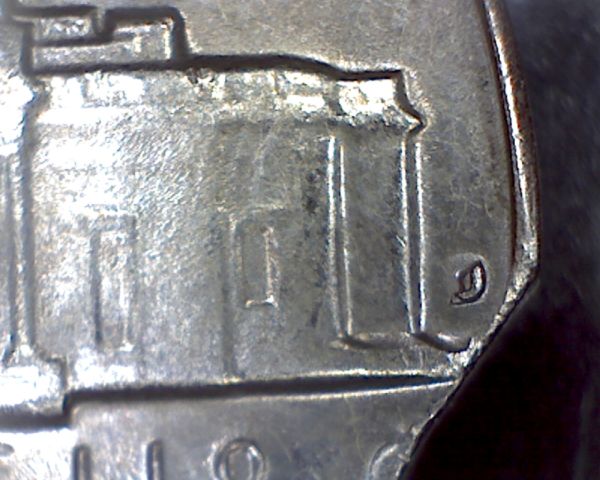
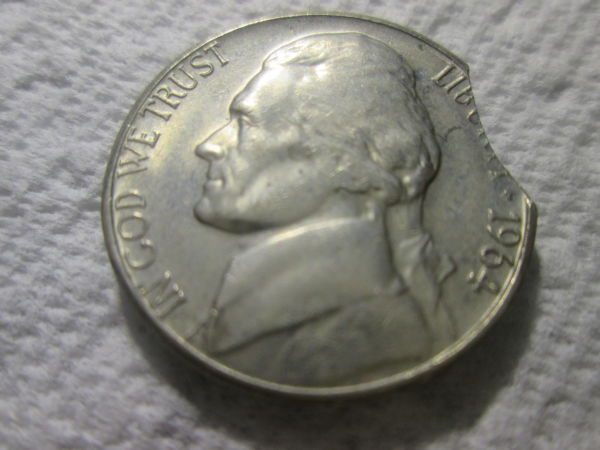
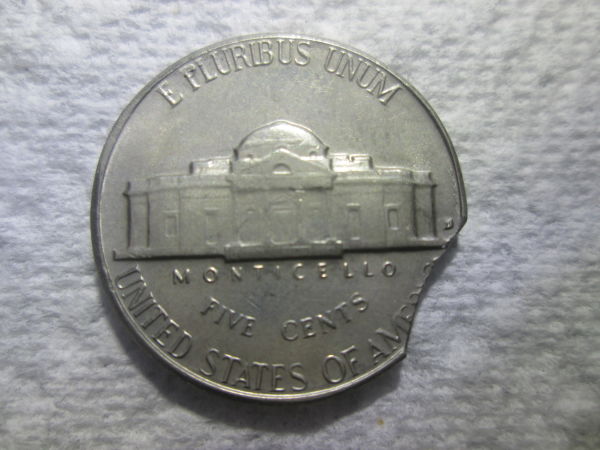
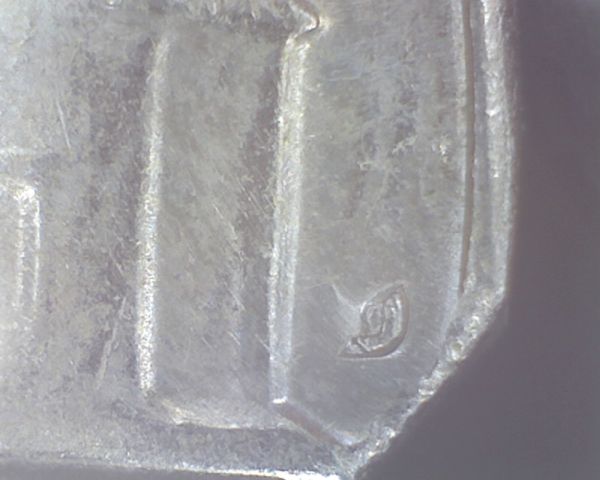
Looks good to me. When a coin is struck the metal flows from the center out towards the edge until it hits the collar. When the metal flow hits the collar it then flows up. Since the metal at the edge of the clip doesn't didn't come in contact with the collar the letters (and in this case the mintmark) will be weak. The partial letters of AMERICA on the reverse and LIBERTY on the obverse should also look thin and weak.
Of course the blakesley effect on your coin is also a great indicator of a genuine clip. Nice find.
|
|
Pillar of the Community
 United States
2824 Posts |
Thanks pyrbob another question I have is the mint mark a D/D RPM OMM etc? or just random weirdiness
|
|
Pillar of the Community
United States
1699 Posts |
Pyrbob has it right on, as always. It's such a small, solitary, high relief element that the clip and metal flow had a large effect on it's being struck fully.
I doubt that it's an RPM and any doubling is an effect of the clip and resultant metal flow.
|
|
Rest in Peace
United States
7075 Posts |
 with the previous posts but that is one messed up MM. Nice find. Give it a good home.  |
|
Pillar of the Community
United States
2624 Posts |
Mint mark looks like PMD. |
|
Pillar of the Community
United States
4809 Posts |
The shear/break edge has me a little confused. In 1964, which die was the hammer?
|
|
Rest in Peace
United States
1943 Posts |
I think in this era the obverse die was the hammer die. I don't understand why you ask this.
|
|
Pillar of the Community
United States
1699 Posts |
The blanking process is totally separate from the striking process. Blanking dies punch out the blanks (later to become planchets). When these are fed through the coining press, the orientation of the punch and tear effect of the edge is completely random in relation to the obverse and reverse faces.
|
|
Pillar of the Community
United States
4809 Posts |
Thanks folks. The break edge still look jagged (circ damage? but the coin looks crisp). I guess I imagined that they'd be smooth(er) after the metal flowed during coining.
|
|
Pillar of the Community
United States
2824 Posts |
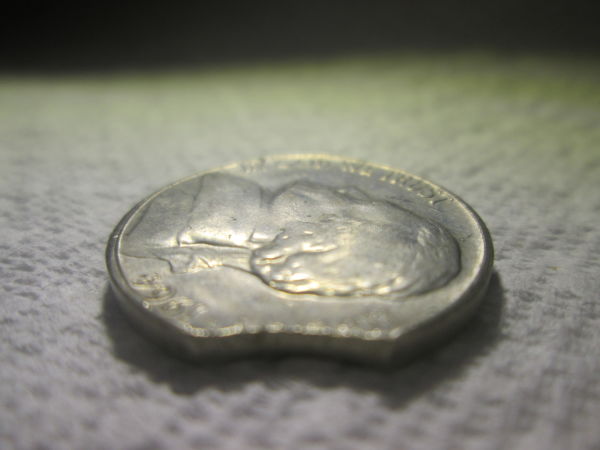
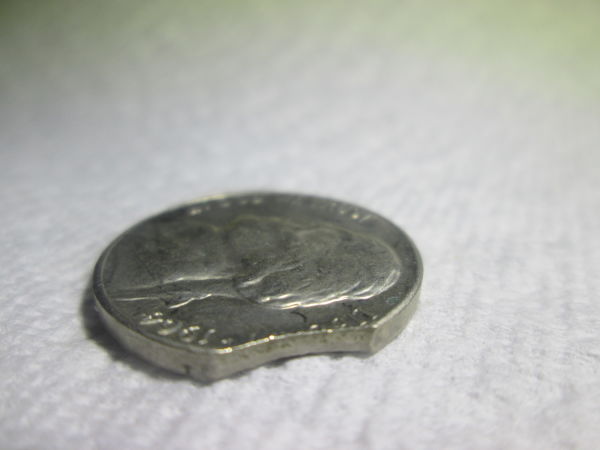
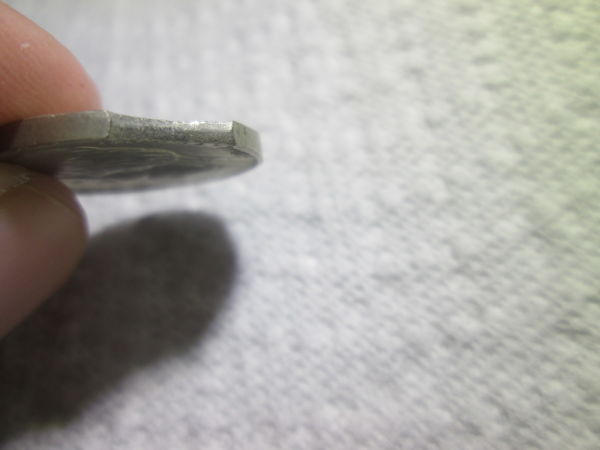
edge is smooth to touch and with eye and loop but the microscope blown up picture does makes it look rough look at the side view of me holding it that how it looks in hand.
|
|
Pillar of the Community
United States
4809 Posts |
Thanks Ocala. Just an optical delusion.  |
|
Pillar of the Community
United States
2824 Posts |
After I looked at it under I thought same thing Rackster and rub my finger across it a bunch of times in confusion myself.
|
|
Bedrock of the Community
United States
62064 Posts |
I'm not decided yet on the mint mark. If it was caused by the incomplete planchet the edge that is strong should be weak and the weak area should be strong. But the opposite is there. The only think I can think is is a Struck Through Grease error on the mint mark on the left side where it is weak. The reason I feel it is this is that area where the doubled level makes me think it is a partial blockage of grease in this area. Preventing the strike in that one part of the mint mark and tapering out to where it is formed. That is the only thing I can think of to make the mint mark look like that. |
|
Pillar of the Community
United States
2824 Posts |
It is a weird one that makes sense mint mark could be oddly shaped (mechanical or strike) from the clip on one side while the other was filled with grease and created the blockage.
|
|
Pillar of the Community
United States
1699 Posts |
There is a forceful outward flow of metal on the faces near the clip during the strike. In this case, the metal is pushed up against the "wall" of the D in the design of the die on it's outward flowing path, causing the anomaly we see here on the mintmark.
|
| |
Replies: 15 / Views: 1,959 |
|









 Posted 06/01/2014 4:08 pm





