| Author |
 Replies: 9 / Views: 1,600 Replies: 9 / Views: 1,600 |
|
|
Pillar of the Community
United States
767 Posts |
If I sent pcgs a 2014 silver eagle to pcgs, would it be held under much tighter scrutiny than perhaps a 1922 Peace dollar? I'm asking because I don't know. I own zero graded coins. Thanks. |
|
|
|
Pillar of the Community
Canada
5417 Posts |
Well, you couldn't compare the two because one is a Peace dollar and the other is a silver eagle. Age isn't directly a factor, like they wouldn't be easier on grading a 20 year old dime than a 40 year old dime, but different coins have different grading standards that aren't necessarily determined by age. |
|
Pillar of the Community
United States
1314 Posts |
One of the difficulties, especially with ancients, is that a nearly perfect coin may have been struck from far from perfect dies.
|
|
Pillar of the Community
United States
589 Posts |
As far as I understand it, the age of a coin does not increase or decrease the leniency in grading (with certain exceptions). A coin either shows wear due to circulation, or it doesn't, and the amount of wear directly correlates the grade of the coin. The exceptions mentioned apply (as far as I know) only to early large cents and Half Cents where the shear rarity of the coins and the rather poor condition of most surviving specimens can and have been taken into account on grading (and have raised grades). How proper that is is open to interpretation, on the one hand it can increase value of a coin, on the other hand the coin that's been given an over-inflated grade can be somewhat damaged or show more wear than it should, and since the grading standards (although mostly standardized in America), can still differ between grading companies (i.e., one company over-inflates a grade due to "age" [rarity], whereas another doesn't and can affect resale of a coin if the grading company that doesn't has more customer-following than the one that does); as well, the grading scale used in America is (I've read) weaker than the grading scale used in Germany or other countries. Where ancients (or even medieval) coins are concerned, in addition to poor die quality is the fact that they were hammered coins on largely imperfect planchets and can show cracks in the planchet and can be grossly off center (as well as some coins appearing to be clipped when in reality they're haven't been, or vice-versa) |
|
New Member
United States
16 Posts |
Obviously there are key dates but condition and care of coins are #1 with respect to grading. Always exceptions to any rules.
|
|
Pillar of the Community
 United States
4616 Posts |
As zxcccxz said: Quote:
Age isn't directly a factor, like they wouldn't be easier on grading a 20 year old dime than a 40 year old dime, but different coins have different grading standards that aren't necessarily determined by age. Even within the same series, different coins are known to have been weakly or strongly struck, have metal flow problems, etc. Take your Peace dollar and compare the obverse and reverse, noting where the metal had to flow: 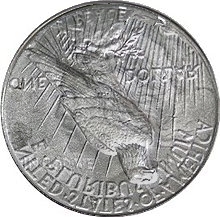 It's no wonder the bird's body is somewhat weaker than would be expected, given the flow into Liberty's face. But that's not WEAR. And knowing the difference is the experience you are paying for - comes from handling 1000s of coins. Do the same thing with the ASE: 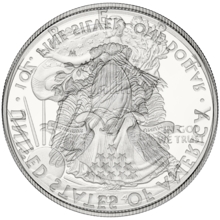 Different places to look, plus newer, better technology - leads to higher expectations. Not different standards due to age per se, but different standards due to different coins and technology. -----Burton 50+ year / Life / Emeritus ANA member (joined 12/1/1973) Life member: Numismatics International, CONECA Member: TNA, FtWCC, NETCC, EveryCountry (online) coin club Owned by three cats and a wife of 40+ years (joined 1983) Author: 3rd Edition of the Sample Slabs book, https://www.sampleslabs.info/ |
|
Pillar of the Community
United States
1804 Posts |
134 day Newbie here. Mostly I do Ikes. IMHO === the 1971 business Ike dollars are very different (weak) from the dollars struck in the last years. When you have an un circulated GEM CHOICE '78 '77 '74, the breast feathers are bristling with detail. The 1971 feathers are "flat" in general The 1972 year is better than 1971, but still "weak" in general. The other day, I placed 40-50 coins face down to see if I could guess the 1971 & 1972 dates from the later dates. I had a very good score. Nailed all the 1971s Missed one or two of the 1972s Nailed all the '78s '77s '74s I believe they had MINT problems early on with the dies and large sized coin. Hitting those copper nickel clads were a world apart from hitting soft Silver Morgans and Peace dollars.  |
|
Pillar of the Community
United States
1804 Posts |
Bstrauss3======================== Quote:
It's no wonder the bird's body is somewhat weaker than would be expected, given the flow into Liberty's face. But that's not WEAR. And knowing the difference is the experience you are paying for - comes from handling 1000s of coins. YESYESYES |
|
Pillar of the Community
United Kingdom
1351 Posts |
Age of a coin and grading shouldn't effect.
We had crap copper in the late 17C but even a F can be as struck...at the end of the day it is eye appeal.Ignore the grade and follow what you like.
You are paying the money.
That is why I can ignore slabs and other peoples reckoning.
|
|
Valued Member
United States
293 Posts |
Age really does not matter although although certain dates within a series might be struck far weaker than the surrounding dates. A 14-D Lincoln is a great example. This coin will not match any of the other "D" mint coins from 1911-16 in terms of quality of strike. But then if you were grading an uncirculated coin you the primary factor is the eye appeal of the luster. The only time you really take age in to account is you have to look at what time a country went from the old punch presses to more modern minting methods. In the U.S.A. 1840 is about the dividing line. American coins struck before that year may have an uneven strike so you could have a coin that's a technical Fine but parts of the coin look only Very Good on certain parts of the coin. In this case you generally look at the overall presence of wear and a coin like this will still grade Fine. Now of course whether or not it will bring average Fine money or maybe a little bit less or even more less than that is the factor of market desire but not grading technicals. Pre 1840 Large Cents are great examples of this.
|
| |
Replies: 9 / Views: 1,600 |
|







 Posted 06/13/2014 7:22 pm





