| Author |
 Replies: 11 / Views: 1,902 Replies: 11 / Views: 1,902 |
|
|
Bedrock of the Community
United States
11951 Posts |
Hoping to get some opinions on if this could be real 7.2 grams 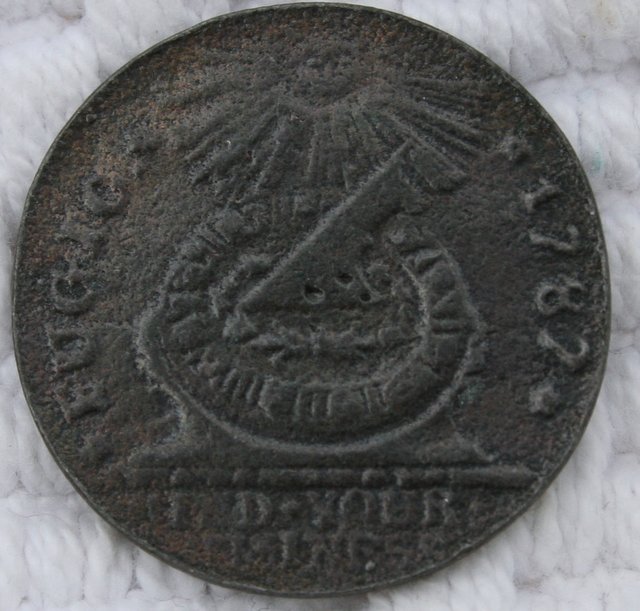 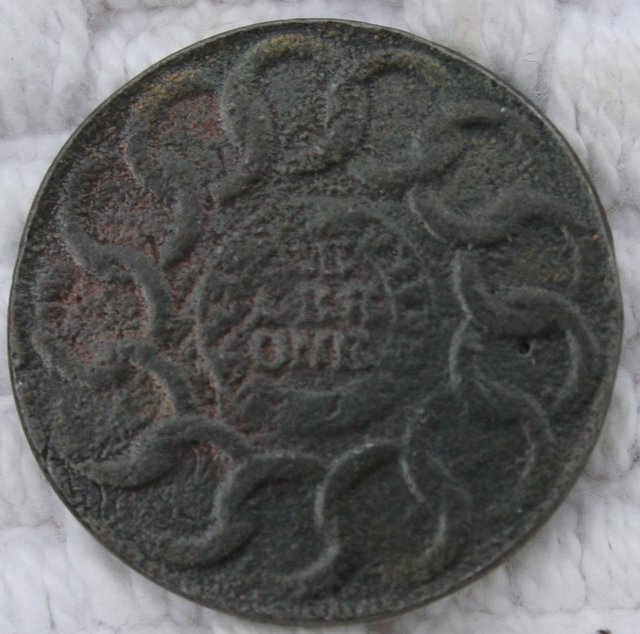 |
|
|
|
Moderator
 United States
16694 Posts |
7.2 grams is a little light. Do you have a diameter?
swcoin.ecrater.com
|
|
Bedrock of the Community
 United States
11951 Posts |
|
|
Pillar of the Community
United States
4431 Posts |
I'm very skeptical about this one, too, and the weight seems light. Did this piece come from the same source as your "Unity States" piece? They look to have undergone the same environmental damage or possibly artificial aging process. If so, what are the odds that two such colonials, having relatively little circulation wear, exhibit the same dark, porous look? Hmmm ...
|
|
Bedrock of the Community
United States
11951 Posts |
Yes they came from the same collection ....
And there is more ... A Kentucky token.
There is also a Pine, oak and willow tree. And two Higley/Granby (Axe)
I might get access to them next week, maybe get pictures.
I posted two these thinking I might purchase them. But I am having a lot of doubt.
|
|
Moderator
United States
14463 Posts |
To be honest, the "coin" looks like a cast copy.  |
|
Pillar of the Community
United States
4431 Posts |
Thought so ... Personally, I have a lot of doubt. I'm willing to bet that others will have a similar look. You might take a scale and get all the weights. (The new Bowers book on colonials is a most worthwhile investment to check weights, varieties, etc.) While weights of the colonial coins do vary, if most or all tend to be underweight, that's another red flag. You might also try the "ping and ring" test on them. Balance a good, early copper on your finger and strike it with another coin, while listening to the sound. Then, do the same thing with the suspected colonials. If the sound is dull and lacks a sustained ring, it may well be made of pot metal. Also, you might solicit permission to do a scratch test on the edge which can also be telling.
|
|
Pillar of the Community
United States
3229 Posts |
I would pass on this coin. Possibly a cast copy IMHO. Do you have any edge pics?
|
|
Pillar of the Community
United States
5992 Posts |
A few years ago I was playing tourist in Washington, D.C., with my family and stopped into the gift shop at the Lincoln Memorial. They had various replica coin sets on sale, including Confederate coins and Colonial coins. I was a bit shocked to discover that none of the coins had the word "Copy" on them, as required by law, and couldn't help wondering whether anybody would ever try passing them off as legitimate. Here's a picture of one of them:   |
|
Pillar of the Community
United States
4431 Posts |
Barryg ... A friend of mine has one of those New Hampshire copies which he thinks is genuine. I explained to him that, prior to the Hobby Protection Act of 1973, the use of the word COPY was not required. Many of these copies started cropping up in the 1960's, during the centennial years of the Civil War which generated much interest in U.S. history. My old friend remains dubious, and I regret having poked a hole in his balloon, so to speak. The cast copies tend to look old, aged.
Coin collectors need to be aware that there are a good many 1800's era reproductions of colonials and early tokens, too. Many of these are highly collectable and have much value to specialists. The Bushnell copies of various Hard Times tokens are but one example.
Edited by ExoGuy
09/01/2014 08:52 am
|
|
Pillar of the Community
United States
1566 Posts |
Looking at the deep pitting obv. and rev. I'd say it's a bad sand casting. Probably modern.
|
|
Pillar of the Community
United States
1903 Posts |
I would think by now with all the cast copies...you need a sample to make the casting with...that by now the copies would be significantly smaller than an original (assuming these people aren't making the casting from a real original). It doesn't take many generations of a "copy of a copy" to see significant size changes.
|
| |
Replies: 11 / Views: 1,902 |
|







 Posted 08/29/2014 7:16 pm





