| Author |
 Replies: 183 / Views: 21,692 Replies: 183 / Views: 21,692 |
|
|
|
Valued Member
Japan
349 Posts |
1 Fen from China, 1975 100 Fen = 1 Yuan 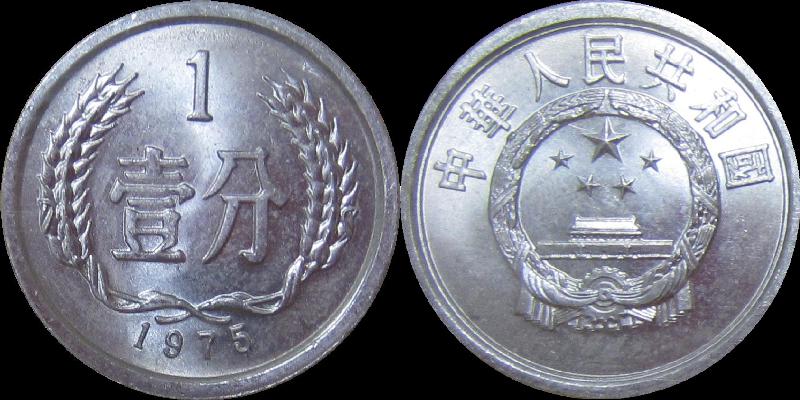 |
|
Valued Member
United States
125 Posts |
A one year type from Saarland - 10 Franken, 1954. 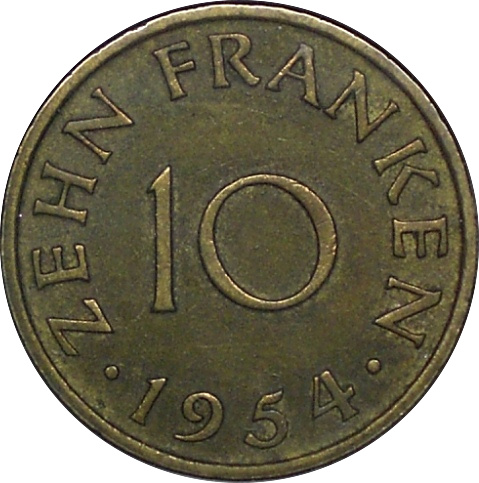 |
|
Pillar of the Community
 3772 Posts |
Another day, another letter: 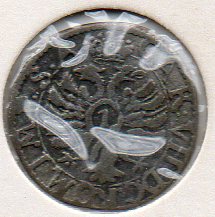 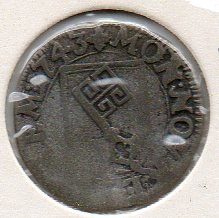 Groten 1743 IP Free Imperial City of Bremen [Holy Roman Empire] |
|
Pillar of the Community
United Kingdom
510 Posts |
Half Grosz - 1509 Lithuania-Poland  |
|
Pillar of the Community
3772 Posts |
Nice coin 'davidrj', I have a few Gros from the 1520s but they are more plentiful and apart from one the condition of mine is not very nice. But here another denomination: 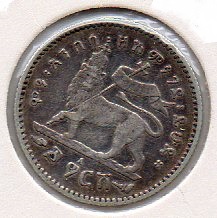 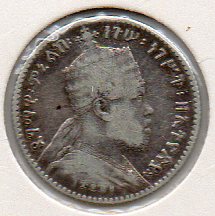 Gersh EE1889 A (1897) Empire of Ethiopia |
|
Pillar of the Community
United Kingdom
510 Posts |
Medieval Quote:
Nice coin 'davidrj', I have a few Gros from the 1520s but they are more plentiful and apart from one the condition of mine is not very nice. Thanks, the earliest dated coin I have, and a favourite, so much movement in that knight on horseback. the same design is still used on current Lithuanian coins Here's a modern version of the Grosz - 50 Groschen from Austria  And the same eagle on a Polish 2 Grosze  Edited by davidrj
10/12/2014 1:48 pm
|
|
Pillar of the Community
3772 Posts |
The names Grosz, Gros, Groschen, Groten, Groat and similar go back quite a while and initially come from the Latin 'grossus' meaning thick or fat. At a time when the ancient silver Denarius had evolved into a severely debased coin a Denarius Grossus was introduced being thicker and of good quality of silver having a value of 12 of the debased Denarii.
As a kid I was confused that in Austria the Groschen was 1/100 of the Schilling while in Germany Groschen was the common name for a 10 Pfennig coin (equal to 1/10 of the Mark). Being on the subject let me also add some information on the etymology of Pfennig, Penny, Penniae, Fennig, Fennigov and similar. This name originates from the Italian word 'panna' (= pan) which was the design used on a Denarius at a time. It also explains why on the british Lsd notation the D stand for Penny, the penny being the 'evolutionary' result of the Denarius.
Edited by Medieval
10/12/2014 6:22 pm
|
|
Pillar of the Community
3772 Posts |
Was really expecting someone to post a Gulden, Guilder or similar. Since it hasn't happened let me squeeze one of mine in: 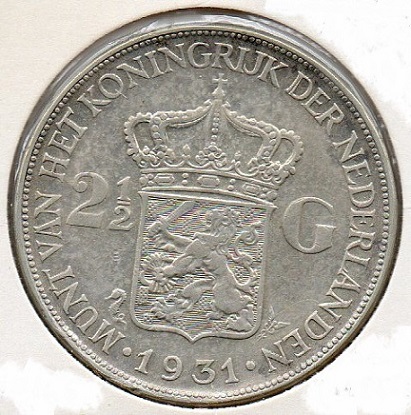 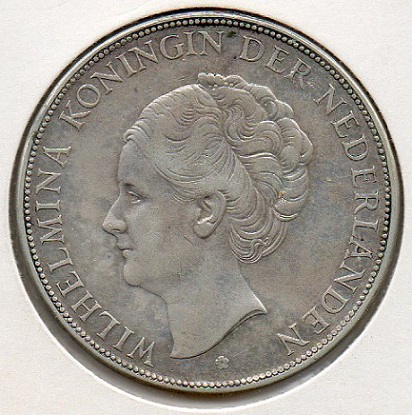 2 1/2 Gulden 1931 Kingdom of the Netherlands |
|
Valued Member
United States
125 Posts |
Paraguay - 500 Guaranies, 2008 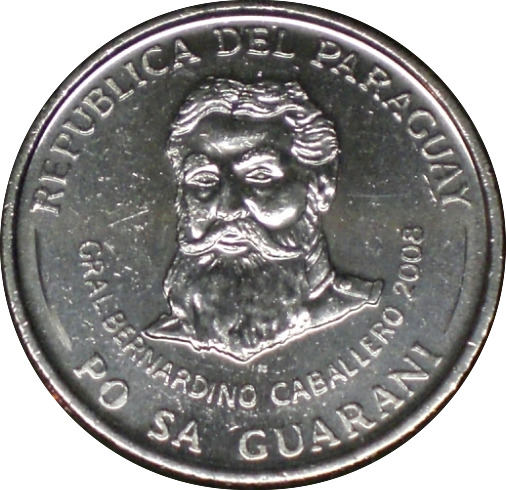 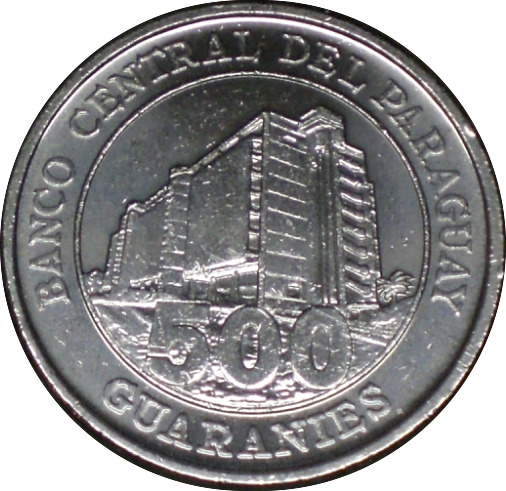 |
|
Pillar of the Community
3772 Posts |
Time for H: 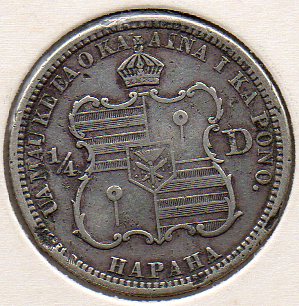 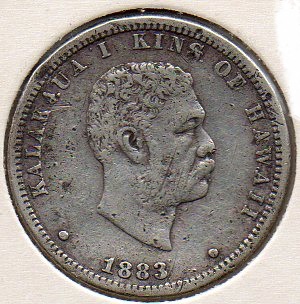 Hapaha = 1/4 Dollar 1883 Kingdom of Hawaii |
|
Pillar of the Community
United Kingdom
510 Posts |
10 Haleru, Czechoslovakia  I suspect I & J will be difficult Edited by davidrj
10/13/2014 07:01 am
|
|
Pillar of the Community
United Kingdom
510 Posts |
4 Heller - 1768 Germany, Cologne Free City  |
|
Pillar of the Community
3772 Posts |
Quote:
I suspect I & J will be difficult Not the easiest letters but I do have one of the two denominations starting with 'I', 'J' is a little easier. The letters after 'T' are slightly difficult as well, so get chasing. Let me add another Heller from another Free Imperial City: 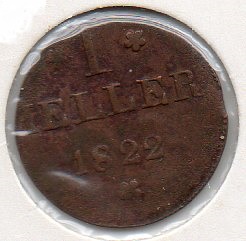 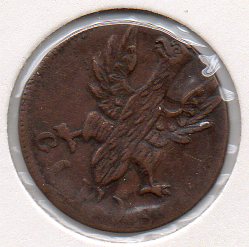 Heller 1822 City of Frankfurt [in Germany] The arms of Cologne are more impressive in my opinion. Postscript: The Heller has a similar etymology to Taler/Dollar. Both are named after the place they originated. In the case of the 'Heller' it comes from '(Schwaebisch) Hall' a township in southern Germany, they coinage made there was known as Haller Pfennig which then became Heller and it's many variations. Edited by Medieval
10/13/2014 08:18 am
|
|
Valued Member
Germany
85 Posts |
Non-latin, but alphabetical nonetheless (That is, if you could actually read the letters...) South Korea 10 hwan, 4294 (1961) KM# 1 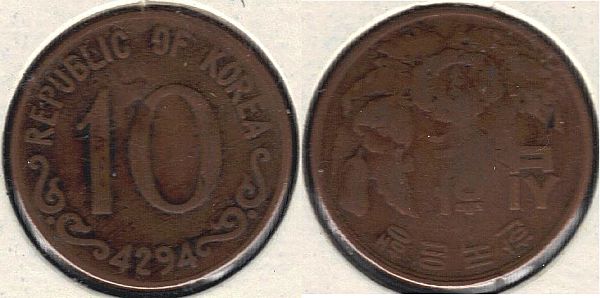 |
|
Valued Member
Germany
85 Posts |
Ukraine 1 hryvnia 2003 KM#8b.1 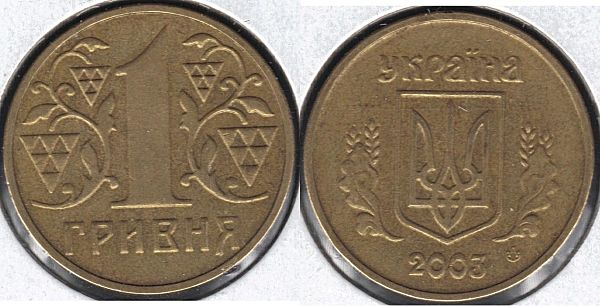 davidrj, I love the style of your pictures - could you give a brief description of how you do it? Or have you posted somewhere? |
| |
Replies: 183 / Views: 21,692 |







 First Page
 Previous Page


 Posted 10/11/2014 12:53 pm





