| Author |
 Replies: 15 / Views: 4,327 Replies: 15 / Views: 4,327 |
|
|
Pillar of the Community
United States
4883 Posts |
A favorite of mine, in my view an exceptionally attractive design. Picked this specimen up at a small coin show today where Allan Schein was on hand promoting his new book, Belleza Mexicana - Un Peso Caballito ("Mexican Beauty - The Caballito One Peso"). He was kind enough to give this one a once over and pronounced it an honest higher grade example (unfortuntely, most of these you see are noticeably worn and/or improperly cleaned). 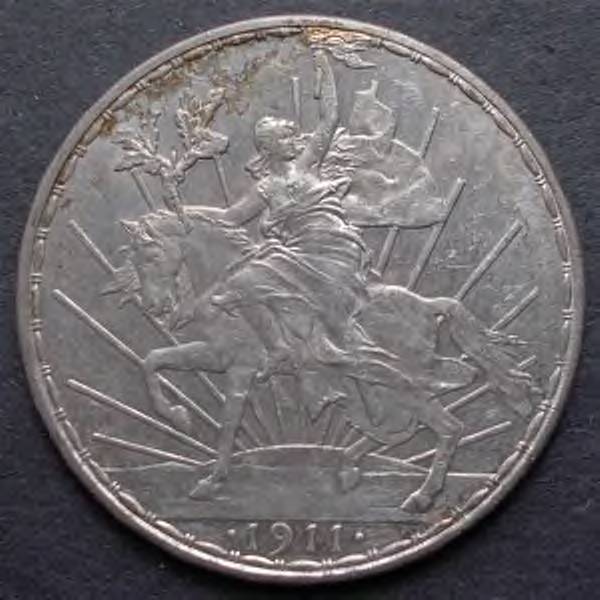 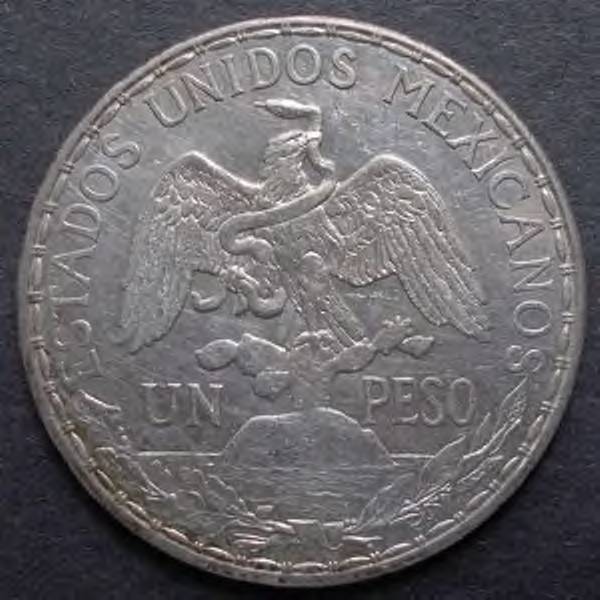 Colligo ergo sum
Edited by Lucky Cuss
10/20/2014 08:32 am
|
|
|
|
Bedrock of the Community
Australia
21789 Posts |
I am not keen on the design of Mexican coins, but this one is quite an exception.
Nice grade to boot!
|
|
Pillar of the Community
Germany
1856 Posts |
A very pretty and appealing coin. Congratulations on finding it.
I appreciate mexican History and the beauty of the country- by extension I appreciate mexican can coinage as well.
|
|
Pillar of the Community
 United States
4883 Posts |
A couple of additional remarks - I find it interesting that these don't bear the customary "Mo" mintmark, and I forgot to mention that the nickname for this coin, caballito, translates as "little horse".
Colligo ergo sum
Edited by Lucky Cuss
10/21/2014 12:23 am
|
|
CCF Master Historian of Commemorative Coins
 United States
12535 Posts |
The Caballito Peso is a great coin - you've got a nice one there! I'm going to have look for the book you mentioned, it could be an interesting read. Here's mine: https://goccf.com/t/114292Collecting history one coin or medal at a time! (c) commems. All rights reserved.
|
|
Pillar of the Community
United States
4409 Posts |
|
|
Bedrock of the Community
Australia
21789 Posts |
The cactus species depicted on the coin is known in Australia as the
prickly pear.
It is an imported exotic species as far as Australia is concerned, and has caused enormous environmental damage as an invasive plant, which wiped out an estimated 15,000 square miles of prime pastoral land.
The cactus was eventually brought under control by the deliberate importation into Australia of one of it's natural enemies: a moth (Cactoblastis Cactorum), the larvae of which ate the succulent leaves.
Edited by sel_69l
10/21/2014 02:16 am
|
|
Pillar of the Community
Hong Kong
1270 Posts |
Great information from the website by Allan Schein from. Thank you. Henry
|
|
Pillar of the Community
United States
7730 Posts |
That one, along with the 1950 Railroad, are my favorite coins from Mexico.
|
|
New Member
United States
5 Posts |
Hello All. This is my first post on Coin Community, prompted by the comments made by Lucky Cuss (LC). The comments were forwarded to me, and I felt a need to make a correction for the record about what I said. First, I want to thank LC and all who had positive comments about my new book. The feedback since its release and previews in Long Beach, Mexico City, the Scottsdale USMEXNA convention and Tucson show were more than I expected, and greatly appreciated. Hopefully it will achieve my goal of sharing information and further educating collectors about one of the most beautiful coins I believe that has ever been designed. So, what prompted me to post here is the statement that the coin LC shows is "an honest higher grade example". Its really not. Its an AU, maybe an AU+ and my words have been somewhat misquoted. What I said at the time was that this coin was a "higher grade than you realize", since it was marked as an XF. This is not an uncirculated coin, and I don't consider it a "high grade" coin. But its nice. However, the 1911 long ray is the toughest of the "common dates" to find in Unc, and having a nice AU is a positive asset. LC is also correct that so many are cleaned. Finding Caballitos with an "original skin", uncleaned and never dipped is getting tougher all the time. Thank you MeadowviewCollector for taking the time to look at my website and the early article I wrote about symbolism. That really needs updating, but is still worth reading. Lots more current info in the book, now available on ebay (or is it ebay?). OK. I hope I have not offended you LC. Its just that I don't want readers getting the impression that I consider an AU coin to be high grade. Allan |
|
New Member
United States
5 Posts |
It seems my ebay comment was auto-edited. When I mentioned ebay, in parenthesis I said "or is it Fee Bay". Maybe that is considered pejorative, expressing disapproval. Allan |
|
Pillar of the Community
United States
689 Posts |
Hi Allan, good to meet you in Scottsdale. Your book is epic. Did you see the 1909 copper pattern with the ray through Pillet? Wow. I bought the 1913/2 from C's daughter, it looks clean under stereo microscope might grade MS.
|
|
New Member
United States
5 Posts |
Hey. I think I know who this is. User names are somewhat mysterious. Hopefully by chosing Caballito Man most everyone knows who I am by now, or will in time. And yes, if you be that man, I know who you are. Scottsdale was a blast, wasn't it? I did see the pattern. But the one that was shown by SS was the Brass. It was a 1911 that was designed to enhance the details that did not translate well from the original 1909 pattern by the Casa de Moneda on the 1910. There is a Bronze that is even more striking and graded an SP66. That's the one I wanted to see. I'll try and upload a photo. Did you notice on the brass test pattern that the 9 was incredibly doubled? More exaggerated than a 1955 DDO Lincoln Cent. So you bought the 1913/2 from Allie. When I first looked at it, they had not realized it was the overdate. No way I could buy it and not tell her. You made a righteous purchase of a very nice coin. Did you know there are only 40 of the over-dates slabbed in total between NGC & PCGS? I hope you saw that I had three in my display. An MS63, 64 and 65. The 65 is the finest known, with one other in grade. Some fabulous coins at Scottsdale. True rarities. And some legendary attendees and long established authors. Anyone interested in Mexican Numismatics should absolutely consider attending next years event. 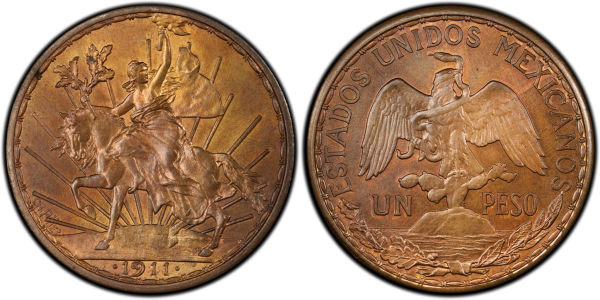 |
|
New Member
United States
33 Posts |
Just to close the loop on this, I am the owner of the copper/bronze trial above and the brass trial at the USMex Convention. Westwood, did we meet?
The copper/bronze trial is ex. Clyde Hubbard (Superior, June 1998), ex. F.C.C. Boyd (Superior, August 1975) and is slabbed PCGS SP66.
I suspect these base metal trials are related to the silver trial sold in Stacks-Bowers-Ponterio January 2014. That coin was dated 19-- with those two digits squished up too much to the left of the space allotted for the date. So when the full date was added, the "9" was spread out a little more naturally resulting in a doubled "9". (Since it was only a trial, that didn't apparently matter.)
Additionally, both trials have a long lower left ray, but the silver piece lacks Pillet's name. I'm not yet sure how they are related or the sequence of emission, but I will (one day) be checking the Barber archives at the ANS for clues.
|
|
Valued Member
United States
88 Posts |
I have been seeking this coin out for some time now and have been close to pulling the trigger twice in the last week alone. I may save up for a graded example to be sure that I am getting what I pay for.
|
|
Pillar of the Community
United States
689 Posts |
Hi pruebas, yes we did meet in Scottsdale. I was totally admiring your KM Pn198 and the unlisted one with the different reverse. The conversation was that the Mexico mint wanted to in-source coin production from other countries.
Your entire display case was outstanding.
|
| |
Replies: 15 / Views: 4,327 |
|










 Posted 10/20/2014 06:09 am


