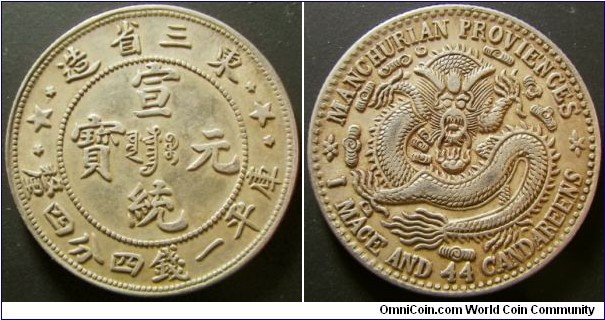
Jiangsu coin is not too common compared to other provinces. However you might have a scarcer variety depending on the reverse. I'm not well into such varieties therefore will not put an estimate. There is a handy book for such variety and this is not expensive at all. Can't remember what the book is called but I remember picking a second hand one for less than 10 dollars. Well worth the value especially if you can read Chinese.
Chinese coinage has been a fascinating topic to study and there is a long history behind it.
If you look at the history of Chinese history, coins have been minted in various provinces. Coins at that time were cast, not struck for thousands of years before the Western world literally tore China apart.
While there were laws mandated to ensure that coins were cast uniformly in various part of China, this was not the case. As you can imagine with adulteration news that you hear from China from time to time, you had mints that made fat profit by reducing expensive copper content with cheaper metals.
There were laws to ensure that each coin had to have a certain percentage of copper. In various part of China where copper may not be readily available such as Yunnan, Gansu and Guizhou, coins were readily substituted with cheaper metals such as iron, antimony, zinc, tin, etc. Copper was not readily available in these areas and it would be too expensive to import from other provinces. This becomes more obvious when wars occur and copper content in coins drop drastically. This continued very well into the Imperial China era.
Some examples are as follows:
Gansu warlord era:
A Shannxi Province coin
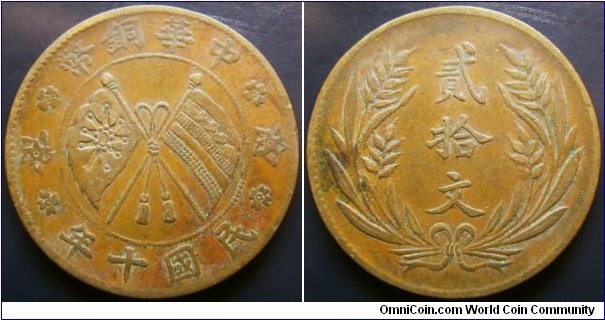
Gansu warlords tried to imitate this by casting coins. They didn't have the technology to cast coins and hence used old casting methods to attempt to make money. Note that the coins have significantly less copper content.
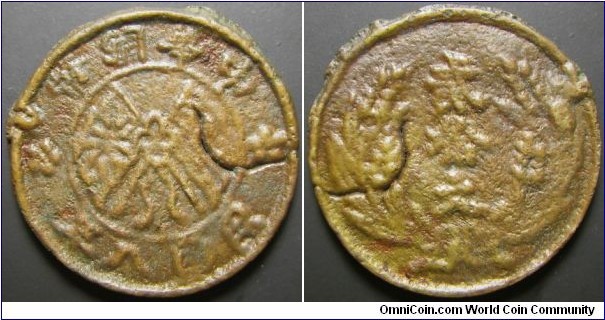
Sichuan has produced coins as follow - forgot that I had this coin with a massive die crack and 90 degrees rotation

At times they would use an older coin from other provinces to overstrike them. This one is overstruck over Hunan 20 cash
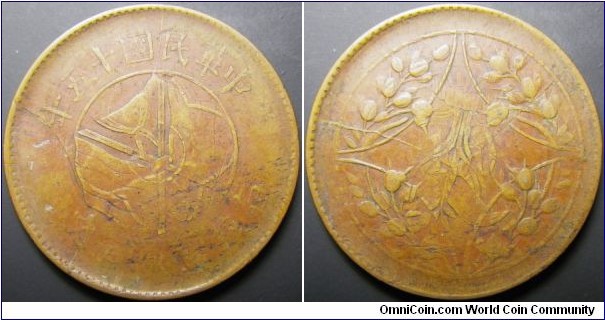
And then a brass version

Some exotic metals in this era included nickel copper, antimony and then fiber coins (used in WWII) and steel (used as trial). If you ask me what this era is like, sure numismatic wise - it's fascinating. However you can only imagine how disgusting this was during those times. Doesn't get any better with some of the modern counterfeits appearing in the market these days. This was a lot easier a decade ago when counterfeit coins were not of such high standard including cheaper copper coins.
As mentioned previously, E. Kann's book covers a lot of information and is well worth the value if you are a serious collector about Imperial Chinese coinage.
This is part one of three of his book. Reprinted and is very affordable.
http://www.amazon.com/Illustrated-C...p/0923891188Otherwise you might want to check your library - never know if they happen to have one.







 Posted 10/24/2014 11:19 pm




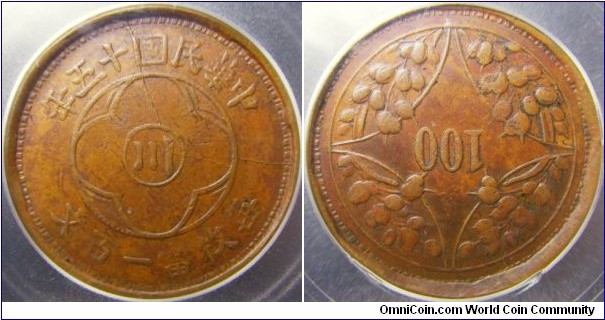


 Sorry picture is blurry; I don't have it in hand (yet).


