| Author |
 Replies: 46 / Views: 8,593 Replies: 46 / Views: 8,593 |
|
Valued Member
Canada
444 Posts |
Help with information please. Sorry if this is the wrong forum category. I see others like this token but they look copper. I need help with the usual questions year, grade, and collector appeal. 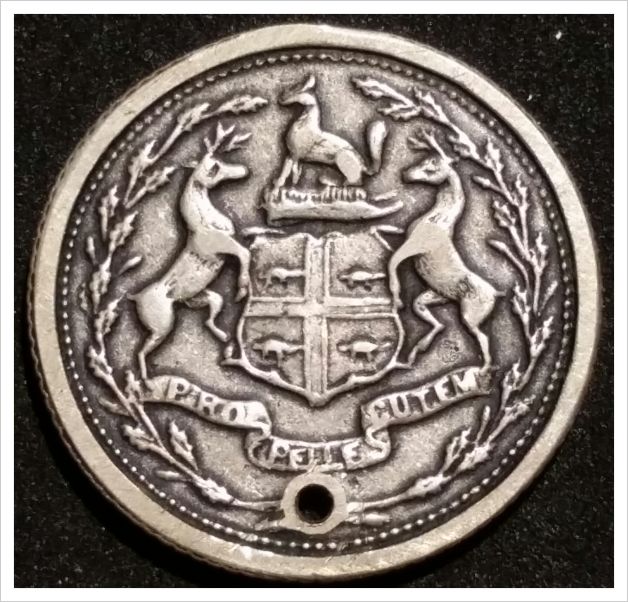 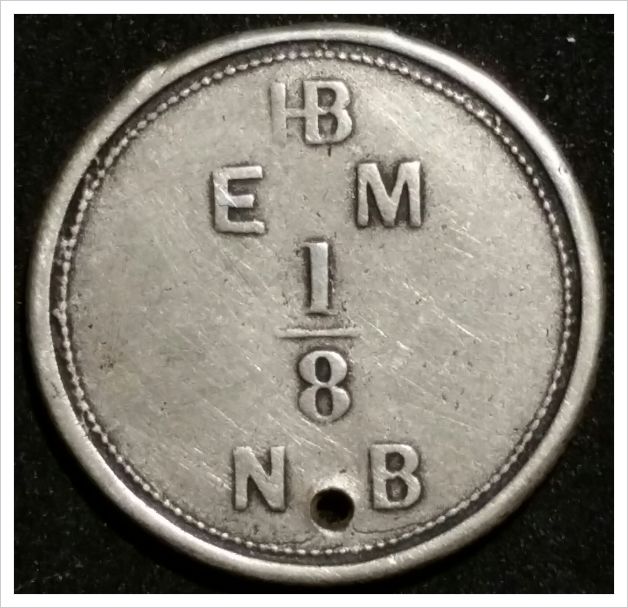 I'm just starting to look at canadian tokens is this the category to share information on them. I try not to stray far from the Canadian section. *** Moved by Staff to a more appropriate forum. *** |
|
|
|
Pillar of the Community
Canada
1118 Posts |
It is a token that is good for 1/8 of a beaver pelt. What is a male beaver? A buck! That is why a dollar is called a buck. The e&m stands for east main and the nb is a mistake. The dude responsible for making the dies messed up the m into an n. MB= Made Beaver.
There is also a 1/4, 1/2 and 1 made beaver.
It is a 1857 and for grade, I mean it has a hole in it, no idea.
|
|
Moderator
 United States
16694 Posts |
Identified and moved to proper forum.
swcoin.ecrater.com
|
|
Valued Member
 Canada
444 Posts |
Thank you for the quick complete response.
|
|
Valued Member
Canada
444 Posts |
All the information and pictures I have been able to find are brass, can anyone explain the silver?
|
|
Pillar of the Community
Canada
1118 Posts |
From what I understand they were all brass. These were made to be carried in canoes and traded and what not. I would think if it was a silver alloy it would have just traded like a coin or been stashed. I do not know. Sorry no one has chimed in yet with grade and value, that is beyond my expertise. I do know however I am drawn towards anything Hudson Bay related.
|
|
Pillar of the Community
United States
4431 Posts |
While I'm not familiar with this series, I'd suggest a specific gravity test might be done. It may be other than silver ... German silver, white metal, or?
|
|
Valued Member
Canada
444 Posts |
The composition is a little off for silver, I'm not sure about it being silver.
|
|
Pillar of the Community
Canada
2785 Posts |
it was probably silvered (mercury) at the same time it was drilled, probably to be used as a piece of jewelry.
|
|
Valued Member
Canada
444 Posts |
The patina shows that it has aged this way. The hole I believe is a punch mark to show that it has been used in trade, if the hole was used it would have worn off any added material.
|
|
Pillar of the Community
United States
4431 Posts |
I tend to agree with you, Coin Scavenger. In those early days, holed coins/tokens could be strung together and then be less likely lost.
|
|
Valued Member
Canada
444 Posts |
The hole is a punch mark to show that it was used, the punch mark is always found in the same place, between the N and B.
|
|
Pillar of the Community
United States
4431 Posts |
Coin Scavenger .... Can you point to any early documentation about the hole being a cancellation of sorts? I find it curious that this would be done, as opposed to recycling.
|
|
Valued Member
Canada
444 Posts |
Only one small note on a coin for sale on an old listing, a note was made about it used out of the area they were distributed. A search on Google image shows all others punched are done in the same place.
|
|
Pillar of the Community
United States
4431 Posts |
Interesting about the note, but that may have been a projected possibility by the writer, might it not? I think that the position of the hole rules out the jewelry theory. While these do have a medalic alignment, they would hang upside-down on a necklace, bracelet or as a pin. I have trouble buying the cancellation theory because a far less neat hole or counterstamp would have more easily served that purpose. Just my two-cents' worth here ...
|
|
Valued Member
Canada
444 Posts |
I have enjoyed the hunt for information on this token. The nice thing about this token is that it draws the attention of a non numismatic generation.
|
| |
Replies: 46 / Views: 8,593 |







 Posted 11/04/2014 12:53 am





