| Author |
 Replies: 12 / Views: 2,088 Replies: 12 / Views: 2,088 |
|
|
Pillar of the Community
Hong Kong
1270 Posts |
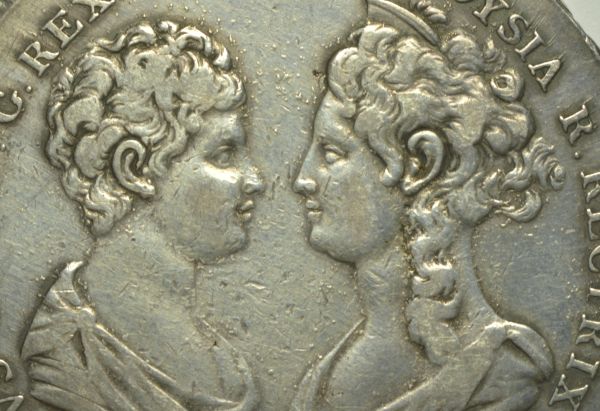
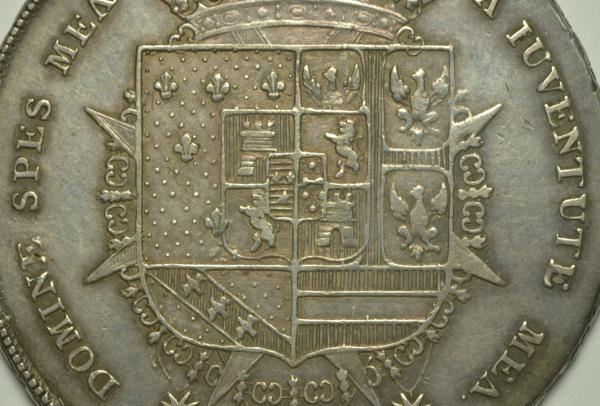
I buy this coin by US$142 in ebay recently. Is it a good buy in this condition for a Napoleonic crown size coin? But there are two features that I don't understand and need your comments. First, what is the cause of the presence of numerous tiny silver remnant on the observe side? The background field on the reverse size is normal. Second, the coin is relatively thin in comparing with an average crown, yet the striking of the coin is not as shallow as expected (see the strong portraits on the coin). Will it be produced by modern technique? I am looking forward to seeing your comments. The coin is 27.12 grams (std. 27.50g), 41.5-41.8 mm measured. 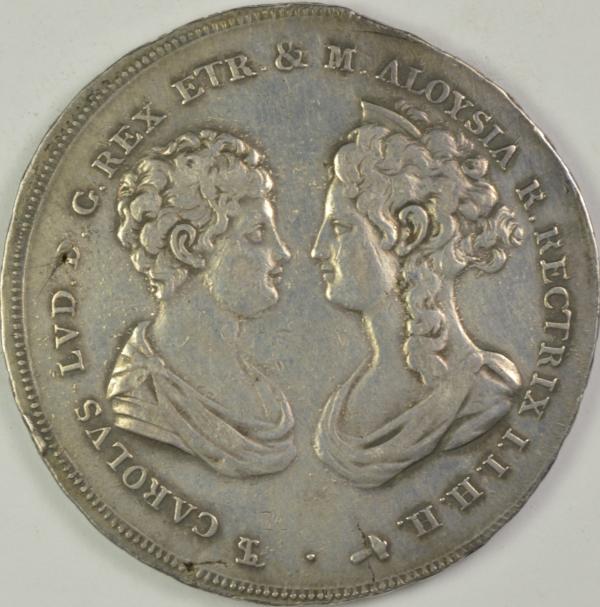 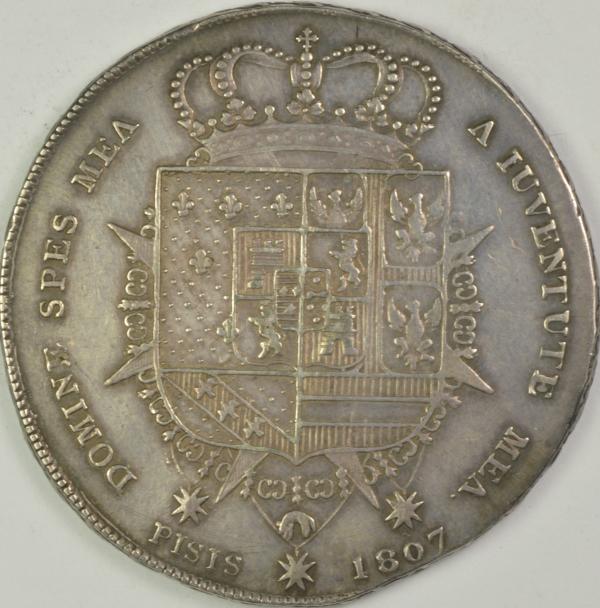  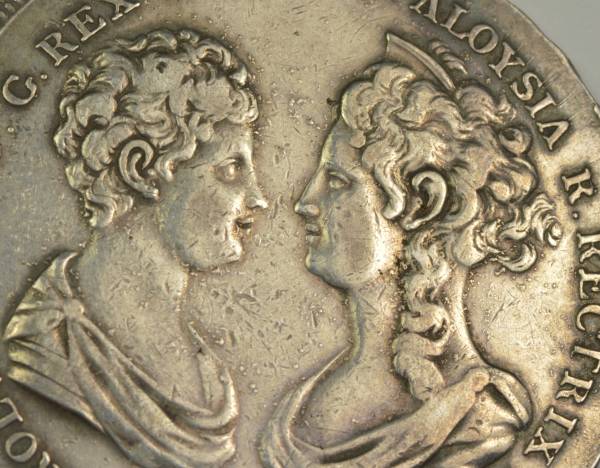 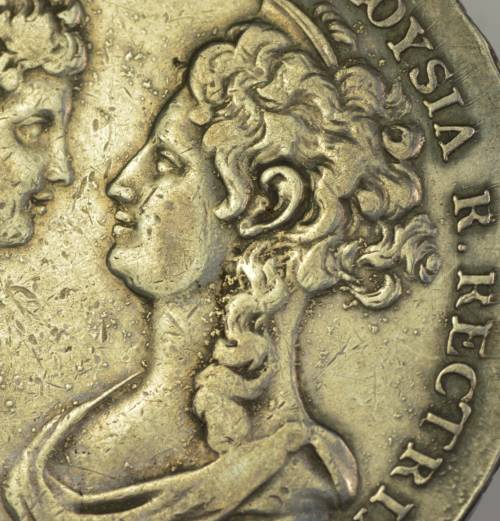 |
|
|
|
Pillar of the Community
2087 Posts |
I can see why you asked. Looks like it may have been cast! those "bubbles all over the obverse look very much like the bubbles you see when sand casting has been used. Have you tried a magnet on it?
Edit: Oops another possibility: Can you you post a clearer photo of the edge. It looks to me like there is a join seam running down the middle of the edge. If that is the case then you likely have a lead filled electrotype. As annoying as that might be I have actually been looking for electrotypes: but not at that Price!!
Edited by austrokiwi
11/09/2014 03:47 am
|
|
Pillar of the Community
3772 Posts |
Agree with 'austrokivi' that the tiny bubbles are suspicious. To make a conclusive judgement by the pictures alone is difficult though, my recommendation would be to show it to a knowledgeable dealer - in hand and with a loupe it's easier to make a proper judgement.
|
|
Pillar of the Community
 Hong Kong
1270 Posts |
|
|
Pillar of the Community
Austria
566 Posts |
Hi Henry,
i think, that this coin might have been struck with a rusty obverse die.
I do not think, that the coin is a fargery as far as I can see from the photographs.
|
|
Pillar of the Community
2087 Posts |
Thanks for posting the better edge pictures. there does appear to be a seam line to my eyes but I could be seeing things. A rusty die intrigues me. Why in the world would they use a rusty die unless its a later restrike? I know there was something funny going on in Florence and Lucca at that time. Many of the coins were actually struck some time around 1810-1815 rather than the dates actually recorded on them. I have tried to ferret out the story but so far have not been successful
|
|
Pillar of the Community
United States
5362 Posts |
If you check on the Heritage website you can find several examples of this identical coin. Several appear with very similar surface textures. There also appear to be multiple die pairs known as well. That said I look at the pictures of the ebay coin and feel something is not quite right - color - cleaning? Before I checked the Heritage site I was very sure the coin would be a cast copy made from transfer dies - now I am much less certain but uneasy about authenticity. |
|
Pillar of the Community
Hong Kong
1270 Posts |
Compare the coin with the pictures on Heritage website, I tends to agree the coin was produced from a rust die. It is still genuine for me. I have done the S.G. of this coin, it is 10.273 (=88.9% Ag).
Thank you all of you.
|
|
Valued Member
Canada
270 Posts |
There are a few things that strike me as odd...
1. The mint reported an original lighter weight...not by much but still odd..
2. Diameter of your coin seems to be too large when compared to 43mm reporting.
3. Biggest issue for me...look at the background pattern behind the shield...(looks like 2 capital C's touching) that part of the design should not cross over the shield at any time as it is the background of the coin. It looks more like they are randomly placed to fit the design with the mistake being made where the pattern crosses over the bottom right triangle of the shield....from what I know about how these coins were struck it just seems weird in my opinion...any thoughts?
|
|
Pillar of the Community
Hong Kong
1270 Posts |
UncleLuc, you said, Quote:
2. Diameter of your coin seems to be too large when compared to 43mm reporting. But my coin is 41.5-41.8 mm... |
|
Pillar of the Community
United States
1761 Posts |
The occluded gas bubble hypothesis is supported by a microscopic surface texture that is identical to the surrounding field. Do microscopic die flow lines continue across the air bubbles without interruption? This supports the idea that the die face was intact and undisturbed when the coin was struck. Occluded gas bubbles are restricted to solid-alloy coins and should be distinguished from plating blisters that form in copper-plated zinc cents. Blistered plating occurs when there is a poor bond between the copper plating and the zinc core. Heat generated by the strike causes gas expansion beneath the plating, pushing it up. Mike Diamond from Coin World explaining air bubbles on an early 20thC Lincoln Cent. Like I said you do display challenging coins and you seem savy enough to avoid a Chinese Die Transfer and an early cast? We hope. LOL. Cast - with this sharp lettering? My guess its surface contamination followed by occluded gas bubbles. Seen this before but not often as on one Evasion Copper sold to me by the late Tom Madigan. Severe occluded surface.Incredible piece. Check the flow lines OVER the air bubbles. Report. KOOL coin. JPL |
|
Valued Member
Canada
270 Posts |
Correction too small*... slipped my eye.
|
|
Pillar of the Community
United States
5362 Posts |
The coin does appear on my list of known numismatic forgeries. The notation indicates there are centrifugal casting. I do not have a picture associated with the forgery so I can only caution that numismatic copies of the date do in fact exist but that this one "looks" good from the pictures.
The caution John provided about looking for continuous flow lines across ALL die features including rust is right on. It is an older technique that absolutely applies to most metal dies. When a feature is part of a die it erodes along with the die surface. On a metal die this erosion is rather slow. The lines should pass over or through such features uninterrupted on a die that has been used.
Two cautionary notes - first, the first strikes made after a rusted die is mounted for the first time will lack ALL flow lines so be aware of that. Second on a centrifugal (injection mold) the mold itself is made of a hard rubberlike material in most cases - the erosion lines will develop quickly because the surface is much softer than die steel - but the flow is usually NOT RADIAL at all.
Get to know what genuine and particularly what counterfeit erosion lines look like under a binocular microscope by studying known forgeries of all types and it will be VERY valuable as a diagnostic tool even if you have never seen an original of any particular coin. Once you know erosion lines are from centrifugal casting and not from radial flow of a strike - you will never fall for another coin made in that way.
|
| |
Replies: 12 / Views: 2,088 |
|










 Posted 11/09/2014 04:07 am