| Author |
 Replies: 18 / Views: 5,848 Replies: 18 / Views: 5,848 |
|
New Member
24 Posts |
Hi friend Bob Finally I have taken those no more clear possible pictures with a friend camera , focusing on what I've tought important to identificate if the coin is an old genuine or a modern fake . Note that the crown on the right pilar completely appears allthough it is suffering from erasure by it's left part. Either the year 1770 and the waves near it seems a little bit eroded , before I've cleaned the coin by citron juice ( non aggressive for silver ) the year & the waves in question were covered in the eroded part by brown rust which has gone with the solution. Now I think you can build a final judgement about this coin , I'm expecting this valuable conclusion , positive or negative no matter , but real :-) thanks boss 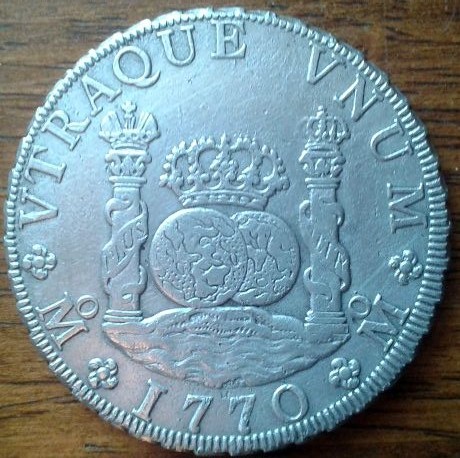 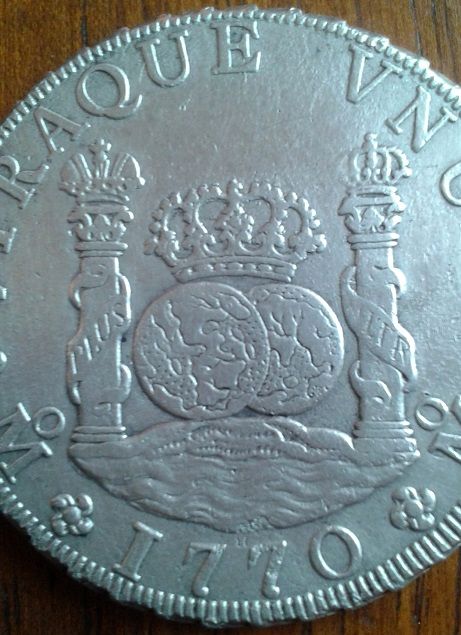 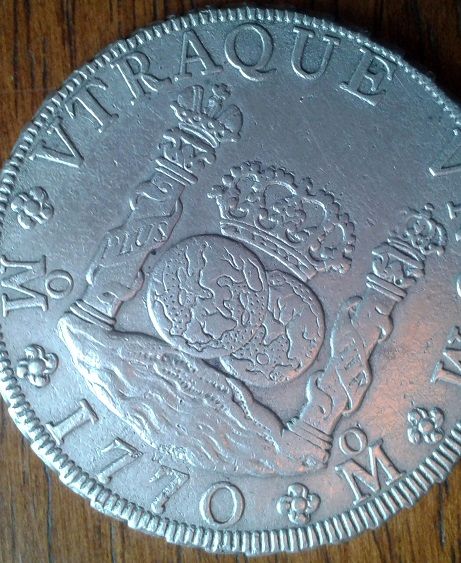 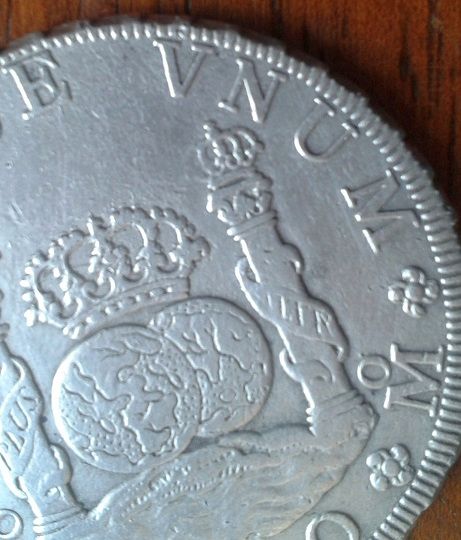 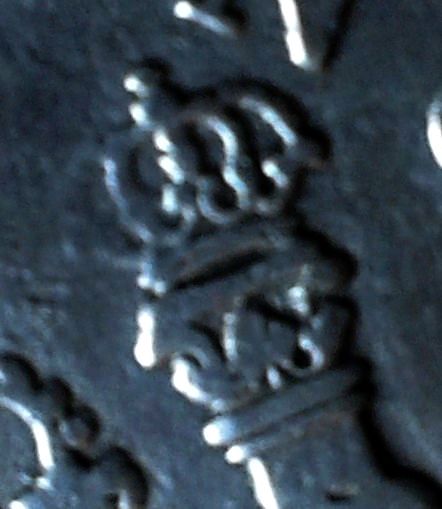 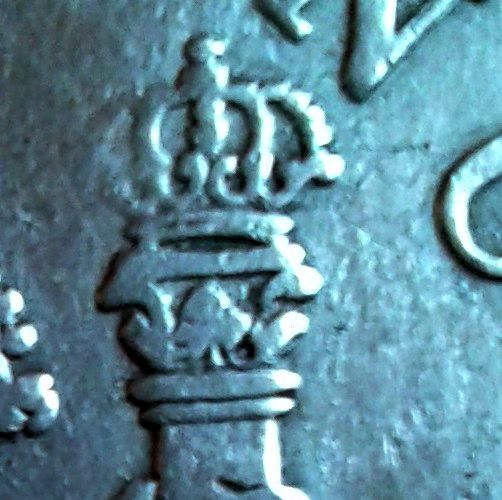 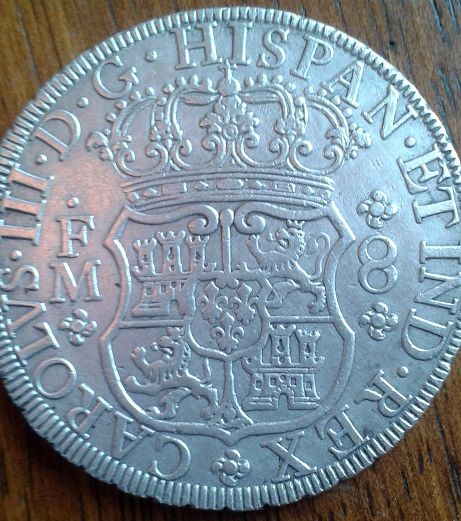 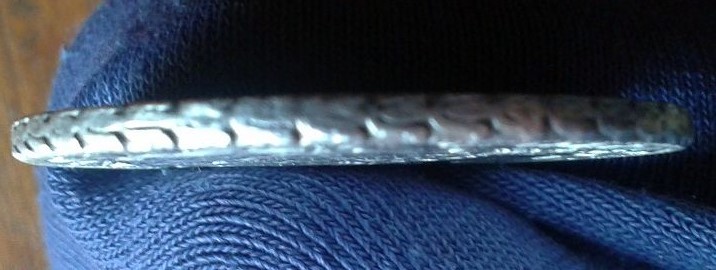 |
|
|
|
Pillar of the Community
United States
5362 Posts |
The series of pictures is better. If you can change the camera from auto focus to manual (not possible on all cameras) you can get a fine focus on what you want. I noticed that the camera focused on the cloth not the edge of the coin. Auto focus uses a light beam for focus and it picks the biggest surface within the focal length.
I am now leaning toward the coin being a numismatic forgery made from a transfer impression than a genuine coin. The reasons are not conclusive but they are serious.
The crown does appear to be "erased." I see no reason for the loss of this detail that would tie to the coining process. I did notice however a number of places where the field seems to have been "smoothed out" including the area next to the crown. It does not appear (based on a lack of reflected light) that the coin itself was erased more like the die (or mold) that created the coin.
One of the identifying problems with cast transfer impressions are the small surface irregularities that occur on the mold. These transfer to the coin. Some forgers now routinely smooth easily corrected areas like the large areas of the fields. I think what happened here is a mold was made that had some poor surfaces and in the process of smoothing the fields they eliminated the edge of the crown. There are several areas on the coin that have a similar appearance with no natural texture.
I also noticed the second 7 in the date has a very typical deficiency seen on transfer molds.
|
|
New Member
 24 Posts |
Good evening my friend Bob you have been slow to come comment on photos, I was allowed to ask meantime expertise on several other forums especially Spanich , believe me nobody else told that my coin was a fake except you . In the footsteps of "brushing" on the surface of the part as you said, especially between the letters and the number 7 the date 1770, what you think the result of brushing and reproduction by molding, I had said earlier that the coin when I bought it was covered with black-brown soot between letters and especially the number 7 of the date, which had eroded the corners as if the coin was "drowned" in salt water for a long time. lemon juice what I used to clean the coin has cleaned soot and showed the spaces cleaned as "eroded" or rough appearance since moisture had marrying the surface many many years as to have left the trace after so years, quite common in many recent circulating coins mostly made of silver metal that is quite fragile due to erosion: these conclusions are also the summary of expertise that I exposed my coin in vivo in the hands of Conservative numismatic expert of a museum of antiquities in my city Tangier. others gave me double the price to sell it them. a collector of old Spanish Cobs, treasures of Atocha (as he likes to call these coins) said "without loss of time and at first look it is a 100% genuine congratulations! I know how is false and authentic, all my life I did that! make no obsession on your, there is authentic. " Believe me if most were telling me that my coin was a fake, I would have accepted this hypothesis without remorse, but I'm sorry you are the only person of all to have deduced the coin is fake, molded and brushed! My friend thank you for your answers. (( google traductio from French texte here : )) bonsoir mon ami Bob vous avez mis du temps avant de venir commenter les photos , ça m'a permis entretemps de demander expertises sur plusieurs autres forums surtout Espagnols , crois-moi personne autre que vous ne m'a dit que ma pièce était un faux . Pour les traces de "brossage" sur la surface de la pièce comme vous avez dit , surtout entre les lettres et sur le chiffre 7 de la date 1770 , ce que vous pensez résultat de brossage et d'une reproduction par moulage , je vous avais dit auparavant que la pièce quand je l'avais achetée était couverte de suie noire-marron entre les lettres et surtout sur le chiffre 7 de la date , ce qui avait érodé ces coins comme si la pièce était "noyée" dans l 'eau salée un certain temps . le jus de citron que j'ai utilisé pour nettoyer la pièce a fait enlever la suie et montré les endroits ainsi nettoyés comme "érodés" ou d'aspect rugueux car la couche épousait la surface au point d'avoir laissé la trace après tant d'années écoulées , chose courante dans assez bon nombre de pièces surtout faites de métal argent qui est assez fragile face aux érosions : ces conclusions sont aussi le sommaire d'une expértise à laquelle j'ai exposé ma pièce in vivo entre les mains d'un expert en numismatique conservateur d'un musée d'antiquités de ma ville Tanger . d'autres personnes m'ont donné le double du prix pour que je la leur vende. un Espagnol vieux collectionneur des Cobs , des tresors d'Atocha (comme il aime dire de ces pièces) a dit de suite " sans perte de temps et à première vue c'est une authentique félicitations! j'en connais en fausses et authentiques , toute ma vie je ne faisais que ça ! ne te fais aucune obssession là dessus c'est une réelle". Crois-moi si la plupart me disait que ma pièce était un faux , j'aurais admis cette hypothèse sans remord , mais je suis désolé vous étes le seul de la foule qui tranche que la pièce est fausse , moulée et brossée ! Merci de tes réponses mon ami. to complete my last post , & in order to proove you that the coin was surely "sunk" for a long period into aggressive water that eroded its surface especially between letters & on the 7 of the date ( little spaces where there is condensation of details ), here's a picture of the coin as soon as I have bought it , before having clenaed moisture by citron juice , look how surface (especially small spaces between letters & numbers) were black-brown looking , there was perfectly adhesing there in the point of having let prints & traces after the clean ( when those spaces were empty of this adhesive black-brown substances made during a long period ) the part not well appearing of the crown on the right pilar is the result of the old primitive making coins method ( pressing paste silver between 2 metal surfaces ), it is usual in old coins manually made so to notice some details which had not perfectly reproduced the "motif" .. imperfected old methods sometimes gives imperfected coin details ... Look at the first picture , I apologize the bad quality & I regret to don't having used the new camera I have recently used before I have cleaned the coin  (( I speak & write French more better than English so excuse my language , If the idea is clear that's the essential  thanks )) 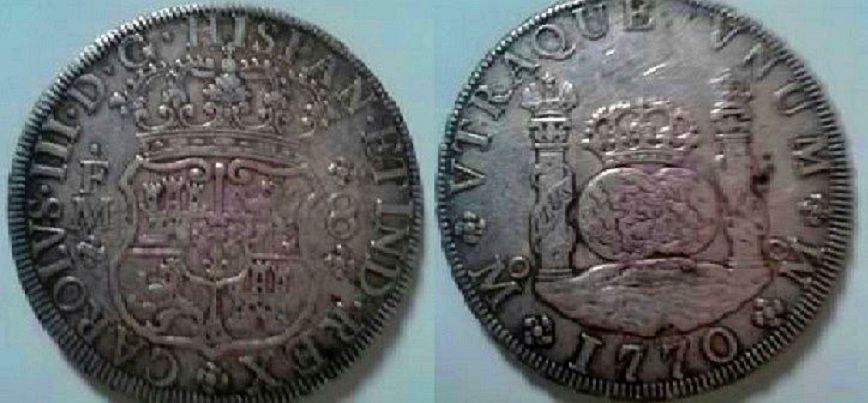 |
|
Pillar of the Community
United States
5362 Posts |
Based on what I see in the pictures alone - I can only stand by the opinions I have already given.
Have any of the other people actually seen the coin or are they working from the same pictures?
Have they given a reason for the loss of metal at the crown?
The coin does NOT show the typical effects seen on a wreck coin from emersion in salt water. The amount of theoretical corrosion expected in any wreck salvaged coin is apparent on none of the surfaces here. Wreck coins were always exposed on some surface - it is a function of the coins being round, they do not stack so that no part of the surface is exposed.
The dark black material seen in the last picture looks more like baked "black goop" to cover a spot that could not be removed.
The first pictures in fact look rather typical of numismatic forgeries that use the black goop to cover casting features.
I may be alone in my opinion but I would still like to see the Specific Gravity of the coin before agreeing it has a chance of being real.
|
|
Pillar of the Community
France
1591 Posts |
Moroccan Friend : can you please post a link to that place ? I'm French, so no worries if it's in French :)
(I'll read the complete post later, have to run now)
|
|
Valued Member
United States
300 Posts |
MF--are you going to send this in for authentication? I find these threads about your coin to be extremely interesting. I was looking at pillar dollars but decided if I ever wanted one to buy the Australian 2006 version--LOL--probably no fake problems with that.
|
|
New Member
24 Posts |
Hi again Bob
all you has said to this recent post is not sufficient to condemn my coin, only remarks & hypothesis.
have a global look to the coin , no matter before or after cleaning: nothing suspicious like usual chinese (or other)fake similar coins can be clearly noted.
crown on right pilar partially bad appearent? is it impossible by authentic old striking coins methods to let in some coins some reliefs not "well done" or seaming "erased" ? have you never seen before many & many authentic similar coins with "erased" zona due to strike errors? old people haden't enough time to pass with an unique coin to make it as perfect as a sculpture , macroscopic & microscopic perfection I mean ! coins was manually produced by hundreds a day as quick as possible ( latino Amerika was hostile to Spanich presence & Spain knew that no time could be eternally sufficient to robb all precious latino metal from annexed terrirories to Iberian peninsula, work was made rapidly and how many times coins was badly made ).
look at again to my coin : is it any abnormal remark about letters (A N I like you always say for judging fake similar coins) or numbers ? nothing to say bad about edge dentles ! isn't it ?
my coin has "passed" without any bad contest all test beginning by no-magnetic test, good metal ; correct weight and diameter , perfect details from sides to edge ; what is now worrying us ? "surfaces seem brushed & right crown partially unshown" !
- surfaces seem "brushed" due to old material resulting of long decennies of contact with sea or river water? acidity? buried under the ground ? exposed to corrosive weather or I don't know what else ...
I'm sorry but the black-brown material which was adhesive with surfaces isn't artificial work of forgers ! on this point excuse me to say that I have enough modest experience to differenciate between "natural" & "artificial" black "groop".
you ask from this coin to be perfect as it was since it's strike well well preserved in a silk box looool
last day I gave you some pictures of examples of 1770 Mo 8r with partial "erased" spaces not due to circulating but from the beginning made so by old Spanich hands not modern Chinese ones loooool
- surface rough surface and not smooth between letters ? why not since the old coin is result of old manual strike methods & corrosive centuries material had marked its presence on the coin?
no abnormal looking appears except in big zooming on coin :
the rough zonas (you are focusing on ) may appear in any old or modern coin if you take big zooming pictures as mines , no coin has never given smooth surface looking in great zooming, including 2014 US circulating coins legally made not late than yesterday to circulate freely looool
the coin isn't a mirror ! so focusing on it to take big pictures , we don't have to expect seeing a smooth mirror surface looool
Dear friend , I have nothing to say more , I have done best of me to explain by my own language and not google traduction or else , If you are still convinced that my coin is fake (allthough many positive experts saying it is genuine) or isn't a coin , OK , I respect your opinion , you judge about what you see in pictures & what you're trusting in like knowldege ; but I respond by what other qualified persons have judged based on what they have carefully observed between hands , basing on their knowledge which are trusting in !
with all my respect to you & my thanks to the time you have spent with my request!
amically !
|
|
New Member
24 Posts |
MathieuMa
bonjour
je suis à ta disposition pour traiter de ma pièce 1770 Mo 8R autant que tu voudras , je suis enfin à l'aise en parlant librement ma 2eme langue qui est le français , je suis sure que mes idées ne paraitront pas incohérentes comme quand je me serre la cervelle pour passer mon point de vue en anglais.
lien web ? j'en ai avec des Espagnols comme je l'ai dit en mes posts précédents ; bref , je ne peux pas vous mettre en contact avec des gens que vous ne connaissez pas et qui ne vous connaissent pas sans leur demander une permission , toutefois je peux recommencer le débat avec vous depuis le départ autant que vous voulez en Français si vous avez assez de temps à y mettre loool
merci
|
|
New Member
24 Posts |
@ MathieuMa I'm still learning about pillar dollars , escpecially your old archives there, like: https://goccf.com/t/133160&whichpage=2there is an old post written by you where I can read : (( Posted 11/09/2012 4:29 pm I'm not a specialist, Swamperbob is :) Most of what I've learned comes from him, the rest is just getting used to check coins and see what looks wrong / right.... )) so I expect the same opinion concerning my 8R coin, with or without giving web link ; is there someone else but teacher & student to making us hear an opposit opinion , just to have productive interesting debate :-) |
|
New Member
24 Posts |
@Gothic
thanks for contribution
I was glad to discover the 2006 Australian Pillar Dollar , really I have never seen it before ! it's very fine and heavily rich in pure silver ( up to 60 gr )
the ironic remark is that eventhough this australian very modern coin is made by up to time high technology ; and having correctly respected all authentic criteras to reproduce "genuine" like PILLAR , if we want to criticize that the pillar reproduced in it's center is full of defects , we can easily do it like : look at this letter it isn't pleazing me, look at that number it seems to fat , touch it! the surface seems too smooth than ancestral copies ; see this crown it's not well appearing there , the map in the globus isn't correctly made , has this modern dollar circulated to the point of having erased some scripts of the old pillar but not the modern dollar taking it , we must break this modern dollar to examinate the edge overlaps of the pillar looooooool
old people wasn't too perfect to the point of waiting to see their currencies manually made as perfected as our modern age of technology currencies loooool!
|
|
Pillar of the Community
United States
5362 Posts |
I am not interested in a fight over a coin like this. I was trying to explain a scientific methodology that is better than simply looking at a coin and using a magnet and scale. Those old fashioned methods are no longer adequate to be positive a coin is genuine.
However, you do not seem to understand my comments and it sounds like you are trying to pick a fight over an opinion I rendered based ONLY on pictures, weight and diameter. I do not know your experts who have see the coin in hand. I also do not know what tests they use to authenticate the coin. One thing I know very well a visual authentication only is nearly as bad as pictures only. I have yet to see good pictures of the edge - you never replied about the overlaps etc.
If no one has yet done an SG test how do you even know your coin is silver of the proper density?
There are three dimensions that must be addressed and you have only done two. Weight and diameter are TWO but thickness ( which is variable over the coin's face) creates the third dimension needed for volume determination which is a scientific way of identifying a forgery. Specific gravity determines the actual density of the coin - it is an iron clad test of the silver content. However you choose to settle for opinions instead of the proof I have been asking for, I have no control over that.
Do the specific gravity test and I will then agree that you have a silver coin - "experts" who do not do an SG test are not experts in my opinion because they really have no scientific evidence to back up their opinions.
I have never said I could not be incorrect - I need proof that the coin is genuine - first the SG, second an explanation for the missing detail and third clear pictures of the entire edge. After more that 40 years in this field I am very well aware of the limitations of the mints of the time, but I do not dismiss clues without proof as the work of crude artisans. That covers up too many modern fakes. The 1770 low relief strike was not as crudely struck as coins from the 1740s or 1750s.
|
|
Pillar of the Community
United States
1801 Posts |
Moroccan Friend, While I lack the technical background of other collectors and "experts", I have in my collecting past held in hand and examined multiple hundred, if not a thousand, pillar dollars and I know what I like to see and I know what makes me very nervous when I see it. Your coin, based on this run of pictures, makes me very nervous. The details are washed out, the coin's fields do not look right, the fade in detail on the one pillar makes no sense, the flaw above the 7 in the date that extends into the waves is really odd, just to many "iffy" things for me to be comfortable. As for your comment that the coin spent years under the sea in corrosive water, there is no sea salvage effect on the coin that I can see. Possible land burial but hard to say since even the "pre-cleaning photo" does not display the common signs of a land burial. I will not make a call on genuine/fake based on a series of photos but I would shy away from this coin and choose to error on the side of my pocketbook. A friendly word of caution from one collector to another, don't be cleaning your coins with lemon juice, the acid will strip away all the coins patina and leave a dull flat look to the coin.
|
|
Valued Member
United States
300 Posts |
Glad to give you a good chuckle MF. Being from the poor side of the tracks, I wouldn't waste a lot of time or money trying to pursue something that is a prime target of the Chinese "miao" production. I reckon the Aussie coin is a knock off too, in truth, but relatively affordable and probably less were minted--has some rarity value. :)
I still think if you believe in your coin send it to ANACS or some other service and let them tell us all. I don't think the resident pillars here can do much more than what they have done and it would be nice to get a verdict from the grading services.
|
|
New Member
24 Posts |
Hi again & thank you all people who had reserved all this valuable time to my modest coin request thank you very much no , I'm not here for fighting over a miserable coin which has cost to me no plus than 160 USD , but I settle for my opinion eventhough some of you are experts more than 40 years on this domain, because I have to this time been convinced by any of your arguments to judge my coin false! 1/ weight correct 27,1 gr 2/ diameter correct 39 mm 3/ Thickness correct 2,45 mm 4/ sound is very fine and kind to hear , something exactly like authentic 925% french 5 fr (1830 or else) sound , or authentic Morgan US Dollar sound ! 5/ edge : tulip pattern rim , not trident one 6/ edge overlaps are making a circle aroung the coin , with 2 exactly opposit 180 degree marks. 7/ details are usual , nothing condemning clearly the coin , allthough some of you say that they look "washed out, the coin's fields do not look right" or making them nervous after long years of studying same coins family. (( The most recognizable characteristics of the modern day fake dos mondos are the rim, the edge, the legend, and the wave. Fake dos mondos have "trident pattern rim" compared to "tulip pattern rim" of the authentic. Fake one have "sharper toothed edges" unlike that of the authentic. The legend lettering of the fake ones are patterned over the portrait Mexican 8 reales particularly those minted in Zecatecas, and finally, there is a wider gap between the globe and the waves on the fake dos mondos coins. )) isn't this criteras that one of you has formulated here before? nothing of abnormal like described there is in mine ! 8/ coin was "dusty" or If you want "covered of adhesive old black-green material ( a little green if observed in day solar light ) common to what we usually see in old coins not well preserved, I have cleaned it by citron juice beffore beginning posting here . I regret having done this before showing you the coin cause no one could say that "coin was brushed everywhere on surface" if they have seen it "dirty" in clear photos! that's the "dirty" material which has "eat" spaces which some having thought "brushed" or "smoothed". 9/ right crown partially looking "erased" : someone says "no reason for the loss of metal at the crown" or "mold surface defect had been transfered to the coin surface" (something like that): right crown is complete to see except that a part of it is not looking in relief exactly like the remaining parts. old manual striking methods can by occasions give some coins with some minor defects, that is logique to understand. I GAVE YOU EXAMPLES OF SAME COINS PARTIALLY ERASED BUT ACCEPTED AS GENUINE BY MOST OF YOU : https://goccf.com/t/191328unfortunately some don't accept the comparison , saying that this defect is symetric on the 2 faces due to not enough pression or I wonder what! I AM NOW GIVING YOU THIS OTHER EXAMPLE PF ONE SIMILAR COIN , UNDER-WEIGHTED + UNDER-DIMENSIONED + UNDER-THIKENED THAN MINE , STRONGLY "ERASED" EVERYWHERE , SURELY MADE BY LESS PURE SILVER METAL THAN MINE , BAD EDGED ..... ALLTHOUGH ALL THAT YOU JUDGED IT GENUIIIIIIIINE ? see https://goccf.com/t/169530&SearchTe...dge,overlapssee please the TOWER how is it "erased" in the first picture & then in microscopical one , no one had said "chines molded" od "not understanding the reason of the loss of substance in the tower" , note how coin surface is full of traces and loss-substances especially in macroscopic views, no one had said "brushed or "smoothed" , contrarily , Bob said "In all likelihood there is little chance that this coin is a counterfeit. I see nothing wrong." I SWEAR BY ALLAH IF I HAVE MET SUCH A COIN , WITHOUT REGRET I HAVE NEVER BOUGHT IT , ITS BLACK LOOKING PLUS ITS TOTAL ERASED STATE WOULD BEEN SUFICIENT TO CONVINCE ME TO TURN OFF AWAY loooool 10/ finally, not fare than yesterday , SPECIFIC GRAVITY test on my coin gave 10,3 ! correeeeeect no ? 11/ to close the debate ( not the fighting please! ) I confirme that many Moroccan & Spain "well knowing" in such coins ( to avoid "experts" word which not pleazing to some ) have confirmed that's genuine , some of them proposed the double price to take it . 12/ no XRay test to expect from me ! debate for me is over thank you brothers :-) ! other detail : I bought the coin from a friend of me , who have found it by metal detectot in Tnagier areas , this Moroccan city was old Spanich dominated land for centuries, digging give pleintly of spanich remains out of the ground. THANK YOU FOR YOUR ATTENTION AND PATIENCE , FORGIVE MY FIXE DEFENSE FOR MY NON-FAKE COIN OPINION , I HAVE GIVEN YOU MY ARGUMENTS , YOU STAY ON SAME LITTLE DETAILS WHICH AREN'T ENOUGH STRONG TO JUDGE IT WITHOUT ANY DOUBT FAKE ; I am proud to have such a coin which are in the same time strongly genuine defended by "experts" and strongly fake confirmed by "experts" loooooool thanks again & don't understand by mistake that I am doubting on your knowledge or fighting with you for a miserable 27 gr of metal bad coin :-) I give freely what I have to give in opposit to what you are freely showing me like remarks ! |
|
Pillar of the Community
United Kingdom
701 Posts |
|
|
Pillar of the Community
United States
5362 Posts |
Moroccan Friend You seem to be essentially admitting that you were supplying information under two different identification names that was incomplete - presented one step at a time trying to entrap people on this forum to impeach our credentials as experts in the techniques of authentication. Personally I find that very disreputable and insulting as I have spent decades doing precisely this one thing. You should change your name to Moroccan Enemy. Do you work for the Spanish forgery ring I was attacking when I worked for ebay? I think you must. Your Allah must be quite a forgiving guy if he approves of these tactics. The physical dimensions specified by you 39mm x 2.45mm x 27.1 grams - yields an SG of 9.25 calculated by simple mathematics (which is a method that I never actually use because it is not completely accurate. Yet it is accurate enough to dispute you findings because of the magnitude of the error). I conclude that either the measurements are way off or 10.3 is not a correct specific gravity. A 27.1 gram coin would have to have a volume of 2.6285 CC to yield an SG of 10.3. Back calculating this yields a thickness of 2.20 mm NOT 2.45 mm. The differential is too large for the numbers to actually be correct. So, as a result, I would have to challenge the test results for SG. Something smells fishy. But that is not the only clue that leads me to my conclusion that you have been far less than HONEST. You say: Quote:9/ right crown partially looking "erased" : someone says "no reason for the loss of metal at the crown" or "mold surface defect had been transfered to the coin surface" (something like that): right crown is complete to see except that a part of it is not looking in relief exactly like the remaining parts. old manual striking methods can by occasions give some coins with some minor defects, that is logique to understand. I GAVE YOU EXAMPLES OF SAME COINS PARTIALLY ERASED BUT ACCEPTED AS GENUINE BY MOST OF YOU : https://goccf.com/t/191328unfortunately some don't accept the comparison , saying that this defect is symetric on the 2 faces due to not enough pression or I wonder what The quote displays a complete lack of understanding of the coining process. The old manual striking process is NOT the direct cause of the strike weakness. It is the irregular thickness of the planchet. Weakness occurs on BOTH sides because the needed metal is lacking for complete infill of the die. The two comparison coins you provided actually display exactly that type of weakness caused by a lack of metal thickness at a given point. Weakness opposite the crown is MISSING on the coin in question but clear on the other coins. That leads me to wonder if the asymmetric features are due to the transfer of the image. You simply do not seem to understand the physics involved in a manual strike on an open sided screw press. So your conclusion in point 9 is simply incorrect. Then you next say: Quote:I AM NOW GIVING YOU THIS OTHER EXAMPLE PF ONE SIMILAR COIN , UNDER-WEIGHTED + UNDER-DIMENSIONED + UNDER-THIKENED THAN MINE , STRONGLY "ERASED" EVERYWHERE , SURELY MADE BY LESS PURE SILVER METAL THAN MINE , BAD EDGED ..... ALLTHOUGH ALL THAT YOU JUDGED IT GENUIIIIIIIINE ? see http://www.coincommunity.com/forum/..dge,overlapssee please the TOWER how is it "erased" in the first picture & then in microscopical one , no one had said "chines molded" od "not understanding the reason of the loss of substance in the tower" , note how coin surface is full of traces and loss-substances especially in macroscopic views, no one had said "brushed or "smoothed" , contrarily , Bob said "In all likelihood there is little chance that this coin is a counterfeit. I see nothing wrong." Interesting that you not only used multiple threads but two different IDs one linked to Spain to attempt a clumsy set up in an attempt to impeach our efforts. I now am rather completely convinced that you represent some of the Spanish interests (forgers) that worked so hard to attempt to discredit the work of the committee at ebay. With ebay your concerted complaints caused them to back off because they are profit driven - but not me. Your last quote attributed to me is taken completely out of context and to me proves that you are in fact NO FRIEND AT ALL. If anyone reads the entire thread you can see the character of the deceit being employed. Pictures paint a partial picture taken one at a time but after a considerable amount of evidence accumulates the reasons for this extended communication become apparent. You were never looking for an honest opinion based on poor pictures - because you already had all the answers and better pictures. A web of lies and half truths. The pictures in the second case were of a low grade - worn - common coin - the pictures were not great but were taken to hide the needed information by not providing a clear picture of the edge. A worn coin is NOT the same as a weakly struck up coin. But the clincher is the numbers provided in the Lohengrin thread. I guess you expected me to use a mathematical approach to SG. I do not do that. A differential weight basis on an accurate scale is far better. But since you withheld not only your identity but the SG of the 1770 coin when I first asked - you methods are flawed. I do not accept the premise nor conclusions you have reached. The mathematical SG for the Lohengrin example is low 9.548 but not as low as the current one. Shame on you and on your use of the name of God in your correspondence.
|
| |
Replies: 18 / Views: 5,848 |
To participate in the forum you must log in or register.
 
- Help With Identification Please.
- 1969-S Lincoln Cent Machine Doubling Or Double Die Obverse
- 1999 Lincoln Cent - Die Clash
- 1809 Half Cent For Grading
- 1987 - D Lincoln Cent Grade Check
- 1987- D Lhc Possible RPM Or DDO In Date
- You Know What I Want That Final Number To Be
- Bronze Coin To Id. Greek Or Roman?
- A Ridiculously Badly Written Computer Aided Book, Coin Collecting Bible, 2024
- Liberty Head 10/11 Stars Obverse With A Sick Looking Eagle On The Reverse Holed 0.59g 13.06mm
- The Tyrant Collector - PCGS Youtube Interview
- Counterfeit Detection: ANA Video - Introduction, With Brian Silliman And Jim Robinson Ep. 1
- Counterfeit Detection: ANA Video - Mistakes, Risk Factors, And Counterfeits & Alterations, Ep. 2
- Counterfeit Detection: ANA Video - Pimples And Pits, Looking At Cast Counterfeits, Ep. 4
- Counterfeit Detection: ANA Video - What Year Is That Cent? Key Date Coins, Ep. 5
- Counterfeit Detection: ANA Video - Diagnostics Of The 3, 5, And 10 Cent Coins, Ep. 6
- Counterfeit Detection: ANA Video, Counterfeit Quarter Dollar Diagnostics, Ep. 7
- Counterfeit Detection: ANA Video, Counterfeit Classic Commemorative Coins Diagnostics, Ep. 8
- Counterfeit Detection: ANA Video, Counterfeit Silver Dollar Diagnostics, Ep. 9
- Counterfeit Detectection: ANA Video, Classic US Gold Coin Diagnostics, Ep. 10
Disclaimer: While a tremendous amount of effort goes into ensuring the accuracy of the information contained in this site, Coin Community assumes no liability for errors. Copyright 2005 - 2026 Coin Community Family- all rights reserved worldwide. Use of any images or content on this website without prior written permission of Coin Community or the original lender is strictly prohibited.
Contact Us | Advertise Here | Privacy Policy / Terms of Use
|
| Coin Community Forum |
© 2005 - 2026 Coin Community Forums |
| It took 0.48 seconds to rattle this change. |
 |
|










 Posted 11/28/2014 6:15 pm


