| Author |
 Replies: 12 / Views: 2,866 Replies: 12 / Views: 2,866 |
|
|
Pillar of the Community
United States
2130 Posts |
Do your TPG's take into account die cracks when assigning a grade to a coin? Also, how do others feel about die cracks on coins. I personally love the character they add to classic coins, but I assume not everybody likes them. I look for die cracks when I am in the market for a nice classic coin. |
|
|
|
Pillar of the Community
United States
2760 Posts |
small die crack: might decrease resale value.
large die cracks: good.
two die cracks: very good.
more than 5 die cracks (shattered die?): very very good.
rim to rim die crack (retained die break): best
|
|
Moderator
 United States
23522 Posts |
Die cracks shouldn't influence a TPG grade. Some prefer their coins totally smooth and think less of coins with cracks. I consider such people to be strange and different, but variety is the charm of numismatics.  |
|
Rest in Peace
United States
10625 Posts |
I'm always looking for massive die cracks and clashes.
|
|
Pillar of the Community
861 Posts |
Excellent question.......what a lot of people don't realize is that a coin with a large die crack is very difficult for TPG's, or any numismatist, to grade. A die crack will take away metal from many of the high devises from the rest of the coin. A Mint State coin with a die crack may appear to only have AU details. Check out this coin: http://i92.photobucket.com/albums/l...17f6c74f.jpghttp://i92.photobucket.com/albums/l...6b7201c4.jpgThe details look to be XF, but, it has the luster of an AU coin. The die cracks took metal away from areas of the coin that left some details soft. Edited by g048406
11/28/2014 8:51 pm
|
|
Pillar of the Community
United States
9810 Posts |
To me die cracks are great, I love finding them, especially if they are Retained Cuds. Though many collectors prefer a perfect example of a coin and look down on them. Die cracks should never effect the grade of the coin by a TPG, unless it drastically affects the coins strike, which as stated above, can usually be good as it would add to the value to more collectors of varieties and error coins. Die cracks are also a good way to validate a particular coin or variety many times. "Buy the Book Before You Buy the Coin" - Aaron R. Feldman - "And read it" - Me 2013! ANA Life Member #3288 in good standing since 1981, ANS, Early American Coppers Member (EAC), Colonial Coin Collectors Club member (C4), Conder Token Collector Club member (CTCC), Civil War Token Society (CWTS) member, Liberty Seated Collectors Club (LSCC) & Numismatic Bibliomania Society member (NBS), USMex, Member in good standing, 2¢ variety collector. See my want page: http://goccf.com/t/140440 |
|
Pillar of the Community
United States
1704 Posts |
Quote:
The details look to be XF, but, it has the luster of an AU coin. The die cracks took metal away from areas of the coin that left some details soft. XF coins may have the luster of a higher grade coin, how much depends on how the coin was handled and then stored. The mushy details of this 1807 half dollar is the result of worn dies or inadequate die strike pressure and has nothing to do with whatever die crack it has. Die cracks will never decrease a coin's value. They could be off putting to some collectors and they are what differentiates die varieties and die pairs on many of the pre 1891 silver coins and many of the Morgan dollar VAM's can be attributed by die cracks. Most die cracks will not affect the design of the rest of the coin significantly enough to have any adverse affect on the details on either side. Moderate to havy die cracks will affect only the details of the area along the die crack itself. Any weakness in all other areas of the coin is a matter of die pressure and die wear. |
|
Pillar of the Community
United States
2760 Posts |
the statement "Die cracks will never decrease a coin's value. They could be off putting to some collectors" is somewhat of an oxymoron. If something is decreasing interest, it will translate into lower prices. Some smaller die cracks do indeed decrease demand, and when that happens, the value of that coin goes down.
Edited by robbudo
11/30/2014 08:39 am
|
|
Valued Member
United States
118 Posts |
This topic is great ! I love to look for imperfections in my coins, and keep them in a special plan in my collection. Some day I will have learned enough to know if die error or DDO or will post on this forum to get great advice. Looking forward to that. |
|
Pillar of the Community
United States
5825 Posts |
Quote:
the statement "Die cracks will never decrease a coin's value. They could be off putting to some collectors" is somewhat of an oxymoron. If something is decreasing interest, it will translate into lower prices. Some smaller die cracks do indeed decrease demand, and when that happens, the value of that coin goes down. I agree. Die cracks are sometimes a diagnostic for a variety BUT generally they fall into the "eye appeal" category along with toning. It's a personal thing. I like die cracks. I DON'T like rainbow toning except the pastel colors that sometimes occur on Buffs and Jeffs. Hence those features affect what I'm willing to pay for a coin. |
|
Pillar of the Community
United States
7291 Posts |
The die crack trailing from America helped me identify this Trade dollar as a s/cc variety. 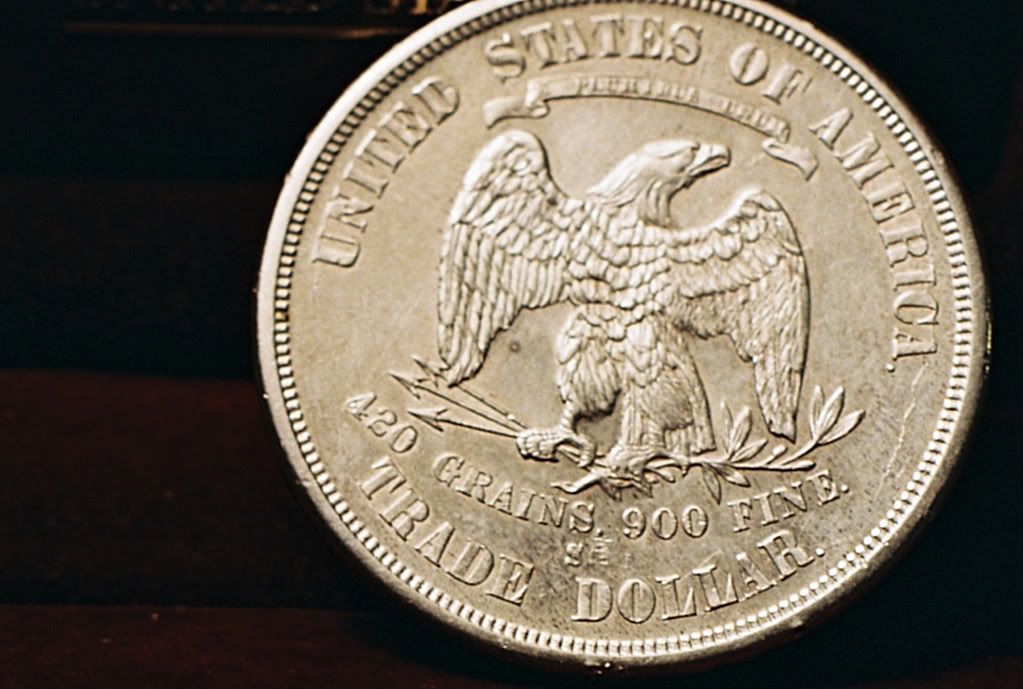 |
|
Pillar of the Community
United States
4337 Posts |
I love die cracks. Especially on MS coins. Shield nickels have some of the best die cracks as do early copper large cents. I love die clashes. Liberty Seated coinage with cracks and clashes? OH BABY! The photobucket 1806 is not an MS coin with AU details due to the die crack. I am not sure if this what the commenter was saying or if a pic of a crack was simply being shared. |
|
Pillar of the Community
861 Posts |
The 1806 is an AU coin with XF details due to the die cracks.
|
| |
Replies: 12 / Views: 2,866 |
|










 Posted 11/28/2014 8:00 pm


