| Author |
 Replies: 9 / Views: 1,856 Replies: 9 / Views: 1,856 |
|
|
Valued Member
United States
309 Posts |
I'm just wondering what this coin would grade in the collective opinion of the CCF? 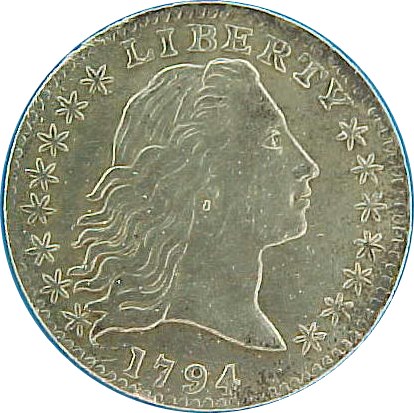 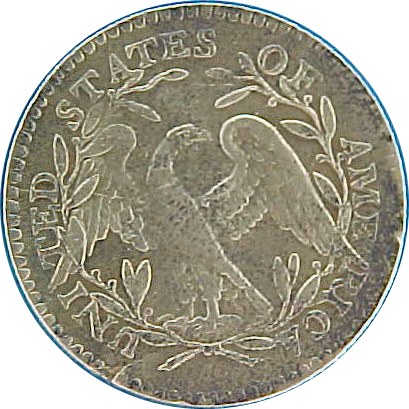 |
|
|
|
Moderator
 United States
16697 Posts |
Welcome to the CCF Pistareen. Technically not a Half Disme. This would be a Federal issue albeit early. Nice coin. If I had to grade from the pics provided, I'd be mid VF, possibly XF. A little hard to accurately grade. swcoin.ecrater.com
|
|
Pillar of the Community
United States
1566 Posts |
 I agree with Vermontensium's grade. He is also correct that this is a Half Dime, not disme. Both words are actually pronounced "dime" disme is just a French spelling that the mint dropped to avoid confusion. |
|
Pillar of the Community
Canada
5417 Posts |
I would agree with the comments made so far, hard to comment on authenticity or originality of fields from these pics though. Does it belong to you?
|
|
Moderator
United States
23522 Posts |
LM-4, looks mid-VF-ish. This one is known clashed and cracked, as well, in case you see features which suggest that.
|
|
Bedrock of the Community
 United States
18942 Posts |
...if its authentic has a shot at XF40 |
|
Bedrock of the Community
United States
10982 Posts |
Cool looking coin. I'd like to see actual photos vs these scans but I'll guess XF45.
|
|
Pillar of the Community
United States
5854 Posts |
I think the coin could make it into the EF range.
|
|
Pillar of the Community
Russian Federation
5186 Posts |
The legislation that introduced them spells it "disme", IIRC, and the coin itself doesn't say anything.
It's a bit traditional to only use that spelling for the 1792 coins (which actually say that), but really this is just the spelling normally used in the 18th century. I have, in fact, occasionally seen it used for this type as well (don't remember where though).
PS: after some search - the J-14 pattern seems to suggest that yes, the spelling "disme" was in fact intended back then, though it didn't make it on the circulating coin type
|
|
Valued Member
 United States
309 Posts |
Thanks for all the input. No I wish it were mine. I took a picture of it some time after it was dug using a light ring that makes the photo look like a scan, which I used on purpose to bring out the details in relief. I understood "disme" rhymes with "steam." The 1792 patterns said "Disme" and " Half Disme" while this first year of regular issue, 1794, says nothing about denomination, so it may have taken a bit before the English translation of the French "dixieme" meaning "tenth" as it distinguishes a 1/10 Ecu from a 1/12 Ecu "douzaine" became Americanized. Since we are talking about a half of a tenth of a dollar perhaps it would have been called a "Demi-Dixieme" from which we get " Half Dime" in translation? If you read John Q. Adams report about the progress of America in adopting the Metric System (circa 1820) he reports the federal dime to be virtually unknown in commerce, especially out west (beyond the Appalachian Mountains), with the familiar Spanish bit (12 1/2 cents) and half bit (6 1/4 cents), later called "picayune" recognized everywhere. It took until about 1820 for all the federal dimes ever minted to top $10,000 in face value, yet spread out among a population of nearly ten million, on average only one American in ten could own a dime at the time of the report, assuming the widest distribution. With Half Dimes their low mintage figures and production hiatus from 1806 till 1829 means that on average only one out of every 100 Americans could have one, circa 1825. I understand it was common to receive 6 1/4 cents worth in goods for a Half Dime on the Mississippi frontier, most folks never having seen one before, and not likely to part with it as a patriotic keepsake, unlikely to get another. |
| |
Replies: 9 / Views: 1,856 |
|








 Posted 01/28/2015 9:10 pm


