| Author |
 Replies: 12 / Views: 1,788 Replies: 12 / Views: 1,788 |
|
|
Pillar of the Community
 United States
1918 Posts |
|
|
|
|
Pillar of the Community
United States
4883 Posts |
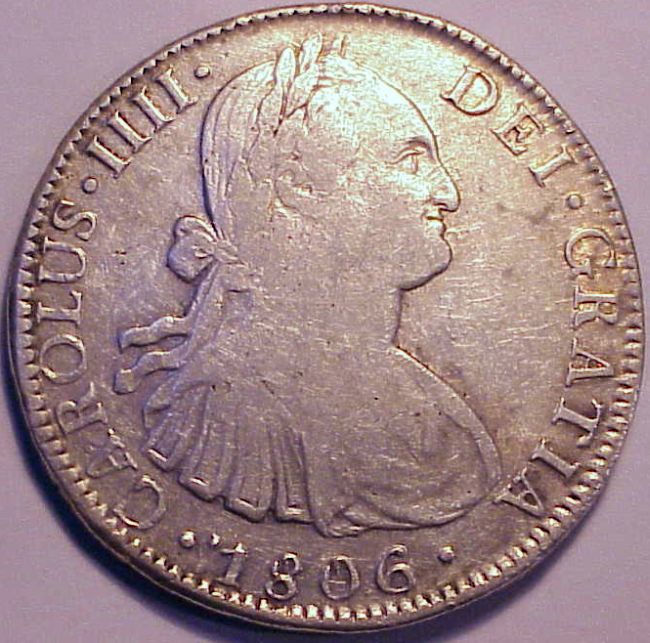
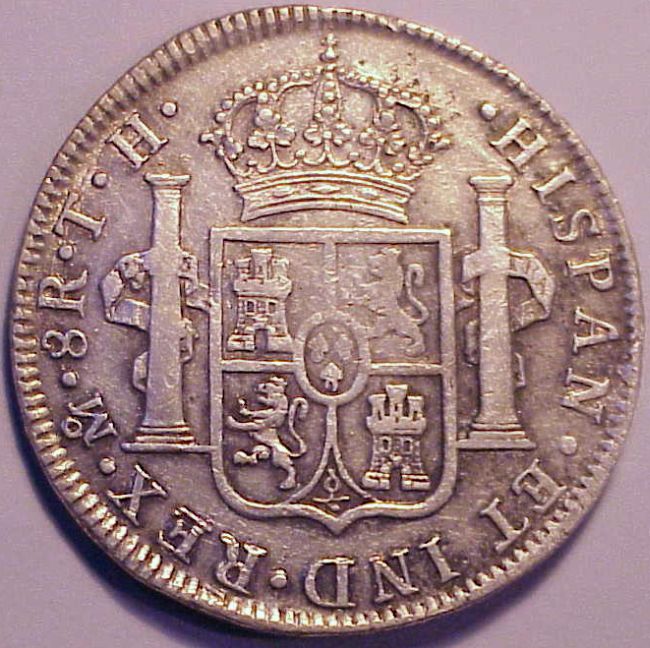
Your photos are more than adequate. I don't consider myself extremely well versed in these, so my observations may be irrelevant. The windows in the upper left castle look to be not quite rectangular, and the superscript "o" in the mintmark seems a little misshapen. The coin overalll appears to be less than perfectly round. A few hairlines to the right of the effigy, but many Mexican coins show signs of improper cleaning. I'd go with F12 as a grade, but can't be certain as to whether it's genuine, albeit the weight is just about what you'd expect in this condition.
Colligo ergo sum
|
|
Pillar of the Community
Hong Kong
1270 Posts |
Before swamperbob introduces the concept of Class 2 Contemporary Counterfeit, this coin could be considered as genuine. Now, I am just be sure it is not a modern fake. The coin should have been circulated for several decades or even up to a century, it is still historic.
|
|
Pillar of the Community
United States
5362 Posts |
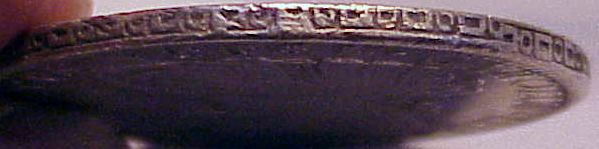
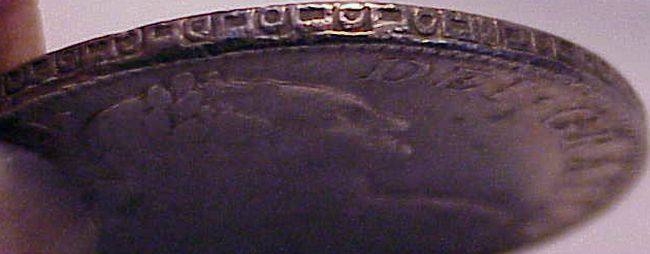
The coin has an edge that places it in the Class 2 Contemporary Silver Circulating Counterfeit group. Made to circulate alongside genuine money it was a bullion trade coin used in China.
There is one very long overlap and as I see it none on the opposite side. Typical of a late US product, so this one might be worth testing with XRF to be positive of a post - 1870s date.
|
|
Pillar of the Community
 United States
1918 Posts |
I have no idea where I would go to get XRF testing done, nor whether it would be worthwhile for a coin I paid $60 for.
Thanks for the input though.
|
|
Pillar of the Community
United States
5362 Posts |
The XRF tests would be useful to determine the age of the coin and assay. It would be great scientific data.
There is no correlation to the value of the coin and knowing for certain whether your coin dates to 1830 - 1840 or 1870 adds no actual value to the item itself. The XRF data is only needed to learn more about the origin of the silver counterfeits.
|
|
Pillar of the Community
United States
1918 Posts |
Quote:
It would be great scientific data. Well, bob, if you have access to that testing equipment, I'd be glad to mail you the coin at my expense. and have it returned at your expense. What's a few $$ postage where -science- is involved, eh  PM me if this is something worthwhile for you to pursue. And please let me know the time frame involved. |
|
Pillar of the Community
United States
5362 Posts |
If you are in the US I will accept the offer - not right now but after I get settled in my new office.
|
|
Pillar of the Community
United States
1156 Posts |
Bob, could you explain how one goes about this process? Do you rent the XRF equipment by the hour? Would it be more cost effective to scan many coins or does it have a fixed cost per scan? Perhaps interested parties (such as myself) could pool resources to get a bunch of coins scanned.
|
|
Pillar of the Community
France
1591 Posts |
Robert, once you are settled, I'd gladly send you my 3 Ferdinand VII 8 reales for XRF as well.
I don't mind paying for the service, I just don't want to have a worthless scan made (and I'm not aware of a nice / serious / with knowledge of numismatic concerns place in Europe)
I'd like to have that type more documented, particularly regarding the different portrait style (one of which you list as contemporary counterfeit)
|
|
Pillar of the Community
United States
1918 Posts |
Quote:
If you are in the US Yes.. yes, I am. Thanks kindly for the offer. No hurry about this whatsoever. I plan to keep the coin, whatever it's provenance, as long as it is not a modern chinese fake. I collect the 8R's by date, and didn't have 1806. |
|
Pillar of the Community
United States
5362 Posts |
The way that RTI International works is on a group basis 10 minimum which runs $50 each - up to a max of 50 a day and the price drops to roughly $40.
They will not do less than 10 coins at a time - it would be too expensive to do one or two. We have to fit into down time in their schedule. This is typically once a month at most. Payment is due when I arrive. I have to handle all coins and take responsibility for any damage to them. Their techs do not want the responsibility and the boss wants to eliminate liability for the testing lab. I have to make sure I renew my liability insurance.
The tests would be done on the newest of the machines that does from Carbon to Uranium. Normal intervals would be used 1-5 minutes or until the analysis looks adequate for the subject coin. The one to five minute period is usually good for a 100 ppm determination (that is accurate to 1/100th of a percent 0.0001). In each case the raw tests are run through the computer to eliminate false positives and then a final report is created.
On a test trying to prove/disprove a class 2 coin or one isolating very minor modern trace elements, the test interval can lengthen considerably up to 60 minutes simply because accuracy of the result is essential - these results would be in the 10-1 ppm range.
The 1 ppm test (full 60 minutes) is not recommended for near mint state coins because surface discoloration can take place due to the prolonged bombardment with Xrays.
I have no problem with making arrangements for periodic tests - say one per quarter or as the workload demands.
I need to gauge the need and make contact with the Lab if there is sufficient interest.
|
|
Pillar of the Community
United States
1156 Posts |
Bob, I suggest starting a new thread when you are ready to collect the first batch of coins for XRF submission. Please provide a cost per coin that would include shipping and handling both ways plus the XRF as I am willing to pay for all costs. My interest is for your research so I would like to know if there are specific dates that you would like to see tested. I have several Charles III busts that I could provide including the 1778 and 1779 that I posted about. ~jack |
| |
Replies: 12 / Views: 1,788 |
|









 Posted 02/15/2015 9:42 pm


