| Author |
 Replies: 13 / Views: 3,257 Replies: 13 / Views: 3,257 |
|
|
New Member
United States
41 Posts |
|
|
|
|
Moderator
 United States
14463 Posts |
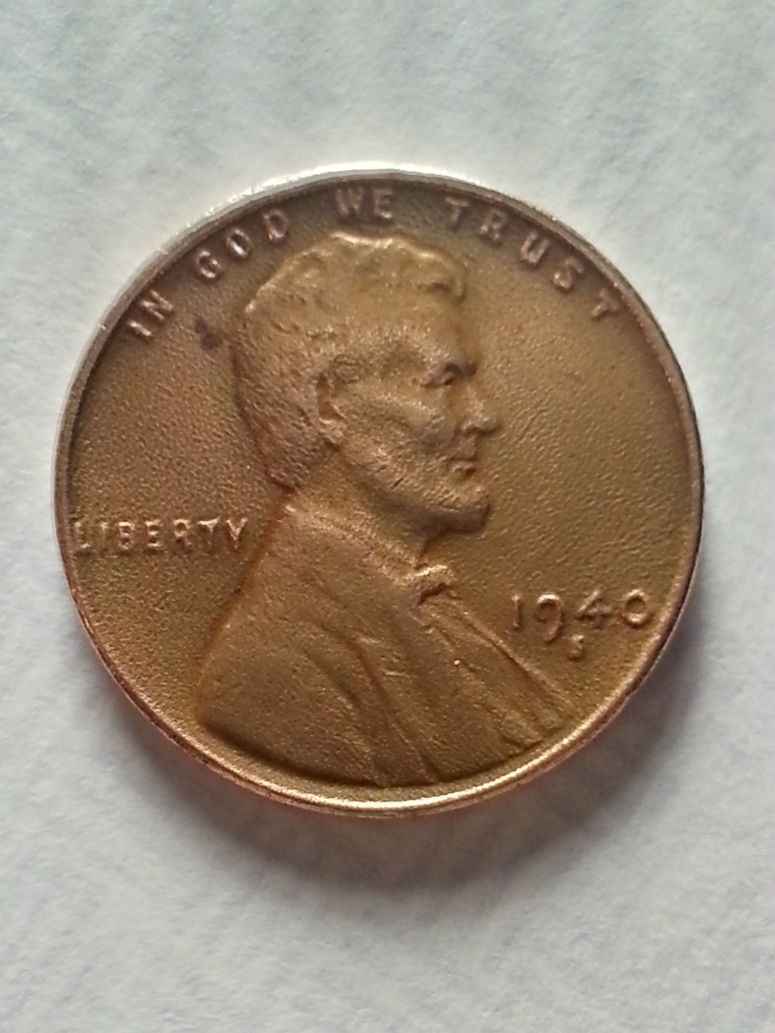
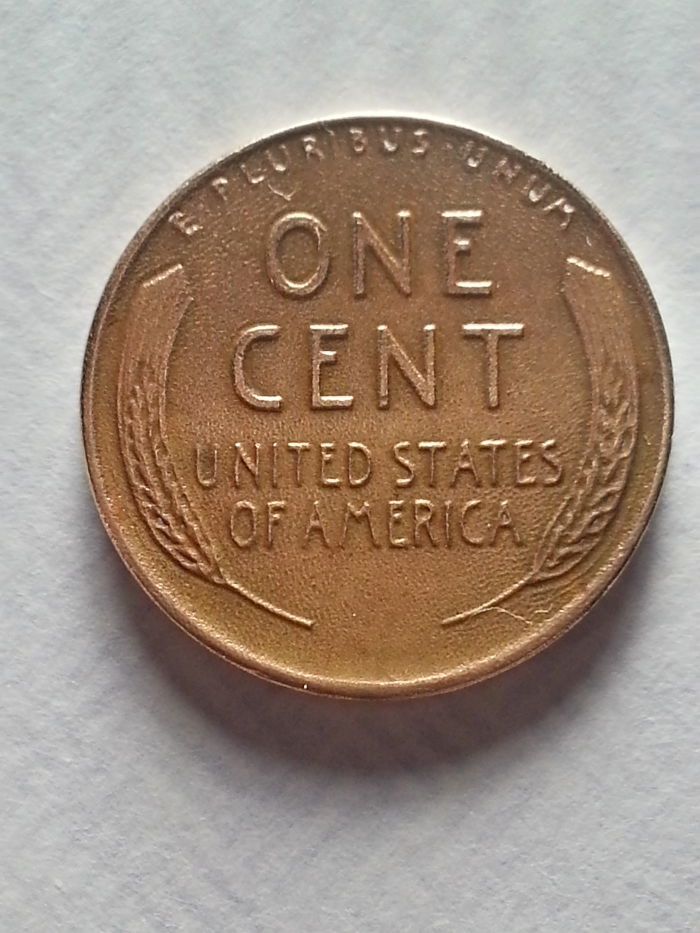
maybe it had been cleaned with an acid batch  |
|
Moderator
Australia
16963 Posts |
"Acid bath" was my first impression.
What's the weight?
Don't say "infinitely" when you mean "very"; otherwise, you'll have no word left when you want to talk about something really infinite. - C. S. Lewis
|
|
New Member
 United States
41 Posts |
Thank you for your response! it weights 3.2g
|
|
Pillar of the Community
798 Posts |
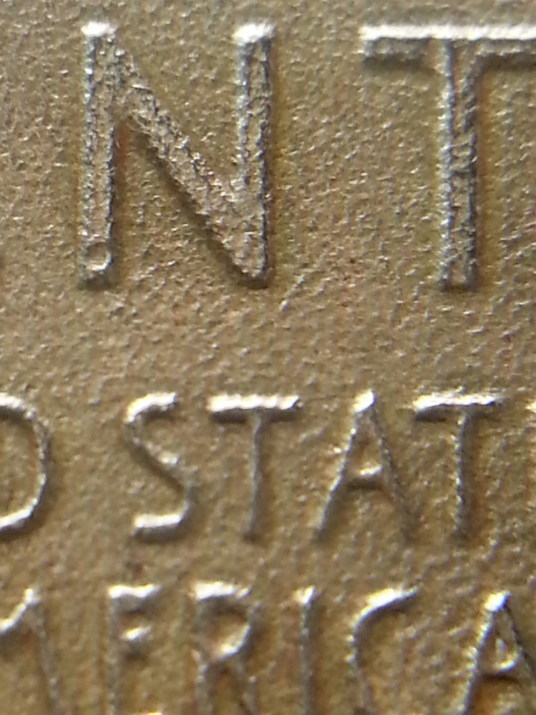
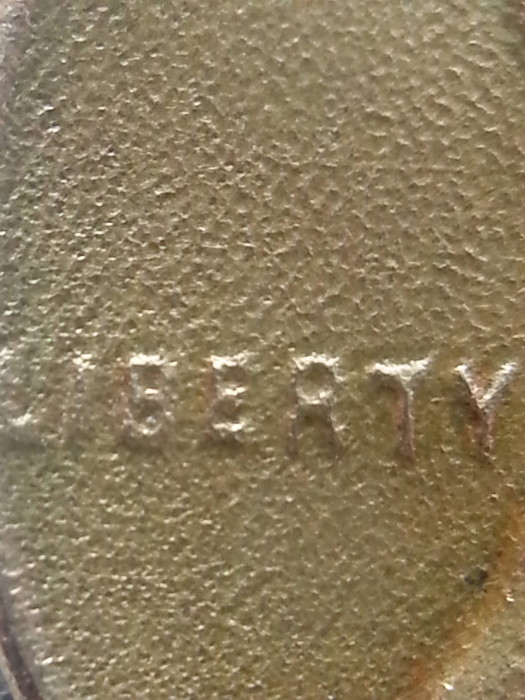
Most coins iv seen that have had an acid bath are way thinner then that coin, so in this case the penny has probably had an acid bath but a light one some how. It looks really strange like sand could of caused it or something.  |
|
New Member
United States
41 Posts |
I put the penny side by side with another 1940S penny so you can compare the thickness. the coin in question is on the bottom. 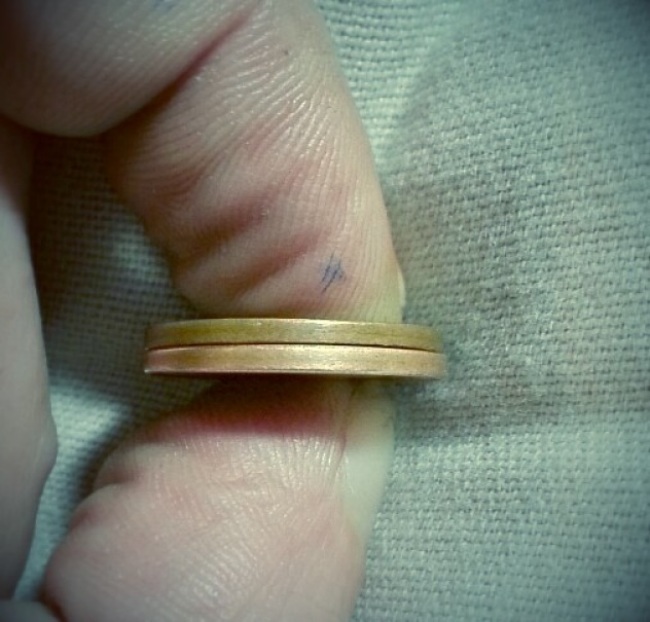 |
|
Moderator
United States
14463 Posts |
that last picture combined with the others, has me thinking its a cast copy |
|
Bedrock of the Community
United States
62064 Posts |
The surface reminds me of an acid bath treatment. Not left in there so long to thin the coin so much like what was know to happen during those days. They would take a cent to chemistry class and dip it into acid so that the overall size would be reduced to a dime in size. Then they would use it in a soda machine as a dime. At that time you could get a soda for 7-10 cents out of a vending machine. (7 oz bottles were 7 cents and 10-12 oz bottles were 10 cents) If they put the cent in the 7 cent machine they would get 3 cents change and the process could start all over again. 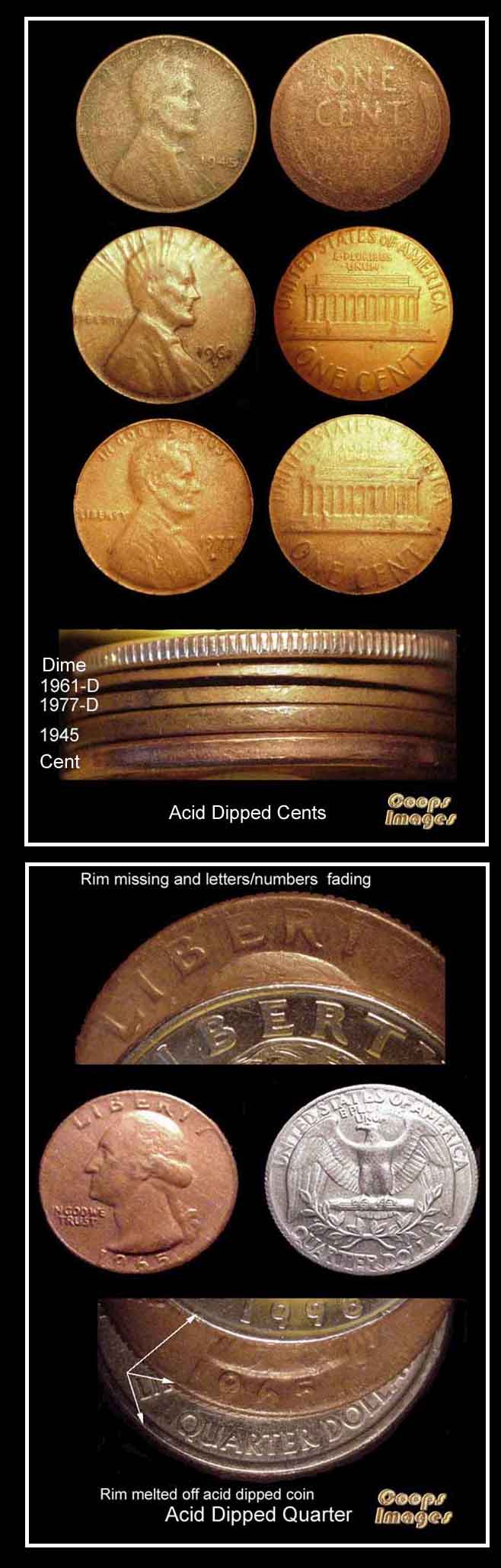 I can't think how or why they would make a cast cent with this date/mint mark. But they do make them: 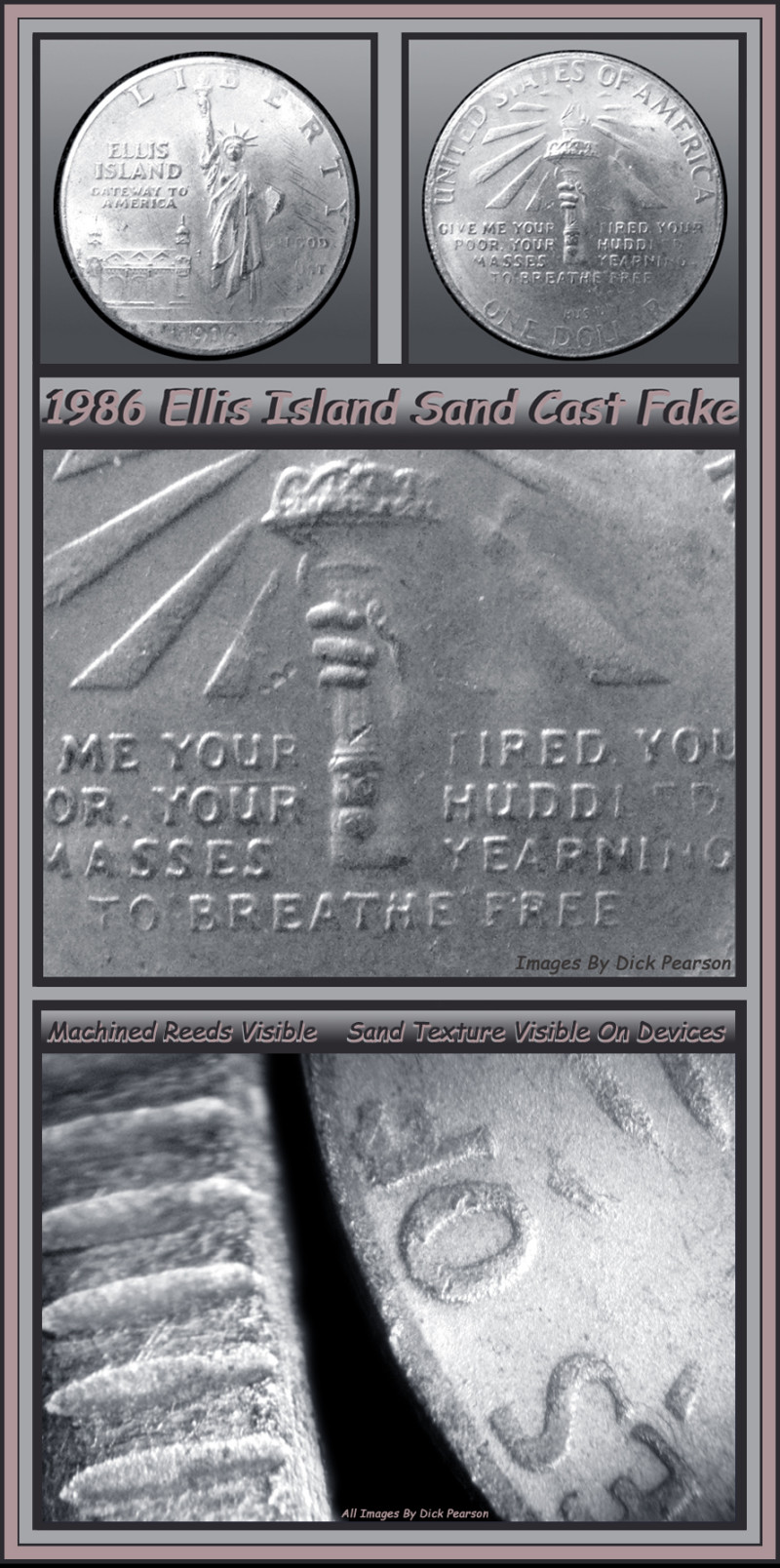 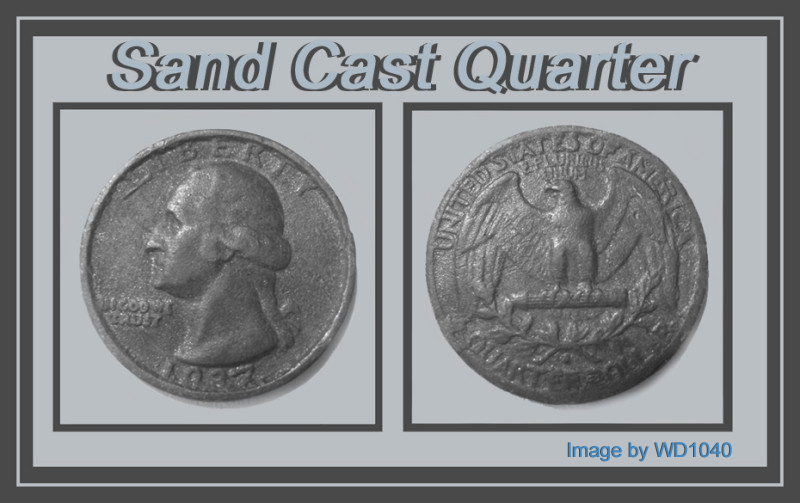 |
|
Pillar of the Community
United States
1796 Posts |
The "1906" Ellis Island counterfeits are actually struck, coop, not cast. However the transfer process was messy. I've been tracking their die pairings.
|
|
Pillar of the Community
United States
1796 Posts |
Not to abduct the thread for too long, but here are two varieties of the "1906" Ellis Island counterfeit. There are a few others. The one that's closest to what you have in your image, coop, is what will eventually be either CF-S$1-1906/86P-0001b or just CF-S$1-1906P-0001b (when I get it up on the site). The dies on most of the B types were rotated about 45° and only the very upper crests of the devices were transferred properly. Although the closer I look at your example, it might be a new set or pairing. I'll have to give it time.   (The type B on the right is in the queue to be documented and then meet Justice, which is why it's missing its COPY stamp.) As for the AngieEllen's coin, I'm scratching my chin. Acid I'd think would be far more likely, but paired with that rim I'm not sure. In any case it is certainly fascinating. :-) Edited by SteveCaruso
02/18/2015 11:58 am
|
|
New Member
United States
41 Posts |
 Whoo Hoo I have a fascinating coin  So I've been researching all possibilities.. Could it be Struck Through Grease? |
|
Bedrock of the Community
United States
62064 Posts |
No, it was dipped in acid and thinned just a bit.
|
|
New Member
United States
41 Posts |
I understand what you are saying.... But it actually looks to be the same if not thicker then the other penny of the same year and mint.
|
|
Bedrock of the Community
United States
62064 Posts |
Thickness of the planchets are not measured by the rim. A stronger upset rim will be taller than others. Look at proof cents. They are taller than buiness strike cents because of the rim. The weight is the same.
|
| |
Replies: 13 / Views: 3,257 |
|











 Posted 02/18/2015 03:09 am


