| Author |
 Replies: 10 / Views: 2,190 Replies: 10 / Views: 2,190 |
|
|
New Member
United States
4 Posts |
Does anybody know if these are genuine? Value? 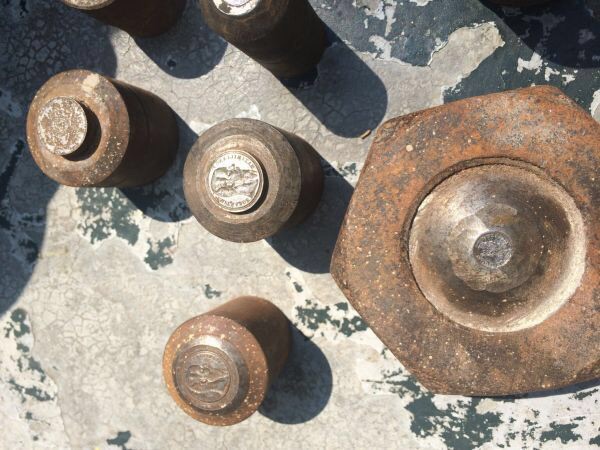 |
|
|
|
Pillar of the Community
United States
1801 Posts |
How did they end up in your hands would be the first question I would ask. Start tracking them backwards, they will either lead to the mint or to a fabricator of counterfeits. Impossible to judge authenticity from those photos.
|
|
Pillar of the Community
Canada
4911 Posts |
whats that large one, a hub?
Feel free to call me Will.
|
|
New Member
 United States
4 Posts |
I found them in Mexico. They belonged to a family who who owned a bank in the XIX century. There are 13 of them. Does anybody know if anything similar has been on sale before?
I don't know what the big one is. Could it have been a proof?
|
|
Pillar of the Community
United States
3499 Posts |
Srosenc- Wow, those are fascinating!! Please do provide us with more pictures of each die. This may turn out to be an amazing find, whether they are authentic governmental dies or contemporary counterfeits.
Srosenc- so long as they are contemporary, you have yourself at least thirteen extremely rare and interesting pieces.
|
|
Pillar of the Community
United States
689 Posts |
For what its worth, my sense is that they are genuine. Every once in a while Mexico dies show up. Years ago, Don B. came across some Republic gold one Peso dies that he returned to the Mexico City mint. He said they have thousands of original dies and hubs there dating back to colonial.
The only specific die variety attribution is for the 20 Peso gold, compliments of the late Hal Birt. There is a guy working on one Peso dies (good luck).
I would pay $500 for a die even if it was fake, maybe $5K for the bunch. I'm in San Diego and can travel and verify.
|
|
New Member
United States
33 Posts |
From the photo provided, I cannot tell of these are coins or medals.
Centro Numismatica made a bunch of Maximilian medals in 1966, one hundred years after the original coins. In the 1985 earthquake, dies for these medals were scattered on the street and taken by the public. If these dies are from those medals, that would be significantly different than if they were from the original 1866/7 coins.
Better photos would help.
|
|
Pillar of the Community
United States
1758 Posts |
They appear Maximilian ... reminds me in France (19thC?) - I think in other periods also the medalists were allowed to keep there original medal dies after production stopped ... have a few ... not cancelled.
John Lorenzo
Numismatist
United States
|
|
New Member
United States
4 Posts |
They look like cocina, but have no value. Can they be proofs? Or work in progress? I will post better photos 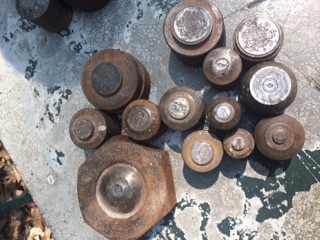 |
|
New Member
United States
4 Posts |
|
|
Pillar of the Community
United States
5362 Posts |
Before we can provide an educated answer there are questions that need answers.
First the size of the face (engraved part) of each die is critical. Are these 9mm medals or 38mm peso dies?
We also need much clearer pictures of each die face. That will allow a comparison with the correct die type from both genuine and known counterfeit coins.
Genuine mint made dies would be VERY valuable on the order of thousands of dollars per die. Even a known contemporary counterfeit die could bring $5,000 from the right collector.
Dies made at a later time for medals or numismatic forgeries would be worth a few hundred dollars per die.
If I were you, I would take the process of potential sale VERY SLOWLY. You could be sitting on a major find.
PLEASE send larger clear pictures and measurements.
|
| |
Replies: 10 / Views: 2,190 |
|





 Posted 02/22/2015 10:06 pm





