| Author |
 Replies: 13 / Views: 2,964 Replies: 13 / Views: 2,964 |
|
|
Pillar of the Community
United States
4883 Posts |
Colligo ergo sum
|
|
|
|
Pillar of the Community
United States
5362 Posts |
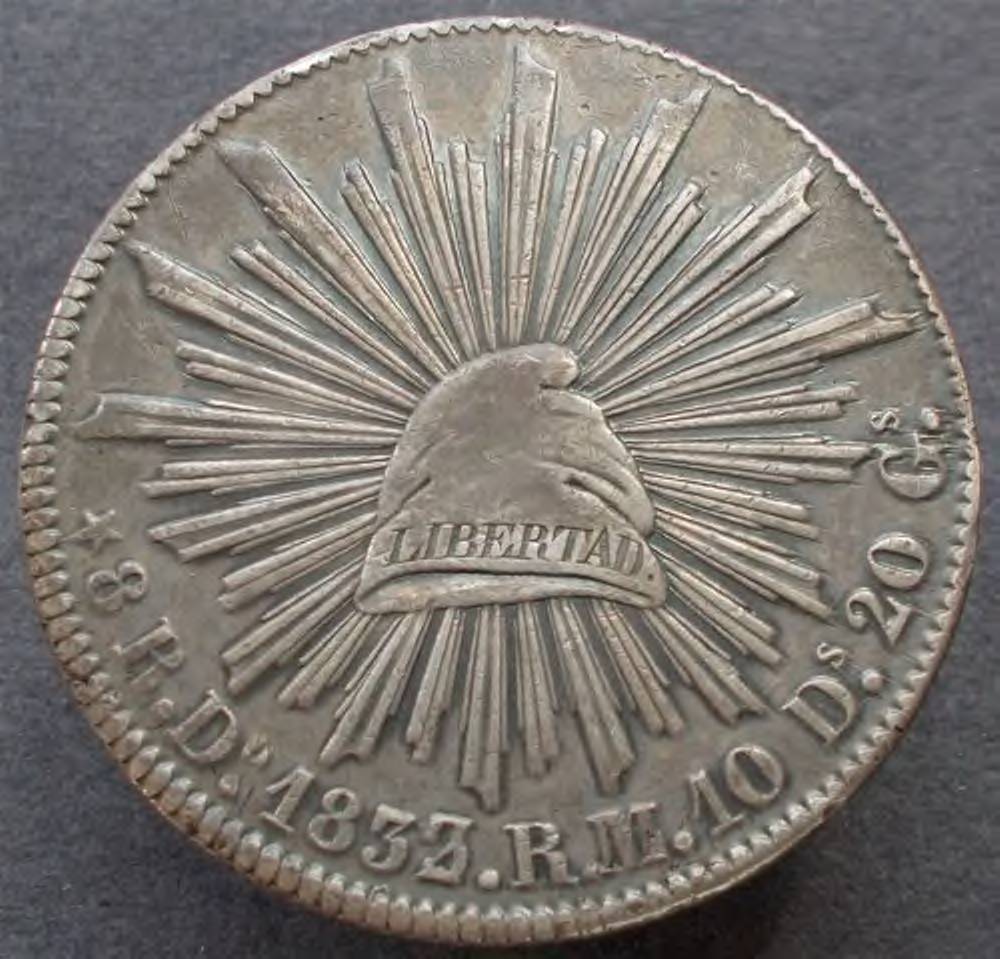
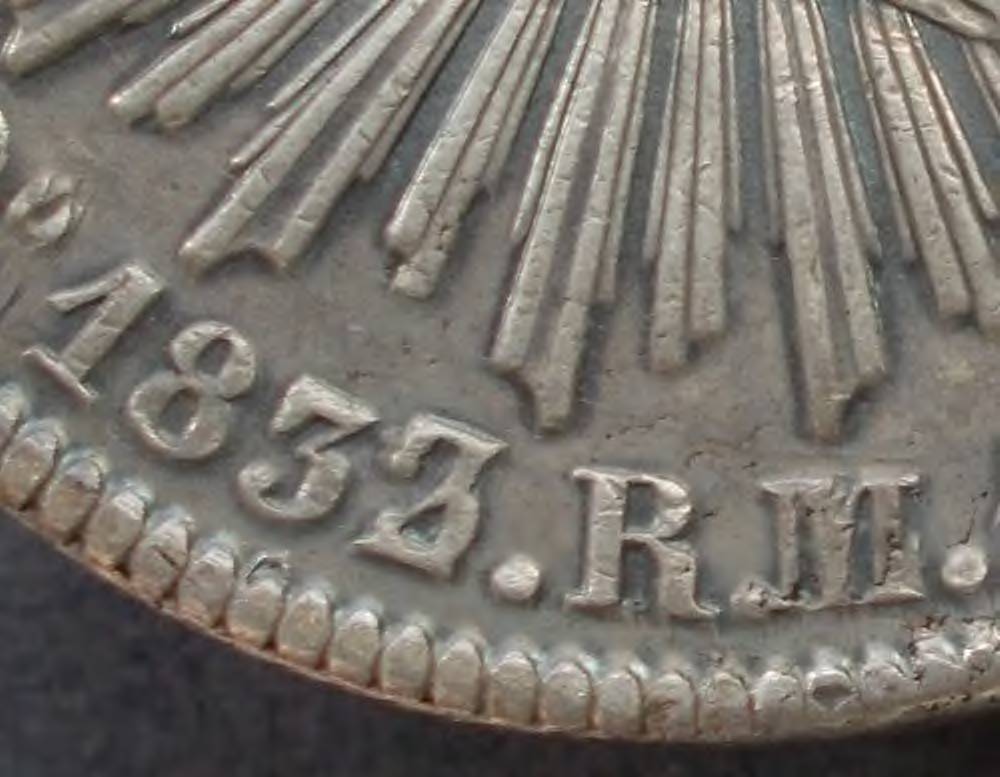
The coin looks good overall with a couple exceptions. Initially I was prepared to say it was good and let it go at that. However ......
Let me start by indicating that 1832 - 1836 was a period plagued by Durango forgeries made in Europe that were shipped into the US and elsewhere. These coins were excellent imitations made with possibly original die making punches and the forgers used hubs to create working forged dies. These were not made in the Mexican mints.
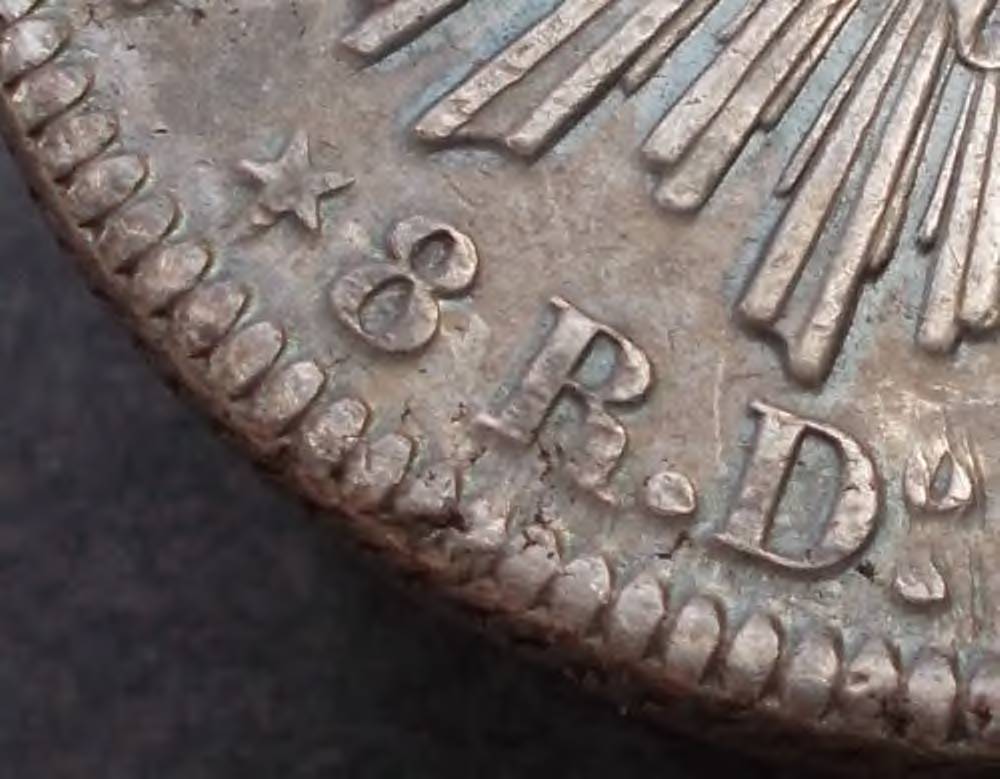
In general overdate versions are very uncommon counterfeits within Class 1 but some varieties are known to exist. Not however 1833/2 Durango. This particular coin is NOT listed in Riddell nor have I seen a counterfeit coin like it. It also uses dies that do not follow the normal counterfeit hub layout (with the ray tip between the 10 and the Ds being closer to the zero.)
The weight is high even for Durango where weight is known to vary on the high side. For a coin with some minimal wear 28.3 grams is simply OFF the charts. Have you checked your scale?
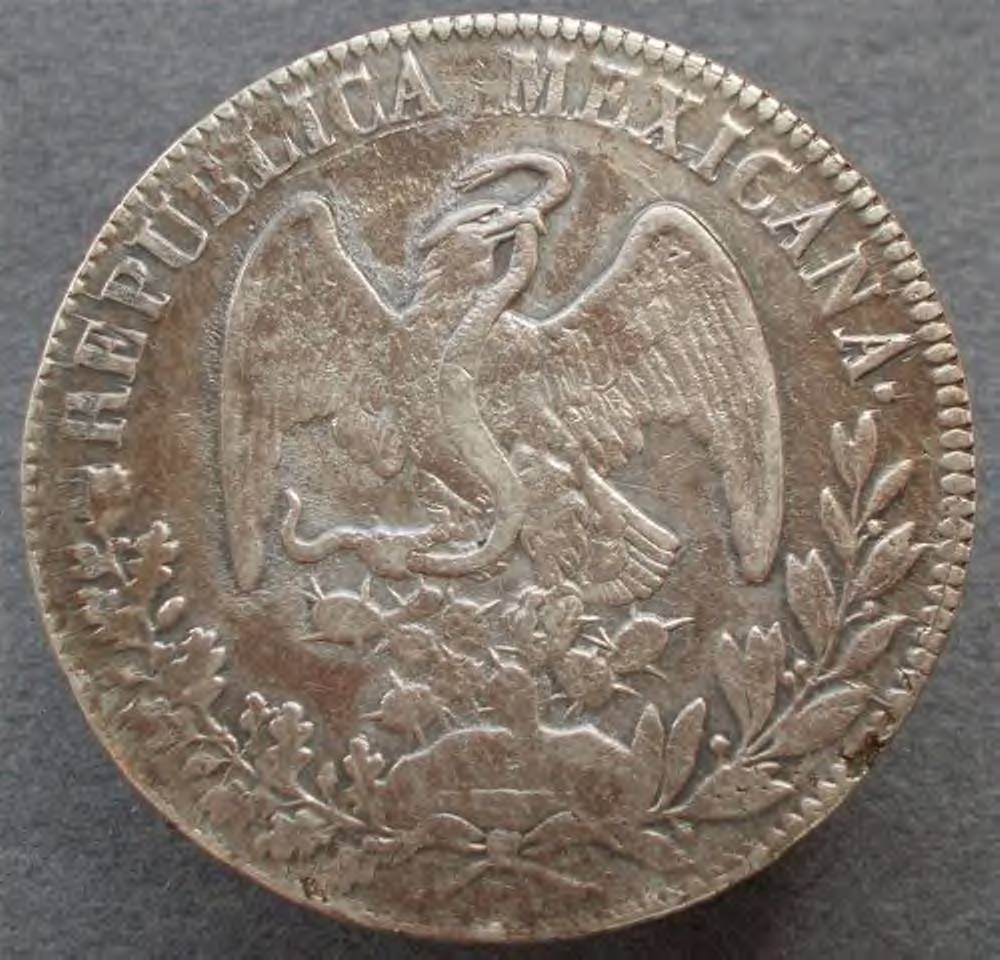
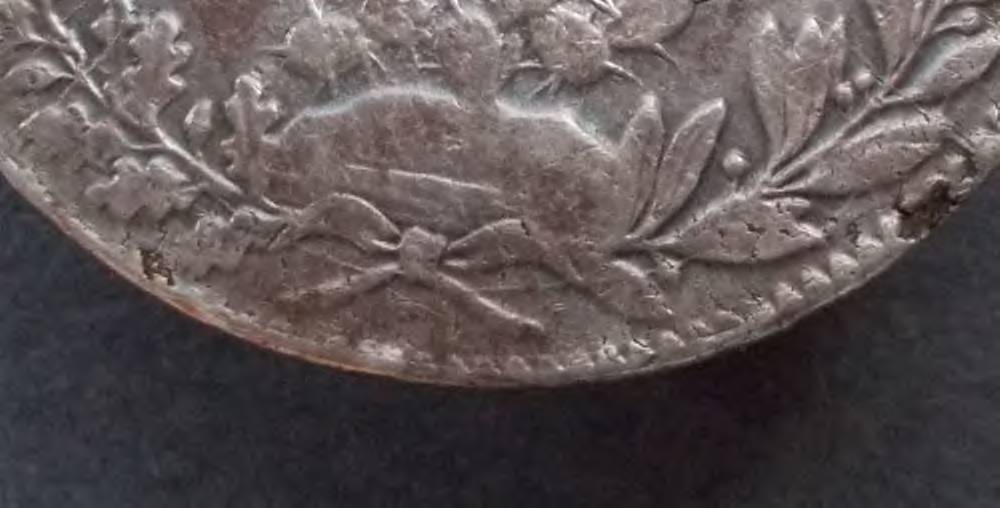
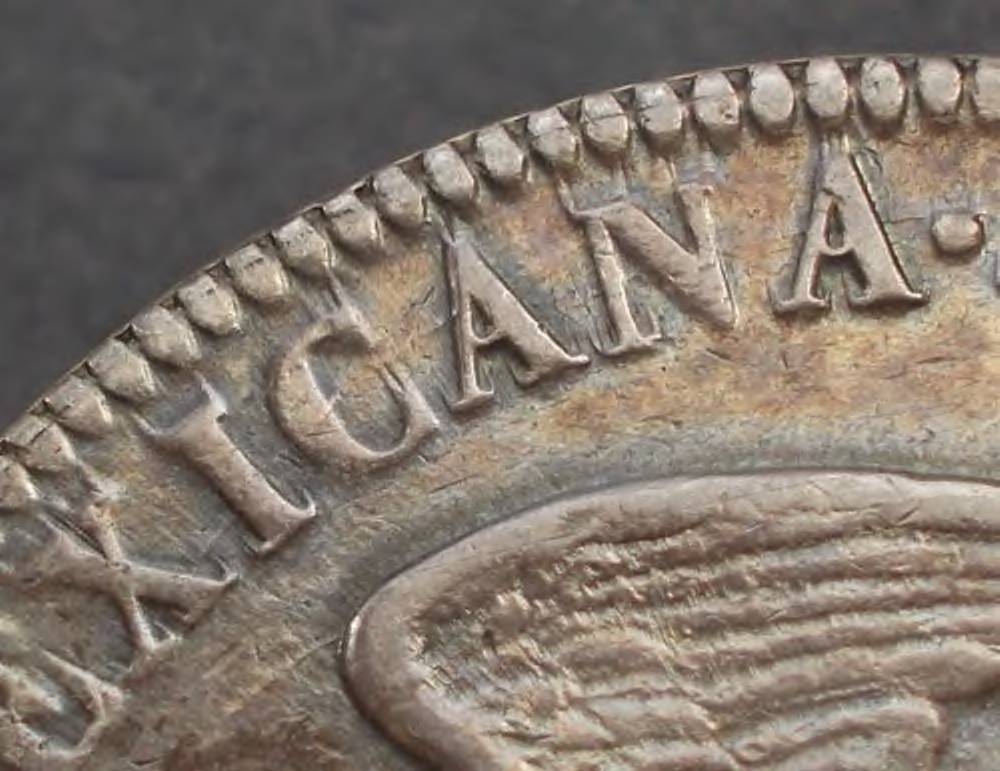
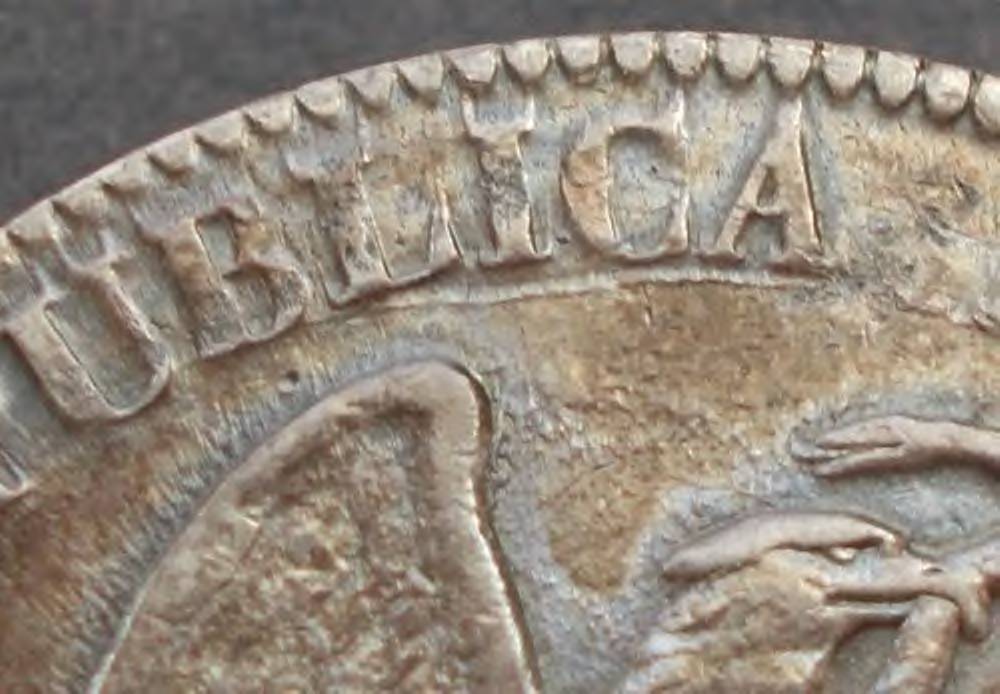
The one thing that I see as incorrect for which I have no explanation is the fact that the dentils on the bottom of the reverse die - eagle die (obverse die for Mexican purists) APPEAR TO END BEFORE THE EDGE OF THE COIN.
This is the sign of a counterfeit in 99% of cases. In person I would check to see if what the pictures look like is in fact true. In 1832 or anytime when an open collar screw press was used - dentils simply should NOT stop before the edge of the coin. The dies were made significantly larger than the flan. The only exception is an off center strike - and even then other features show that the die face contacts the flan to the VERY EDGE.
So please look at that area very closely and let me know if the arc shaped line is a struck in feature or post strike damage from a coin counter.
If this is a counterfeit as it may be I would be very interested in buying it for further study. The core of the coin is open to inspection and XRF would be of great interest here.
|
|
New Member
United States
33 Posts |
I was once told that some Durango 8R dies of this period escaped the mint. That might explain the overweight factor.
I have a somewhat underweight example that I think is genuine (from memory, its either 1833 or 1834).
|
|
New Member
United States
33 Posts |
I just found my notes. My coin is an 1833 RM (my notes don't indicate an overdate) and it weighs 26.58g.
The dies appear genuine and the coin was always an enigma to me. It looks to be struck over a medal of some kind.
|
|
Pillar of the Community
 United States
4883 Posts |
Robert -
My examination of the area in question under excellent lighting and good magnifcation leads me to the conclusion that the dentils do in fact extend to the edge, but that they're extremely weakly impressed in this area, which incidentally also shows a lot of that cavitation I had previously mentioned. The arc shaped feature is sort of like a scratch, but not exactly; I'm really not sure what to make of it. But the strike right there is very muck lacking.
The scale I used I had checked against my control weights just yesterday, and the other "Cap & Rays" I bought today came in at 26.97 grams on it. I also was shocked at 28.33 for this one. I guess the next step I ought to take is to determine its specific gravity.
Colligo ergo sum
Edited by Lucky Cuss
03/16/2015 4:55 pm
|
|
Pillar of the Community
United States
4883 Posts |
Here's a couple more shots taken tonight under harsh artifical lighting that may help. The first I think shows pretty conclusively that the dentils do extend all the way to the edge: 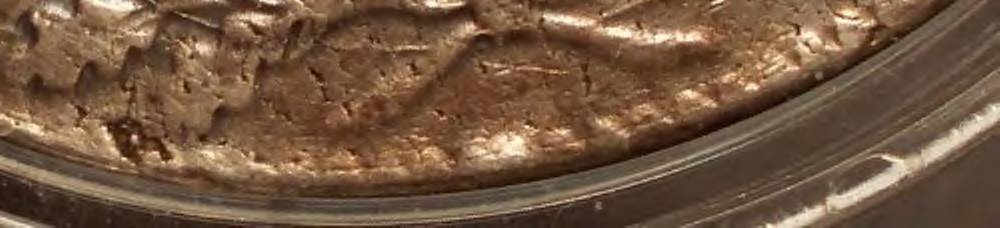 In this area a bit farther up (clockwise), the dentils become so indistinct that they're just so much mush, but interestingly that arc-like feature can still be seen, but I don't know what conclusion (if any) to draw from that: 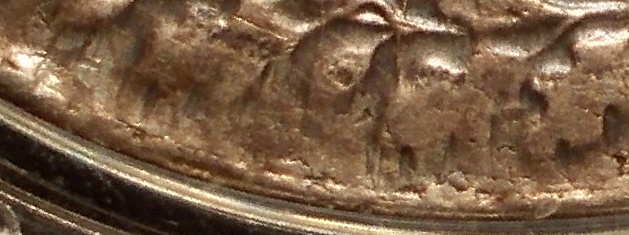 Colligo ergo sum
|
|
Pillar of the Community
Hong Kong
1270 Posts |
The color of this coin does not persuade me it has a sufficient silver content, yes I agree it is not a real piece. But I don't know why the date was re-engraved if it was not an original.
|
|
Pillar of the Community
United States
4883 Posts |
My measurement of this coin's specific gravity (done carefully and with sufficient repetition to be reasonably certain of the accuracy) works out to 10.302 - indicating a range of 88 to 89% silver purity (assuming nothing other than copper was used in the alloy). So it would seem the composition isn't significantly debased and the chances of its being a contemporary counterfeit are considerably lessened. Interestingly, even at only 88%, its actual silver content works out to about ½ gram more than an 8 reales struck to the correct specifications.
Colligo ergo sum
Edited by Lucky Cuss
03/16/2015 6:12 pm
|
|
Pillar of the Community
United States
1764 Posts |
I agree an interesting XRF candidate as most overweight coins are an enigma - possibly. I stop guessing alloys on photographs - gives me a headache.
JPL
|
|
Pillar of the Community
United States
5362 Posts |
I agree the coin is now an enigma - heavy but the correct alloy. Unless you have an analytical balance scale accurate to 1/1000th of a gram direct reading you can not estimate an alloy to better than 2 or 3 % so your reading is correct. XRF even hand held could do the alloy to 1/10th percent but I agree with John that this would be a candidate coin for a lab XRF test.
The die looks well worn - not quite terminal. Durango did over use their dies and hubs. Must have been a "cheap" operation. It was under lease and overweight coins might have been intentional.
The 1832, 1834 and 1836 counterfeit dies which look like mint dies are generally believed to have been made in Europe in a forgery effort that centered in France. The mint at Durango did not sell worn out dies to scrap dealers like Guanajuato did.
|
|
Pillar of the Community
Austria
566 Posts |
A nice coin, I would buy it.
|
|
Pillar of the Community
United States
4883 Posts |
Quote:
It was under lease and overweight coins might have been intentional. In order to profit from a conspiatorial scheme (in collusion with one or more corrupt mint employees) whereby overweight coins were struck would generally require that the spurious issue be melted down once it was out the door. In other words, such shouldn't survive, with an additional reason being that if some did, they would be damning evidence of official perfidy. All the more cause to wonder about this extant specimen. Colligo ergo sum
|
|
Pillar of the Community
United States
5362 Posts |
I would be interested in buying it as well - except I would not be buying as an original (just in case).
by the way I do not get many takers for that kind of offer.
|
|
Pillar of the Community
United States
4883 Posts |
A bit more regarding this issue: http://www.coinfactswiki.com/wiki/M..._RM_8_realesWhat's interesting about the overdate specimen pictured is the extensive die cracks it exhibits, evidence that the repurposed dies were employed until they were used up also. Colligo ergo sum
|
| |
Replies: 13 / Views: 2,964 |
|











 Posted 03/15/2015 9:51 pm


