First Page


 Posted 03/17/2015 1:41 pm


Quote:
1.Is there a Error that is likely/close looking to other then:
*Struck Through Die Cap
*Struck Through Grease
*?_____________________?
And
2.Is the Die Cap a Cap?
3.What does the Die Cap Look like?
4.How thick is the Die Cap?
5.Are they tore up after the first strike?
6.How many times can the Run of Coinage be Struck Through the same Die Cap before it get taken off the Die/Removed?
7.How do they remove the Die Caps?
8.What year/years have been zero down to produce most/likely Struck Through Die Cap?(Cent/Nickels/Etc)
1.Is there a Error that is likely/close looking to other then:
*Struck Through Die Cap
*Struck Through Grease
*?_____________________?
And
2.Is the Die Cap a Cap?
3.What does the Die Cap Look like?
4.How thick is the Die Cap?
5.Are they tore up after the first strike?
6.How many times can the Run of Coinage be Struck Through the same Die Cap before it get taken off the Die/Removed?
7.How do they remove the Die Caps?
8.What year/years have been zero down to produce most/likely Struck Through Die Cap?(Cent/Nickels/Etc)
I'll try to tackle some of these questions.
1. There are a few other errors that cause similar weakness/blurred details on one side of a coin. I believe these would be limited to coins struck through things other than grease (split planchets, cloth, plastic, other coins or planchets, clad layers, etc.)
2. Not exactly sure what you mean here. It's a cap in the sense that it covers the striking surface of the die. It's comparable to a bottle cap on a glass bottle.
3. Die caps vary in the shape that they acquire. Some form large walls where the planchet morphed around the die neck. Others only form mild cupping.
4. Die caps tend to thin out as they strike more coins. They can be very close to the thickness of a normal coin and can wear out to a point that they're so thin that they tear apart.
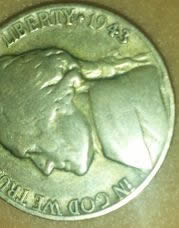
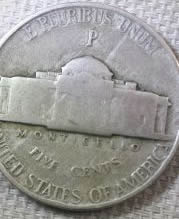
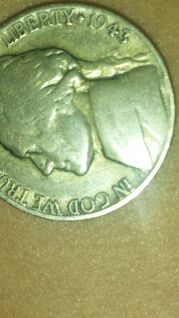
5./6. Die caps, by their definition, strike at least one coin after being attached to the die. It is possible that a die cap strikes only 1 coin, but I believe they could strike 100 or more. I have a run of about 10 struck through die cap cents (like yours) that came from a collection of about 60 that were produced from the same die cap.
7. I'm not sure how they are removed. In many cases, they fall off or tear apart after striking. I'm sure in some cases, caps were manually removed by press operators.
8. I've not paid much attention to the specific dates/mints/denominations that are found with die caps and struck through die cap errors. I know struck through die cap errors are really common from the late 1960s to late 1990s on cents and nickels. Dimes are a little less common. Quarters, halves, and dollars are probably the rarest. I'm sure others will have more accurate information as to the relative rarity of these errors between dates, mints, and denominations.