| Author |
 Replies: 17 / Views: 9,794 Replies: 17 / Views: 9,794 |
|
Valued Member
United States
128 Posts |
Is it a mint error that produced the oversize 1988 cent at right? 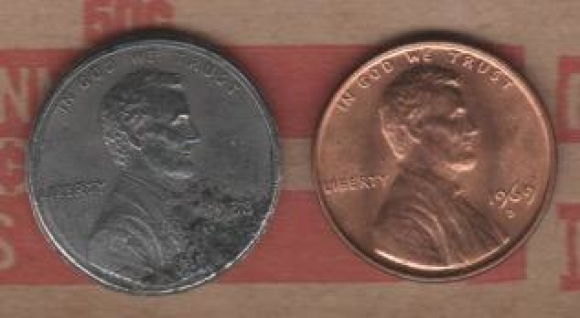 |
|
|
|
Valued Member
United States
449 Posts |
Just like most materials, especially metal they will expand and contract when there is a temperature change. This coin has most likely gone through the wash/dryer so many times it has expanded in size. Did you try weighing the coin?
|
|
Pillar of the Community
United States
6478 Posts |
Texas cent.
Edited by SilverStackerKid
03/24/2015 09:55 am
|
|
Valued Member
 United States
128 Posts |
I meant to weigh it, but forgot. It weighs 2.47 grams; consistent with zinc cents.
|
|
Pillar of the Community
United States
6478 Posts |
It has been squashed between two pieces of leather.
|
|
Valued Member
United States
186 Posts |
probably put on something hot ...like a stove
that's why its a dark color
|
|
Bedrock of the Community
United States
12437 Posts |
SSK is correct, it is a Texas Penny.
|
|
Moderator
 United States
23522 Posts |
A Texas Penny gets the name from the "everything's bigger in Texas" meme. When you hammer a Cent between two pieces of leather, it flattens and expands with surprising accuracy. They're tough on collectors who haven't seen them before, because they're so accurate. After all, they're real.  Popular thing to do, apparently, because we see a lot of them here. |
|
Valued Member
United States
108 Posts |
|
|
Valued Member
United States
280 Posts |
I will say it again, " I learn something new here every day " !
|
|
Moderator
Canada
10476 Posts |
I am posting here (18 months later), because one element that has to be considered is that these coins typically have rims. To have a rim, means it has a collar die. Oversize planchets do not fit in the collar die. If someone were to manually shove it in there, it would bend after the strike and during ejection. Now this one, looks very similar, but it is not a Texas Cent. It is struck on an oversize (as well as over thickened and overweight planchet). You can even see the die polish striations. There was minor rim finning and yes, it was bent by the collar die (that is why it got a 'Genuine' grade). https://www.PCGS.com/cert/33950455 "Discovery follows discovery, each both raising and answering questions, each ending a long search, and each providing the new instruments for a new search." -- J. Robert OppenheimerContent of this post is licensed under a Creative Commons Attribution-NonCommercial 3.0 Unported License. See: http://creativecommons.org/licenses...0/deed.en_USMy eBay store
|
|
Pillar of the Community
United States
2567 Posts |
|
|
Bedrock of the Community
United States
94367 Posts |
You certainly do learn something new on the CCF everyday! |
|
Bedrock of the Community
United States
17884 Posts |
Quote:Now this one, looks very similar, but it is not a Texas Cent. It is struck on an oversize (as well as over thickened and overweight planchet). You can even see the die polish striations. There was minor rim finning and yes, it was bent by the collar die (that is why it got a 'Genuine' grade). They piece was "assisted" by a mint worker. It shows rims and finning on both sides. That means it was struck IN the collar. No way to strike a 21 mm plnchet inside a 19 mm collar. Someone mounted cent dies in a nickel collar and then struck this piece. |
|
Pillar of the Community
United States
2775 Posts |
I would think Texas Cent, because the would be static devices including the bust seem to be stretched out of proportion. Coin weight is with in tolerance for this year. Don't think the die would stretch the design out, because of collar size or a more extreme no collar scenario. If this coin is bent I'm not picking up on it. Seems flat to me. Thanks, Doug. Adding: also the missing copper plating seems typical of that seen on a copper plated Texas Cent. Edited by Halo1st
01/26/2018 5:06 pm
|
|
Bedrock of the Community
United States
62064 Posts |
Looks like e Texas Cent to me. Note the diameter is larger than a regular coin: 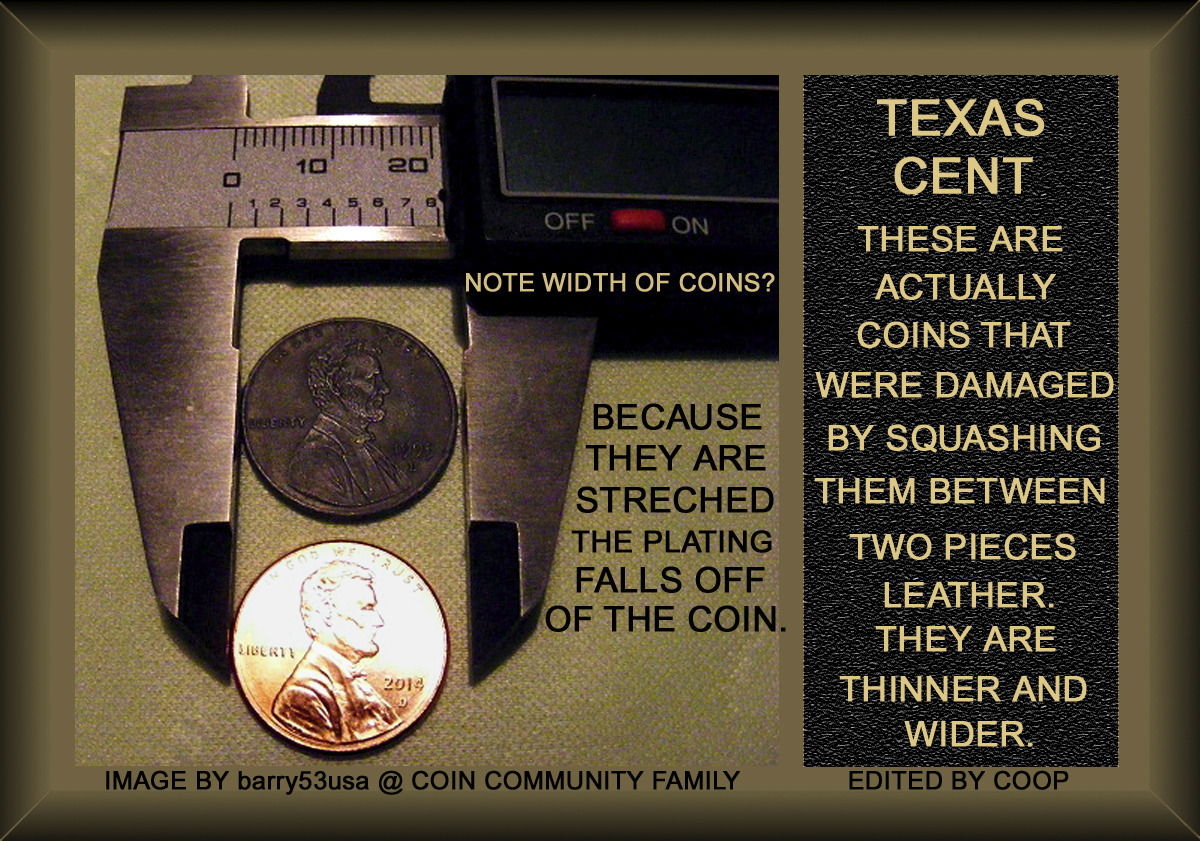 |
| |
Replies: 17 / Views: 9,794 |







 Posted 03/24/2015 09:55 am





