Poll Question
OK, so there are basically two things that make proof coins special a I understand it. First, they are struck with specially prepared dies that result in extra-sharp details. Second, they are usually struck on specially prepared blanks that have mirror-like surfaces. Both of these are important, but I have to admit that it's the mirror-like surfaces that really catch my eye and make me drool.
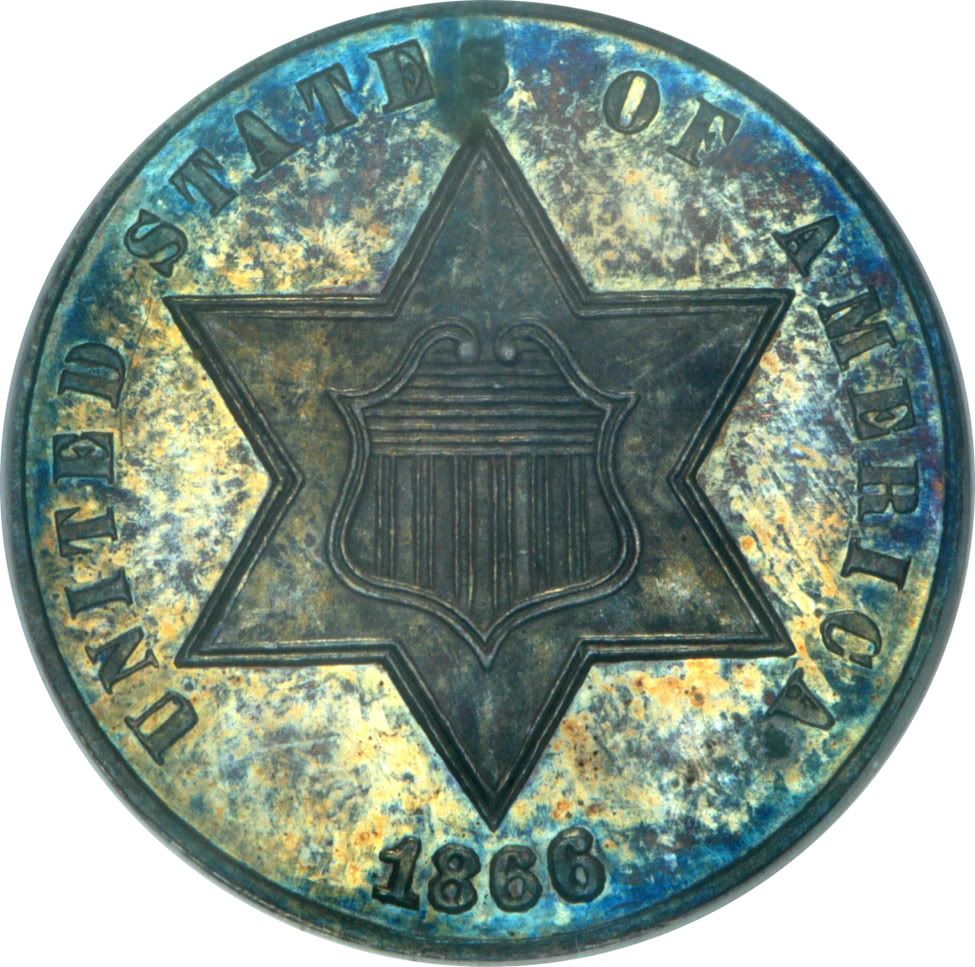
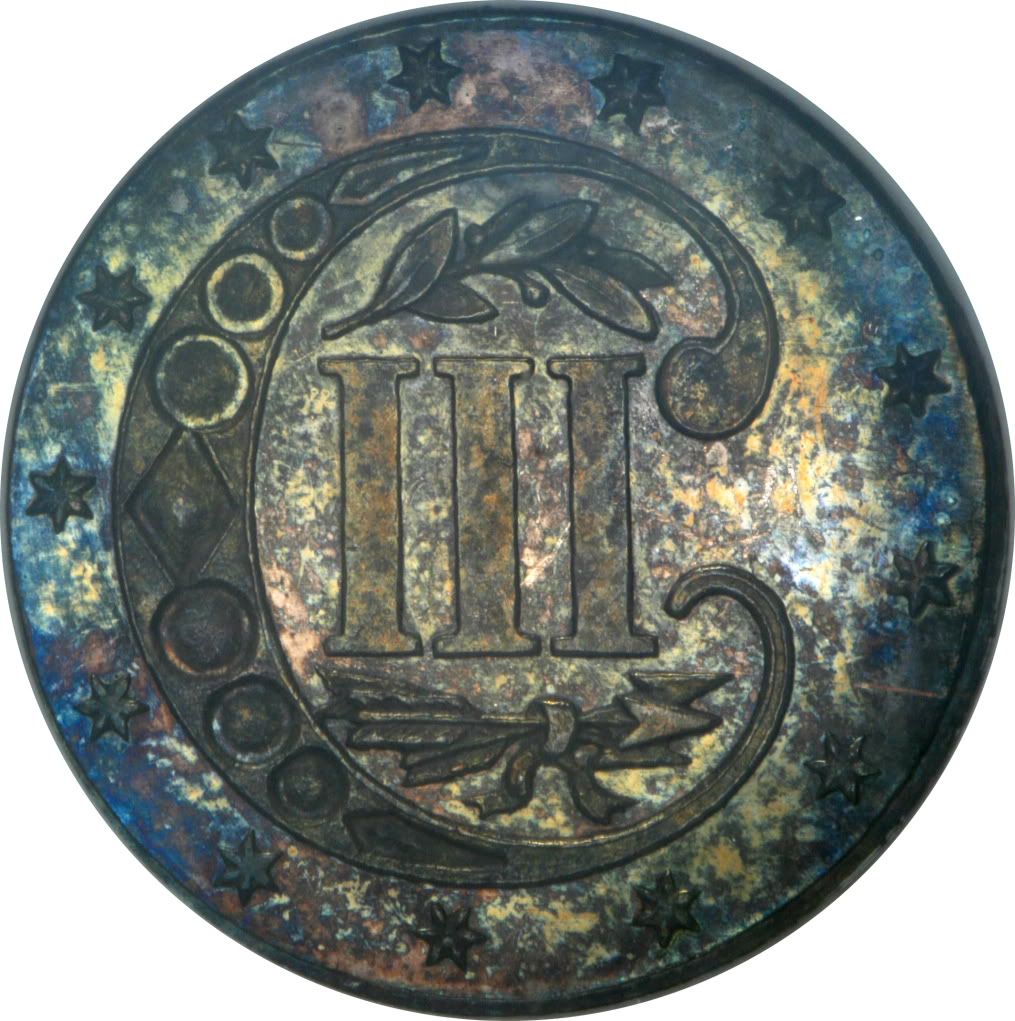
For example, here is a PF65 coin with fantastic detail but no mirrored fields due to toning:
And here is a PF61 coin with great mirrored fields but with enough wear to knock it down a few grades:
Given a choice between a high-grade proof that no longer has mirror-like surfaces (e.g., due to toning) or a lower-grade proof that still has mirror-like surfaces, which would you rather have?
I can't decide. It's all about eye-appeal for me, and the price that comes with it ofcourse. For example if the two coins above were worth the same I would take the 1870 over the 1910. However, if the 1910 happened to have vivid rainbow toning I might be inclined to take it over the 1870. I must say that I am partial towards the 1870 as Seated coins are a series that I specifically collect while I don't really like Barber coinage.
If the price was different, the situation would change, is the more expensive coin so much nicer than the cheaper coin that it warrants the extra price?
Anyway, to address your original question, if price wasn't in play, and I wasn't partial, I would probably pick the more mirrored coin as it's more likely to be better looking.
Yeah, I wish I had two identical proof coins in different grades to better illustrate my point, but I had to go with what I had available.
From what I've seen in the market, prices are based almost exclusively on grade (although exceptionally nice toning can certainly bump the price up). Which is to say that the lower grade proof with mirrored fields will almost certainly cost less than the same coin in a higher grade but with no mirrored fields. Since I'm not really buying as an investment and only have limited funds in the first place, I would definitely go with more mirrors over better grade. The 1910 dime I showed above was one of the first classic proofs I purchased and I really got suckered by the high grade. I just don't enjoy looking at it the way I do my other proofs and will probably try to exchange it at some point for one with more mirrors, even if it means going with a lower grade example.
Quote: I just don't enjoy looking at it the way I do my other proofs and will probably try to exchange it at some point for one with more mirrors, even if it means going with a lower grade example.
The beauty of that is, you won't have any trouble finding someone who feels opposite of you on the subject. So you're hardly in any financial trouble with the 1910.
The farther you go back, though, the less I trust the originality of untoned Proofs.
Quote: The beauty of that is, you won't have any trouble finding someone who feels opposite of you on the subject. So you're hardly in any financial trouble with the 1910.
True, that! In fact, I might even make a profit on the deal if I can find a nice example in a lesser grade with better mirrors.
Quote: The farther you go back, though, the less I trust the originality of untoned Proofs.
Hmmmm... I started another post recently where I asked what effect, if any, dipping would have on a proof coin, and the general consensus was that the mirror finish would be destroyed. What other type of process could remove toning of a proof coin without affecting the mirrors?
Toning should NOT affect mirrors. They might be a bit subdued/darker but they coin should still have brilliant surfaces when tilted into the light. If it doesn't, it's impaired and should never get into a good holder, unless there's something bizarre going on with the Proof dies/process which I've never heard of. And, as far as I know, all Barber Proofs have brilliant surfaces.
Quote: Hmmmm... I started another post recently where I asked what effect, if any, dipping would have on a proof coin, and the general consensus was that the mirror finish would be destroyed.
I have dipped proofs before with no problems. But you need to consider that the mirrors ARE delicate. We all know than an Unc coin can be dipped without it showing. We also know that you can dip that Unc coin a limited number of time before the cumulative effect destroys the luster and gives it that flat washed out look. A proof coin is the same way a single dip is probably OK but multiple dips over time will destroy the mirrors. And it takes a lot fewer dips to destroy the mirrors on a proof than it does to destroy the luster on an Unc. One other thing to consider, the toning on a proof also damages the mirrors. that is another reason the proofs can stand much fewer dippings.
Let me clarify, if toning runs its course, it's oxidizing the metal and (let me backpedal here), yes it will eventually destroy the mirrors. I suppose I was optimistically thinking of the normal toning seen on Classic Proofs doesn't ever really go to black and destroy the mirrors (at least none that I've seen). Quite frankly, if you have a Proof that doesn't look like a Proof (i.e. doesn't have flashy fields, toning or no), that is not a coin I'd want to own and has negative appeal to most Early Proof collectors.
I have Proofs with darker toning, but they still have decent mirrors. What's the point of owning a Proof without mirrors/brilliant surfaces?
Here is an example of a coin that has dark surfaces when not in the right light, but you should be able to tell that the coin still has brilliant/reflective surfaces (and if you can't discern that, then you'll have to trust me that you'd see it in hand):
Quote: What's the point of owning a Proof without mirrors/brilliant surfaces?
Oh, I agree 100% with that sentiment, believe me! But I have been told repeatedly that "proof" refers to the special die used and does not necessarily mean the coin has mirrored surfaces (although many proofs do, of course, have mirrored surfaces).
Disclaimer: While a tremendous amount of effort goes into ensuring the accuracy of the information contained in this site, Coin Community assumes no liability for errors. Copyright 2005 - 2026 Coin Community Family- all rights reserved worldwide. Use of any images or content on this website without prior written permission of Coin Community or the original lender is strictly prohibited. Contact Us | Advertise Here | Privacy Policy / Terms of Use










 Posted 04/20/2015 10:50 am