| Author |
 Replies: 22 / Views: 3,777 Replies: 22 / Views: 3,777 |
|
Pillar of the Community
United States
1372 Posts |
Picked up a roll of uncirculated 21-Ps, and started looking into VAMs ... it's just going to give me a headache, so they are likely going to remain unattributed. I did find this one with a huge die gouge from the eagle's tailfeathers, and through the bow in the wreath,extending down between the D and O of DOLLAR. I couldn't find it listed anywhere, and its big enough to easily be seen with the naked eye. The coins are a bit "traveled" ... kinda "baggy", bu definitely BUs. There are 13 with the 16 berry reverse and 7 with the 17 berry reverse. Of the seven 17 berry variety, 2 are the wide reeded variety. 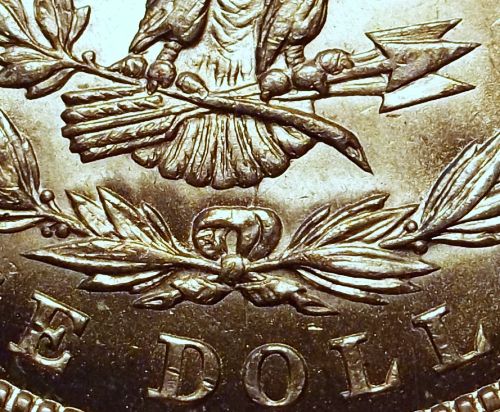 |
|
|
|
Pillar of the Community
United States
1314 Posts |
|
|
Pillar of the Community
 United States
1372 Posts |
I found this one interesting too. This appears on one of the two infrequently reeded specimens. Chance 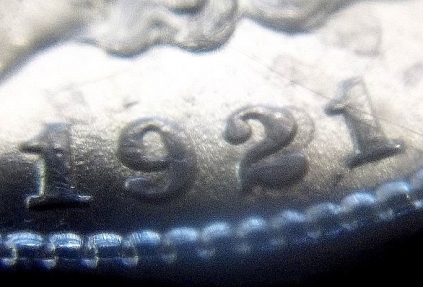 |
|
Moderator
 United States
23522 Posts |
The gouge is VAM-48.
Is it what looks like a "ghosted" 2 you're seeing there, Chancellor? Interesting, but we'd have to look in the context of broader images to start coming up with ideas. Ghosting is possible (seen with toning, for instance), just odd in that direction. Have you attributed the Infrequent Reeding coins yet? Look atop the reverse for die gouges from the denticles towards ST, and beveled field at the denticles near OF. Those are markers that help narrow them down (not all those are on the same coin).
|
|
Pillar of the Community
United States
1372 Posts |
I checked and rechecked that 2 ... its raised and not just toning tricking the eye. I'll look closer at the 2 infrequently reeded ones in particular.
This is an interesting lot. There are 2 with overpolished reverses, where the eagle's wing begins to look detached as feather detail between the wing and breast is lost. There are 2 or 3 that have almost proof-like surfaces, whereas most of them are really frosty, to the point of looking coarse in comparison.
I'll check the 2 infrequently reeded ones closer later this evening. Looking through the loupe for periods of time gives me a "real" headache, not a figurative one.
Thanks too, Dave, for the attribution on the die gouge. I appreciate that. I'll look closer at that one too.
Chance
Edited by Chancellor Sutler
04/26/2015 6:51 pm
|
|
Moderator
United States
23522 Posts |
Yeah, I saw hints of really nice surfaces on your images. Looking forward to seeing more.
|
|
Pillar of the Community
United States
1372 Posts |
Cleaned my loupe... and have to report that the ghost "2" is nothing more than a spot of the rinse agent used by the mint.
Looks to me like I have a VAM-28A, and VAM-25A in the infrequently reeded coins.
I charged up some batteries, so I'll try and take some pictures of some of coins that have more proof like fields in particular.
Chance
|
|
Moderator
United States
23522 Posts |
Quote:
Looks to me like I have a VAM-28A, and VAM-25A in the infrequently reeded coins.
Those are two of the most interesting to me. They must have had some serious problems with the feed finger mechanism not being up to production demands on the physical size and scale of 1921 Morgans - not having struck anything that large in production for 17 years - and feed finger telltales abound in that year. I think these are two good examples. |
|
Pillar of the Community
United States
1372 Posts |
Here are a few shots of the reverses of the 3 most reflective specimens. 2 of these exhibit the bow polishing lines of the VAM-47, but do not have the other markers. The obverses are less proof-like, and no doubt these are business strikes. The image of the obverses is pretty useless, but I took that one last night, with weak batteries, and without a "rest". Chance 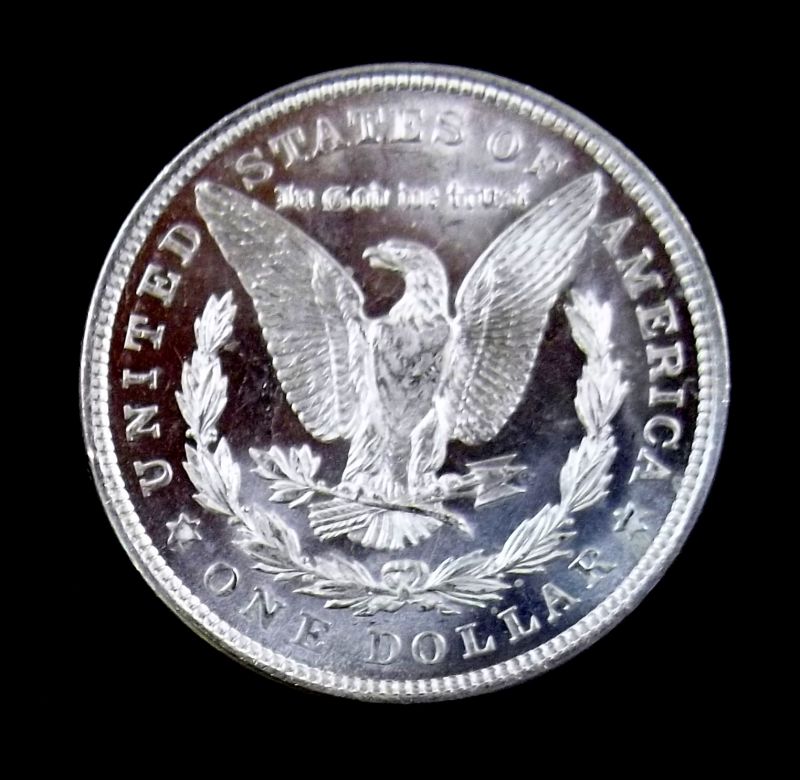 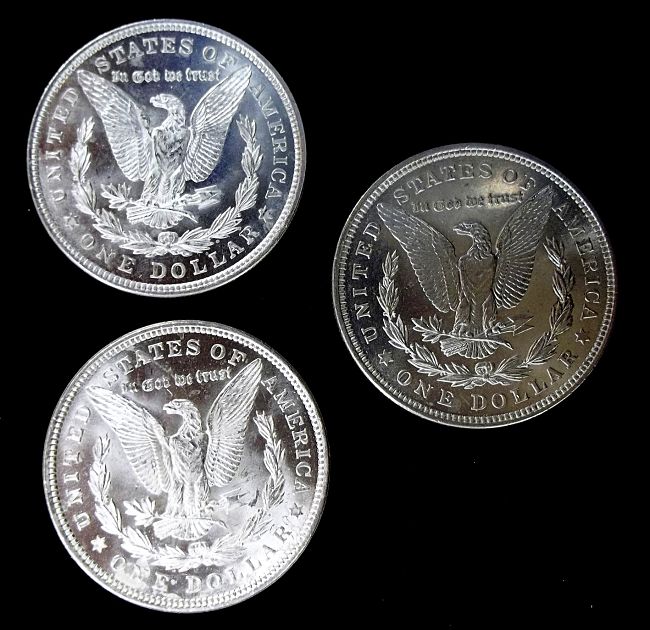 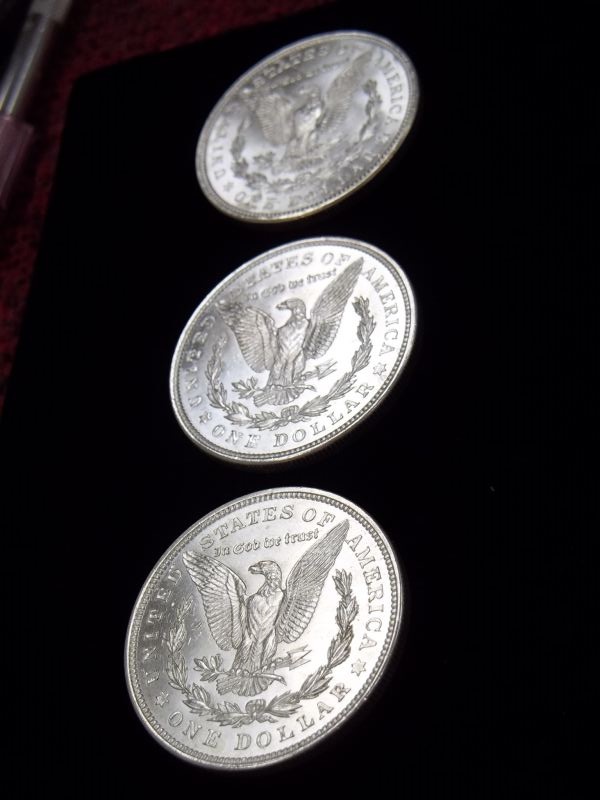 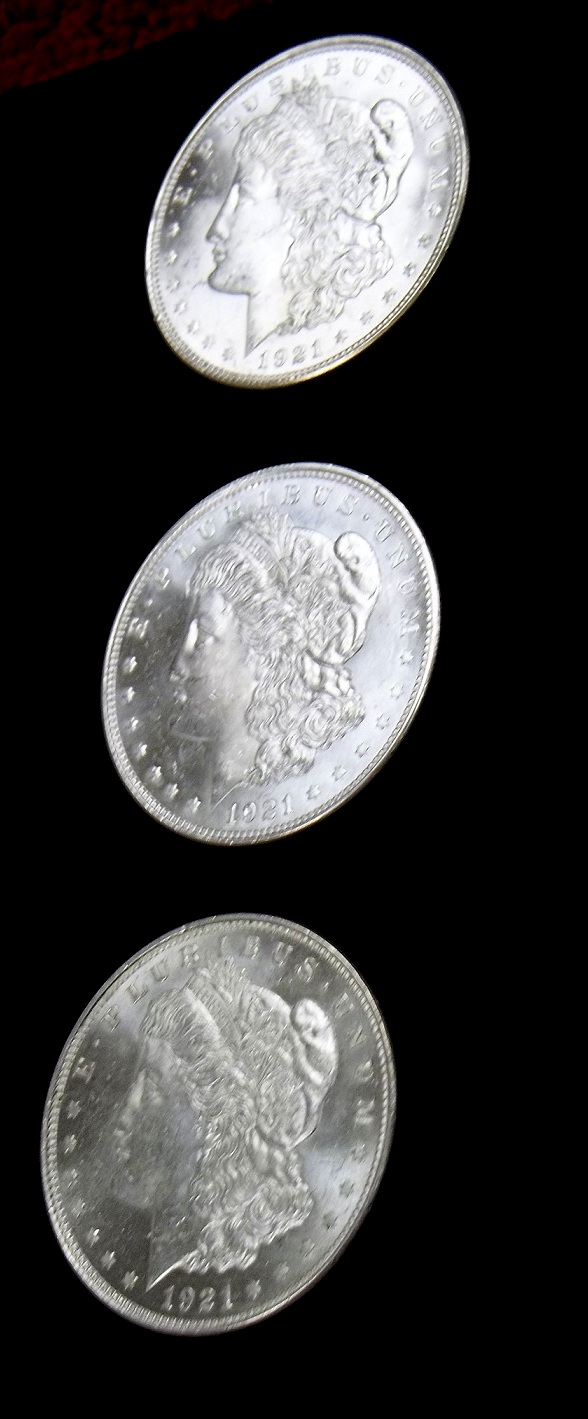 |
|
Pillar of the Community
United States
1372 Posts |
I believe that there's a VAM-3D, and a VAM-3GH in the overpolished eagle reverse specimens.
Chance
|
|
Moderator
United States
23522 Posts |
Check the D2's for VAM-3BV, which appears related to the Chapman Proofs.
|
|
Pillar of the Community
United States
1372 Posts |
I'll check that out.
While looking at some other 1921 morgans that I have, I encountered one that's interesting. It's apparently an adjustment strike from the Denver mint. The casual observer would simply think it was worn and scratched. The planchet was grainy, and the strike so incomplete that a lot of the highest points of the coin show these unidirectional scratches. It reminds you of some of the adjustment marks on our early coins. These "scratches" appear on both obverse and reverse, and run in the same direction.
The legends on this coin have partially filled characters, with high ridges toward the outer periphery of the legends, and the wreath is nearly devoid of details.
I've had it for years, and always just regarded it as a worn coin, which it clearly is not. I'll take a few pics of that one to show you what I mean. It's kind of cool now that I have surmised what it is.
Chance
Edited by Chancellor Sutler
04/27/2015 5:54 pm
|
|
Pillar of the Community
 United States
5828 Posts |
|
|
Moderator
United States
23522 Posts |
Quote:
I'll take a few pics of that one to show you what I mean. Yes, very much please.  |
|
Pillar of the Community
United States
1372 Posts |
This one's a pain in the butt to photograph for some reason. I'm having a devil of a time with it. The first picture of the reverse was taken using incandescent lighting ... and with much post processing to bring out the "scratches", which is the finish of the planchet. Those are present on the obverse as well. The remaining shots were taken using flourescent light. I found it easier to take cropped shots in order to be able to show details large enough. The flatness of the wings is dramatic, and one shot really shows the "F" in "OF" well. It looks like a surfing wave. Look how full and sharp the denticles and the rim are. That's further evidence that what we're looking at isn't wear. The devices couldn't become that worn without losing the rim and denticle detail. Chance 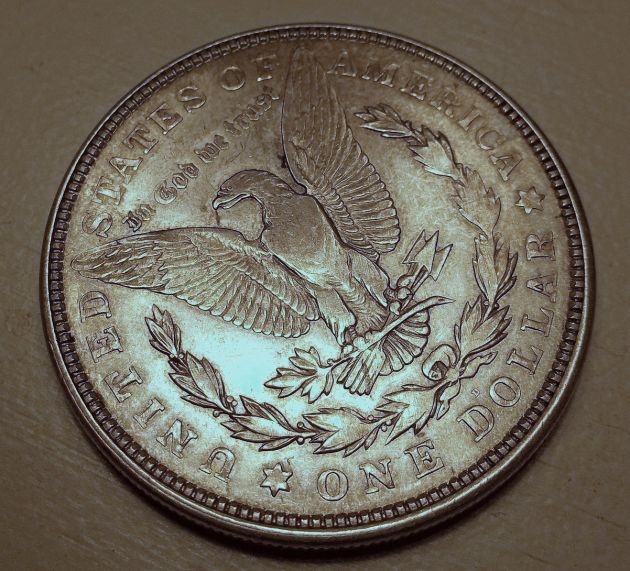 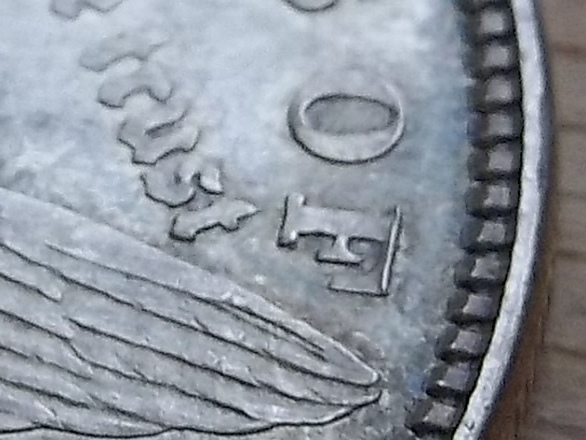 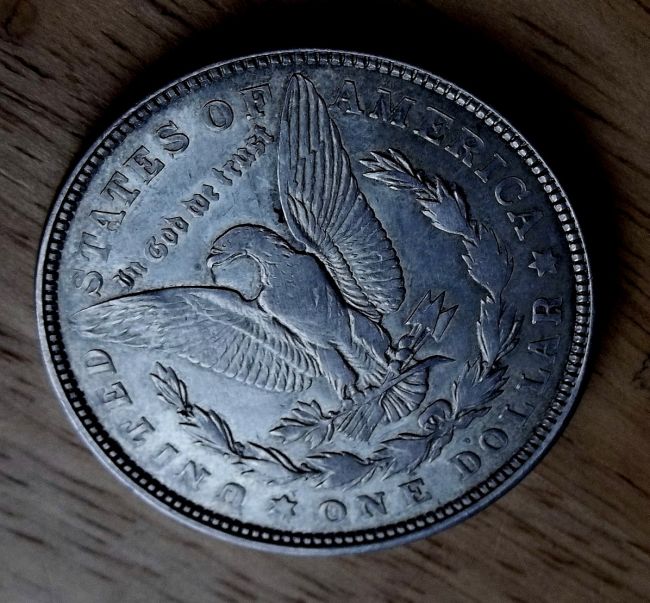 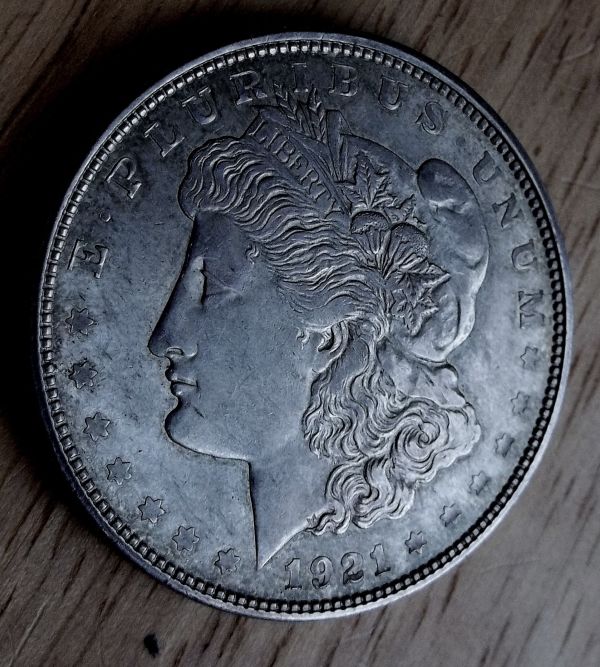 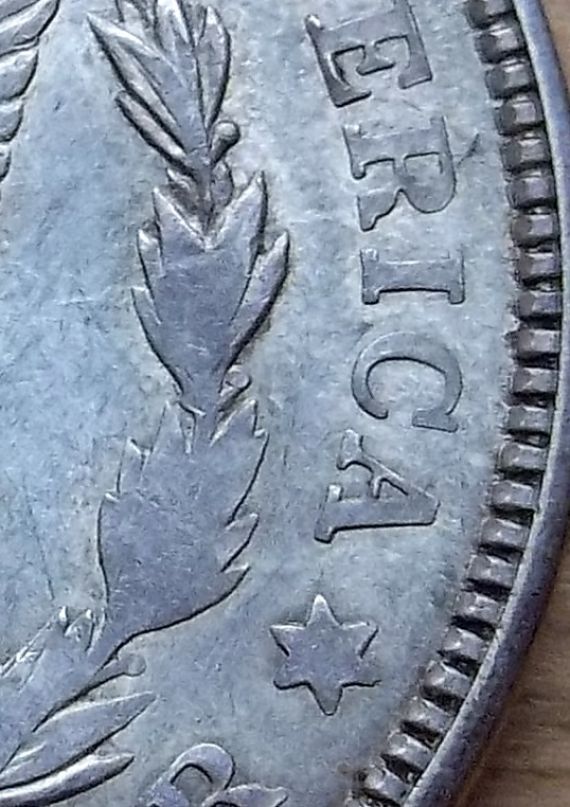 Edited by Chancellor Sutler
04/27/2015 7:32 pm
|
|
Pillar of the Community
United States
1372 Posts |
Here are a couple better pictures of the adjustment strike after a quick (and I stress "quick") bath in MS70. No matter what lighting I tried, I was unable to cut through the toning to show the remaining luster. The grainy finish of the planchet is visible in the fields as well, especially on the reverse, to the right of the eagle. I wonder how this would grade ... given that the strike is so weak. It's not been circulated all that much, and much mint luster remains. Chance 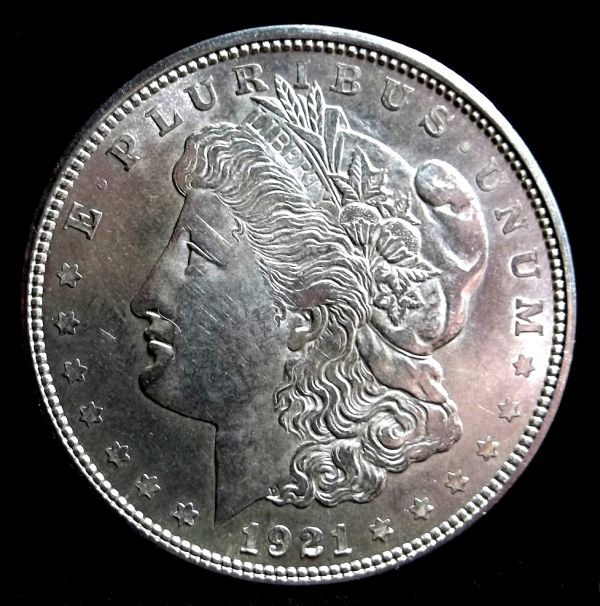 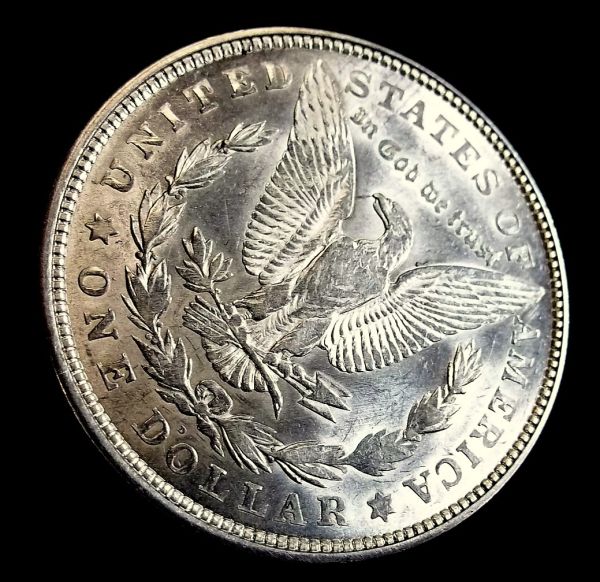 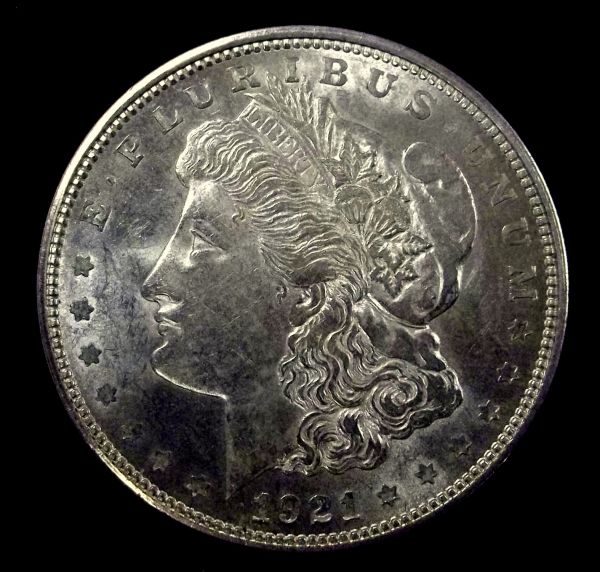 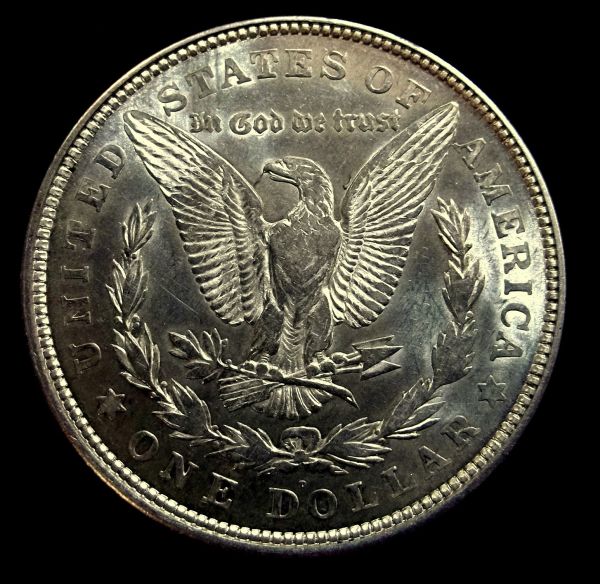 |
| |
Replies: 22 / Views: 3,777 |







 Posted 04/26/2015 3:18 pm





