| Author |
 Replies: 10 / Views: 3,333 Replies: 10 / Views: 3,333 |
|
|
Pillar of the Community
Hong Kong
1270 Posts |
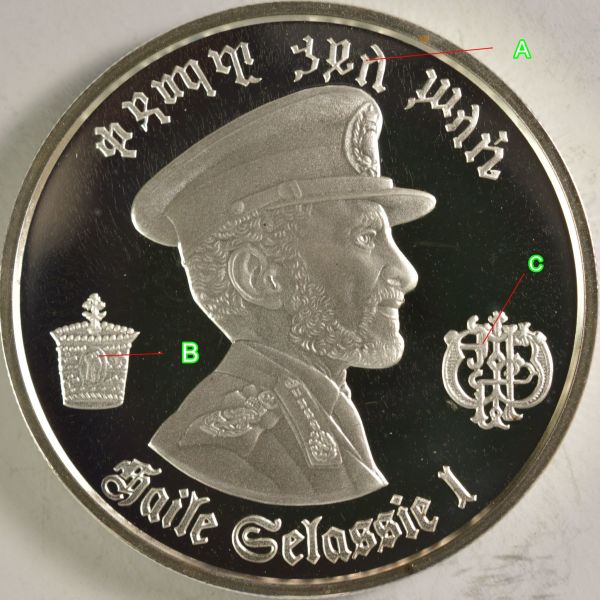
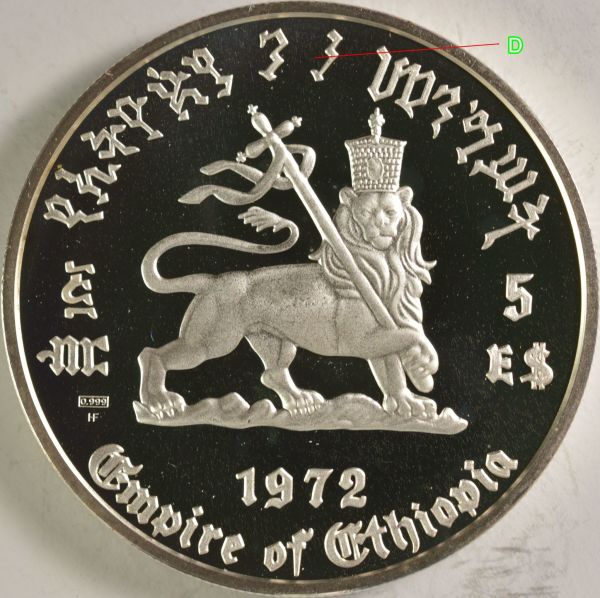
There is always a question to me when I see my the old Ethiopian coins. The constituent of the hard currency can sometimes reflect the state of affairs of a country, especially its economy. The Empire of Ethiopia was the only Christian empire in Europe. In 19th Century, she was the only (maybe I am wrong) country to issue her own crown - silver Birr for trades. At the start of 20th Century, when most of the African lands were under the control of most European countries, Ethiopia was still be the independent Empire. Only in WWII, at the years 1936 to 1941, Ethiopia became part of the Italian Empire. The currency of the country was silver coins and some of the lower denomination was pure nickel - a metal just less expensive than silver. But today, the country is very poor, many hungers there and many economical refugees smuggling to Italy via Mediterranean Sea. What was the turning point of the country from strong to weak or from weak to poor? I hope to know more from my question here. Your ideas are always welcome. 50 Matonas (Ni) 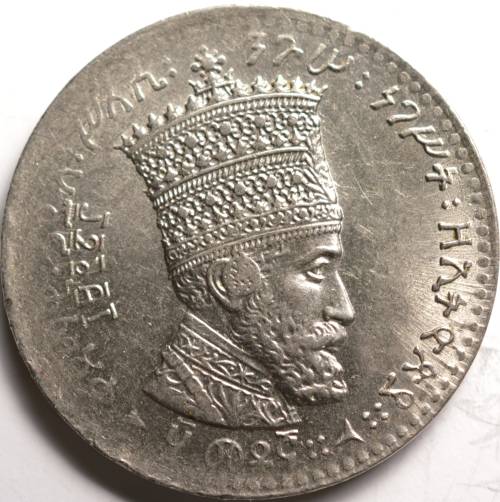 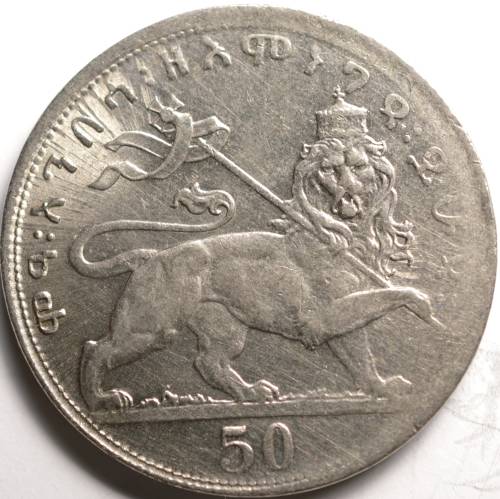 1 Birr (Ag) 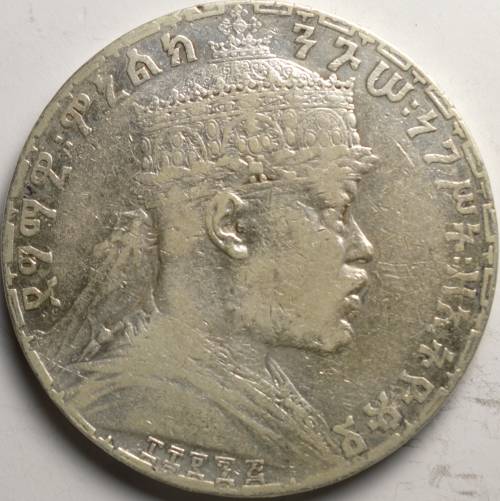 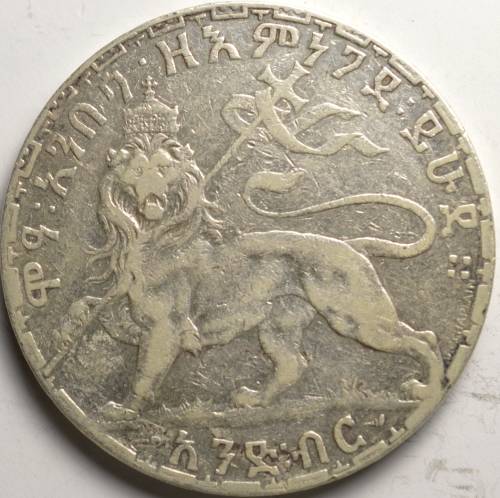 |
|
|
|
Pillar of the Community
United Kingdom
2928 Posts |
"The Empire of Ethiopia was the only Christian empire in Europe" - Did you mean Africa here by any chance?
|
|
Pillar of the Community
 Hong Kong
1270 Posts |
Sorry, a typo here. I mean "the Empire of Ethiopia was the only Christian Empire in Africa".
|
|
Moderator
 Australia
16974 Posts |
Ethiopia was indeed the only piece of Africa not to be annexed by the European colonial powers (or the United States) during the 19th century. Indeed, apart from the brief Italian occupation (1935-1941) it completely resisted colonial occupation. This fact gave the Ethiopian emperors considerable influence amongst post-colonial African nationalist movements, and even helped spawn the Rastafarian religious sect in faraway Jamaica (who believe the last emperor Haile Selassie to be a reincarnation of Jesus Christ).
Ethiopia was also one of the last remnants of the ancient pre-Islamic Christian Middle East not to be conquered by Islamic forces.
But both of these facts can largely be put down to geography: Ethiopia is mountainous, and up until the 20th century invention of modern weaponry, it was always easier for people to hide from invaders in the mountains than in the plains or by the sea. Even today with modern weapons, mountainous countries are the most difficult countries to invade (as the Americans have been the most recent to find out in Afghanistan). Thus, Ethiopia did not survive where other African kingdoms had fallen because of its wealth, or power, or resources, or influence - but simply by its location.
Having no inherently superior wealth, Ethiopia was not really any better (or worse) off than any other post-colonial government in 1960s Africa. What helped bring Ethiopia down, and keep it down, was war.
After World War II, the Ethiopians were given control of Eritrea as reparations for having been invaded (since Eritrea was originally annexed from the Ethiopians back in the 1800s). Ethiopian rule over Eritrea was initially fairly benign, with Ethiopia forming a federal-style government giving the provinces considerable autonomy. Then, in 1961, the government became more centralist - and the Eritrean provincial government was stripped of its powers and shut down. This initiaited a 30-year-long secessionist war between Ethiopia and Eritrean rebels. Unfortunately, the same mountains that had hidden the Ethiopians from the colonialists also hid the rebels from the Ethiopians. The Imperial government in Ethiopia, weakened by its inability to win the war, succumbed to Marxist revolutionaries in 1974. But even with the Soviets now backing the Ethiopian government, the war was unwinnable. Somalia also attempted to invade Ethiopia during the communist period. When Soviet help disappeared along with the Soviet Union in 1991, the Marxist government collapsed and the new regime quickly recognized Eritrean independence. But the damage had been done.
As for the famines that have all too frequently made the news since the 1980s, this too can largely be blamed on the geography, though Ethiopian culture plays its part as well. Ethiopia's weather is dominated by the mountains and their ability to trap the monsoon rains. The ability of local farmers to grow enough food to feed themselves has always depended on the rainy season, which runs from June to September - this same rain that used to cause the annual flooding of the Nile River in Egypt. This wet season is very regular and almost never fails - but, sometimes, it does, particularly in "La Nina" years.
Since Ethiopia was never colonized, Ethiopian landowners were never dispossessed nor had their lands rearranged in the "modern" way, nor were modern agricultural techniques ever introduced by colonialist "meddlers". Traditionally, Ethiopian peasant farmers who produced more than they could consume were forced to give their surplus to the church, or to the local nobility. Thus, there was little cultural impetus to produce a large surplus or to store food in the event of the rains failing in the future. Thus, occasional famines have really always been a part of the way of life. The Ethiopian peasants traditionally compensated for this by having one of the highest birth-rates in the world - creating a "natural" human boom-bust population cycle.
The inability of the Imperial government to cope with the famine of 1973 (which did not really make the news in the West) led in part to the downfall of the government, with Marxist promises to end the famines with collectivization creating food for all. The Marxists showed that such promises were easier to make than keep when the next famine struck just ten years later, in 1983 - only this time, the rains failed for three years in a row (1983-1985) - there simply hadn't been time or the political will to build the massive Soviet-style agricultural projects needed to drought-proof Ethiopia. The fact that the civil war with Eritrea was also still raging in the famine-hit area also did not help, with the Ethiopian government attempting to use the famine as a weapon, to starve the rebels into surrendering.
Since 1993, Ethiopia is mostly stable, though increasingly dictatorial as the originally populist party became entrenched in power. The anarchy in neighbouring Somalia is also not helping the stability of the more low-lying areas in the south-east of the country. Most of the refugees leaving Ethiopia in recent years are fleeing the aftermath of the most recent famine, where again the rains failed for two years in a row (2010 and 2011).
Don't say "infinitely" when you mean "very"; otherwise, you'll have no word left when you want to talk about something really infinite. - C. S. Lewis
|
|
Pillar of the Community
2087 Posts |
Henry I may be out a few years but Axum was the first empire to adopt Christianity as its national Religion.
NOw from memory heres an overview ( some detail may be out a little) Axum is the Spiritual and political ancestor of Ethiopia The political and spiritual ancestor of Axum was Sheba. Ethiopia traces its origins and political power back to Solomon and the "Kings" of Ethiopia traced their lineage back to Solomon. It is believed that Menelik the first was the son of the Queen of Sheba and Solomon. The Lion on the Birr you pictured is the Lion of Judah, the traditional symbol of Coptic Ethiopia.
Axum was very rich but partially because of the intervention of the Romans. Axum Parthia and Rome were the only powers to issue coin in that region, at that time.
Parthia( think modern day Iran) caused a few headaches for Rome. The Parthians controlled the crucial cross roads at the mouth of the Persian Gulf and the red sea. As a result Roman access to trade goods from India and China were cut off. Rome sent some ships and drove the Parthians out of what is modern day Aden, they worked with the Rulers of Axum who ended up taking over Aden and Yemen and as a result the trade to Rome from China and India flowed without restriction. Axum became Christian due to the work of two Syrian Missionaries. It was the rise of Islam that cut Ethiopia(AXUM) off from Europe. And saw its fortunes wane
At the time that the Prophet was building his Religion(Islam), there were a number of other religious leaders also touting their form of Arabic Monotheism. There was considerable violence between these groups and for a while the budding Muslims were suffering,,, some took refuge in AXum/Ethiopia where they were protected. The prophet never forgot this and directed that Ethiopia had a special status and should be remembered as a friend. That's The PC story. More likely when Mohammed's Islam became strong... there was a proscription against taken Muslims as Slaves so a neighbouring Christian Country was very convenient and profitable. It is quite likely the prophets instructions re Ethiopia were obeyed out of profit not religious piety.
Ethiopia ended up a Christian Island in a Muslim sea and its riches and powers waned. After Axum it remained in a state of arrested development, it was, in the first half of the 19th century a loosely associated set of Feudal states, bound by by language and Coptic Christianity. Very feudal... Menelik II was the person who created the modern state of Ethiopia, Ethiopia was doing well until Haille Selassie ( Ras Tafari: was his name before coronation and the basis of "Rastafarian"). The communists coming to power through mismanagement created the famines that lead to Live aid...those famines occurred at a time that should have been one of relative plenty...it was the seizure of lands and a lack of care that really created the famine. I can tell you lots more....I have heaps of references...as the main currency of Ethiopia was the MAria Theresa Thaler
Edited by austrokiwi
05/10/2015 09:49 am
|
|
Pillar of the Community
Hong Kong
1270 Posts |
Wow! Thank you Sap and Ian, I have read your notes carefully and find both of you tell the history of Ethiopia in two different directions. They are all fantastic; I am lucky to learn a lot from my unwitting question.
Ian, would you clarify two points for me: what is meant by "The PC story"? When did MTT restrikes start to an influx to the Christian Empire? I would suppose the Birr crown of Menelik II was an imitation to MTT, did it a successful issue to compete with MTT in your viewpoints? I think a crown size silver from another Christian (Roman) Empire would have a benefit to circulate in Ethiopia.
|
|
Moderator
Australia
16974 Posts |
Ethiopia is just a small part of the Maria Theresa thaler trade region. The coins were widely accepted throughout the lands on either side of the Red Sea, including what is now Sudan, Eritrea, Somalia, Yemen and Saudi Arabia, from the earliest days of mass-producing the restrikes - the late 1700s and early 1800s. The coin is still held in high esteem as a reliable form of bullion and it is often turned into traditional jewellery, particularly in Yemen - see this old thread for an example. Was the silver birr intended to circulate alongside the MTT? Almost certainly, as it has exactly the same weight and fineness. It would be fair to say that the birr was intentionally struck to the "thaler standard". I doubt it supplanted the MTT to any great extent, except perhaps in the mountainous Ethiopian heartland where access to supplies of the MTT were more restricted. The Red Sea locals liked their thalers, and were suspicious of anyone, European or local, who attempted to create an alternative. The Italian efforts to replace the MTT with an Eritrean "tallero" of their own design failed dismally. Don't say "infinitely" when you mean "very"; otherwise, you'll have no word left when you want to talk about something really infinite. - C. S. Lewis
|
|
Pillar of the Community
Australia
3841 Posts |
All you need is one wrong regime / poor leadership and it can ruin a country within a few years. A lot of African nations unfortunately was under poor leadership and the result is what it is today. Laos, Vietnam, Philippines, etc all follow similar pattern.
|
|
Pillar of the Community
2087 Posts |
Quote:
Was the silver birr intended to circulate alongside the MTT? Almost certainly, as it has exactly the same weight and fineness Many texts say as sap believes that the Birr was meant to surplant the MTT. However I have some problems with that view. Menelik was a very astute leader. I believe that he only introduced his birr to support his Rule. I think this because if he were serious about displacing the Maria theresa thaler he would have banned it. However when the Birr was issued he allowed the MTT to be used to pay gvt fees and taxes. He probably knew that it was impossible to replace the MTT, a coin that was the the currency of trade in the indian Ocean/red sea/ persian gulf regions. To replace the MTT would be to cut of trade with Ethiopia's trading partners( something the Italians took three attempts to learn). There is a typo in my first post Ethiopia was doing well until Haile Selassie was deposed Edited by austrokiwi
05/22/2015 01:12 am
|
|
Pillar of the Community
Hong Kong
1270 Posts |
From the mintage point of view, this Ethiopian Birr's mintage was about 1.5 millions for 3 years, it could be impossible to resist the influx of MTT restrikes. The Emperor could do nothing about the production of the silver crown as other nations in Africa. So I also believe Menelik used his Birr to promote his rule and his achievements rather than pure economy. Without the Menelik's portrait on the silver Birr, the later generations could know less about the country's history. This is the point why I feel the greatness of Menelik.
|
|
Pillar of the Community
Hong Kong
1270 Posts |
|
| |
Replies: 10 / Views: 3,333 |
|
To participate in the forum you must log in or register.
Disclaimer: While a tremendous amount of effort goes into ensuring the accuracy of the information contained in this site, Coin Community assumes no liability for errors. Copyright 2005 - 2026 Coin Community Family- all rights reserved worldwide. Use of any images or content on this website without prior written permission of Coin Community or the original lender is strictly prohibited.
Contact Us | Advertise Here | Privacy Policy / Terms of Use
|
| Coin Community Forum |
© 2005 - 2026 Coin Community Forums |
| It took 0.47 seconds to rattle this change. |
 |
|







 Posted 05/10/2015 08:42 am