| Author |
 Replies: 23 / Views: 3,106 Replies: 23 / Views: 3,106 |
|
Pillar of the Community
United States
6478 Posts |
|
|
|
|
Pillar of the Community
 United States
6478 Posts |
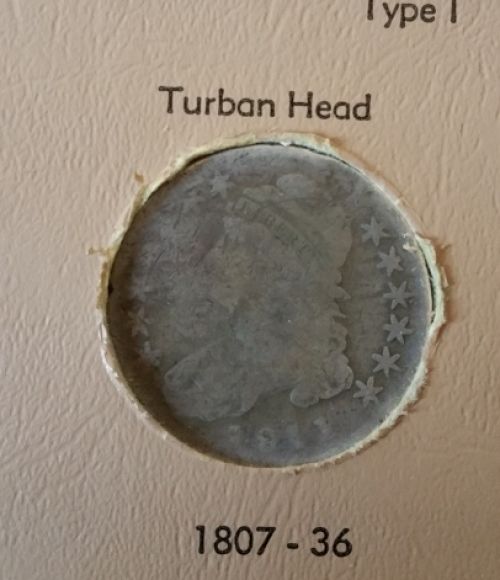
After the pics I did trim and brush off the excess paper so it looks great.
|
|
Moderator
 United States
23522 Posts |
OK, here's a fun one. Anybody else like this for O-108?  |
|
Pillar of the Community
United States
6478 Posts |
|
|
Pillar of the Community
Canada
4944 Posts |
Quote:
What does that mean? O-108 is an Overton variety. Edited by Canadian-Banknotes
05/10/2015 5:42 pm
|
|
Moderator
United States
23522 Posts |
Al Overton specified the varieties for these, and gave them his name. These were not struck in a collar - the edge lettering was applied before the strike - so you can expect some variance in diameter.
|
|
Pillar of the Community
United States
6478 Posts |
Ok thanks. That makes since. It is not actualy bent but just large in diameter. Is that good or bad?
|
|
Moderator
United States
23522 Posts |
Quote:
Is that good or bad? Kinda irrelevant, actually, since they're not expected to have consistent diameter. |
|
Pillar of the Community
United States
8137 Posts |
Is that a 7070 album you are using? The pages look very similar to mine and mine is a really old one.
|
|
Pillar of the Community
United States
6478 Posts |
Yes it is a 7070. It is a pretty old one. it doesn't have a zinc cent hole. The newest coin is an SBA dollar. |
|
Pillar of the Community
United States
1760 Posts |
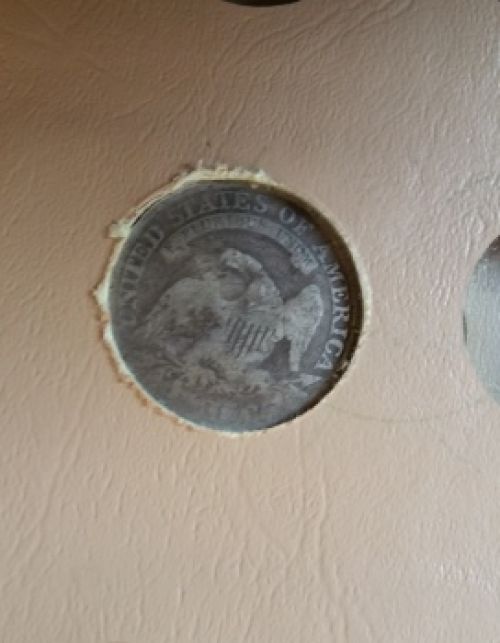
To verify whether or not its an o.108, I would immediately be looking at the lower right hand side of the right wing for a protruding spike. If it's there, it's an o.108...but too hard to tell from the pictures.
Very nice old Bustie, ssk!
Edited by DoubleEagle20
05/11/2015 01:08 am
|
|
Pillar of the Community
United States
6478 Posts |
No. I don't see a spike. I compared it too other examples of the o.108.
|
|
Bedrock of the Community
United States
17884 Posts |
Quote:
Is that good or bad? Not a matter of good or bad, just a statement of fact. The capped bust halves had the edges lettered before striking and then were struck in what is called an "open" collar which means it did not fit closely around the planchet and so did not force the coins to be a consistent diameter. Every coin is slightly different is size because the final diameter was determined by the softness of the planchet and the force of the hand operated press. This is why the album makers have fits with these coins. Since every coin is a different size you can't make a hole that will fit the coin precisely. So they make a hole that fits the "average" size. When you get a coin that was struck a little harder than normal and it spread a little more they wind up damaging the hole trying to get it in. That is one of the "charms" of collecting the early coinage, every coin is different. Different sizes and every die was hand punched to at least some extent so every die pair produced coins that were from every other die pair. Once the close collar and full die hubbing came along around 1836 the coins became "buttons" with very little difference between them. Edited by Conder101
05/11/2015 11:05 am
|
|
Pillar of the Community
United States
6478 Posts |
I really appreciate the information. So these coins were all broad strikes in a way, but not really.
|
|
Bedrock of the Community
United States
17884 Posts |
Correct, the open collars that were used were useful to center the planchet on the die but did not constrain the coins expansion to a fixed size. (At least on the plain or lettered edge coins. The reeded edge early coins were a little odd. Their edges were not reeded pre-strike so the reeds had to be formed by contact with the collar yet I believe sizes still varied.)
|
|
Valued Member
United States
430 Posts |
what a great flea market find! It will be fun tracing down the Overton #. Is there a good or any online guide for these coin specific varieties without buying a old out of print hardcover book?
|
| |
Replies: 23 / Views: 3,106 |







 Coin was bent so it damaged my 7070.




 Posted 05/10/2015 5:08 pm





