| Author |
 Replies: 63 / Views: 8,037 Replies: 63 / Views: 8,037 |
|
|
|
Pillar of the Community
United States
1781 Posts |
Mike, All the coins you are showing are weak strikes -- none are Struck Through Grease. Read Timothy Grat's explaination of why rims fill and you'll have a better understanding of what's going on here. Read Sean Moffatt's explaination where he goes into the planchet striations (what he calls grain lines) and you'll see these are diagnostics of weak strikes. Mike, the guys that Mint coins for a living can't be all wrong and you who I'm not sure have ever been in a Mint -- be right. Edited by koinpro
05/22/2015 10:43 pm
|
|
Bedrock of the Community
United States
62064 Posts |
The image of the 2000 first image of is from another collector. I just have the obverse image. The second image in the thread I posted (just below the 2000) is a different coin. It is a 1948-D cent. The lines you are mentioning I call rolling lines from the stock material. I've seen these lines that com through even after a full strike. 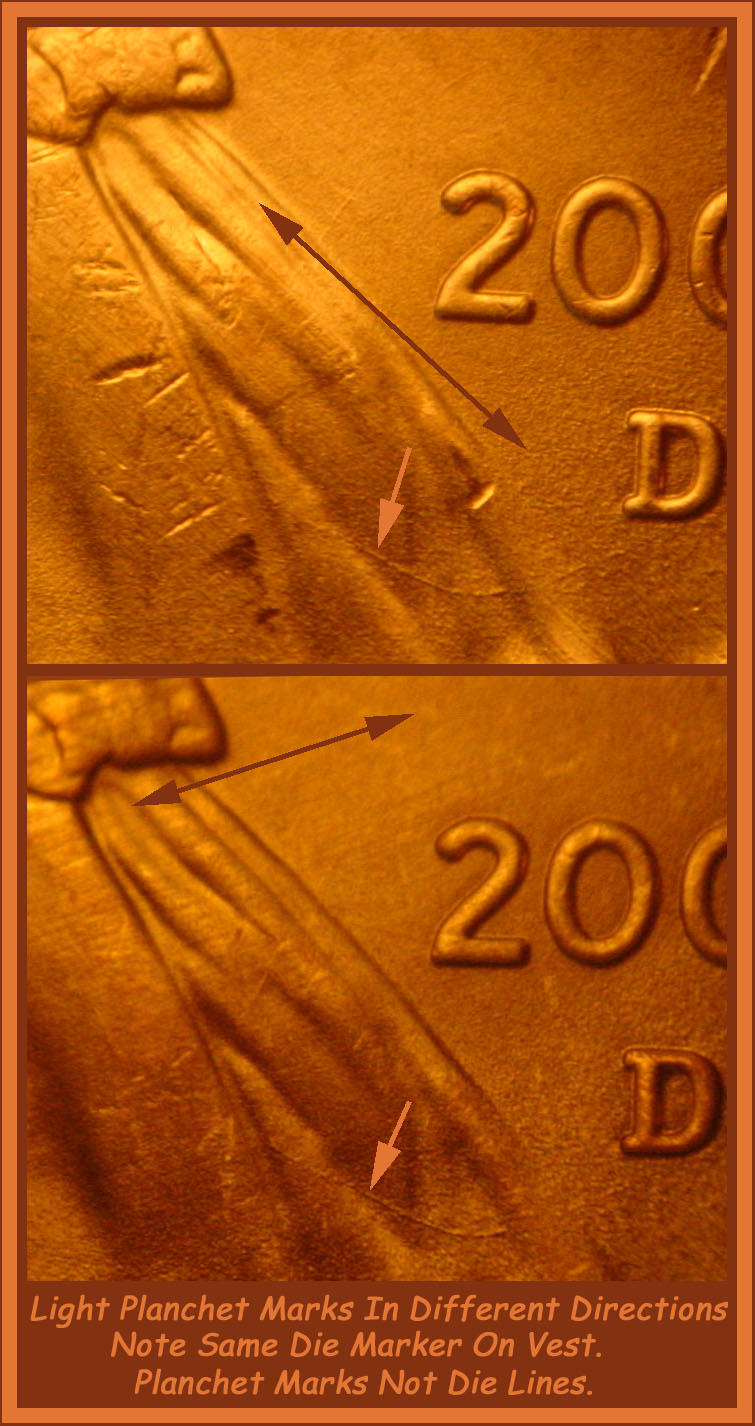 Why they are still there after a strike is a mystery to me. But the two images are from different coins and the markers are the same, but the rolling lines are at different angles. (something you would expect if it were a planchet issue) |
|
Pillar of the Community
United States
2752 Posts |
These coins show strong design rims, a sharp rim/edge junction, and a flat, vertical edge from collar contact. I can even show you specimens similar to these with finning of the design rim. How about those specimens in which one face looks exactly like these coins and the opposite face shows no weakness whatsoever. Would you still consider all of these weak strikes?
Error coin writer and researcher.
Edited by mikediamond
05/22/2015 5:26 pm
|
|
Pillar of the Community
United States
1781 Posts |
Coop, what I called planchet striations and Sean Moffatt referred to a "grain lines" and you called "rolling lines" all refer to the same thing. They are mill marks. The lines you show on the coins are often difficult to strike out as you note in your images.
|
|
Pillar of the Community
United States
1781 Posts |
Mike, I cannot comment on coins unseen. What you are not showing but referring to could indeed be grease. Each coin has to be assessed by its individual characteristics. On some weak strikes then rims are normal (or as close as you can expect) as per the information provided to you by Tim Grat but only on coins that are struck beyond a certain pressure. Weak strikes like the Ike dollar Coop, showed, that are virtually more planchet than coin, will of course not fill the rims. Anyway, with all due respect, I know what I know and at least for now I must move on to more productive endeavors. It doesn't appear we are getting anywhere. |
|
Pillar of the Community
United States
2752 Posts |
Here is a zinc cent struck though a heavy layer of smooth grease on the obverse. It shows extensive preservation of the planchet's original streaky surface. The reverse face is perfectly normal. The edge is flat and the rim/edge junction abrupt. 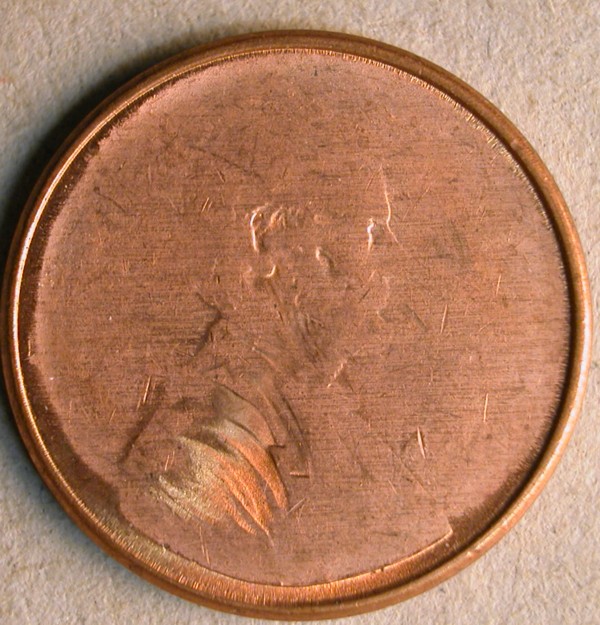 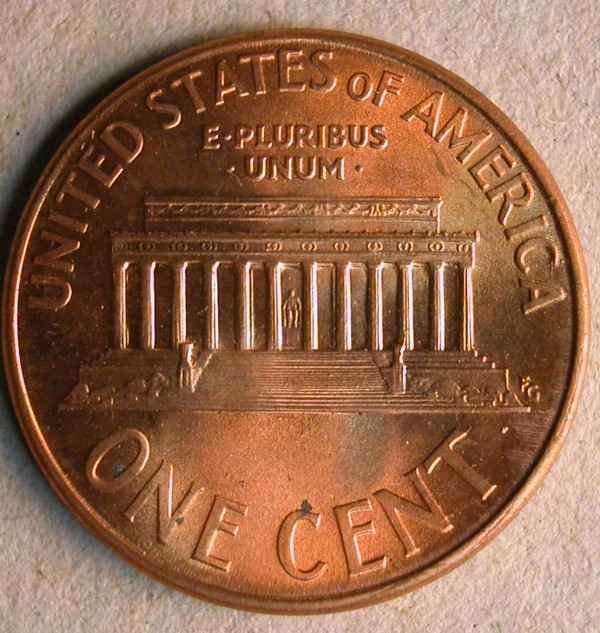 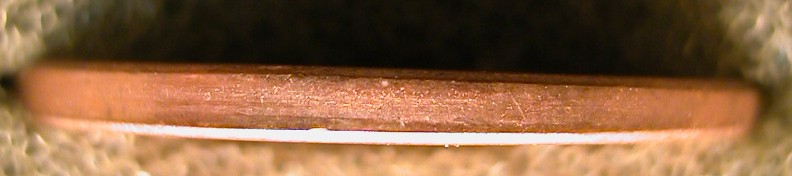 This is a perfect illustration why streakiness is a useless diagnostic for distinguishing between weakly-struck zinc cents and zinc cents Struck Through Grease. I might add that this coin is absolutely representative of grease strikes found on zinc cents. Error coin writer and researcher.
Edited by mikediamond
05/22/2015 7:21 pm
|
|
Pillar of the Community
United States
1781 Posts |
Mike,
You're not seeing the difference. The one before this is as flat as a pancake on the high points. This one is not. You can see the barely perceptible texture caused by the grease. The one before is "whiter" and this one has been subdued by the grease/oil. There is a big difference in the effects here though many will not see it.
Can I see the reverse of the coin before?
On the coin before that, the image is smaller and I've taken a closer look and can't say what that is with any certainty. Anyway, please send the reverse of the previous coin.
|
|
Pillar of the Community
United States
2752 Posts |
Ken, you're splitting hairs that only you can see. But I'll try to dig out the 1995 cent. I assume that's the one you want to see.
Error coin writer and researcher.
|
|
Pillar of the Community
United States
2752 Posts |
Here are both faces of the 1995 cent you insisted was a weak strike. As you can see, the reverse design is nearly normal, with just a few patches of "frosting" and weakness. 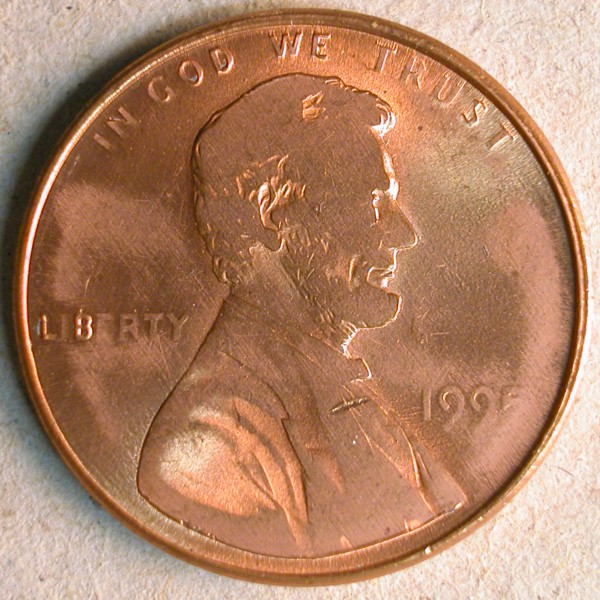 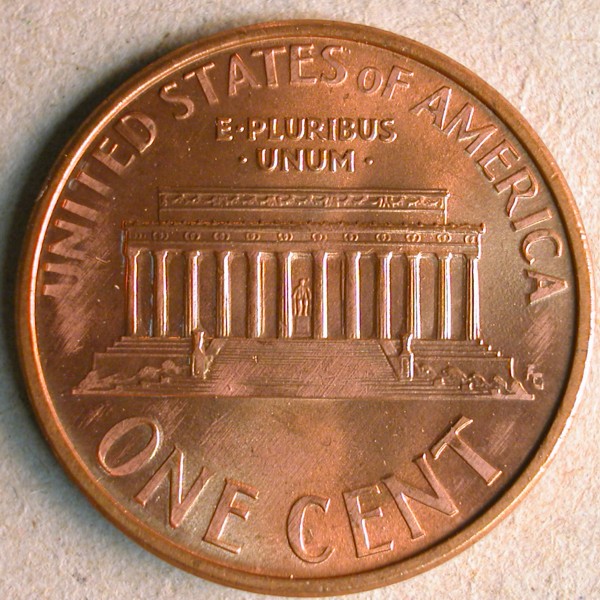 The patchy nature of the weakness on the obverse face, the very unequal degrees of weakness on both faces, a strong design rim, a tall, flat, vertical edge, a sharp rim/edge junction, and slight finning of the obverse rim between 1:30 and 3:30 all prove without a doubt that this is a grease strike. Error coin writer and researcher.
Edited by mikediamond
05/23/2015 08:24 am
|
|
Pillar of the Community
United States
2189 Posts |
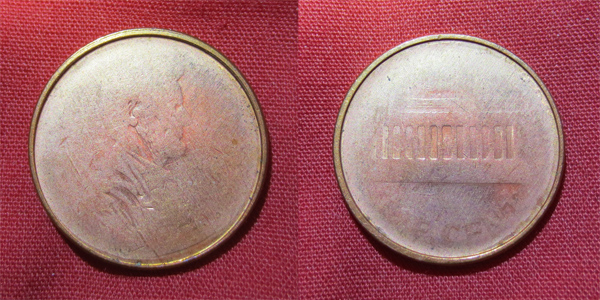
I'm Sorry to throw mine in the mix but I pulled this one from a full roll of brand new 1990 Lincolns back in 1990,I've had it for 25 years now & a little bit confused as what it is now. Again my apology to the OP but it seems relevant to the topic. I've always assumed it was a strike through grease but a little unsure now 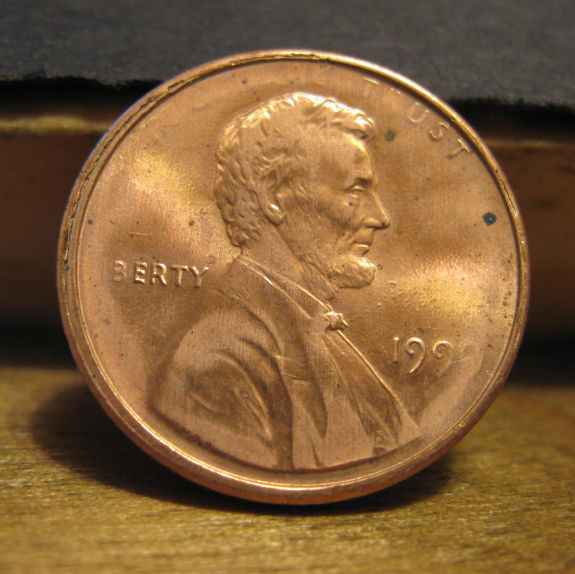 |
|
Pillar of the Community
United States
2752 Posts |
Your 1999 cent was definitely Struck Through Grease. The patchy pattern of weakness and the strong design rim with finning on the left side leave no room for doubt. Error coin writer and researcher.
|
|
Pillar of the Community
United States
2189 Posts |
Thank you Mike.It may look like 1999 but I found it in 1990 so it can't be 1999.Lot of great information in this thread thanks to all of you
|
|
Pillar of the Community
United States
3463 Posts |
|
|
Pillar of the Community
United States
2752 Posts |
Struck through grease. As you observed, the wide flat edge and the strong design rim are diagnostic. Some double-sided grease strikes are associated with a complete absence of the design on each face.
Error coin writer and researcher.
|
|
Pillar of the Community
United States
3463 Posts |
The person that I got it from said it was a struck through die cap, but it was obvious to me that wasn't the case. I did wonder about a weak strike or filled die. I can see the planchet striations that Ken mentioned and it appears to be evenly struck. Both sides are equally weak or filled, which ever is the case.
|
| |
Replies: 63 / Views: 8,037 |








 First Page
 Previous Page


 Posted 05/22/2015 5:10 pm