| Author |
 Replies: 22 / Views: 3,915 Replies: 22 / Views: 3,915 |
|
Valued Member
United States
249 Posts |
Edited by rynegold
05/24/2015 8:58 pm
|
|
|
|
Pillar of the Community
United States
7390 Posts |
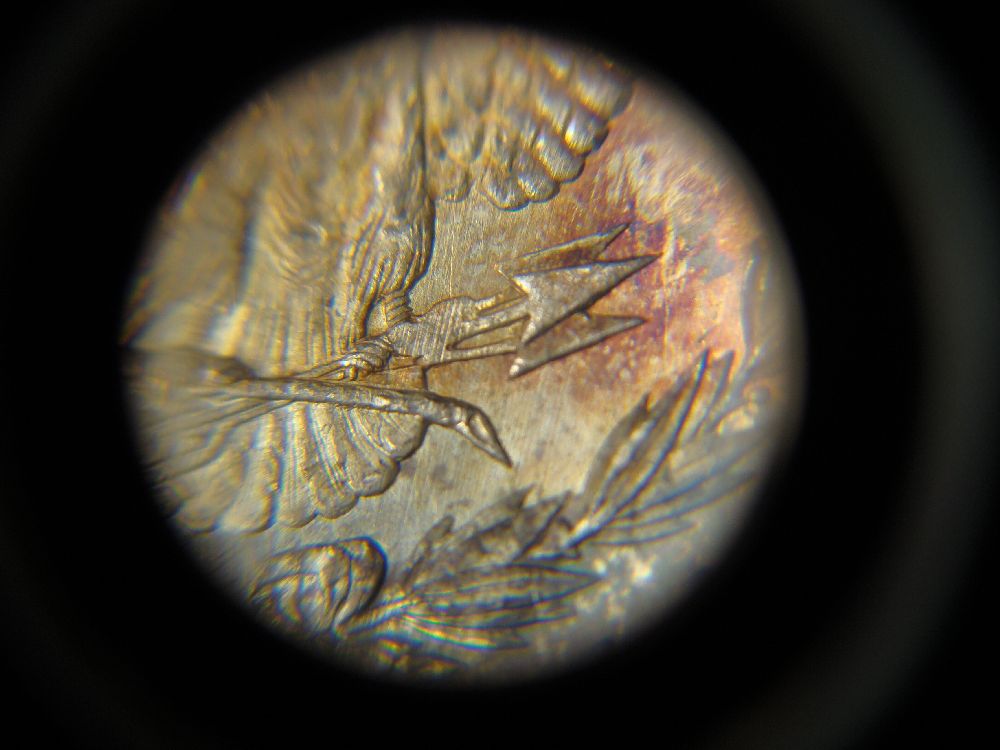
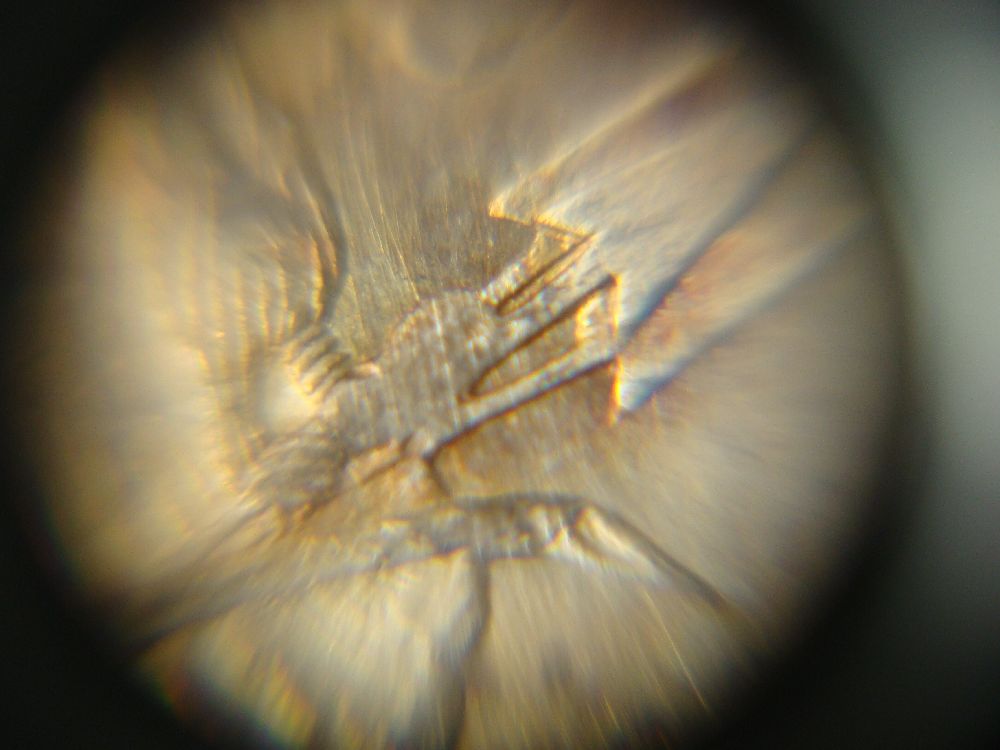
Looks like a little grease got caught in the toes when it was struck. I'm wondering though if it's a fry pan color job?  |
|
Valued Member
 United States
249 Posts |
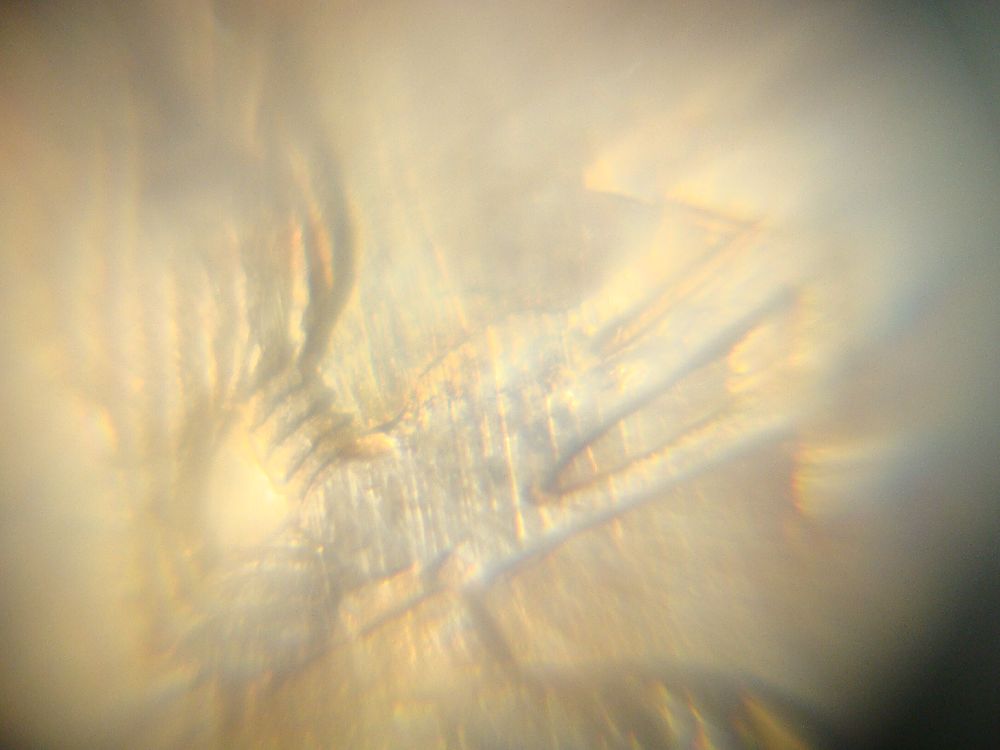
Yea but would grease leave those lines? I've seen serious "scuffs" like that before but never so contained to such a small area; nothing else adjacent is so affected. Cascade if you saw it in hand you would see the color is ok, sort'a ugly really!
|
|
Rest in Peace
United States
10625 Posts |
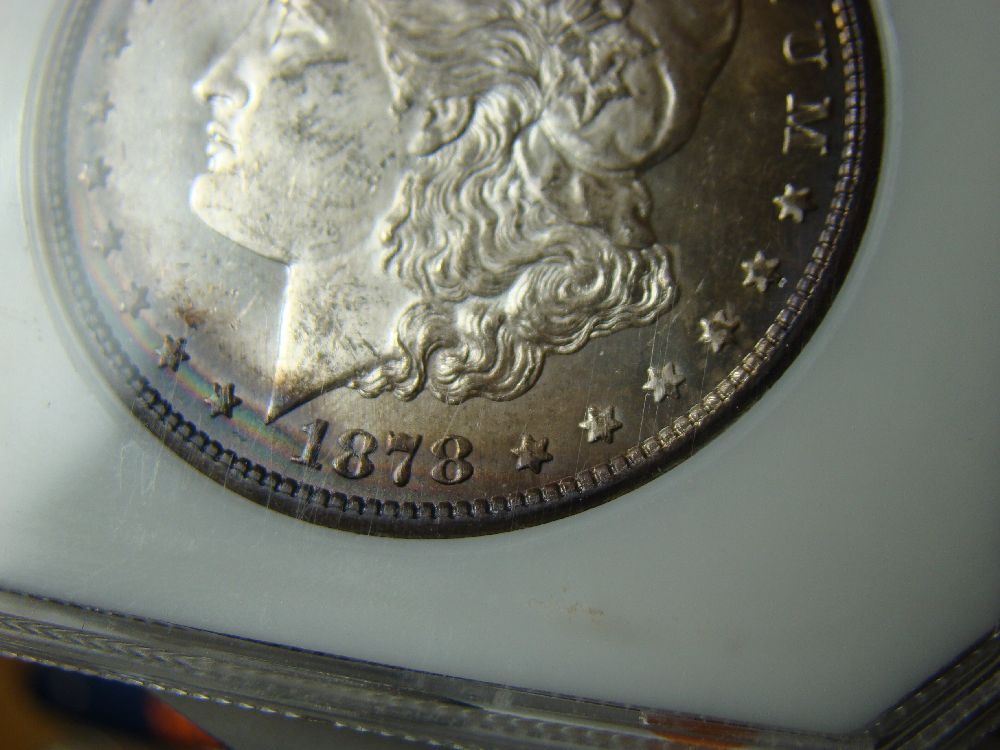
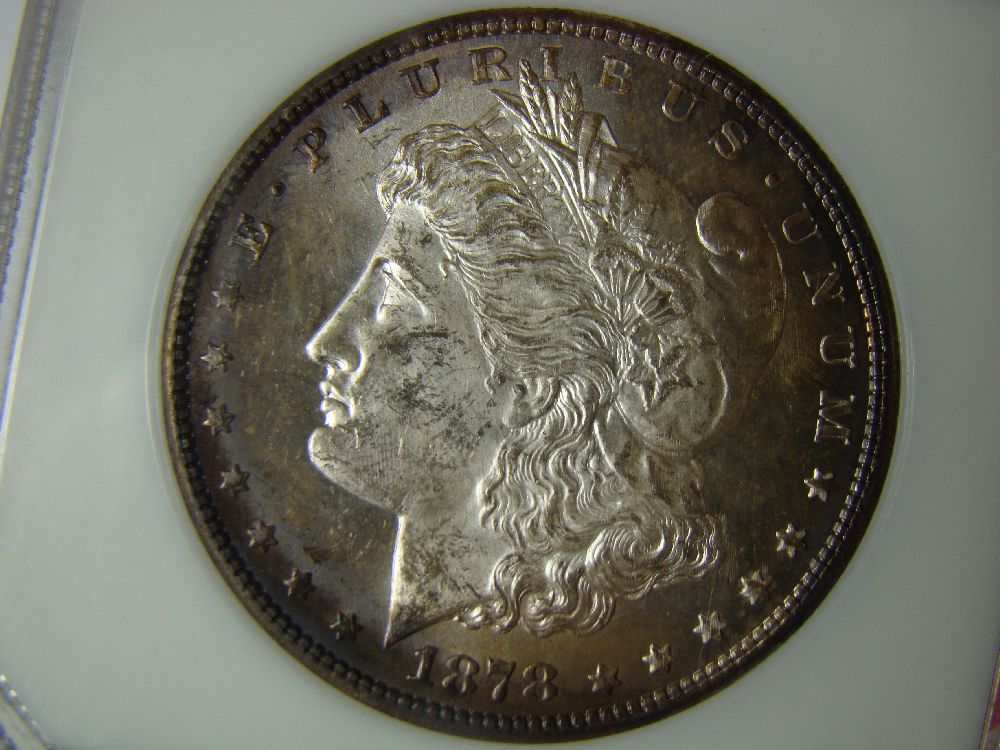
I think what you are seeing is planchet striations. These are common on Morgans that do not come up to full strike. Not a common condition for '78-S and probably due to grease as Cascade noted. As for the tone, it looks like old album toning that is nearing the end of the 4th cycle.
|
|
Pillar of the Community
United States
7390 Posts |
After taking a good look I'm starting to come around to end spectrum NT. Color progression seems ok and it does have minor elevated chromatics. I tend to stay away from close to terminal toners so my eye isn't quite tuned to them.
|
|
Pillar of the Community
Canada
5417 Posts |
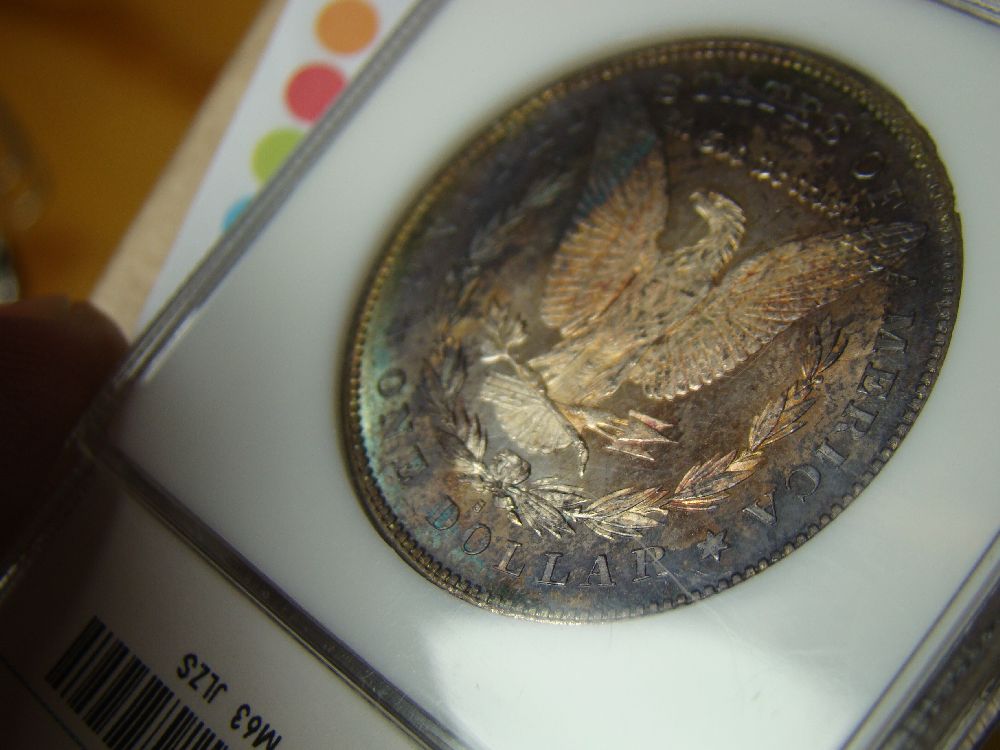
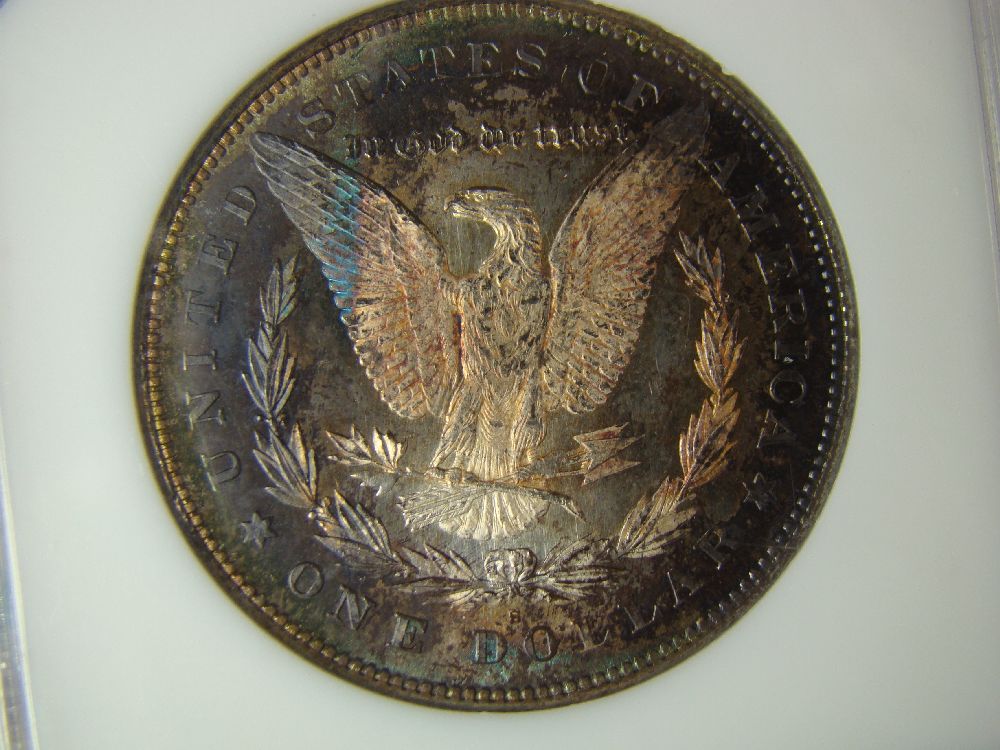
That reverse toning is real nice  |
|
Pillar of the Community
Canada
4912 Posts |
I love this Morgan!, I believe it was a weak strike...because the planchet did not fill the die, scratches on the planchet were not destroyed by the strike and are still seen.
Feel free to call me Will.
|
|
Valued Member
United States
249 Posts |
So; not a VAM, and the strike on the ('anvil'?) die is weak? Now I'm getting the idea of that being simply the surface of the planchet that remained untouched by the die. But what of the grade? Surly it's not a 63 in today's grading? edit; and yes, I pulled this right out of one of those old blue books! this brand:  Edited by rynegold
05/24/2015 5:41 pm
|
|
Moderator
 United States
23522 Posts |
The trouble is, these images show the talons, which are among the very first features to suffer from a poor strike. The complete development of the third talon (and the large bottom leaf) tells me that this coin could not be considered weakly-struck by any measure of the term. The rest of the reverse confirms this.
But keep in mind, this is San Francisco we're talking about here. They went on a run of producing the finest Morgans ever struck after 1878, and we're looking at their learning curve with this issue. 1878-S's are often found with an astounding number of die polishing lines, and to my relatively limited experience, very few poor strikes. The following issues through the mid-1880's (and after) reflected the process of minting Morgans brought to an art, and one knows they were looking for the right die-die clearance to give the strongest strike while minimizing die wear. This seems like an effort in that direction, the slightest bit short of perfect to planchet striations can still show, yet strong enough to develop complete detail including die polishing lines visible all over the reverse in these images.
The two missing talons are undoubtedly a strikethrough. No mechanical damage process could remove just them without adjacent damage. I just wonder if grease would allow the planchet lines to remain (they're identical to the lines on the adjacent field; planchet striations are the most reasonable explanation).
|
|
Valued Member
United States
249 Posts |
So what would it grade... today?
|
|
Moderator
United States
23522 Posts |
I don't think 63 is out of the question. 1878-S's can be found quite frosty, and I think yours is an example. If that be the case, much of what we see here as "black" on the cheek could just be breaks in that frost which get undue emphasis in digital imagery.
This is one of my favorite issues. Just about every 1878-S demonstrates something about what San Francisco was doing differently than the other mints.
|
|
Valued Member
United States
249 Posts |
Great! thoughts noted: I think I'll bust it out and send it back for a new slab. PCI being marginal to my thinking these days.
|
|
Moderator
United States
23522 Posts |
Well, at MS63 you have to have just about nothing into the coin to justify the cost of slabbing.
|
|
Pillar of the Community
United States
1314 Posts |
Yes, this likely is a VAM. We just haven't determined which one yet. All Morgan and Peace dollars are either discovered and have numbers assigned, or are waiting to be discovered and have Leroy assign it a number. And yes, while the San Francisco mint was striving to improve it's image, New Orleans wasn't. |
|
Rest in Peace
United States
10625 Posts |
Yes this Morgan is a VAM because it is a Morgan not because of the soft strike on the left talons. Attribution of an 1878-S begins with the length of the arrow nock. Yours is what is considered a B2 reverse "short nock" variety. The next step is to determine the condition of the 4th right star on the obverse and the letter "r" in trust. I'm not positive, but your coin looks like it may be a broken star, broken r variety. If correct, this would narrow down your choices to 42 varieties. http://www.vamworld.com/1878-S+...43;Varieties |
|
Moderator
United States
23522 Posts |
I couldn't tell whether the "r" was broken or not from these images, so I didn't attempt an attribution.
|
| |
Replies: 22 / Views: 3,915 |












 Posted 05/24/2015 2:22 pm


