Replacement notes are only possible to identify from a list of serial numbers, since they are indistinguishable from regular banknotes.
As for fancy serial numbers, look for these types of serials:
Solids, eg. 2222222 (very valuable)
Ladders, e.g. 0123456
Radars (read forwards the same as backwards), eg. 2151512, 0801080, 1117111. Solids are also an example of radars.
Repeaters (numbers repeat in a sequence), eg. 1141141, 3737373, 5678567. Solids are also an example of repeaters.
Rotators (read the same when rotated upside down), e.g. 6008009, 0868980
Binary (composed of two numbers, usually 1s or 0s only), e.g. 0111010, 1111001
Birthday notes (serial number spells out a calendar date), e.g. 2181988 = February 18, 1988 (
https://goccf.com/t/174633&SearchTe...rthday,note)Low numbers (usually desirable under 1000), e.g. 0000750, 0000028, 0000001
Changeovers refer to the first/last prefixes of a series. For example, the note you have pictured is a changeover because HBG is the first in the series of polymer $5 notes.
Good luck in the hunt! I hope I listed all the fancy serials out there.









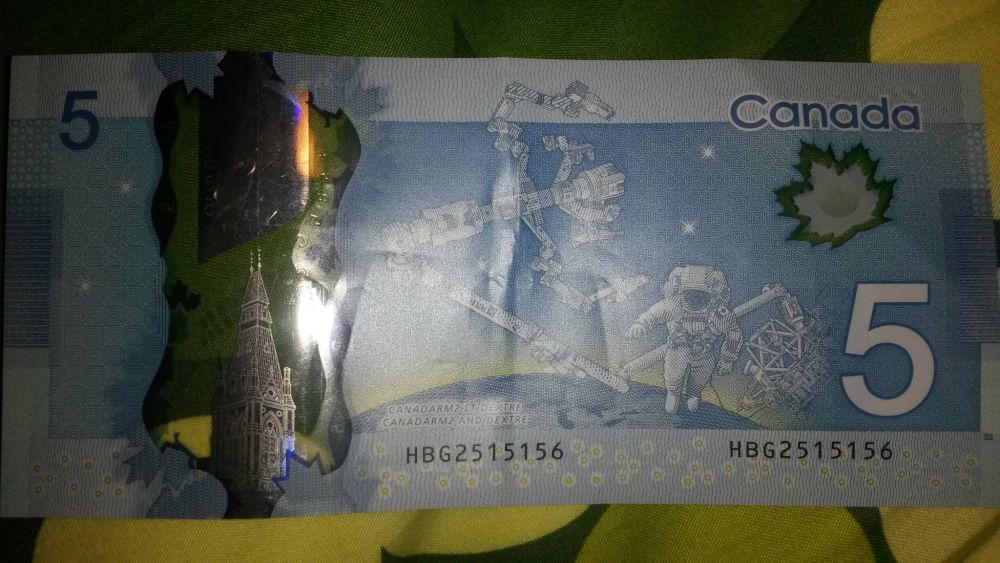
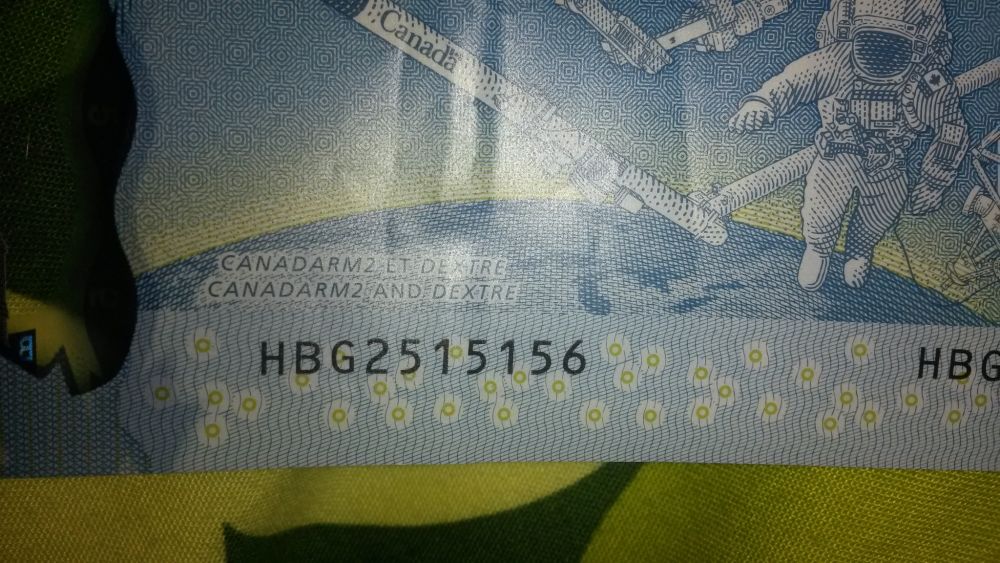
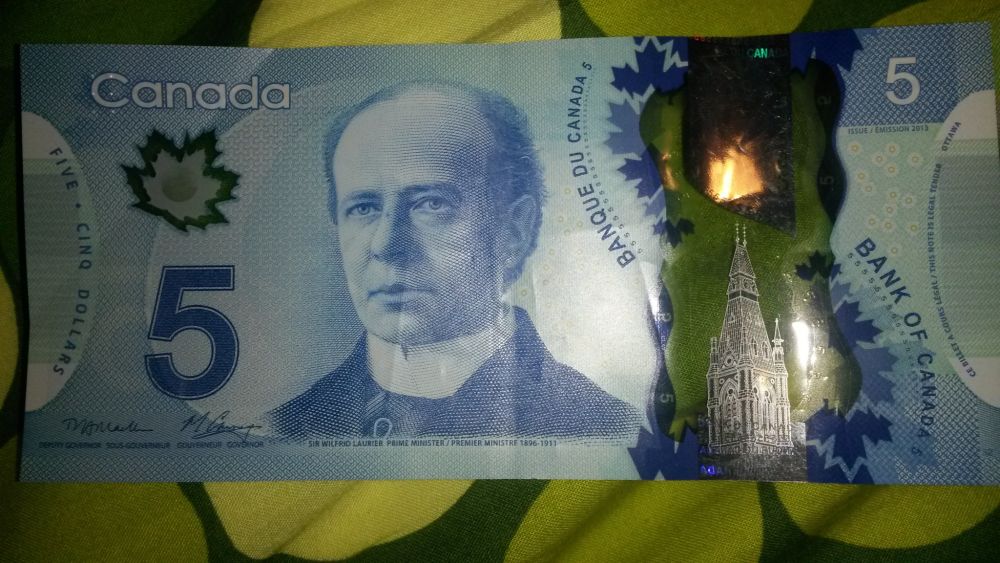


 Posted 05/26/2015 11:36 pm


