| Author |
 Replies: 7 / Views: 1,462 Replies: 7 / Views: 1,462 |
|
|
Pillar of the Community
United States
4883 Posts |
Insomuch as any wear is evident, this specimen is close to, if not actually in, uncirculated condition. However, there's a lot going on with it. My initial impression was that it was struck on a flawed flan; if those cavities are post mint damage, they're awfully strange and difficult to reasonably assign a cause to. It's actually a bit overweight at 27.33 grams, which also argues against material having been removed. What's additionally perplexing are some small convex surface features. Before anyone pronounces it a cast copy, though, note that the "dragon's teeth" are sharply rendered, there's an obvious but fine die crack on the cap side, and the edge shows no evidence of a seam. Has anybody seen anything like this? All opinions welcome. Informed ones even more so.  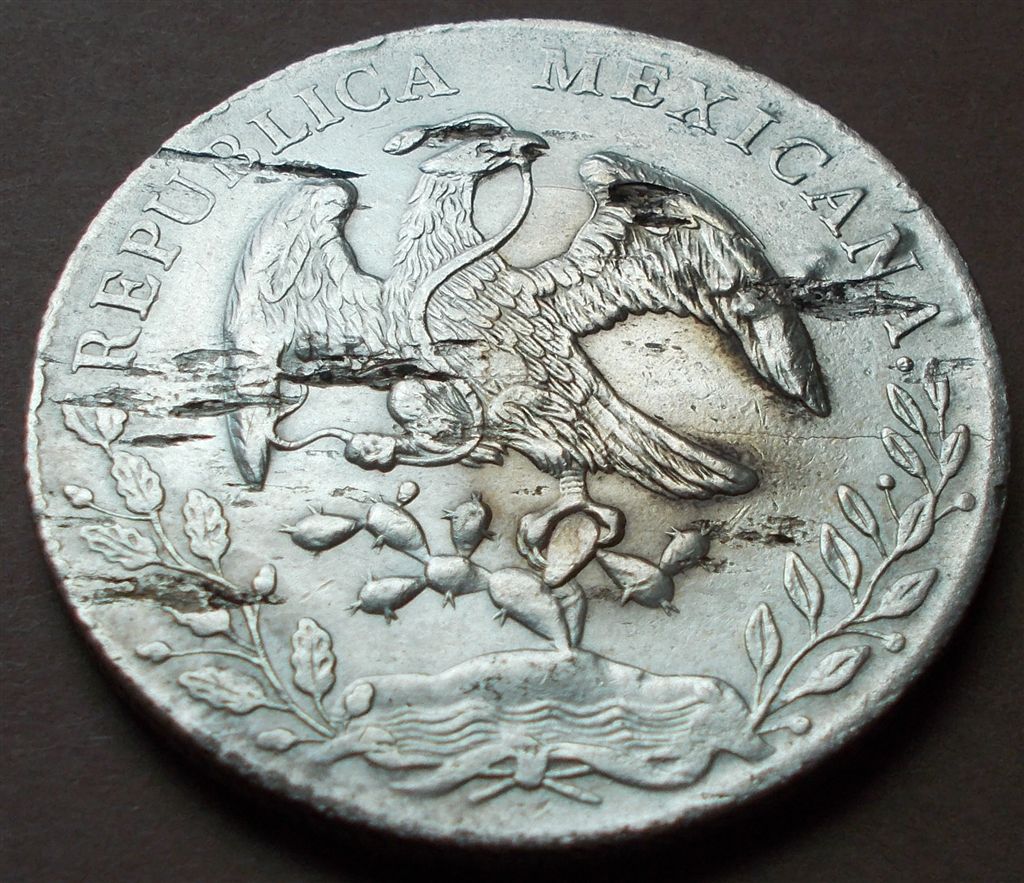 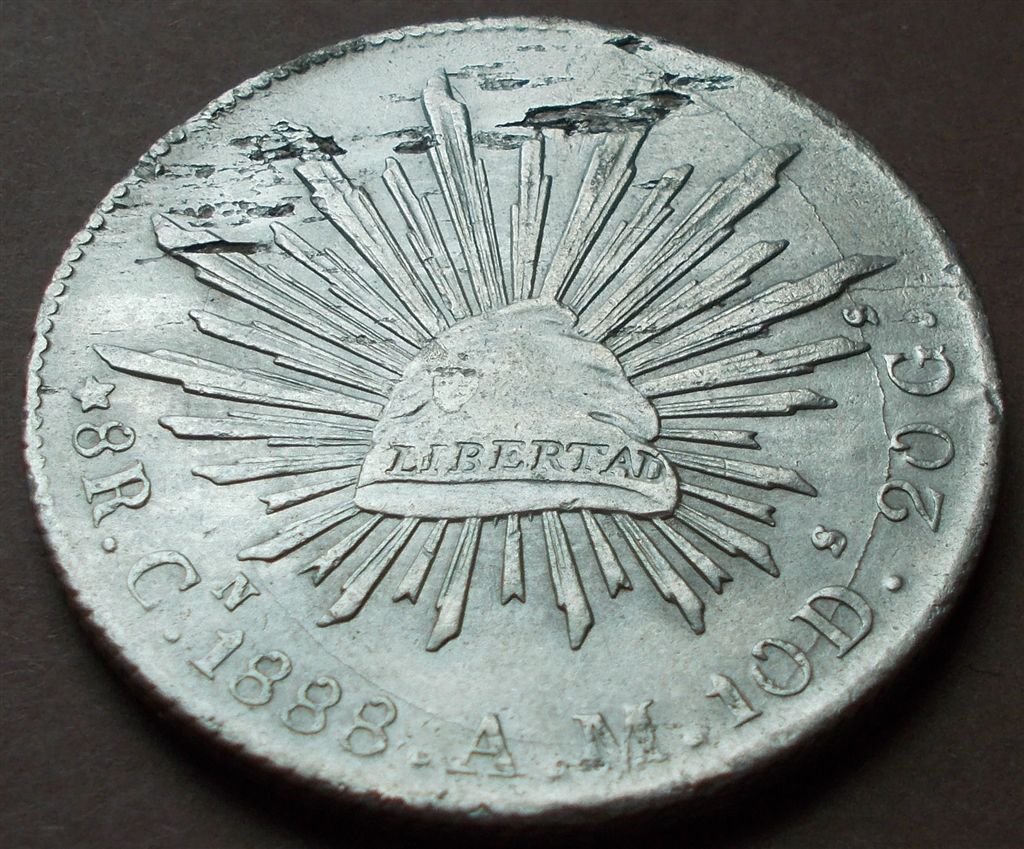 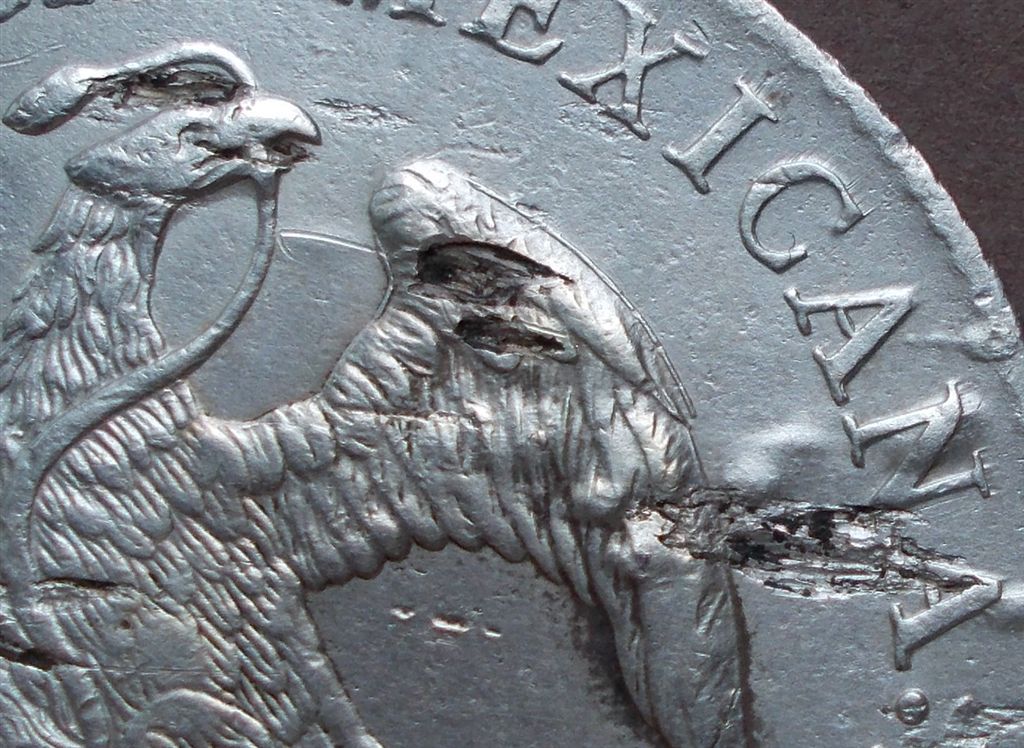 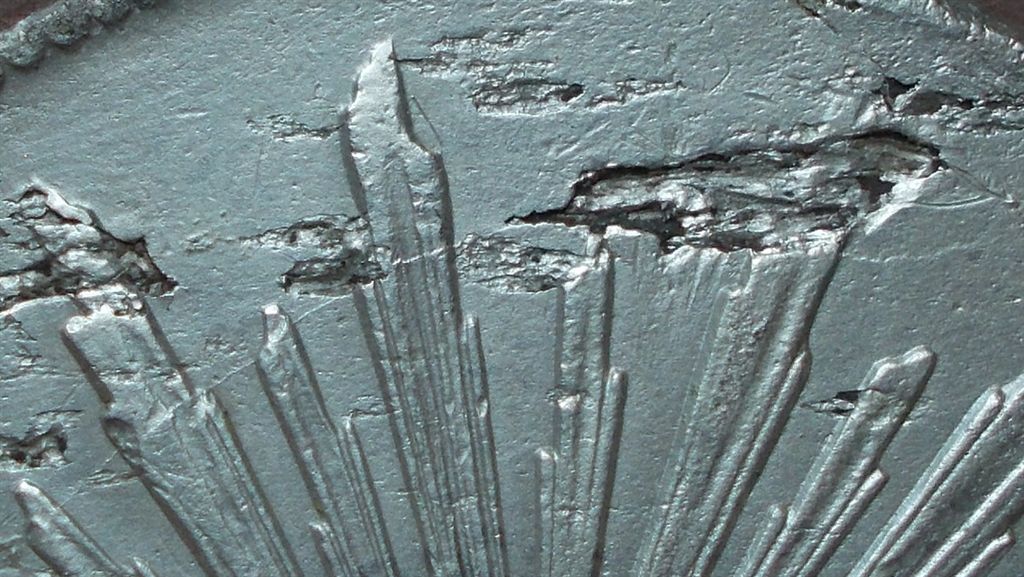 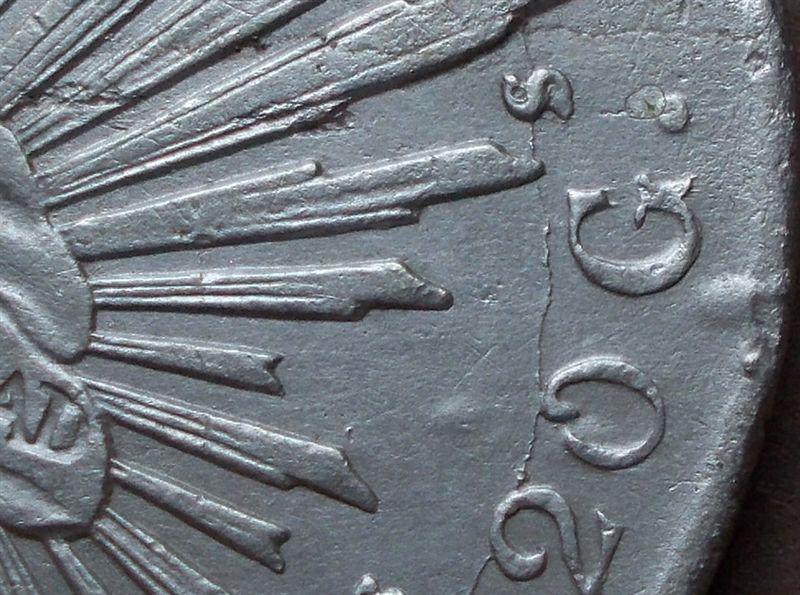 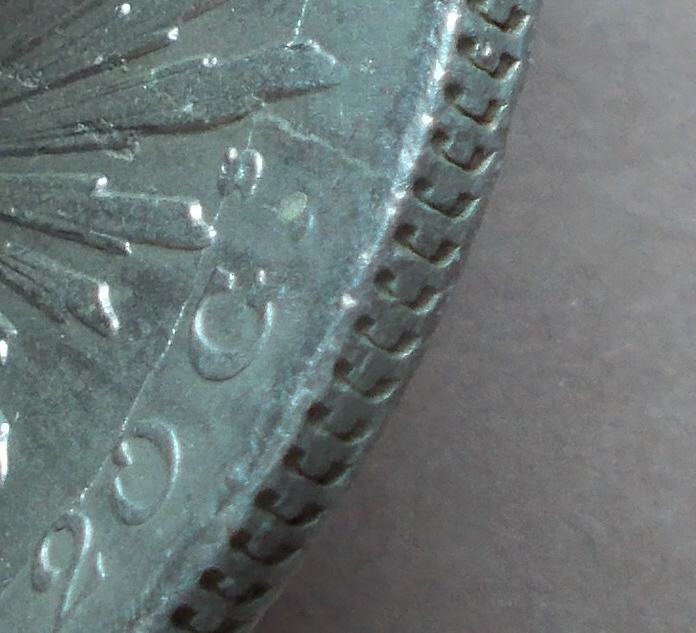 Colligo ergo sum
Edited by Lucky Cuss
06/16/2015 5:11 pm
|
|
|
|
Pillar of the Community
Canada
4912 Posts |
just a flawed planchet IMO
Feel free to call me Will.
|
|
Valued Member
United States
264 Posts |
I see similarly flawed planchets frequently on Kingdom period Isabel II copper coins. I must admit, however, that I'm surprised to see such significant flaws on a large denomination silver coin. Were the Mexican mint personnel under some sort of quota that prioritized quantity/urgency to such a degree?
|
|
Pillar of the Community
United States
6478 Posts |
|
|
Pillar of the Community
 United States
4883 Posts |
Quote:
I must admit, however, that I'm surprised to see such significant flaws on a large denomination silver coin. What surprises me is that it could happen this late (as opposed to, say, before 1850) and at Culiacan, which was one of the more productive, consistent, and long lived facilities within the Mexican system of mints. Colligo ergo sum
|
|
Pillar of the Community
United States
3229 Posts |
Looks like planchet flaws to me. Cool coin. Like the die cracks too.
|
|
Pillar of the Community
United States
1761 Posts |
Planchet lamination's - and LARGE - made during the rolling process. Rare I suspect on these C&R 8R types. Probably superficial soils such as grease or dirt entering the planchet making process. Improper alloy mixes also cause lamination marks - but unlikely here - more from outside contamination. Did an XRF study once on U.S. Jefferson nickels during World War II with that quick mix high Mn alloy. These Jeff nickels always have shown a high percentage rate of lamination marks in the finished products - so its either poor alloy or surface contamination. Who has ever seen a poor alloy mix C&R 8R? Did not say silvered copper, debased silver or of the piece being of a contemporary counterfeit nature - but of a poor alloy mix. So yeah - these lamination marks are the real McCoy IMO on this legitimate regal 92% silver issue - I suspect from this photo. Sometimes SEM/EDS can be used to determine organics like sulfur, chlorine, aluminum, silicon, phosphorous, etc to SUGGEST what this surface contamination that ENTERED the alloy mix may have been that created this metal fall-out if you will on the surface ... John Lorenzo United States Edited by colonialjohn
06/16/2015 4:24 pm
|
|
Pillar of the Community
United States
4883 Posts |
Quote:
...what this surface contamination that ENTERED the alloy mix may have been that created this metal fall-out if you will on the surface ... I've accumulated a bunch of these 8 reales pieces, real and not, that merit an XRF analysis. This specimen definitely qualifies for inclusion in that group. Hopefully someday, somewhere, somehow I'll get access to such testing and be able to report back with the results. Colligo ergo sum
|
| |
Replies: 7 / Views: 1,462 |
|










 Posted 06/15/2015 8:37 pm


