| Author |
 Replies: 7 / Views: 8,461 Replies: 7 / Views: 8,461 |
|
|
New Member
United States
3 Posts |
|
|
|
|
Pillar of the Community
United States
4883 Posts |
First off, welcome.
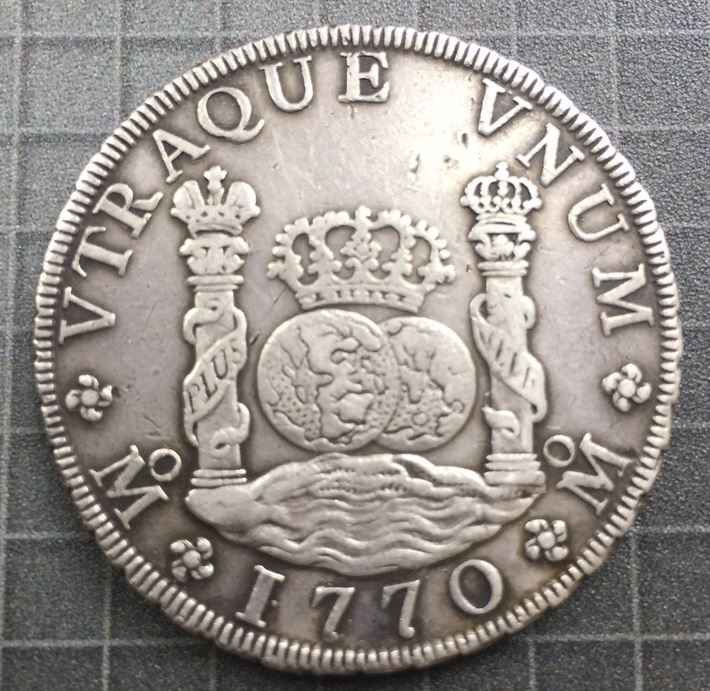
These types are among the most forged coins on the planet, and the whole thing is muddled by the various categories of phonies - contemporary counterfeits, later "restrikes", and modern fakes.
Sometimes visual cues can separate genuine from not. More often, weight and composition (the latter deduced from measuring specific gravity, or better yet, determined via x-ray fluorescence analysis) is what aloows you to make the right call.
This genre is not well suited to dabbling. Buying raw specimens is very risky, and even certified ones occasionally turn out to be other than what's claimed for them.
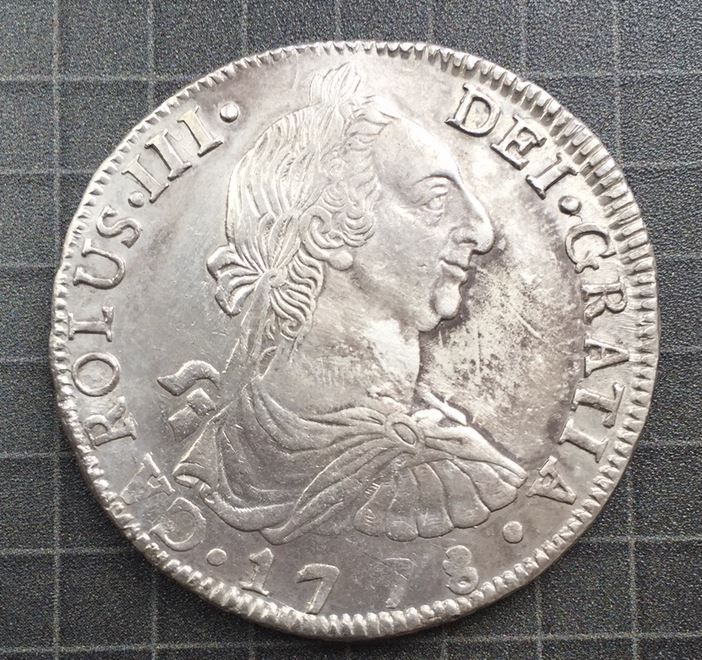
Just on the "eyeball" test, even allowing for variations that do occur with these, I'm (putting it gently) less than confident about the authenticity of either of the examples you've put up here.
Colligo ergo sum
Edited by Lucky Cuss
06/20/2015 1:05 pm
|
|
New Member
 United States
3 Posts |
Thanks Lucky,
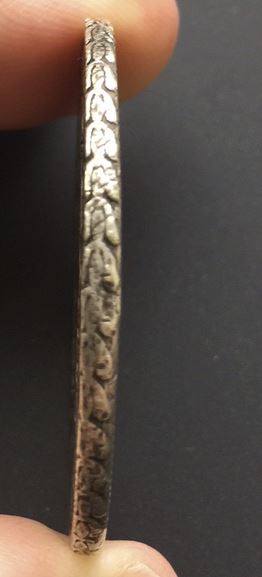
I also think these are dubious, but I'm not experienced enough with this type to articulate why. The problem for beginners like me is that when looking at these, I can weigh them, tap them, look at fonts, and check proper assayers/mint marks, but don't have access to an XRF or specific gravity set-up when I come across them. The edges of this type have also been unclear to me. I'm not sure what visual clues I might be missing and am looking to more experienced folks who have a keener eye and more experience.
|
|
Pillar of the Community
United States
5362 Posts |
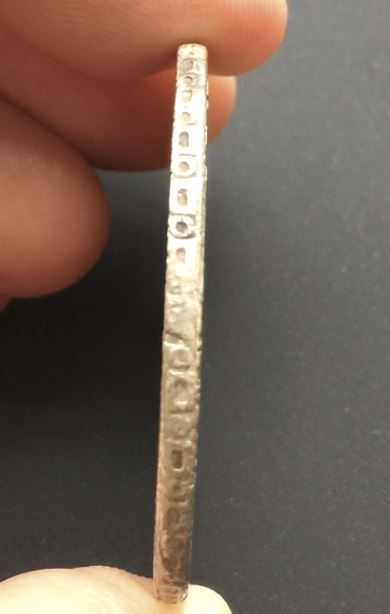
The 1770 Mo is a common date which may be real. It does have a few points of concern which I would want to check out closely. First -the edge design wobbles and has clearly been damaged. This could mean a counterfeit but perhaps not. Second - there are a few tiny stray marks in the die that resulted in raised marks on the coin. These are often signs of forgery but when only a few are present they call for a closer examination of the coin.
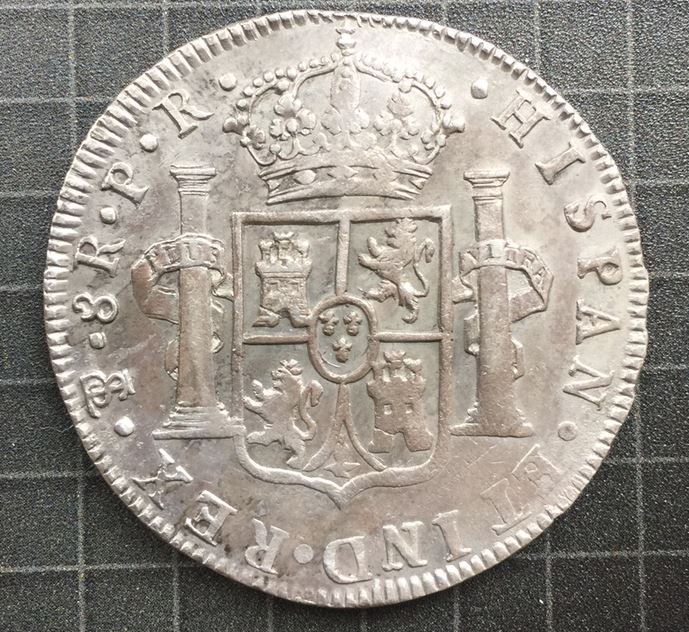
The 1778 is a different case. That is an example of the "broken castle" punch. I associate that punch with counterfeits of Class 1. The break appears from 1772 until 1782 on Charles III coins of Bolivia. Several in my collection are absolutely counterfeit (no doubt at all). Others have less in the form of direct proof (like copper centers). In this case, there is suspicious staining - essentially no wear on the faces but plenty on the edge - a very uneven strike - and very poor die work all typical of counterfeits.
I suggest determining an accurate weight, SG, edge lap confirmation and finally (if no proof has emerged) an XRF check of the alloy.
|
|
Pillar of the Community
Hong Kong
1270 Posts |
Welcome montecristo, the first coin looks much better to me. Does the weight correct? The fonts of the second coin looks odd so I don't like this coin. Henry
|
|
New Member
United States
3 Posts |
Thanks for the feedback Bob and Henry. My wife's digital kitchen gram scale doesn't give me tenths of a gram, so it's time to invest in a better one. Thanks for insight on the Class 1 angle for the bust specimen.
|
|
Pillar of the Community
United States
3229 Posts |
Montecristo,  |
|
Pillar of the Community
United States
5362 Posts |
Since I collect and study counterfeit coins I prefer the second coin. It is a nice example of the "Broken Castle" most of the examples I own are drilled and/or test cut exposing the inner core.
|
| |
Replies: 7 / Views: 8,461 |
|












 Posted 06/20/2015 2:59 pm


