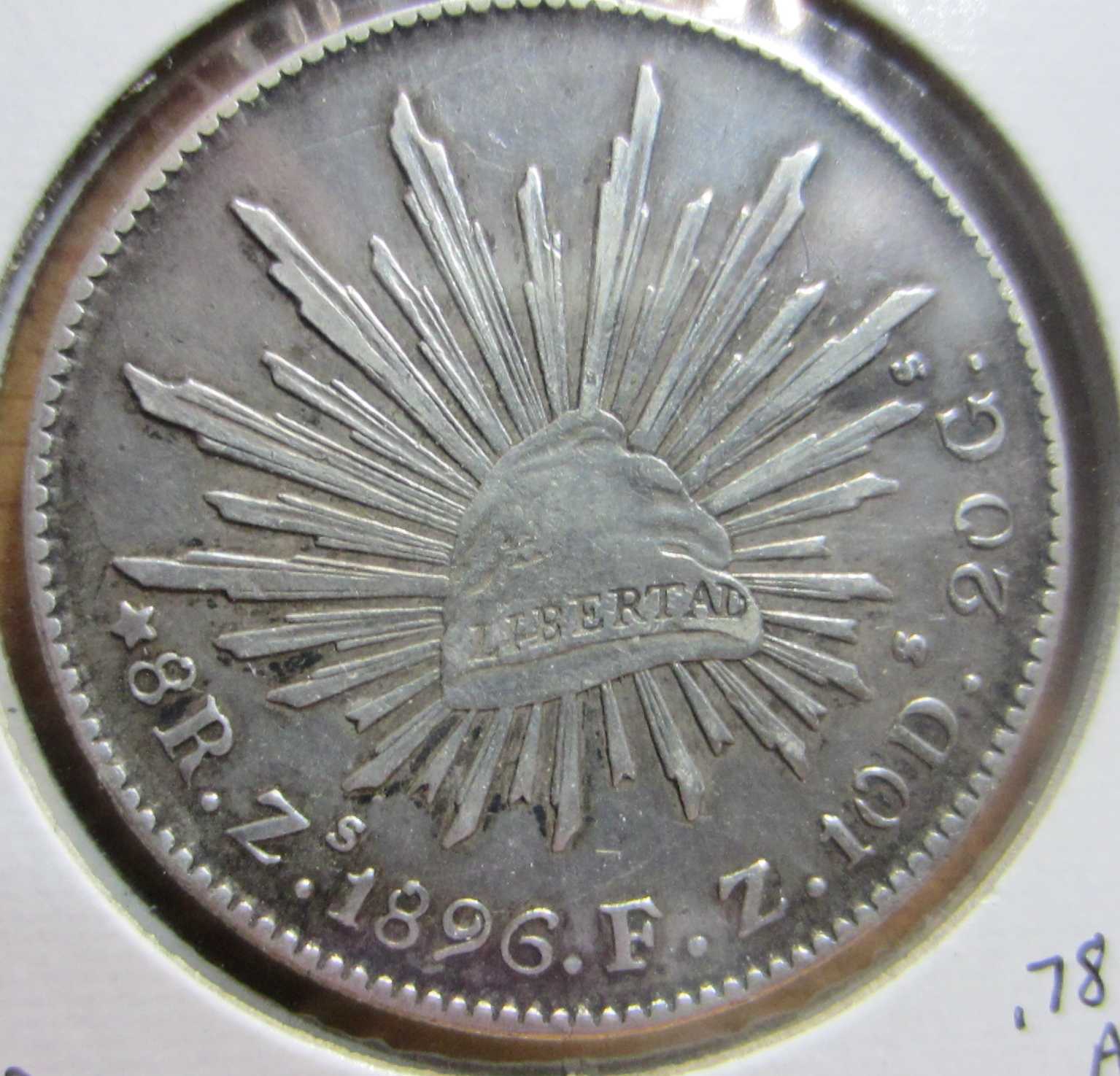
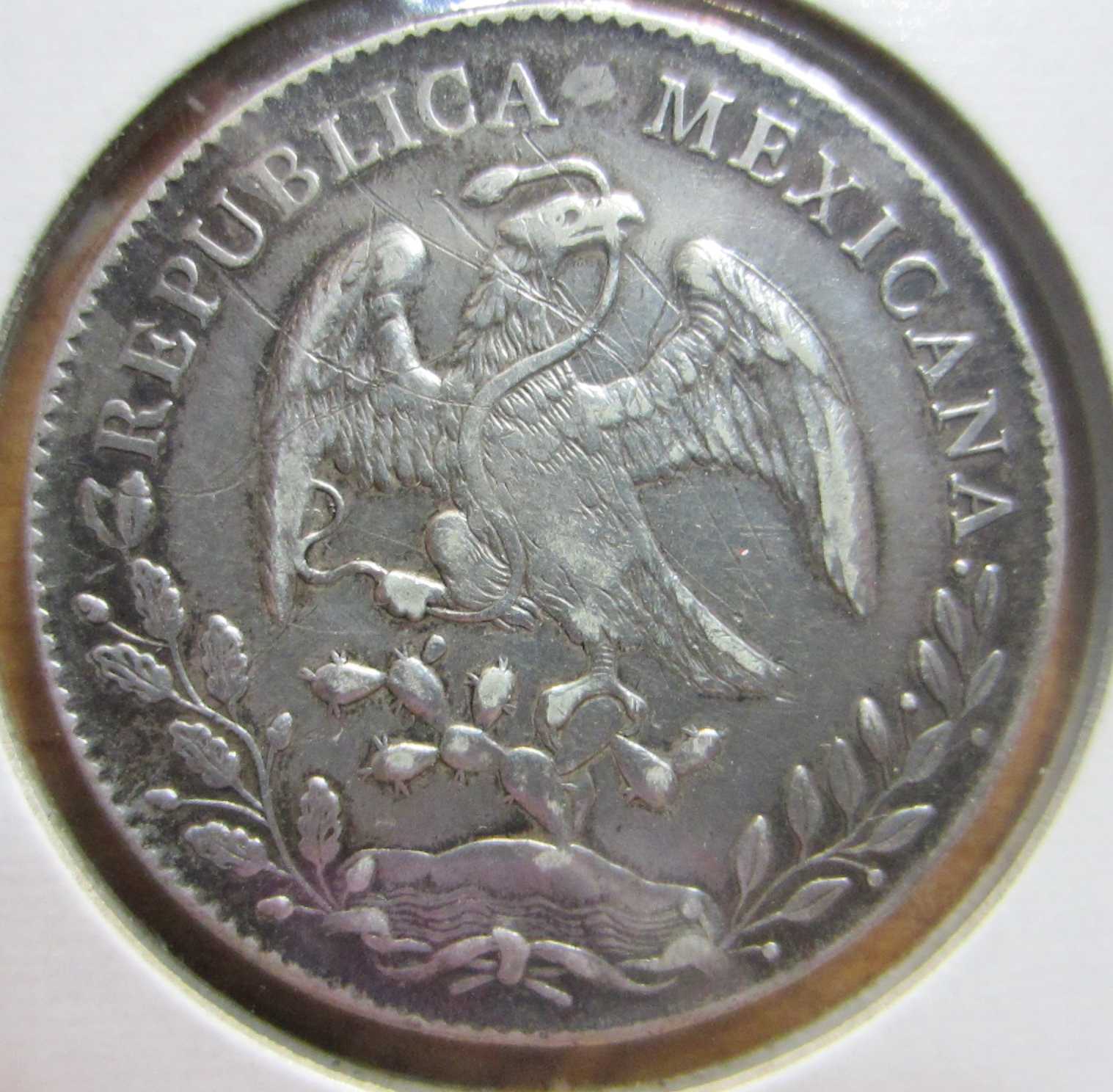
Coin is real - price is not so great at the present time but if you like the coin and use it to learn that is fine.
Use the coin to see and understand what a genuine late Second Republic coin looks like so that you can distinguish it from earlier types and forgeries. Compare the surface of this coin (cleaned and re-toned possibly naturally) with a new MS silver coin from any modern country so you can distinguish between unimpared and cleaned.
The coin is a close collar strike made on a steam press. The close collar as opposed to a closed collar held the planchet in place for the strike mechanically but did not impart the edge design at the time of the strike. The close collar changed the stress patterns of the strike and produced coins that were better looking in general than the manual strikes of the First Republic. Later dies tend to have stress cracks that are circular something early manual strikes never have. The dies used to make your coin were fairly new and show no signs of wear or fatigue. The Manual press (screw press) had no collar so centering was variable. The edge on an open collar press also had a tendency when struck fully to bulge slightly at the center and even to crack very slightly at the edge top to bottom.
The edge on your coin was applied on a steam powered multiple coin edger so the edge design may be rolled on one two or three times. There should be two overlaps opposite one another but on multiple edged coins it can be hard to find. This edging was done BEFORE the coin was struck with the face dies. The edge was high (upset by edging) which protected the central detail better than the old manual edgers did.
Get familiar with the edge design it is referred to as engrailled and is very close to standard for coins made after 1887. Prior to that it varied somewhat mint to mint. You NEED to learn the edge designs so that when you are at a show you can tell a genuine edge from a forged edge. The edge is the side no one thinks to look at and it is the side forgers cut corners on.
The working dies in this case were produced from full hubs so design details are not variable as are the earlier dates. The adoption of hubs varies some mints adopted them as early as 1830 but failed to continue the technology.
When you get a First Republic coin say a common Zs date in the middle 1830s compare the coins closely and you should see the differences. At that time Zacatecas used dies that were hand punched from a set of die punches. The eagle was mostly on one punch set first called the King punch. The letters were added ONE AT A TIME so slight variation is the rule not the exception.
The Cap and Ray 8R series is complex, confusing, frustrating and at the same time the most fascinating (for me) of all the coins ever made. I started buying these coins in 1960 when they were 75 cents each typically and once hooked I never left.
If you do not have an accurate scale get one and learn about Specific Gravity. It is really a simple test and can detect 98 % of fakes. Also when you can get a binocular microscope with 10X-30X capability. Both tools are critical for forgery detection.
FINALLY - Keep asking questions so you can learn.










 Posted 06/21/2015 5:01 pm





